Sri Lanka DevOps Market Size & Growth Rate (2026-2032)
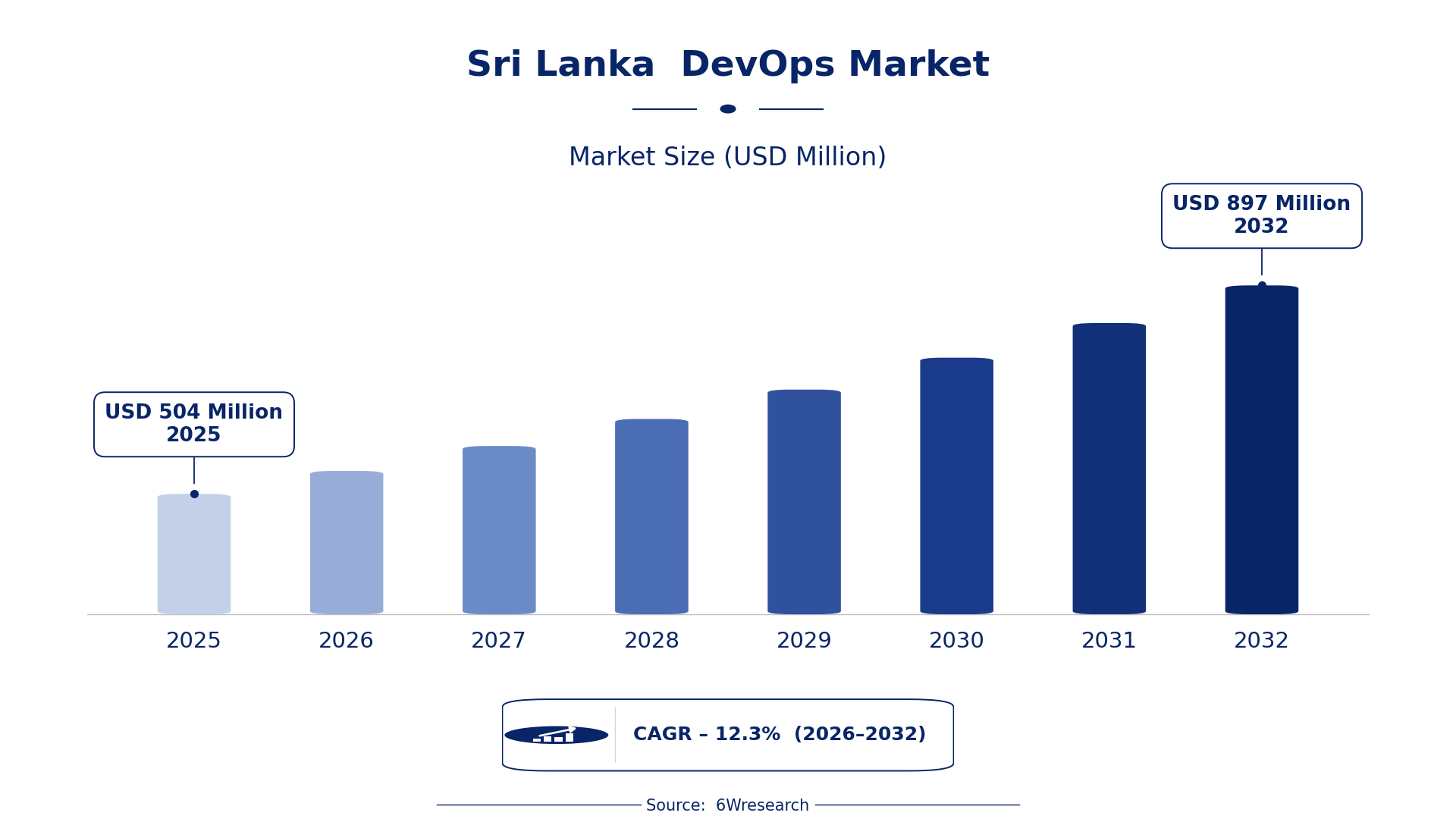
The Sri Lanka DevOps Market was estimated at USD 504 Million in 2025 and is projected to reach USD 897 Million by 2032, growing at a CAGR of 12.3% from 2026 to 2032.
Sri Lanka DevOps Market Synopsis
The demand for DevOps solutions in Sri Lanka is skyrocketing as enterprises increasingly shift to cloud-based infrastructure. This transition is fueled by the pressing need for faster software development cycles and improved operational efficiency, making DevOps practices a necessity rather than a luxury.
With a tech-savvy workforce and a growing emphasis on digital transformation, Sri Lankan companies are recognizing the competitive edge that DevOps can provide. As collaboration between development and operations teams improves, businesses are experiencing enhanced software quality and expedited time-to-market.
Sri Lanka DevOps Market Year-wise Growth Rate and Key Drivers
This graph illustrates the annual growth rates of the Sri Lanka DevOps Market from 2021 to 2032, highlighting a steady upward trajectory and projected expansion over the forecast period.

The table below presents the year‑wise growth rates along with the key drivers influencing the market
| Year | Growth Rate | Major Drivers |
| 2021 | 7.9% | Government digital transformation initiatives boosting IT efficiency. |
| 2022 | 8.3% | Rise in local tech startups fostering DevOps practices. |
| 2023 | 8.7% | Formulation of ISO standards for IT services improvement. |
| 2024 | 9.1% | Increased investment in cybersecurity enhancing software development. |
| 2025 | 9.5% | Emergence of local DevOps talent hubs facilitating training. |
| 2026 | 9.9% | Collaboration among universities and tech firms for innovation. |
| 2027 | 10.3% | Adoption of Agile methodologies streamlining project workflows. |
| 2028 | 10.7% | Demand for continuous integration tools among enterprises rising. |
| 2029 | 11.1% | Government incentives for IT sector growth accelerating adoption. |
| 2030 | 11.5% | Integration of AI in development processes driving efficiency. |
| 2031 | 11.9% | Development of local software products increasing DevOps necessity. |
| 2032 | 12.3% | International partnerships enhancing Sri Lankan tech capabilities. |
Note: Market size estimations and growth projections presented in this report are based on 6Wresearch's proprietary forecasting methodology, utilizing the latest available industry data, government publications, and primary research inputs.
Sri Lanka DevOps Market Key Takeaways
Below are some of the specific key takeaways from the market, including:
- The market is seeing increasing adoption of cloud-native technologies and automation tools.
- Organizations are prioritizing security integration within their DevOps pipelines to protect sensitive data.
- Continuous integration and delivery (CI/CD) practices are becoming more common as firms strive for efficiency.
- Investment opportunities are emerging in DevOps consulting and training services as demand grows.
- The government is actively promoting DevOps adoption to enhance national productivity and innovation.
Evaluation of Restraints in Sri Lanka DevOps Market
Despite the promising outlook, the Sri Lanka DevOps market faces notable challenges. A prevalent lack of awareness regarding DevOps methodologies among local organizations often leads to misalignment with business goals. Additionally, the shortage of skilled professionals in this area presents a barrier to effective implementation. Many companies are hesitant to shift from traditional IT practices, further complicating the integration of DevOps into their operations.
Sri Lanka DevOps Market Trends
The trend towards cloud-native technologies is gaining momentum as organizations seek to streamline their development and deployment processes. Companies are increasingly adopting containers, microservices, and serverless computing to boost agility and scalability. Simultaneously, there is a heightened focus on embedding security practices within the DevOps framework, ensuring compliance with data protection regulations while fostering a culture of continuous improvement.
Sri Lanka DevOps Market Opportunities
Investors and businesses should look toward the burgeoning demand for DevOps services as an avenue for growth. The rise of digital transformation initiatives has created a fertile ground for consulting firms specializing in DevOps solutions. Additionally, the need for training and certification programs to cultivate local talent presents lucrative opportunities. Innovations in automation and CI/CD technologies will further enhance investment potential within this sector.
Government Initiatives in the Sri Lanka DevOps Market
The Sri Lankan government recognizes the strategic importance of DevOps in fostering innovation and enhancing efficiency across industries. To support this vision, several initiatives have been launched, aimed at developing a skilled workforce and encouraging the adoption of modern IT practices.
- A national training program launched in early 2023 focuses on upskilling IT professionals in DevOps methodologies.
- Currently, the government is collaborating with educational institutions to establish a curriculum centered on DevOps practices.
- A planned public-private partnership expected to expand digital infrastructure access will facilitate broader adoption of DevOps across sectors by 2026.
- In 2025, a regulatory framework was introduced to incentivize organizations to integrate DevOps principles into their operations.
Future Insights of the Sri Lanka DevOps Market
Looking ahead to 2026-2032, the Sri Lanka DevOps market is set to experience transformative growth. As businesses prioritize efficiency and collaboration, the demand for advanced DevOps tools and services will surge. The government’s commitment to digitalization and innovation will likely accelerate the adoption of DevOps, positioning Sri Lanka as a competitive player in the regional IT landscape. This shift will open doors to new investment opportunities and drive further advancements in technology integration.
Sri Lanka DevOps Market Latest Developments
In the past year, the Sri Lanka DevOps market has witnessed significant activity, driven by both local enterprises and international stakeholders. Companies are increasingly investing in technologies that enhance their DevOps capabilities and improve overall operational efficiency.
- A major technology vendor launched a suite of DevOps tools designed to optimize CI/CD processes in early 2023.
- An ongoing initiative aims to integrate AI-driven automation tools into existing DevOps frameworks, enhancing productivity.
- In Q4 2023, a leading regional operator announced plans for a partnership focused on developing DevOps training modules for local IT professionals.
- A rollout expected to begin in mid-2024 will introduce cloud-native DevOps platforms to small and medium enterprises across the country.
Sri Lanka DevOps Market - Key Attractiveness of the Report
- 10 Years of Market Numbers
- Historical Data Starting from 2022 to 2025
- Base Year: 2025
- Forecast Data until 2032
- Key Performance Indicators Impacting the Market
- Major Upcoming Developments and Projects
Key Highlights of the Report:
- Sri Lanka DevOps Market Outlook
- Market Size of Sri Lanka DevOps Market, 2025
- Forecast of Sri Lanka DevOps Market, 2032
- Historical Data and Forecast of Sri Lanka DevOps Revenues & Volume for the Period 2022-2032F
- Sri Lanka DevOps Market Trend Evolution
- Sri Lanka DevOps Market Drivers and Challenges
- Sri Lanka DevOps Price Trends
- Sri Lanka DevOps Porter's Five Forces
- Sri Lanka DevOps Industry Life Cycle
- Historical Data and Forecast of Sri Lanka DevOps Market Revenues & Volume By Type for the Period 2022-2032F
- Historical Data and Forecast of Sri Lanka DevOps Market Revenues & Volume By Solutions for the Period 2022-2032F
- Historical Data and Forecast of Sri Lanka DevOps Market Revenues & Volume By Services for the Period 2022-2032F
- Historical Data and Forecast of Sri Lanka DevOps Market Revenues & Volume By Vertical for the Period 2022-2032F
- Historical Data and Forecast of Sri Lanka DevOps Market Revenues & Volume By Telecommunications for the Period 2022-2032F
- Historical Data and Forecast of Sri Lanka DevOps Market Revenues & Volume By IT and ITeS for the Period 2022-2032F
- Historical Data and Forecast of Sri Lanka DevOps Market Revenues & Volume By Retail and Consumer Goods for the Period 2022-2032F
- Historical Data and Forecast of Sri Lanka DevOps Market Revenues & Volume By Media and Entertainment for the Period 2022-2032F
- Historical Data and Forecast of Sri Lanka DevOps Market Revenues & Volume By Government and Public Sector for the Period 2022-2032F
- Historical Data and Forecast of Sri Lanka DevOps Market Revenues & Volume By Manufacturing for the Period 2022-2032F
- Historical Data and Forecast of Sri Lanka DevOps Market Revenues & Volume By Healthcare and Life Sciences for the Period 2022-2032F
- Historical Data and Forecast of Sri Lanka DevOps Market Revenues & Volume By Education for the Period 2022-2032F
- Historical Data and Forecast of Sri Lanka DevOps Market Revenues & Volume By Deployment Model for the Period 2022-2032F
- Historical Data and Forecast of Sri Lanka DevOps Market Revenues & Volume By Public for the Period 2022-2032F
- Historical Data and Forecast of Sri Lanka DevOps Market Revenues & Volume By Private for the Period 2022-2032F
- Historical Data and Forecast of Sri Lanka DevOps Market Revenues & Volume By Organization Size for the Period 2022-2032F
- Historical Data and Forecast of Sri Lanka DevOps Market Revenues & Volume By SMEs for the Period 2022-2032F
- Historical Data and Forecast of Sri Lanka DevOps Market Revenues & Volume By Large enterprises for the Period 2022-2032F
- Sri Lanka DevOps Import Export Trade Statistics
- Market Opportunity Assessment By Type
- Market Opportunity Assessment By Vertical
- Market Opportunity Assessment By Deployment Model
- Market Opportunity Assessment By Organization Size
- Sri Lanka DevOps Top Companies Market Share
- Sri Lanka DevOps Competitive Benchmarking By Technical and Operational Parameters
- Sri Lanka DevOps Company Profiles
- Sri Lanka DevOps Key Strategic Recommendations






































