Sri Lanka Double Glazing Glass Market Size, Share & Growth Rate
The Sri Lanka Double Glazing Glass Market was estimated at USD 314 Million in 2025 and is projected to reach USD 421 Million by 2032, growing at a CAGR of 4.3% from 2026 to 2032. This growth trajectory is primarily propelled by an increasing demand for energy-efficient solutions within the construction sector, as both residential and commercial building projects increasingly prioritize thermal insulation and noise reduction. The heightened awareness around sustainable building practices further solidifies this upward trend.
Sri Lanka Double Glazing Glass Market Year-wise Growth Rate and Key Drivers
This graph highlights how the Sri Lanka Double Glazing Glass Market has steadily grown over the years, supported by major growth factors.
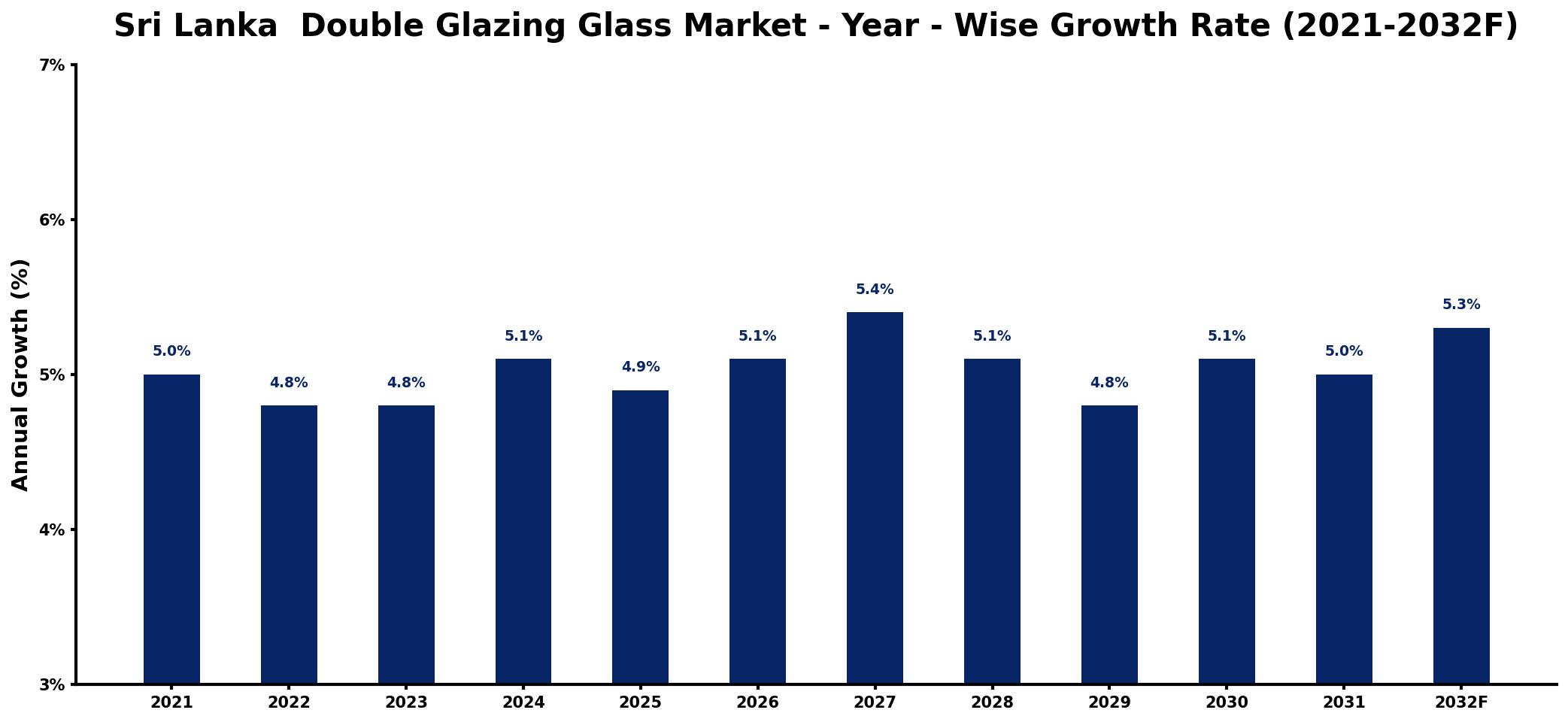
The table below presents the year‑wise growth rates along with the key drivers influencing the market
| Year | Growth Rate | Major Drivers |
| 2021 | 5.0% | Rising construction sector investments |
| 2022 | 4.8% | Growing energy efficiency awareness |
| 2023 | 4.8% | Increased residential renovation projects |
| 2024 | 5.1% | Expansion of green building initiatives |
| 2025 | 4.9% | Higher urbanization rates observed |
| 2026 | 5.1% | Technological advancements in insulation |
| 2027 | 5.4% | Enhanced building regulations enforced |
| 2028 | 5.1% | Surge in eco-friendly materials adoption |
| 2029 | 4.8% | Growing demand for soundproof solutions |
| 2030 | 5.1% | Increased focus on sustainable architecture |
| 2031 | 5.0% | Rising disposable income levels |
| 2032 | 5.3% | Emergence of smart home technologies |
Note: Market size estimations and growth projections presented in this report are based on 6Wresearch's proprietary forecasting methodology, utilizing the latest available industry data, government publications, and primary research inputs.
Sri Lanka Double Glazing Glass Market Synopsis
A pivotal force shaping the Sri Lanka Double Glazing Glass Market is the escalating emphasis on energy efficiency in the construction industry. This focus is not merely a passing trend; it reflects a broader societal shift towards sustainability, driven by both consumer demand and regulatory frameworks. As urbanization progresses, so does the appetite for materials that contribute positively to energy conservation and environmental responsibility.
In addition, the technological advancements in double glazing products have been significant, yielding high-performance glass options that meet the evolving needs of modern architecture. Consequently, builders and homeowners alike are increasingly investing in double glazing to achieve optimal comfort, energy efficiency, and aesthetic appeal in their properties.
Sri Lanka Double Glazing Glass Market Key Takeaways
- The market's growth is driven by rising urbanization and a preference for sustainable construction materials.
- Technological advancements have enhanced the performance capabilities of double glazing products.
- Government incentives and public awareness campaigns are fostering increased adoption rates.
- Despite its growth potential, the market faces challenges related to consumer education and high initial costs.
- Future market expansion is anticipated as regulatory measures promote energy-efficient building solutions.
Evaluation of Restraints in Sri Lanka Double Glazing Glass Market
While the Sri Lanka Double Glazing Glass Market demonstrates substantial growth prospects, several restraints impede its full potential. A primary concern is the high initial investment required for double glazing solutions, which deters cost-sensitive consumers. Additionally, there exists a significant knowledge gap among potential customers regarding the long-term benefits of double glazing, limiting widespread adoption. Cheaper alternatives and traditional window solutions are readily available, posing further competition. The absence of stringent quality control standards may also lead to consumer hesitance, affecting overall market trust.
Sri Lanka Double Glazing Glass Market Trends
The growing trend towards energy efficiency is the most influential force within the Sri Lanka Double Glazing Glass Market. Consumers are increasingly aware of how double glazing significantly reduces heat loss, contributing to lower energy bills and environmental impact. Moreover, advancements in technology are fostering the development of innovative double glazing products that offer enhanced thermal insulation and superior soundproofing qualities. As the demand for such features rises, manufacturers are compelled to keep pace with these emerging expectations.
Sri Lanka Double Glazing Glass Market Opportunities
The Sri Lanka Double Glazing Glass Market is ripe with investment opportunities as it correlates with the broader growth of the construction sector. Investors can explore various avenues such as local manufacturing, importing high-quality products, and offering specialized installation services. With government initiatives focusing on sustainable building practices, there is significant potential for businesses that align with these goals. Furthermore, addressing the current knowledge gaps through educational campaigns can drive consumer awareness and boost market penetration.
Government Initiatives in the Sri Lanka Double Glazing Glass Market
The Sri Lankan government has adopted several measures to bolster the double glazing glass market. Initiatives include incentives such as tax breaks and subsidies aimed at promoting the use of energy-efficient building materials. New building codes have been established to mandate double glazing in new construction projects, reflecting the government's commitment to improving energy efficiency and reducing carbon emissions. Additionally, awareness campaigns are being rolled out to inform consumers about the numerous advantages of double glazing, such as enhanced insulation and sound reduction.
Future Insights of the Sri Lanka Double Glazing Glass Market
Looking ahead to 2026-2032, the Sri Lanka Double Glazing Glass Market is set to flourish, underpinned by urbanization and increasing disposable income among consumers. As building projects increasingly embrace sustainability, the market will benefit from both consumer demand and regulatory support. The anticipated implementation of more stringent building codes will further bolster the adoption of double glazing solutions. As awareness of the benefits associated with double glazing grows, both residential and commercial segments are likely to witness a consistent rise in demand.
Sri Lanka Double Glazing Glass Market Latest Developments (2025 - 2026)
Recent developments in the Sri Lanka Double Glazing Glass Market indicate a trend towards enhanced product offerings with improved thermal performance and durability. Manufacturers are focusing on incorporating cutting-edge technology into their product lines to meet the escalating expectations of consumers and builders alike. Furthermore, collaborative efforts between industry stakeholders and government bodies are fostering an environment conducive to innovation and sustainability, paving the way for a more robust market landscape in the near future.
Sri Lanka Double Glazing Glass Market - Key Attractiveness of the Report
- 10 Years of Market Numbers
- Historical Data Starting from 2022 to 2025
- Base Year: 2025
- Forecast Data until 2032
- Key Performance Indicators Impacting the Market
- Major Upcoming Developments and Projects
Key Highlights of the Report:
- Sri Lanka Double Glazing Glass Market Outlook
- Market Size of Sri Lanka Double Glazing Glass Market, 2025
- Forecast of Sri Lanka Double Glazing Glass Market, 2032
- Historical Data and Forecast of Sri Lanka Double Glazing Glass Revenues & Volume for the Period 2022-2032F
- Sri Lanka Double Glazing Glass Market Trend Evolution
- Sri Lanka Double Glazing Glass Market Drivers and Challenges
- Sri Lanka Double Glazing Glass Price Trends
- Sri Lanka Double Glazing Glass Porter's Five Forces
- Sri Lanka Double Glazing Glass Industry Life Cycle
- Historical Data and Forecast of Sri Lanka Double Glazing Glass Market Revenues & Volume By Material for the Period 2022-2032F
- Historical Data and Forecast of Sri Lanka Double Glazing Glass Market Revenues & Volume By Glass for the Period 2022-2032F
- Historical Data and Forecast of Sri Lanka Double Glazing Glass Market Revenues & Volume By Frame and Spacer for the Period 2022-2032F
- Historical Data and Forecast of Sri Lanka Double Glazing Glass Market Revenues & Volume By Sealant for the Period 2022-2032F
- Historical Data and Forecast of Sri Lanka Double Glazing Glass Market Revenues & Volume By Others for the Period 2022-2032F
- Historical Data and Forecast of Sri Lanka Double Glazing Glass Market Revenues & Volume By Thickness for the Period 2022-2032F
- Historical Data and Forecast of Sri Lanka Double Glazing Glass Market Revenues & Volume By Less than 10mm for the Period 2022-2032F
- Historical Data and Forecast of Sri Lanka Double Glazing Glass Market Revenues & Volume By 10mm to 12mm for the Period 2022-2032F
- Historical Data and Forecast of Sri Lanka Double Glazing Glass Market Revenues & Volume By More than 12mm for the Period 2022-2032F
- Historical Data and Forecast of Sri Lanka Double Glazing Glass Market Revenues & Volume By Application for the Period 2022-2032F
- Historical Data and Forecast of Sri Lanka Double Glazing Glass Market Revenues & Volume By Window and Door for the Period 2022-2032F
- Historical Data and Forecast of Sri Lanka Double Glazing Glass Market Revenues & Volume By Faade for the Period 2022-2032F
- Historical Data and Forecast of Sri Lanka Double Glazing Glass Market Revenues & Volume By Applications for the Period 2022-2032F
- Sri Lanka Double Glazing Glass Import Export Trade Statistics
- Market Opportunity Assessment By Material
- Market Opportunity Assessment By Thickness
- Market Opportunity Assessment By Application
- Sri Lanka Double Glazing Glass Top Companies Market Share
- Sri Lanka Double Glazing Glass Competitive Benchmarking By Technical and Operational Parameters
- Sri Lanka Double Glazing Glass Company Profiles
- Sri Lanka Double Glazing Glass Key Strategic Recommendations






































