Sri Lanka Electrical Conduit Market Size Growth Rate
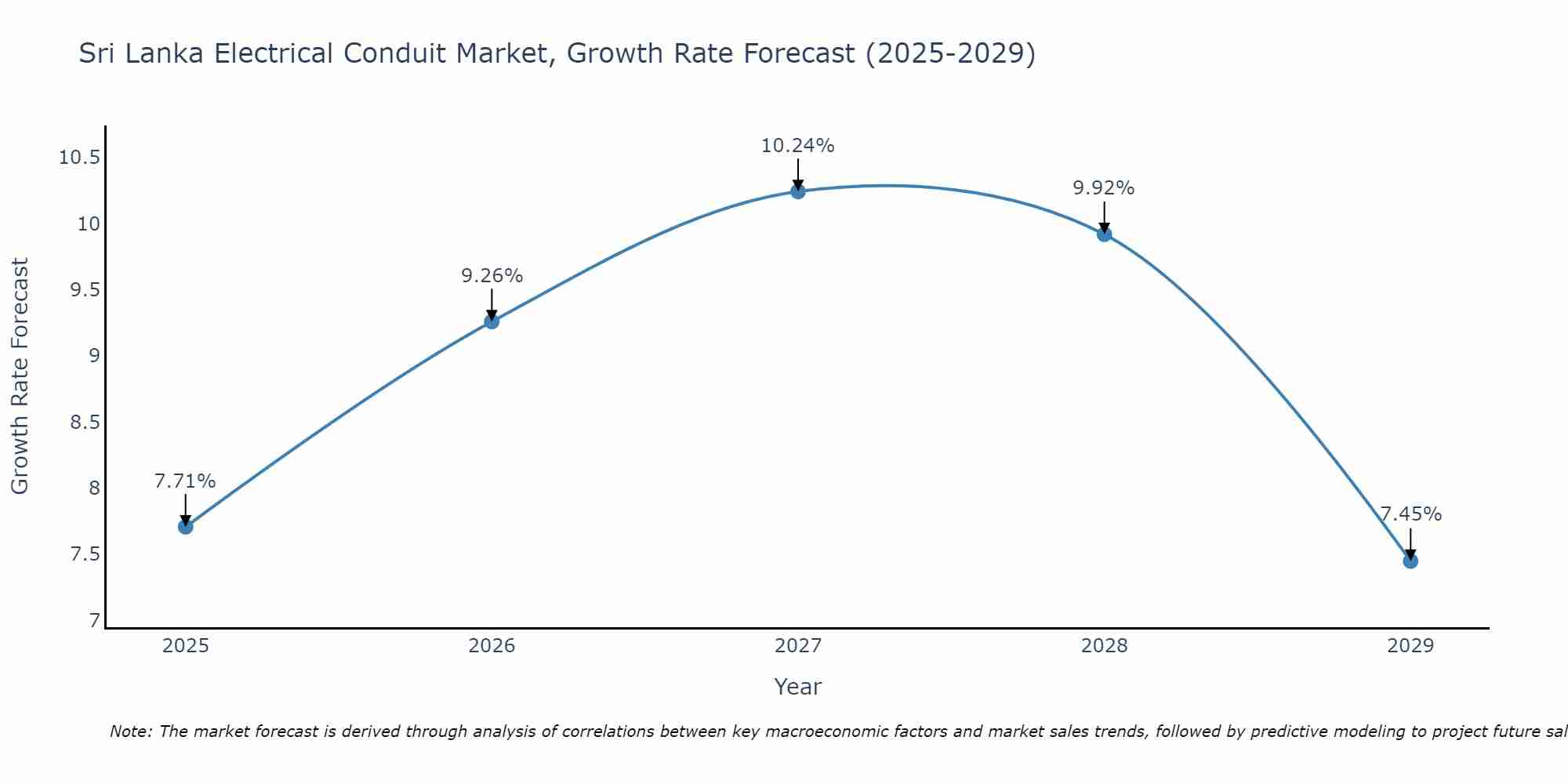
The Sri Lanka Electrical Conduit Market is projected to witness mixed growth rate patterns during 2025 to 2029. Starting at 7.71% in 2025, the market peaks at 10.24% in 2027, and settles at 7.45% by 2029.
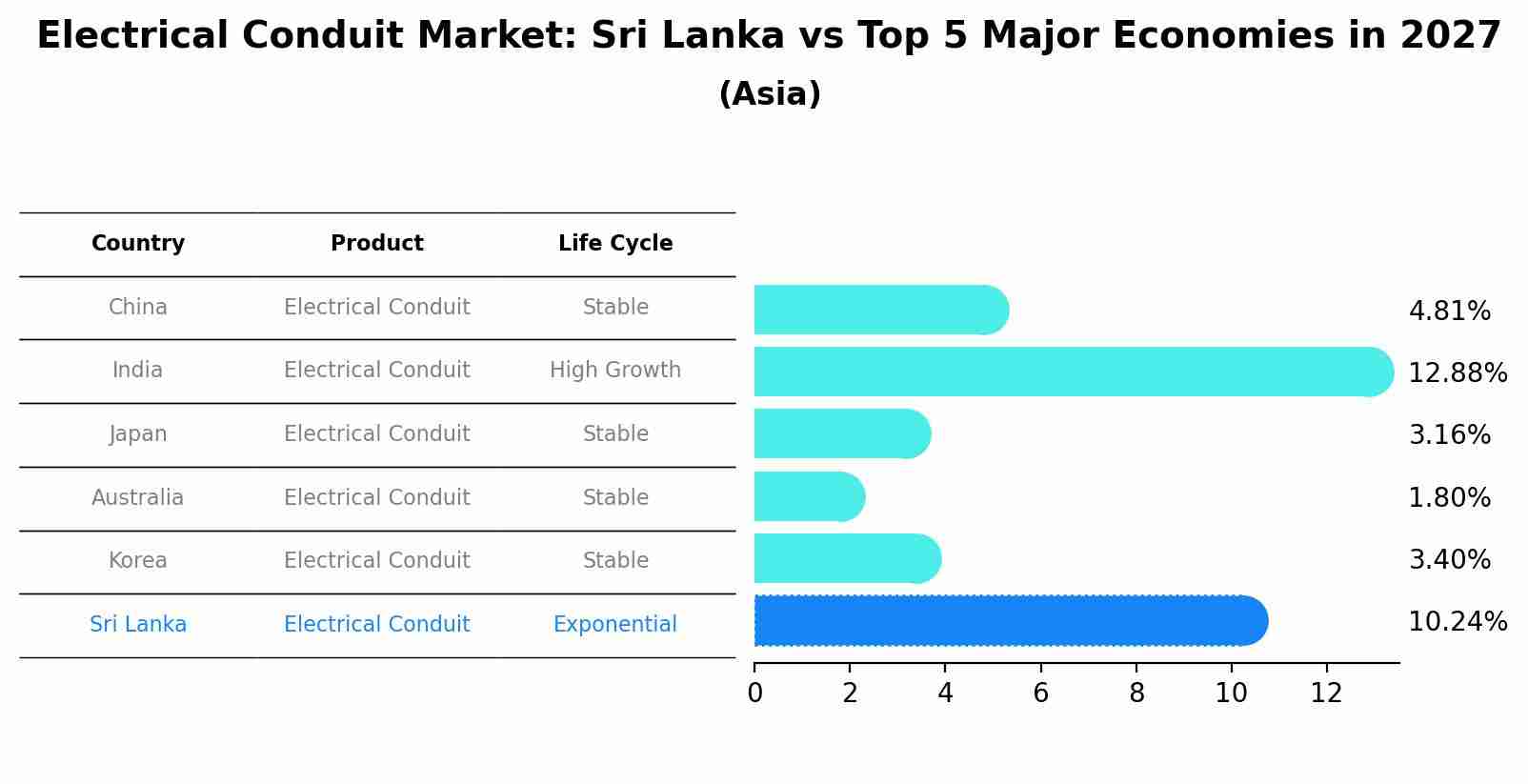
Electrical Conduit Market: Sri Lanka vs Top 5 Major Economies in 2027 (Asia)
The Electrical Conduit market in Sri Lanka is projected to grow at a high growth rate of 10.24% by 2027, within the Asia region led by China, along with other countries like India, Japan, Australia and South Korea, collectively shaping a dynamic and evolving market environment driven by innovation and increasing adoption of emerging technologies.
Sri Lanka Electrical Conduit Market Overview
The Sri Lanka Electrical Conduit Market is witnessing steady growth driven by increasing infrastructure development, urbanization, and government initiatives focusing on improving the country`s electricity distribution network. The market is primarily dominated by PVC conduits due to their cost-effectiveness, durability, and ease of installation. With a growing demand for electricity in residential, commercial, and industrial sectors, the need for efficient electrical wiring systems is driving the adoption of electrical conduits in Sri Lanka. Additionally, the rise in construction activities, especially in sectors like real estate, hospitality, and manufacturing, is further fueling the demand for electrical conduits. Key players in the market include local manufacturers as well as international companies expanding their presence in the region to cater to the evolving needs of the Sri Lankan electrical infrastructure sector.
Sri Lanka Electrical Conduit Market Trends
The Sri Lanka Electrical Conduit Market is experiencing a shift towards more sustainable and durable materials, such as PVC and steel conduits, due to their longevity and resistance to corrosion. With a growing focus on energy efficiency and safety standards in construction projects, there is an increasing demand for high-quality conduits that can withstand harsh environmental conditions. Additionally, the market is witnessing a trend towards the adoption of flexible conduits for their ease of installation and versatility in accommodating complex wiring systems. The rise in infrastructure development projects, particularly in the residential and commercial sectors, is driving the demand for electrical conduits in Sri Lanka, leading to a competitive landscape with key players focusing on product innovation and customization to cater to diverse customer requirements.
Sri Lanka Electrical Conduit Market Challenges
In the Sri Lanka Electrical Conduit Market, several challenges are faced that impact the industry`s growth. One major challenge is the presence of counterfeit and low-quality electrical conduits in the market, which not only compromises safety standards but also creates unfair competition for legitimate manufacturers. Additionally, the market is vulnerable to fluctuations in raw material prices, particularly for metals like steel and aluminum used in conduit production, affecting overall profitability for manufacturers. Another challenge is the lack of standardized regulations and enforcement mechanisms in the industry, leading to inconsistencies in product quality and safety across different brands. Furthermore, limited awareness among consumers and contractors about the importance of using high-quality conduits poses a challenge in promoting premium products in the market. Addressing these challenges will be crucial for sustainable growth and development in the Sri Lanka Electrical Conduit Market.
Sri Lanka Electrical Conduit Market Investment Opportunities
The Sri Lanka Electrical Conduit Market presents promising investment opportunities due to the country`s growing construction and infrastructure development sector. With increasing urbanization and industrialization, there is a rising demand for electrical conduit systems to protect and manage wiring in buildings and other structures. Investors can capitalize on this trend by investing in local manufacturers and distributors of electrical conduits, as well as companies involved in related segments such as electrical fittings and accessories. Additionally, the government`s focus on improving the country`s electrical infrastructure further enhances the potential for growth in this market. Overall, investing in the Sri Lanka Electrical Conduit Market offers the opportunity to benefit from the country`s expanding construction industry and increasing need for reliable electrical solutions.
Sri Lanka Electrical Conduit Market Government Policy
The Sri Lankan government has implemented policies to promote the use of standardized electrical conduits to ensure safety and efficiency in the construction sector. The Sri Lanka Standards Institution (SLSI) sets regulations for the production and installation of electrical conduits to meet quality and safety standards. Additionally, the government has introduced import restrictions on non-compliant electrical conduits to protect consumers from low-quality products. These policies aim to create a reliable market for electrical conduits, encourage innovation in the industry, and safeguard the interests of consumers and businesses in Sri Lanka.
Sri Lanka Electrical Conduit Market Future Outlook
The Sri Lanka Electrical Conduit Market is poised for steady growth in the coming years due to increasing urbanization, industrialization, and government investments in infrastructure development. The market is expected to benefit from the rising demand for electricity in residential, commercial, and industrial sectors, driving the need for efficient and safe electrical wiring systems. Additionally, the growing awareness about the importance of electrical safety and compliance with regulations is likely to drive the adoption of high-quality electrical conduits. Technological advancements, such as the introduction of innovative materials and smart conduit systems, are also anticipated to further fuel market growth. Overall, the Sri Lanka Electrical Conduit Market is projected to expand as the country continues to modernize its infrastructure and increase its focus on sustainable development practices.
Key Highlights of the Report:
- Sri Lanka Electrical Conduit Market Outlook
- Market Size of Sri Lanka Electrical Conduit Market, 2021
- Forecast of Sri Lanka Electrical Conduit Market, 2031
- Historical Data and Forecast of Sri Lanka Electrical Conduit Revenues & Volume for the Period 2018 - 2031
- Sri Lanka Electrical Conduit Market Trend Evolution
- Sri Lanka Electrical Conduit Market Drivers and Challenges
- Sri Lanka Electrical Conduit Price Trends
- Sri Lanka Electrical Conduit Porter's Five Forces
- Sri Lanka Electrical Conduit Industry Life Cycle
- Historical Data and Forecast of Sri Lanka Electrical Conduit Market Revenues & Volume By Type for the Period 2018 - 2031
- Historical Data and Forecast of Sri Lanka Electrical Conduit Market Revenues & Volume By Rigid for the Period 2018 - 2031
- Historical Data and Forecast of Sri Lanka Electrical Conduit Market Revenues & Volume By Flexible for the Period 2018 - 2031
- Historical Data and Forecast of Sri Lanka Electrical Conduit Market Revenues & Volume By Material for the Period 2018 - 2031
- Historical Data and Forecast of Sri Lanka Electrical Conduit Market Revenues & Volume By Metallic for the Period 2018 - 2031
- Historical Data and Forecast of Sri Lanka Electrical Conduit Market Revenues & Volume By Non-metallic for the Period 2018 - 2031
- Historical Data and Forecast of Sri Lanka Electrical Conduit Market Revenues & Volume By End-Use Industry for the Period 2018 - 2031
- Historical Data and Forecast of Sri Lanka Electrical Conduit Market Revenues & Volume By Building & Construction for the Period 2018 - 2031
- Historical Data and Forecast of Sri Lanka Electrical Conduit Market Revenues & Volume By Industrial Manufacturing for the Period 2018 - 2031
- Historical Data and Forecast of Sri Lanka Electrical Conduit Market Revenues & Volume By IT & Telecommunication for the Period 2018 - 2031
- Historical Data and Forecast of Sri Lanka Electrical Conduit Market Revenues & Volume By Oil & Gas for the Period 2018 - 2031
- Historical Data and Forecast of Sri Lanka Electrical Conduit Market Revenues & Volume By Energy & Utility for the Period 2018 - 2031
- Historical Data and Forecast of Sri Lanka Electrical Conduit Market Revenues & Volume By Others for the Period 2018 - 2031
- Sri Lanka Electrical Conduit Import Export Trade Statistics
- Market Opportunity Assessment By Type
- Market Opportunity Assessment By Material
- Market Opportunity Assessment By End-Use Industry
- Sri Lanka Electrical Conduit Top Companies Market Share
- Sri Lanka Electrical Conduit Competitive Benchmarking By Technical and Operational Parameters
- Sri Lanka Electrical Conduit Company Profiles
- Sri Lanka Electrical Conduit Key Strategic Recommendations






































