Sri Lanka Ergonomic Chair Market Size, Share & Growth Rate
The Sri Lanka Ergonomic Chair Market was estimated at USD 1025 Million in 2025 and is projected to reach USD 1825 Million by 2032, growing at a CAGR of 8.6% from 2026 to 2032. This growth trajectory is primarily fueled by heightened awareness surrounding workplace wellness and the necessity of good posture to minimize musculoskeletal disorders. As companies increasingly prioritize employee comfort and health, the demand for ergonomic seating solutions continues to rise, particularly with the persistent shift towards remote work and home offices.
Sri Lanka Ergonomic Chair Market Year-wise Growth Rate and Key Drivers
This graph highlights how the Sri Lanka Ergonomic Chair Market has steadily grown over the years, supported by major growth factors.
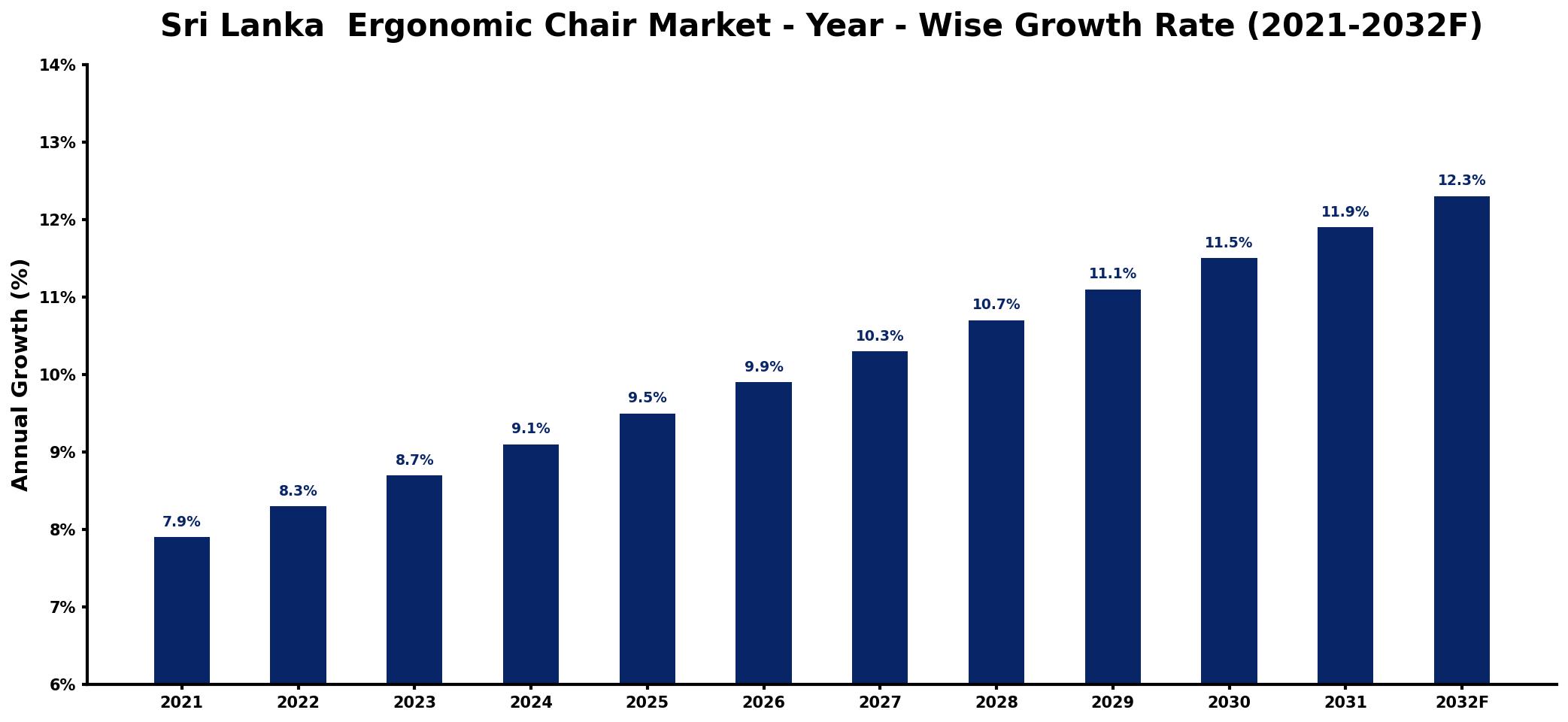
The table below presents the year‑wise growth rates along with the key drivers influencing the market
| Year | Growth Rate | Major Drivers |
| 2021 | 7.9% | rising health awareness among consumers |
| 2022 | 8.3% | increased remote working trends |
| 2023 | 8.7% | growing focus on workplace wellness |
| 2024 | 9.1% | expansion of office infrastructure projects |
| 2025 | 9.5% | surge in online furniture sales |
| 2026 | 9.9% | heightened demand for comfort solutions |
| 2027 | 10.3% | emphasis on sustainable materials usage |
| 2028 | 10.7% | growing influence of design aesthetics |
| 2029 | 11.1% | increased corporate wellness programs implementation |
| 2030 | 11.5% | rising disposable income levels |
| 2031 | 11.9% | growing popularity of home offices |
| 2032 | 12.3% | enhanced technological integration in workplaces |
Note: Market size estimations and growth projections presented in this report are based on 6Wresearch's proprietary forecasting methodology, utilizing the latest available industry data, government publications, and primary research inputs.
Sri Lanka Ergonomic Chair Market Synopsis
Demand for ergonomic chairs in Sri Lanka is surging as organizations recognize the critical role of proper support in enhancing productivity and employee satisfaction. As a result, manufacturers are rapidly diversifying their offerings to include various designs, materials, and features that cater to evolving consumer needs.
Additionally, the rise of remote work has created a significant opportunity for ergonomic chair sales, as individuals seek quality seating solutions that provide comfort for prolonged periods. This evolving market dynamic has prompted companies to innovate and implement advanced ergonomic technologies, making it an increasingly competitive landscape.
Sri Lanka Ergonomic Chair Market Key Takeaways
- Robust growth is driven by increased awareness of ergonomics in the workplace and the need for supportive seating.
- Demand for adjustable features in chairs is on the rise, reflecting diverse consumer preferences.
- Sustainable materials are gaining popularity as consumers become more environmentally conscious.
- Remote work continues to bolster the market, as individuals seek ergonomic solutions for home office setups.
- Innovation in design and technology is essential for manufacturers to remain competitive and meet evolving customer expectations.
Evaluation of Restraints in Sri Lanka Ergonomic Chair Market
Despite the promising growth potential, the Sri Lanka ergonomic chair market faces significant challenges. A notable restraint is the limited understanding of ergonomic principles among the general population and businesses, leading to lower demand for these specialized chairs compared to traditional options. Additionally, the higher price point of ergonomic seating can deter price-sensitive consumers and businesses. The market currently suffers from a limited variety of options, which can hinder consumer choice and satisfaction. Lastly, the absence of stringent regulations on ergonomic products can result in inconsistencies in quality, complicating the purchasing process for consumers.
Sri Lanka Ergonomic Chair Market Trends
The Sri Lanka ergonomic chair market is witnessing a clear trend towards greater customization and flexibility in design. Features such as adjustable lumbar support, armrests, and seat height are increasingly popular as consumers seek chairs that cater specifically to their comfort needs. Additionally, there is a discernible shift towards sleek, modern aesthetics that align with contemporary office designs, emphasizing both function and style. The growing concern for environmental sustainability is also influencing purchasing decisions, with consumers showing a preference for eco-friendly materials.
Sri Lanka Ergonomic Chair Market Opportunities
The Sri Lanka ergonomic chair market presents numerous investment opportunities, particularly in manufacturing chairs that reflect local design sensibilities and sustainability. There is significant potential in offering customization options, including ergonomic assessments and tailored seating solutions. Collaborations with office furniture suppliers and ergonomic consultants could enhance market penetration and brand differentiation. Furthermore, as companies place an increasing emphasis on employee wellness, the demand for ergonomic products is expected to accelerate, creating ample avenues for growth.
Government Initiatives in the Sri Lanka Ergonomic Chair Market
While there are no specific government policies targeting the ergonomic chair market in Sri Lanka, existing regulations governing workplace health and safety could indirectly promote the use of ergonomic furniture. These regulations aim to reduce workplace injuries and encourage a healthier workforce, which may stimulate demand for ergonomic solutions. Additionally, the governments push for sustainable practices across industries may foster the adoption of eco-friendly ergonomic chairs, aligning market growth with national objectives.
Future Insights of the Sri Lanka Ergonomic Chair Market
The outlook for the Sri Lanka ergonomic chair market is positive as awareness of ergonomics continues to grow in both corporate and individual settings. Businesses are expected to invest more in ergonomic solutions, recognizing their impact on employee productivity and well-being. As the economy modernizes, the integration of ergonomic furniture is likely to expand across multiple sectors, including education and healthcare. Additionally, the ongoing emphasis on remote work underscores the importance of comfortable seating solutions, suggesting a sustained demand for ergonomic chairs in the years to come.
Sri Lanka Ergonomic Chair Market Latest Developments (2025 - 2026)
In recent months, the Sri Lanka ergonomic chair market has seen a surge in product launches focused on incorporating advanced ergonomic features and sustainable materials. Companies are increasingly emphasizing design innovation to cater to the preferences of modern consumers who seek both functionality and style in their office environments. Furthermore, collaborations between furniture manufacturers and health professionals have become more common, aiming to educate consumers on the benefits of ergonomic seating. As a result, the market landscape is evolving rapidly, reflecting current trends in employee wellness and workspace optimization.
Sri Lanka Ergonomic Chair Market - Key Attractiveness of the Report
- 10 Years of Market Numbers
- Historical Data Starting from 2022 to 2025
- Base Year: 2025
- Forecast Data until 2032
- Key Performance Indicators Impacting the Market
- Major Upcoming Developments and Projects
Key Highlights of the Report:
- Sri Lanka Ergonomic Chair Market Outlook
- Market Size of Sri Lanka Ergonomic Chair Market, 2025
- Forecast of Sri Lanka Ergonomic Chair Market, 2032
- Historical Data and Forecast of Sri Lanka Ergonomic Chair Revenues & Volume for the Period 2022-2032F
- Sri Lanka Ergonomic Chair Market Trend Evolution
- Sri Lanka Ergonomic Chair Market Drivers and Challenges
- Sri Lanka Ergonomic Chair Price Trends
- Sri Lanka Ergonomic Chair Porter's Five Forces
- Sri Lanka Ergonomic Chair Industry Life Cycle
- Historical Data and Forecast of Sri Lanka Ergonomic Chair Market Revenues & Volume By Application for the Period 2022-2032F
- Historical Data and Forecast of Sri Lanka Ergonomic Chair Market Revenues & Volume By Enterprise Procurement for the Period 2022-2032F
- Historical Data and Forecast of Sri Lanka Ergonomic Chair Market Revenues & Volume By Government Procurement for the Period 2022-2032F
- Historical Data and Forecast of Sri Lanka Ergonomic Chair Market Revenues & Volume By School Procurement for the Period 2022-2032F
- Historical Data and Forecast of Sri Lanka Ergonomic Chair Market Revenues & Volume By Individual Procurement for the Period 2022-2032F
- Historical Data and Forecast of Sri Lanka Ergonomic Chair Market Revenues & Volume By Other for the Period 2022-2032F
- Sri Lanka Ergonomic Chair Import Export Trade Statistics
- Market Opportunity Assessment By Application
- Sri Lanka Ergonomic Chair Top Companies Market Share
- Sri Lanka Ergonomic Chair Competitive Benchmarking By Technical and Operational Parameters
- Sri Lanka Ergonomic Chair Company Profiles
- Sri Lanka Ergonomic Chair Key Strategic Recommendations






































