Sri Lanka Ethyl Alcohol Market Size Growth Rate
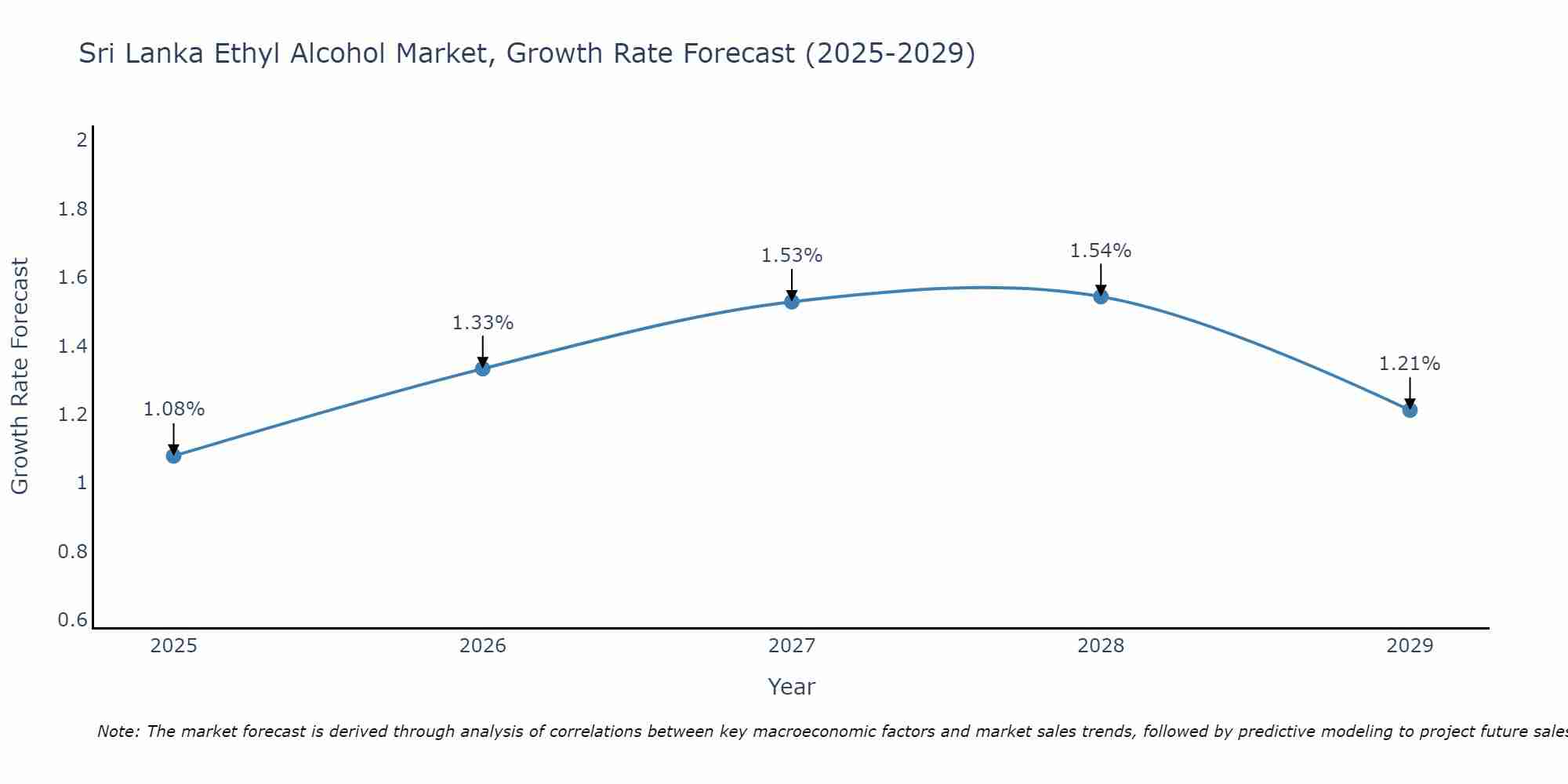
The Sri Lanka Ethyl Alcohol Market is projected to witness mixed growth rate patterns during 2025 to 2029. Growth accelerates to 1.54% in 2028, following an initial rate of 1.08%, before easing to 1.21% at the end of the period.
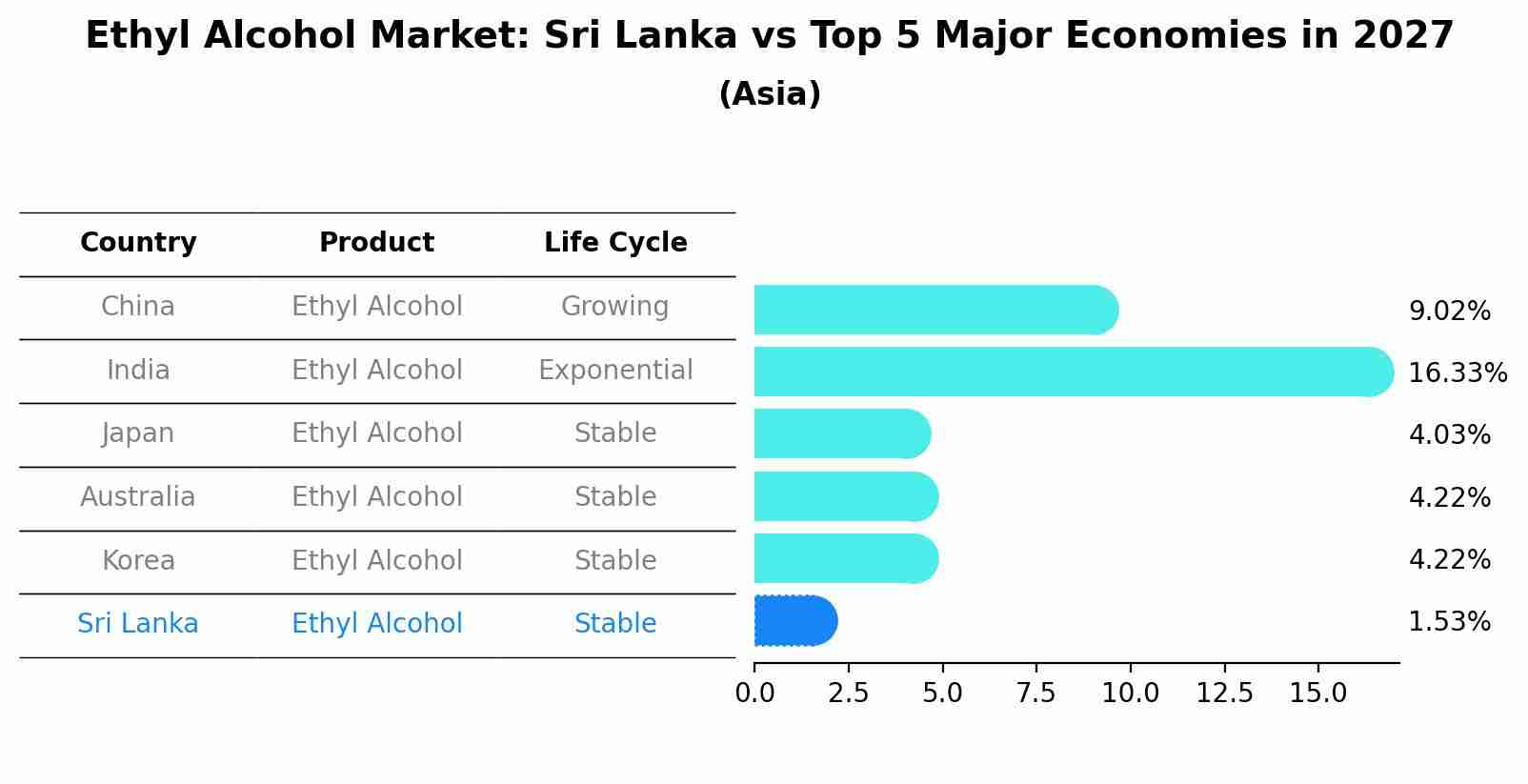
Ethyl Alcohol Market: Sri Lanka vs Top 5 Major Economies in 2027 (Asia)
Sri Lanka's Ethyl Alcohol market is anticipated to experience a stable growth rate of 1.53% by 2027, reflecting trends observed in the largest economy China, followed by India, Japan, Australia and South Korea.
Sri Lanka Ethyl Alcohol Market Overview
The Sri Lanka Ethyl Alcohol Market is characterized by a steady demand primarily driven by the pharmaceutical, beverage, and industrial sectors. The market is witnessing moderate growth due to the increasing use of ethyl alcohol in various applications such as hand sanitizers, disinfectants, alcoholic beverages, and as a solvent in industries. The government regulations play a significant role in shaping the market dynamics, with strict quality standards and licensing requirements in place for ethyl alcohol production and distribution. Key players in the market include local distilleries, importers, and manufacturers catering to the diverse needs of different industries. The market is expected to continue growing at a stable pace, with opportunities for expansion in the pharmaceutical and healthcare sectors driving future demand.
Sri Lanka Ethyl Alcohol Market Trends
In the Sri Lankan Ethyl Alcohol market, there is a growing demand for ethanol as a key ingredient in the production of hand sanitizers due to the ongoing COVID-19 pandemic. This has led to an increase in the production and consumption of ethyl alcohol in the country. Additionally, there is a rising trend towards the use of ethyl alcohol in the pharmaceutical and cosmetic industries for the manufacturing of various products such as disinfectants, perfumes, and medicines. The government`s initiatives to promote the local production of ethanol for industrial use have also contributed to the growth of the market. Overall, the Sri Lankan Ethyl Alcohol market is witnessing a surge in demand driven by the health and hygiene concerns amidst the pandemic and the expanding applications of ethyl alcohol across different sectors.
Sri Lanka Ethyl Alcohol Market Challenges
In the Sri Lanka Ethyl Alcohol Market, there are several challenges that industry players face. These include regulatory restrictions and policies governing the production, distribution, and sale of ethyl alcohol, which can impact market growth and profitability. Additionally, fluctuating raw material prices, such as sugarcane or grains used in the production process, can affect production costs and overall pricing strategies. Competition from illicit alcohol manufacturers is also a significant challenge, as it not only poses a threat to legal market players but also raises concerns about product quality and safety standards. Furthermore, the impact of the COVID-19 pandemic on the hospitality sector has led to a decrease in demand for ethyl alcohol used in beverages and other industries, further complicating market dynamics. Overall, navigating these challenges requires strategic planning and adaptability from industry participants in the Sri Lanka Ethyl Alcohol Market.
Sri Lanka Ethyl Alcohol Market Investment Opportunities
Investment opportunities in the Sri Lanka Ethyl Alcohol Market include the production and distribution of ethanol for various applications such as pharmaceuticals, cosmetics, beverages, and industrial uses. With the increasing demand for ethanol-based products, there is a growing market for high-quality ethyl alcohol in Sri Lanka. Investors can consider setting up ethanol production facilities, partnering with local distilleries for sourcing ethanol, or investing in research and development to enhance ethanol production methods. Additionally, with the government`s focus on promoting renewable energy sources, there is potential for investing in ethanol production from bio-based sources such as sugarcane, maize, or other agricultural crops. Overall, the Sri Lanka Ethyl Alcohol Market offers opportunities for investors to capitalize on the growing demand for ethanol across various industries.
Sri Lanka Ethyl Alcohol Market Government Policy
The Sri Lankan government has implemented several policies related to the ethyl alcohol market to regulate production, distribution, and consumption. These policies include licensing requirements for manufacturers and distributors, strict quality control measures to ensure consumer safety, and tax regulations to generate revenue from the sale of ethyl alcohol. Additionally, there are restrictions on advertising and promotion of ethyl alcohol products to prevent excessive consumption and promote responsible drinking. The government also enforces laws related to underage drinking and drunk driving to protect public health and safety. Overall, these policies aim to balance the economic benefits of the ethyl alcohol market with the need to mitigate potential social and health risks associated with alcohol consumption.
Sri Lanka Ethyl Alcohol Market Future Outlook
The Sri Lanka Ethyl Alcohol Market is expected to witness steady growth in the coming years due to increasing demand from various industries such as pharmaceuticals, cosmetics, and food and beverages. The market is likely to be driven by the growing population, rising disposable income, and changing consumer preferences towards alcohol-based products. Additionally, the government`s initiatives to promote the use of ethanol as a clean and renewable fuel source are expected to further boost the demand for ethyl alcohol in the country. However, challenges such as fluctuating raw material prices and stringent regulations on alcohol production and consumption may hinder market growth to some extent. Overall, the Sri Lanka Ethyl Alcohol Market is poised for expansion, driven by diverse end-use applications and increasing awareness about the benefits of ethyl alcohol.
Key Highlights of the Report:
- Sri Lanka Ethyl Alcohol Market Outlook
- Market Size of Sri Lanka Ethyl Alcohol Market, 2021
- Forecast of Sri Lanka Ethyl Alcohol Market, 2031
- Historical Data and Forecast of Sri Lanka Ethyl Alcohol Revenues & Volume for the Period 2018 - 2031
- Sri Lanka Ethyl Alcohol Market Trend Evolution
- Sri Lanka Ethyl Alcohol Market Drivers and Challenges
- Sri Lanka Ethyl Alcohol Price Trends
- Sri Lanka Ethyl Alcohol Porter's Five Forces
- Sri Lanka Ethyl Alcohol Industry Life Cycle
- Historical Data and Forecast of Sri Lanka Ethyl Alcohol Market Revenues & Volume By Grade for the Period 2018 - 2031
- Historical Data and Forecast of Sri Lanka Ethyl Alcohol Market Revenues & Volume By Food Grade for the Period 2018 - 2031
- Historical Data and Forecast of Sri Lanka Ethyl Alcohol Market Revenues & Volume By Industrial Grade for the Period 2018 - 2031
- Historical Data and Forecast of Sri Lanka Ethyl Alcohol Market Revenues & Volume By Pharmaceutical Grade for the Period 2018 - 2031
- Historical Data and Forecast of Sri Lanka Ethyl Alcohol Market Revenues & Volume By Lab Grade for the Period 2018 - 2031
- Historical Data and Forecast of Sri Lanka Ethyl Alcohol Market Revenues & Volume By End-user Industry for the Period 2018 - 2031
- Historical Data and Forecast of Sri Lanka Ethyl Alcohol Market Revenues & Volume By Automotive and Transportation for the Period 2018 - 2031
- Historical Data and Forecast of Sri Lanka Ethyl Alcohol Market Revenues & Volume By Food and Beverage for the Period 2018 - 2031
- Historical Data and Forecast of Sri Lanka Ethyl Alcohol Market Revenues & Volume By Pharmaceutical for the Period 2018 - 2031
- Historical Data and Forecast of Sri Lanka Ethyl Alcohol Market Revenues & Volume By Cosmetics and Personal Care (Includes hand-Sanitizer) for the Period 2018 - 2031
- Historical Data and Forecast of Sri Lanka Ethyl Alcohol Market Revenues & Volume By Other End-user Industries for the Period 2018 - 2031
- Sri Lanka Ethyl Alcohol Import Export Trade Statistics
- Market Opportunity Assessment By Grade
- Market Opportunity Assessment By End-user Industry
- Sri Lanka Ethyl Alcohol Top Companies Market Share
- Sri Lanka Ethyl Alcohol Competitive Benchmarking By Technical and Operational Parameters
- Sri Lanka Ethyl Alcohol Company Profiles
- Sri Lanka Ethyl Alcohol Key Strategic Recommendations






































