Sri Lanka First Aid Market: Import Trend Analysis
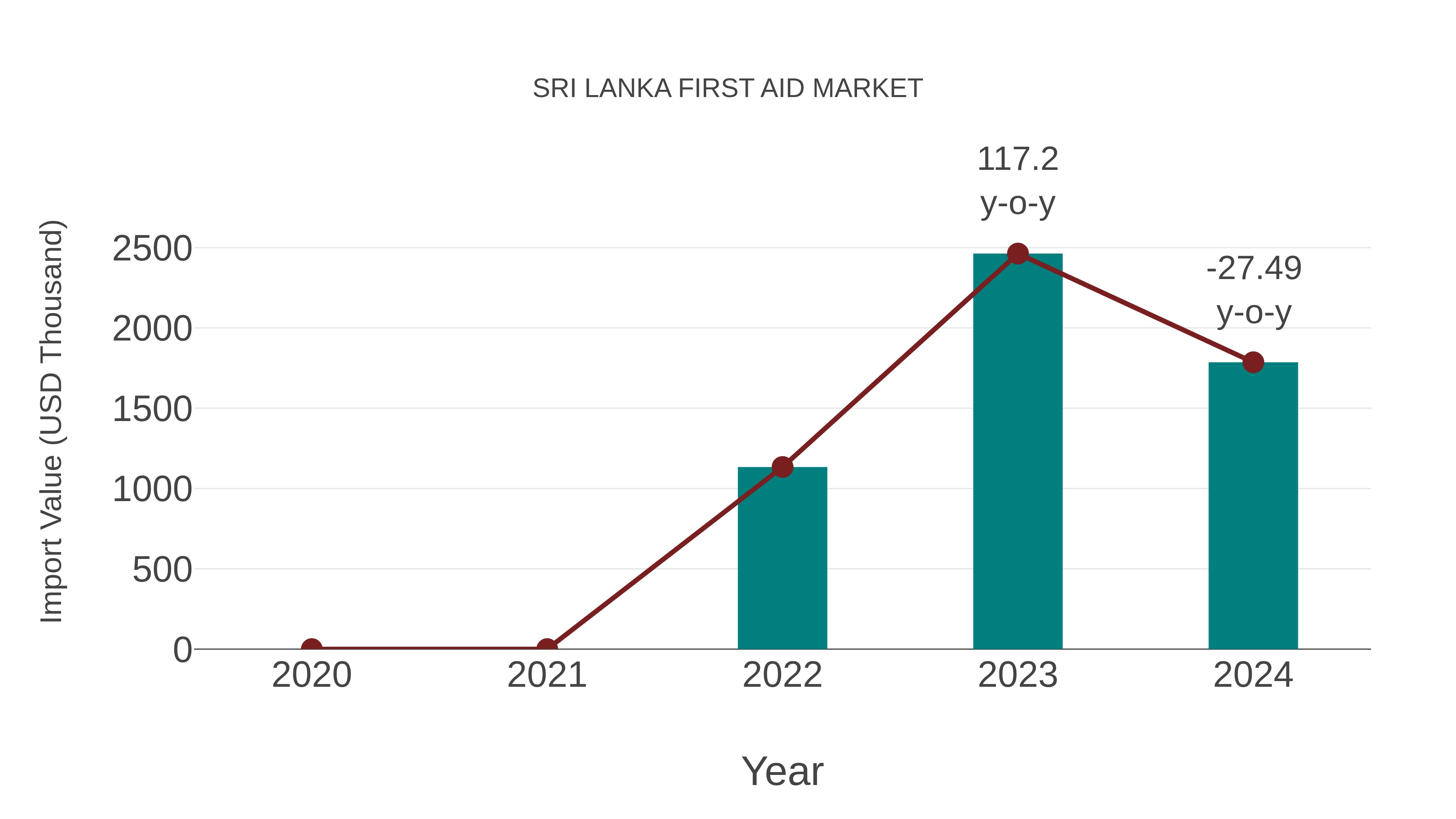
Sri Lanka import trend for the first aid market experienced a significant decline from 2023 to 2024, with a growth rate of -27.49%. However, the compound annual growth rate (CAGR) for 2020-2024 stood at 25.5%. This shift may be attributed to changes in demand dynamics or market saturation.
Sri Lanka First Aid Market Overview
The Sri Lanka first aid market is experiencing steady growth due to increasing awareness about the importance of first aid in emergency situations. The market is primarily driven by the demand for first aid kits, supplies, and training programs across various sectors such as healthcare, education, tourism, and manufacturing. The growing emphasis on workplace safety and government regulations mandating first aid provisions in public spaces further contribute to the market`s expansion. Key players in the Sri Lanka first aid market include both local and international brands offering a wide range of products and services to cater to the diverse needs of consumers. As the country continues to prioritize safety and preparedness, the first aid market is expected to witness continued growth in the coming years.
Sri Lanka First Aid Market Trends and Opportunities
The Sri Lanka First Aid Market is experiencing growth due to increasing awareness about the importance of first aid in emergency situations. A key trend is the rising demand for portable and easy-to-use first aid kits, especially among households, schools, and workplaces. There is also a shift towards investing in certified first aid training programs for individuals and organizations. Opportunities lie in the development of innovative first aid products, such as smart first aid kits with digital features, and the expansion of distribution channels to reach rural areas. Moreover, collaborations with healthcare providers and government initiatives to promote first aid education can further drive market growth in Sri Lanka.
Sri Lanka First Aid Market Challenges
In the Sri Lanka First Aid Market, some of the challenges faced include limited awareness and access to first aid training and products among the general population, inadequate infrastructure for emergency response systems in rural areas, and a lack of standardized regulations for first aid products. Additionally, the market may also face competition from traditional remedies and practices, which could hinder the adoption of modern first aid techniques and products. Furthermore, economic constraints and affordability issues for high-quality first aid supplies could pose challenges for both consumers and providers in the market. Overall, addressing these challenges would require collaborative efforts from the government, healthcare providers, educational institutions, and the private sector to improve awareness, accessibility, and quality standards in the Sri Lanka First Aid Market.
Sri Lanka First Aid Market Drivers
The Sri Lanka First Aid Market is primarily driven by increasing awareness about the importance of first aid in emergency situations, rising incidence of accidents and injuries, and the growing emphasis on workplace safety standards. The government initiatives promoting first aid training and the presence of various organizations and NGOs conducting first aid programs also contribute to market growth. Additionally, the tourism industry in Sri Lanka drives the demand for first aid supplies and services to cater to the needs of tourists. Furthermore, the ongoing advancements in first aid technology and products, as well as the expanding healthcare infrastructure in the country, are expected to further boost the market in the coming years.
Sri Lanka First Aid Market Government Policies
The Sri Lankan government has implemented several policies related to the First Aid market to ensure public safety and compliance with standards. The Ministry of Health oversees regulations for first aid kits and supplies, requiring businesses and public establishments to have adequate first aid provisions on hand. Additionally, the Sri Lanka Red Cross Society plays a key role in promoting first aid training and awareness campaigns nationwide. The government also encourages partnerships between public and private sectors to improve access to first aid services and equipment. Overall, these policies aim to enhance emergency response capabilities, reduce injury-related fatalities, and create a safer environment for the general population in Sri Lanka.
Sri Lanka First Aid Market Future Outlook
The future outlook for the Sri Lanka First Aid Market appears promising with a projected growth driven by increasing awareness about the importance of first aid, rising healthcare expenditures, and government initiatives to promote safety and emergency preparedness. The market is expected to witness a surge in demand for first aid kits, training programs, and related products as individuals, businesses, and healthcare facilities prioritize safety measures. Additionally, advancements in technology such as the development of smart first aid kits and integration of telemedicine in emergency response systems are likely to further propel market growth. Overall, the Sri Lanka First Aid Market is anticipated to expand significantly in the coming years, presenting opportunities for both domestic and international players in the industry.
Key Highlights of the Report:
- Sri Lanka First Aid Market Outlook
- Market Size of Sri Lanka First Aid Market, 2025
- Forecast of Sri Lanka First Aid Market, 2032
- Historical Data and Forecast of Sri Lanka First Aid Revenues & Volume for the Period 2022 - 2032F
- Sri Lanka First Aid Market Trend Evolution
- Sri Lanka First Aid Market Drivers and Challenges
- Sri Lanka First Aid Price Trends
- Sri Lanka First Aid Porter's Five Forces
- Sri Lanka First Aid Industry Life Cycle
- Historical Data and Forecast of Sri Lanka First Aid Market Revenues & Volume By Type for the Period 2022 - 2032F
- Historical Data and Forecast of Sri Lanka First Aid Market Revenues & Volume By First Aid Room Equipment for the Period 2022 - 2032F
- Historical Data and Forecast of Sri Lanka First Aid Market Revenues & Volume By Automated External Defibrillators for the Period 2022 - 2032F
- Historical Data and Forecast of Sri Lanka First Aid Market Revenues & Volume By First Aid Training Products for the Period 2022 - 2032F
- Historical Data and Forecast of Sri Lanka First Aid Market Revenues & Volume By End-use for the Period 2022 - 2032F
- Historical Data and Forecast of Sri Lanka First Aid Market Revenues & Volume By Hospital & Clinics for the Period 2022 - 2032F
- Historical Data and Forecast of Sri Lanka First Aid Market Revenues & Volume By Home & Offices for the Period 2022 - 2032F
- Sri Lanka First Aid Import Export Trade Statistics
- Market Opportunity Assessment By Type
- Market Opportunity Assessment By End-use
- Sri Lanka First Aid Top Companies Market Share
- Sri Lanka First Aid Competitive Benchmarking By Technical and Operational Parameters
- Sri Lanka First Aid Company Profiles
- Sri Lanka First Aid Key Strategic Recommendations






































