Sri Lanka Fruit Powder Market Size, Share & Growth Rate
The Sri Lanka Fruit Powder Market was estimated at USD 483 Million in 2025 and is projected to reach USD 665 Million by 2032, growing at a CAGR of 4.7% from 2026 to 2032. This growth trajectory is primarily fueled by a significant shift in consumer preferences towards natural and health-focused food options. The increasing incorporation of fruit powders in a variety of food and beverage applications further enhances their appeal, making them a staple for health-conscious individuals seeking convenience without sacrificing nutrition.
Sri Lanka Fruit Powder Market Year-wise Growth Rate and Key Drivers
This graph highlights how the Sri Lanka Fruit Powder Market has steadily grown over the years, supported by major growth factors.
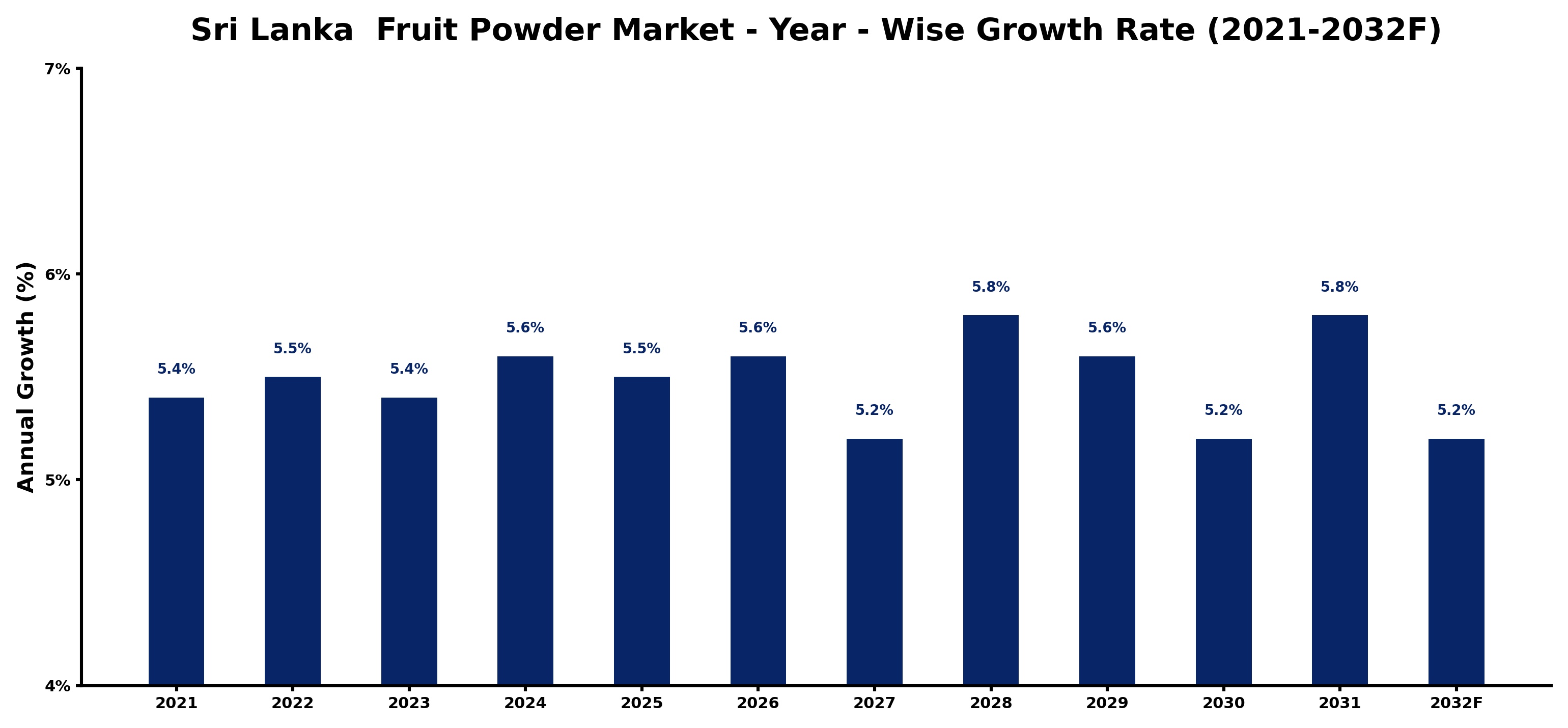
The table below presents the year‑wise growth rates along with the key drivers influencing the market
| Year | Growth Rate | Major Drivers |
| 2021 | 5.4% | Higher fruit processing technology adoption boosts export quality powder production |
| 2022 | 5.5% | Domestic fruit processing facilities boost dehydrated fruit powder output |
| 2023 | 5.4% | Local fruit processing plants boost demand for quality powder production |
| 2024 | 5.6% | Surge in local food processing boosts fruit powder production capacity |
| 2025 | 5.5% | New fruit drying technologies boost powder production capacity significantly |
| 2026 | 5.6% | Advanced drying technologies boost fruit powder production efficiency |
| 2027 | 5.2% | New processing facilities boost Sri Lanka's fruit powder production capacity |
| 2028 | 5.8% | Fruit powder processing facility upgrades boost efficiency and capacity |
| 2029 | 5.6% | Domestic fruit powder manufacturers adopt advanced drying technologies to enhance quality |
| 2030 | 5.2% | Fruit processing facility upgrades enhanced powder production efficiencies |
| 2031 | 5.8% | Fruit powder manufacturers invest in advanced drying technology adoption |
| 2032 | 5.2% | Capacity expansion projects boosted Sri Lanka's fruit powder production output |
Note - Market size estimations and growth projections presented in this report are based on 6Wresearch's advanced forecasting approach, validated with industry datasets as of June 2026.
Sri Lanka Fruit Powder Market Synopsis
Consumer awareness about the nutritional benefits of fruit powders is the strongest force currently shaping the Sri Lanka Fruit Powder Market. As individuals prioritize health in their dietary choices, fruit powders—known for their rich vitamins, antioxidants, and fibers—are rapidly gaining traction across various demographics.
The diversification of product offerings, including exotic flavors like mango and pineapple, is attracting more consumers. Additionally, the rise in demand for organic products is leading manufacturers to innovate, creating fruit powders free from additives and preservatives that appeal to discerning customers.
Sri Lanka Fruit Powder Market Key Takeaways
- Growing consumer demand for natural and healthy food products is driving market expansion.
- Manufacturers are focusing on product innovation and sustainable sourcing to meet evolving consumer preferences.
- The food processing industry is significantly incorporating fruit powders into a variety of products, enhancing their market presence.
- Challenges such as sourcing high-quality fruits and competition from imports require strategic solutions from local producers.
- Government initiatives are supporting the agricultural sector to promote quality fruit production for powder processing.
Evaluation of Restraints in Sri Lanka Fruit Powder Market
Despite its promising growth, the Sri Lanka Fruit Powder Market faces several restraints. A primary concern is the consistent sourcing of high-quality fruits, which can be affected by unpredictable weather conditions and evolving agricultural practices. Moreover, maintaining the natural flavor and nutritional integrity during the processing phase is crucial; excessive heat or improper handling can lead to nutrient loss. Local producers also contend with stiff competition from imported products, making it essential to establish unique selling points. Additionally, logistical challenges related to distribution and storage can hinder the freshness of products in the market.
Sri Lanka Fruit Powder Market Trends
Current trends indicate a marked increase in the preference for organic and sustainably sourced fruit powders. Consumers are increasingly inclined to opt for clean label products, pushing manufacturers to innovate with formulations that exclude artificial additives. The versatility of fruit powders is also emerging as a key trend, with applications expanding into health foods, snacks, and beverages, enhancing the overall market appeal.
Sri Lanka Fruit Powder Market Opportunities
The Sri Lanka Fruit Powder Market presents lucrative investment opportunities driven by changing consumer preferences towards healthier food choices. Establishing processing facilities that utilize high-quality local fruits can be beneficial. Additionally, creating innovative fruit powder blends or targeting niche markets such as health supplements or specialty beverages can significantly enhance market penetration. Exploring export channels to international markets also holds potential for growth and profitability.
Government Initiatives in the Sri Lanka Fruit Powder Market
The Sri Lankan government is actively fostering the growth of the Fruit Powder Market through supportive agricultural policies. This includes providing subsidies and incentives for farmers to cultivate fruits suitable for powder processing. Additionally, regulations ensuring the safety and quality of fruit powders are being enforced, alongside initiatives promoting the export of these products through trade agreements and market development programs. Such efforts aim to bolster the competitiveness of the local market on a global scale.
Future Insights of the Sri Lanka Fruit Powder Market
The outlook for the Sri Lanka Fruit Powder Market from 2026 to 2032 is exceptionally positive. A continued emphasis on health and wellness among consumers, combined with the increasing demand for natural ingredients, is anticipated to drive market expansion. Innovations in product formulations and packaging are expected to align with consumer preferences for convenience and nutrition, further solidifying fruit powders' position within the food and beverage sectors. As local manufacturers adapt to these trends, their market presence will likely strengthen, ensuring sustained growth in the years ahead.
Sri Lanka Fruit Powder Market Latest Developments (May 2025 - June 2026)
Recent developments in the Sri Lanka Fruit Powder Market include increased collaborations between local farmers and manufacturers aimed at ensuring a steady supply of high-quality fruits. Innovations in processing technology have been adopted to improve the nutrient retention in fruit powders, addressing quality concerns. Moreover, industry players are focusing on expanding their reach through both online platforms and traditional retail outlets to meet the rising demand.
Sri Lanka Fruit Powder Market - Key Attractiveness of the Report
- 10 Years of Market Numbers
- Historical Data Starting from 2022 to 2025
- Base Year: 2025
- Forecast Data until 2032
- Key Performance Indicators Impacting the Market
- Major Upcoming Developments and Projects
Key Highlights of the Report:
- Sri Lanka Fruit Powder Market Outlook
- Market Size of Sri Lanka Fruit Powder Market, 2025
- Forecast of Sri Lanka Fruit Powder Market, 2032
- Historical Data and Forecast of Sri Lanka Fruit Powder Revenues & Volume for the Period 2022-2032F
- Sri Lanka Fruit Powder Market Trend Evolution
- Sri Lanka Fruit Powder Market Drivers and Challenges
- Sri Lanka Fruit Powder Price Trends
- Sri Lanka Fruit Powder Porter's Five Forces
- Sri Lanka Fruit Powder Industry Life Cycle
- Historical Data and Forecast of Sri Lanka Fruit Powder Market Revenues & Volume By Type for the Period 2022-2032F
- Historical Data and Forecast of Sri Lanka Fruit Powder Market Revenues & Volume By Banana for the Period 2022-2032F
- Historical Data and Forecast of Sri Lanka Fruit Powder Market Revenues & Volume By Grapes for the Period 2022-2032F
- Historical Data and Forecast of Sri Lanka Fruit Powder Market Revenues & Volume By Blueberry for the Period 2022-2032F
- Historical Data and Forecast of Sri Lanka Fruit Powder Market Revenues & Volume By Mango for the Period 2022-2032F
- Historical Data and Forecast of Sri Lanka Fruit Powder Market Revenues & Volume By others for the Period 2022-2032F
- Historical Data and Forecast of Sri Lanka Fruit Powder Market Revenues & Volume By Application for the Period 2022-2032F
- Historical Data and Forecast of Sri Lanka Fruit Powder Market Revenues & Volume By Bakery & Confectionery for the Period 2022-2032F
- Historical Data and Forecast of Sri Lanka Fruit Powder Market Revenues & Volume By Dairy & Frozen Desserts for the Period 2022-2032F
- Historical Data and Forecast of Sri Lanka Fruit Powder Market Revenues & Volume By Beverages for the Period 2022-2032F
- Historical Data and Forecast of Sri Lanka Fruit Powder Market Revenues & Volume By Food Supplements for the Period 2022-2032F
- Historical Data and Forecast of Sri Lanka Fruit Powder Market Revenues & Volume By others for the Period 2022-2032F
- Sri Lanka Fruit Powder Import Export Trade Statistics
- Market Opportunity Assessment By Type
- Market Opportunity Assessment By Application
- Sri Lanka Fruit Powder Top Companies Market Share
- Sri Lanka Fruit Powder Competitive Benchmarking By Technical and Operational Parameters
- Sri Lanka Fruit Powder Company Profiles
- Sri Lanka Fruit Powder Key Strategic Recommendations






































