Sri Lanka Gold Bullion Market Size, Share & Growth Rate
The Sri Lanka Gold Bullion Market was estimated at USD 655 Million in 2025 and is projected to reach USD 955 Million by 2032, growing at a CAGR of 5.5% from 2026 to 2032. This upward trajectory is primarily fueled by the enduring cultural significance of gold as a preferred store of value, particularly in times of economic uncertainty. A rising awareness among the population regarding the benefits of gold investments, coupled with innovative digital platforms facilitating easier access to gold buying, is further propelling market growth.
Sri Lanka Gold Bullion Market Year-wise Growth Rate and Key Drivers
This graph highlights how the Sri Lanka Gold Bullion Market has steadily grown over the years, supported by major growth factors.
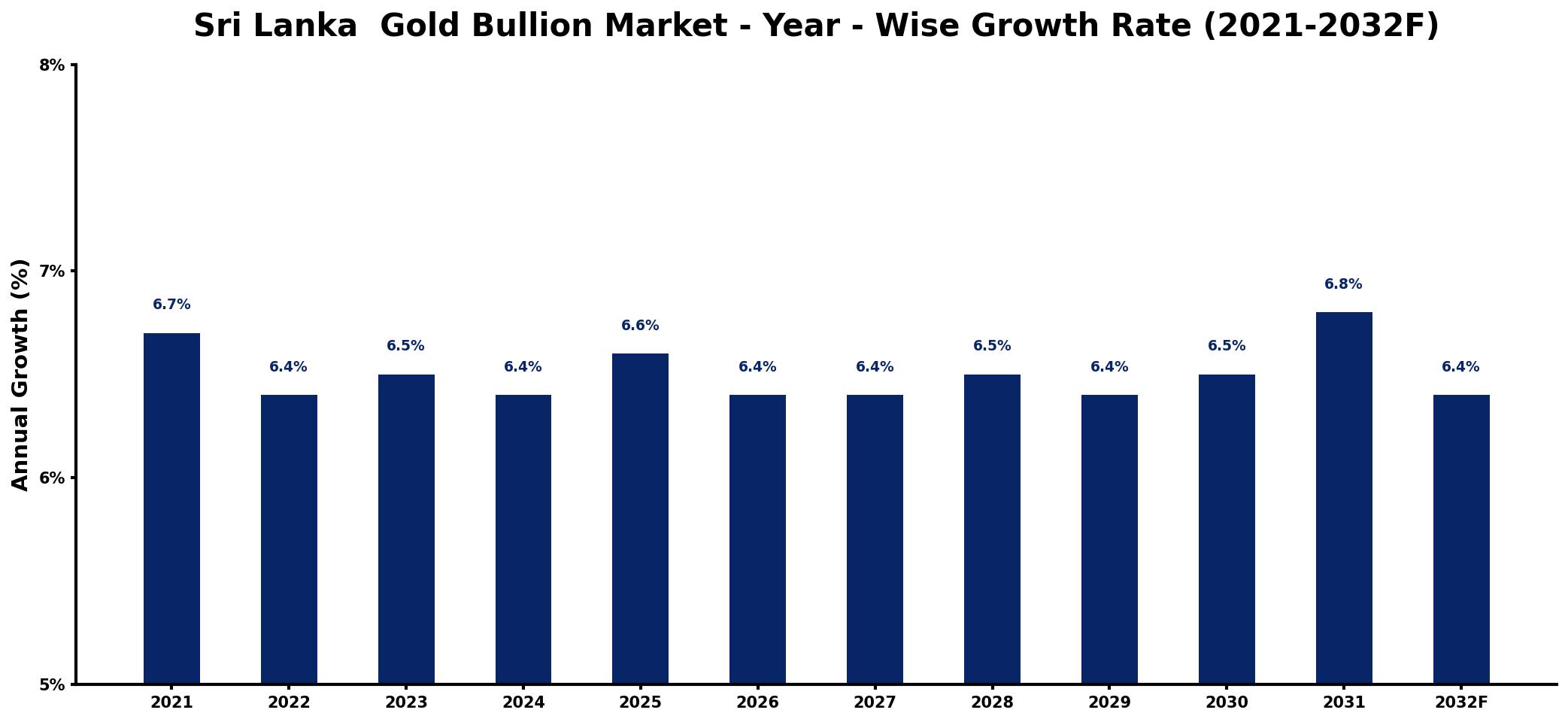
The table below presents the year‑wise growth rates along with the key drivers influencing the market
| Year | Growth Rate | Major Drivers |
| 2021 | 6.7% | Increased investment in precious metals |
| 2022 | 6.4% | Rising consumer demand for safety |
| 2023 | 6.5% | Growing interest in alternative assets |
| 2024 | 6.4% | Expansion of retail investment platforms |
| 2025 | 6.6% | Higher industrial usage for electronics |
| 2026 | 6.4% | Boost in tourism-related purchases |
| 2027 | 6.4% | Surge in online trading activities |
| 2028 | 6.5% | Increased market participation from millennials |
| 2029 | 6.4% | Growth in international trade opportunities |
| 2030 | 6.5% | Rising demand from jewelry sector |
| 2031 | 6.8% | rising infrastructure development spending |
| 2032 | 6.4% | Increased awareness of wealth preservation |
Note: Market size estimations and growth projections presented in this report are based on 6Wresearch's proprietary forecasting methodology, utilizing the latest available industry data, government publications, and primary research inputs.
Sri Lanka Gold Bullion Market Synopsis
In Sri Lanka, the gold bullion market stands out as a vital component of the economy, deeply intertwined with cultural traditions and investment practices. The local populace perceives gold not only as a symbol of wealth but also as a safeguard against economic fluctuations, making it an attractive asset for both individual and institutional investors.
Gold bullion primarily circulates in the form of jewelry and investment bars, with seasonal spikes in demand often aligning with weddings and religious events. The Central Bank of Sri Lanka oversees the regulatory landscape of gold trading, ensuring a stable environment for transactions while fostering growth within this cherished market.
Sri Lanka Gold Bullion Market Key Takeaways
- The market is driven by a blend of cultural significance and rising investment interest, especially during economic instability.
- Digital platforms for gold investments are gaining traction, making ownership more accessible to a broader audience.
- Regulatory frameworks are continually evolving to enhance market transparency and combat illicit activities.
- Geopolitical factors and global price fluctuations are influencing both short-term trading strategies and long-term investment approaches.
- Growing awareness of gold as a hedge against inflation is reshaping consumer perceptions and driving market dynamics.
Evaluation of Restraints in Sri Lanka Gold Bullion Market
While the Sri Lanka Gold Bullion Market shows promising growth potential, several restraints hinder its full realization. Fluctuating global gold prices continue to challenge local traders, creating uncertainty for both buyers and sellers. Additionally, the prevalence of counterfeit products undermines consumer confidence, while regulatory constraints may limit some investment avenues. Furthermore, limited public understanding of gold investments impacts participation in this vital market. For sustainable growth, these issues must be addressed through robust regulatory frameworks and consumer education initiatives that enhance market trust.
Sri Lanka Gold Bullion Market Trends
Current trends within the Sri Lanka Gold Bullion Market indicate a marked shift towards the investment in physical gold as a safe-haven asset. Amidst growing global economic uncertainties, there's a palpable urgency among investors to hedge against inflation through gold. Moreover, innovative digital gold platforms are emerging, allowing smaller-scale investments and catering to a younger, tech-savvy demographic. This evolution signifies a broader acceptance of gold as a versatile investment vehicle, with many now exploring opportunities for short-term trading amidst ongoing price volatility.
Sri Lanka Gold Bullion Market Opportunities
The landscape of the Sri Lanka Gold Bullion Market is rich with opportunities for investors aiming to diversify portfolios. The prospect of purchasing physical gold bullion bars and coins from authorized dealers remains a solid investment strategy. Additionally, gold exchange-traded funds (ETFs) available on the Colombo Stock Exchange present a convenient alternative for gaining exposure without the complications of physical storage. Investors may also consider the burgeoning sector of gold mining stocks, which can offer capital appreciation driven by operational success within the industry. As the market continues to evolve, these avenues hold significant potential for lucrative returns.
Government Initiatives in the Sri Lanka Gold Bullion Market
The Sri Lankan government has enacted various policies aimed at stabilizing and promoting the Gold Bullion Market. Import duties on gold are employed strategically to regulate the influx of gold and encourage local consumption. Licensing requirements for gold dealers have been established to enhance transparency in transactions, while measures to combat illegal gold smuggling and money laundering help maintain the integrity of the market. Collectively, these initiatives reflect a commitment to fostering a secure and robust gold trading environment that benefits consumers and legitimate businesses alike.
Future Insights of the Sri Lanka Gold Bullion Market
Looking ahead to 2026-2032, the Sri Lanka Gold Bullion Market is poised for continued growth, underpinned by increasing demand for gold as a safe-haven asset. Factors such as persistent inflationary pressures and heightened geopolitical tensions will likely sustain interest in gold investments. The government's ongoing efforts to promote gold trading through regulatory reform and public education initiatives are expected to amplify market activities. However, stakeholders must remain vigilant, as shifting consumer preferences and global economic dynamics could influence market trajectories. Overall, the outlook remains optimistic for those engaged in the gold sector.
Sri Lanka Gold Bullion Market Latest Developments (2025 - 2026)
Recent developments in the Sri Lanka Gold Bullion Market indicate a heightened focus on digital investment platforms, reflecting a broader trend towards technology integration in traditional markets. The regulatory environment is also adapting, with new measures being proposed to combat counterfeit gold while enhancing transaction transparency. Initiatives promoting gold awareness and investment are gaining momentum, further driving interest and participation across diverse demographic segments. These developments underline a shift towards a more modernized and accessible gold trading environment.
Sri Lanka Gold Bullion Market - Key Attractiveness of the Report
- 10 Years of Market Numbers
- Historical Data Starting from 2022 to 2025
- Base Year: 2025
- Forecast Data until 2032
- Key Performance Indicators Impacting the Market
- Major Upcoming Developments and Projects
Key Highlights of the Report:
- Sri Lanka Gold Bullion Market Outlook
- Market Size of Sri Lanka Gold Bullion Market, 2025
- Forecast of Sri Lanka Gold Bullion Market, 2032
- Historical Data and Forecast of Sri Lanka Gold Bullion Revenues & Volume for the Period 2022-2032F
- Sri Lanka Gold Bullion Market Trend Evolution
- Sri Lanka Gold Bullion Market Drivers and Challenges
- Sri Lanka Gold Bullion Price Trends
- Sri Lanka Gold Bullion Porter's Five Forces
- Sri Lanka Gold Bullion Industry Life Cycle
- Historical Data and Forecast of Sri Lanka Gold Bullion Market Revenues & Volume By Type for the Period 2022-2032F
- Historical Data and Forecast of Sri Lanka Gold Bullion Market Revenues & Volume By Gold Bar for the Period 2022-2032F
- Historical Data and Forecast of Sri Lanka Gold Bullion Market Revenues & Volume By Gold Coin for the Period 2022-2032F
- Historical Data and Forecast of Sri Lanka Gold Bullion Market Revenues & Volume By Distribution Channel for the Period 2022-2032F
- Historical Data and Forecast of Sri Lanka Gold Bullion Market Revenues & Volume By Online for the Period 2022-2032F
- Historical Data and Forecast of Sri Lanka Gold Bullion Market Revenues & Volume By Offline for the Period 2022-2032F
- Sri Lanka Gold Bullion Import Export Trade Statistics
- Market Opportunity Assessment By Type
- Market Opportunity Assessment By Distribution Channel
- Sri Lanka Gold Bullion Top Companies Market Share
- Sri Lanka Gold Bullion Competitive Benchmarking By Technical and Operational Parameters
- Sri Lanka Gold Bullion Company Profiles
- Sri Lanka Gold Bullion Key Strategic Recommendations






































