Sri Lanka Golf Clubs Market Size, Share & Growth Rate
The Sri Lanka Golf Clubs Market was estimated at USD 282 Million in 2025 and is projected to reach USD 386 Million by 2032, growing at a CAGR of 4.6% from 2026 to 2032. This promising trajectory is primarily driven by the increasing disposable incomes of the local population and a burgeoning interest in golf as a leisurely pursuit. Additionally, the government's initiatives to promote golf tourism are expected to create a favorable environment for growth and investment in the sector.
Sri Lanka Golf Clubs Market Year-wise Growth Rate and Key Drivers
This graph highlights how the Sri Lanka Golf Clubs Market has steadily grown over the years, supported by major growth factors.
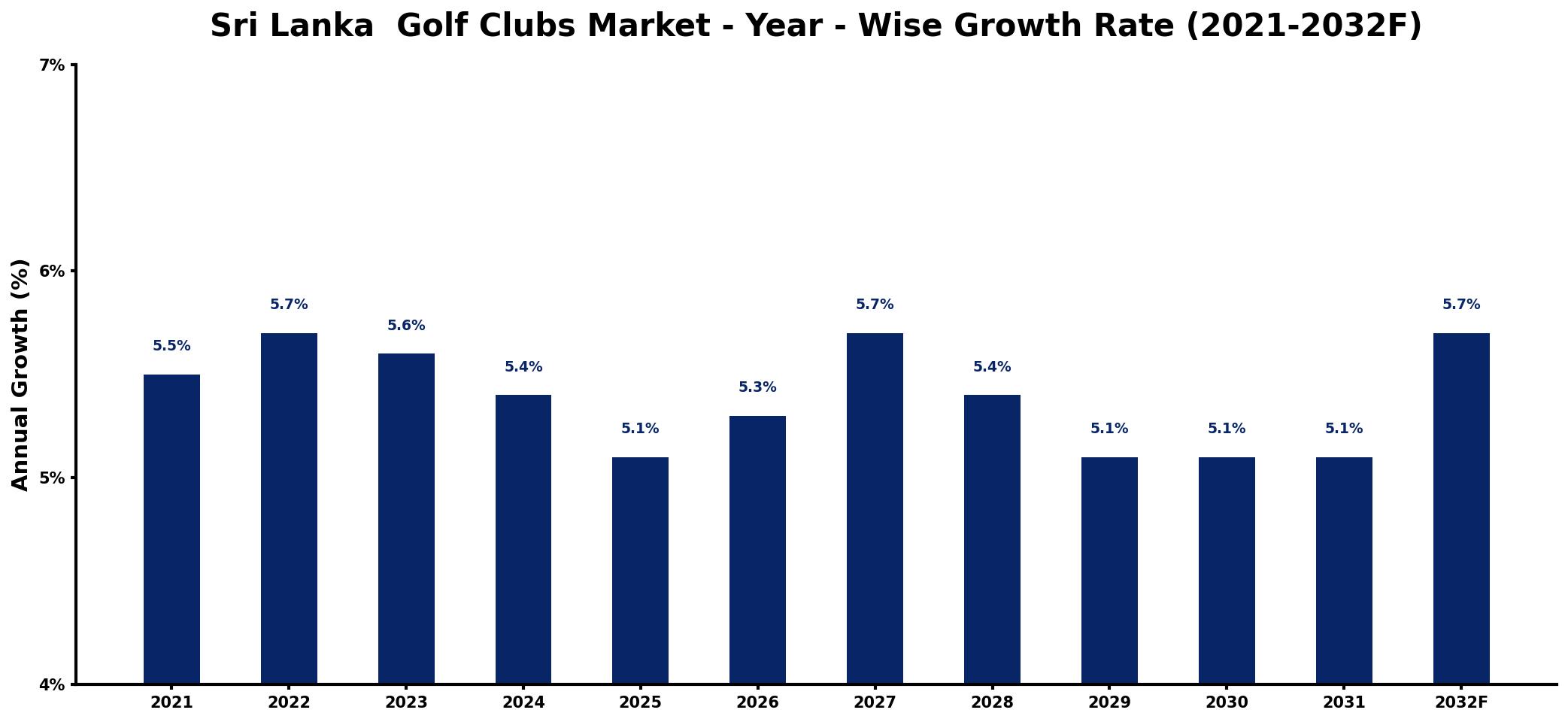
The table below presents the year‑wise growth rates along with the key drivers influencing the market
| Year | Growth Rate | Major Drivers |
| 2021 | 5.5% | Increased tourism and leisure activities |
| 2022 | 5.7% | Growing interest in sports tourism |
| 2023 | 5.6% | Expansion of luxury resorts offerings |
| 2024 | 5.4% | Rise in corporate events hosting |
| 2025 | 5.1% | Emergence of youth sports programs |
| 2026 | 5.3% | Investment in sports infrastructure |
| 2027 | 5.7% | Enhanced marketing strategies implemented |
| 2028 | 5.4% | Development of eco-friendly facilities |
| 2029 | 5.1% | Collaboration with international brands |
| 2030 | 5.1% | Increased participation in wellness retreats |
| 2031 | 5.1% | Growth in local community engagement |
| 2032 | 5.7% | Focus on sustainability initiatives |
Note: Market size estimations and growth projections presented in this report are based on 6Wresearch's proprietary forecasting methodology, utilizing the latest available industry data, government publications, and primary research inputs.
Sri Lanka Golf Clubs Market Synopsis
The most significant force currently shaping the Sri Lanka Golf Clubs Market is the rising popularity of golf as a recreational activity among both locals and tourists. As golf gains traction, consumers are seeking high-quality equipment and unique golfing experiences, prompting market players to innovate and diversify their offerings.
With several golf clubs enhancing their amenities, including premium dining options and luxurious facilities, the market is catering to a growing segment of affluent individuals. Coupled with the increasing emphasis on eco-friendly practices, these initiatives are driving a transformation in the Sri Lankan golfing landscape, setting the stage for sustained growth.
Sri Lanka Golf Clubs Market Key Takeaways
- The market is experiencing a notable shift towards luxury and diversity in golfing experiences.
- Strong growth is supported by increasing disposable incomes and a rise in golf tourism.
- Environmental sustainability initiatives are gaining prominence among golf clubs.
- Investment opportunities abound in course development and retail sectors.
- Collaboration with hospitality sectors enhances the appeal of golfing tourism.
Evaluation of Restraints in Sri Lanka Golf Clubs Market
Despite its growth potential, the Sri Lanka Golf Clubs Market is hindered by a few key restraints. Firstly, limited awareness of golf as a sport among the general population restricts the consumer base. The high costs associated with memberships and equipment purchases can deter potential players from participating. Furthermore, infrastructure challenges, such as the availability of high-quality golf courses, may inhibit the attraction and retention of enthusiasts. Addressing these limitations through targeted marketing and investment in better facilities is crucial for enhancing market viability.
Sri Lanka Golf Clubs Market Trends
Current trends in the Sri Lanka Golf Clubs Market indicate a significant pivot towards luxury offerings and diverse experiences to attract a wider audience. Golf clubs are investing in upscale amenities, such as fine dining and lavish clubhouses, to enhance the overall experience. Additionally, there is a growing demand for eco-friendly golfing practices, leading clubs to adopt sustainability initiatives. Collaboration with local hotels and tour operators to create comprehensive golfing packages is also a trend gaining momentum, appealing to international tourists seeking unique experiences.
Sri Lanka Golf Clubs Market Opportunities
Opportunities for investment in the Sri Lanka Golf Clubs Market are ripe for both domestic and international players. The development and management of new golf courses and resorts, capitalizing on the growing interest in golf tourism, are promising avenues. Additionally, the retail sector for golf equipment, both in physical stores and online platforms, holds potential for lucrative returns. Organizing golf tournaments and events can also serve as a platform to attract participants and generate partnerships, while offering coaching and training services presents another profitable avenue to engage with the expanding golfing community.
Government Initiatives in the Sri Lanka Golf Clubs Market
The Sri Lankan government has been proactive in promoting golf as a vehicle for tourism and sports development. Incentives, including tax breaks, have been introduced to attract foreign investment in the golf sector. Regulations also focus on ensuring environmental sustainability in golf course management. Moreover, the government is committed to enhancing the local talent pool in golf through collaborations with international organizations, thereby further bolstering the market's growth prospects.
Future Insights of the Sri Lanka Golf Clubs Market
The outlook for the Sri Lanka Golf Clubs Market is optimistic, driven by a combination of increasing interest in golf, rising disposable incomes, and a strategic focus on tourism. As more people seek leisure activities that promote health and wellness, golf is set to enjoy heightened demand. Moreover, continued governmental support for sports and tourism will likely pave the way for infrastructure enhancements and innovative golfing experiences. All of these elements are expected to synergistically contribute to the market's growth trajectory through 2032.
Sri Lanka Golf Clubs Market Latest Developments (2025 - 2026)
Recent developments in the Sri Lanka Golf Clubs Market have highlighted a surge in clubs enhancing their facilities to meet rising consumer expectations. Many are integrating state-of-the-art technology to improve golfing experiences, including virtual simulations and advanced training tools. Furthermore, initiatives focused on promoting golf events and tournaments have been observed, aimed at both local and international audiences, enhancing the appeal of Sri Lanka as a golfing destination.
Sri Lanka Golf Clubs Market - Key Attractiveness of the Report
- 10 Years of Market Numbers
- Historical Data Starting from 2022 to 2025
- Base Year: 2025
- Forecast Data until 2032
- Key Performance Indicators Impacting the Market
- Major Upcoming Developments and Projects
Key Highlights of the Report:
- Sri Lanka Golf Clubs Market Outlook
- Market Size of Sri Lanka Golf Clubs Market, 2025
- Forecast of Sri Lanka Golf Clubs Market, 2032
- Historical Data and Forecast of Sri Lanka Golf Clubs Revenues & Volume for the Period 2022-2032F
- Sri Lanka Golf Clubs Market Trend Evolution
- Sri Lanka Golf Clubs Market Drivers and Challenges
- Sri Lanka Golf Clubs Price Trends
- Sri Lanka Golf Clubs Porter's Five Forces
- Sri Lanka Golf Clubs Industry Life Cycle
- Historical Data and Forecast of Sri Lanka Golf Clubs Market Revenues & Volume By Product Type for the Period 2022-2032F
- Historical Data and Forecast of Sri Lanka Golf Clubs Market Revenues & Volume By Woods for the Period 2022-2032F
- Historical Data and Forecast of Sri Lanka Golf Clubs Market Revenues & Volume By Iron for the Period 2022-2032F
- Historical Data and Forecast of Sri Lanka Golf Clubs Market Revenues & Volume By Wedges for the Period 2022-2032F
- Historical Data and Forecast of Sri Lanka Golf Clubs Market Revenues & Volume By Putters for the Period 2022-2032F
- Sri Lanka Golf Clubs Import Export Trade Statistics
- Market Opportunity Assessment By Product Type
- Sri Lanka Golf Clubs Top Companies Market Share
- Sri Lanka Golf Clubs Competitive Benchmarking By Technical and Operational Parameters
- Sri Lanka Golf Clubs Company Profiles
- Sri Lanka Golf Clubs Key Strategic Recommendations






































