Sri Lanka Handicrafts Market Size Growth Rate
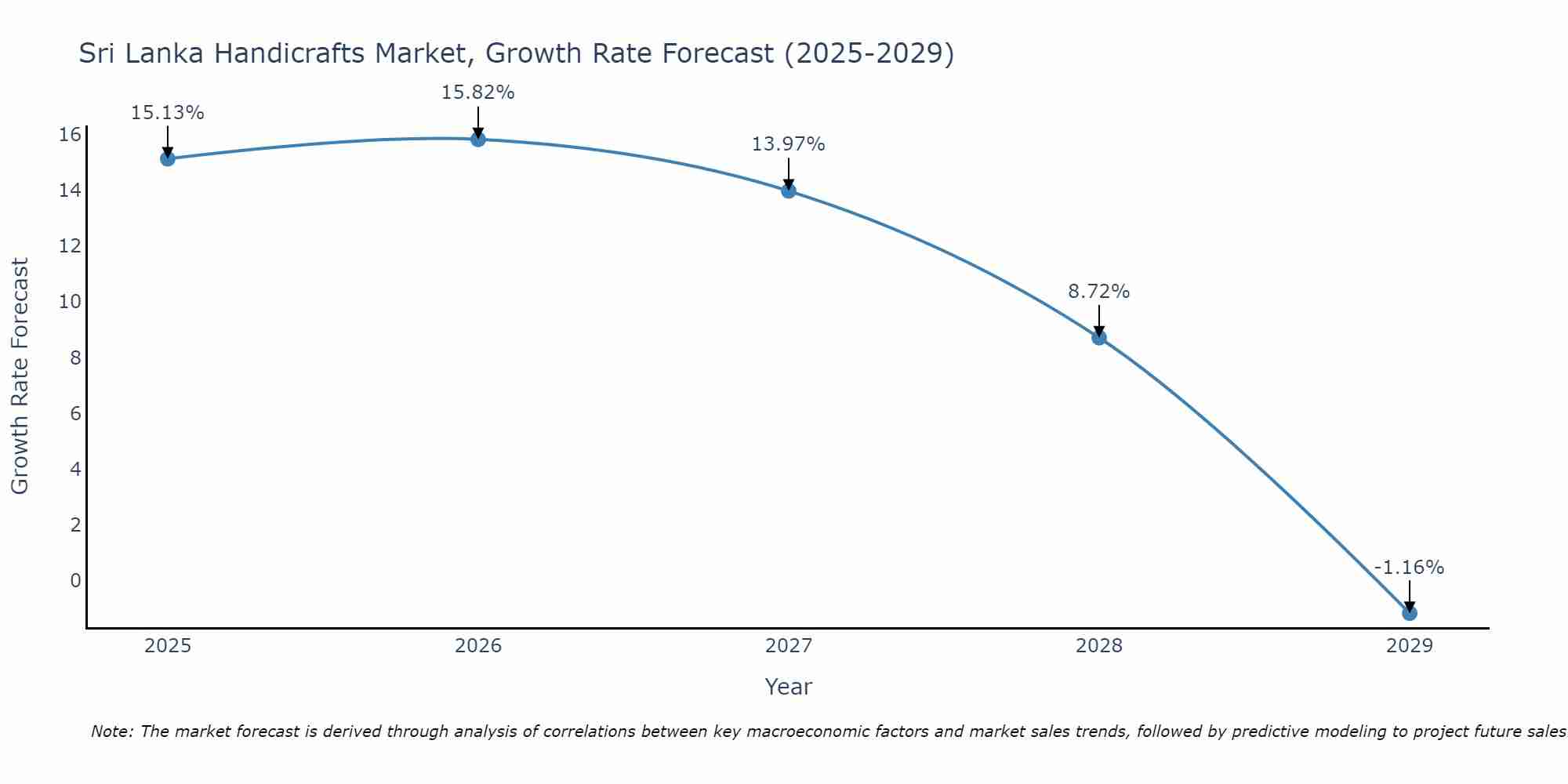
The Sri Lanka Handicrafts Market is projected to witness mixed growth rate patterns during 2025 to 2029. The growth rate begins at 15.13% in 2025, climbs to a high of 15.82% in 2026, and moderates to -1.16% by 2029.
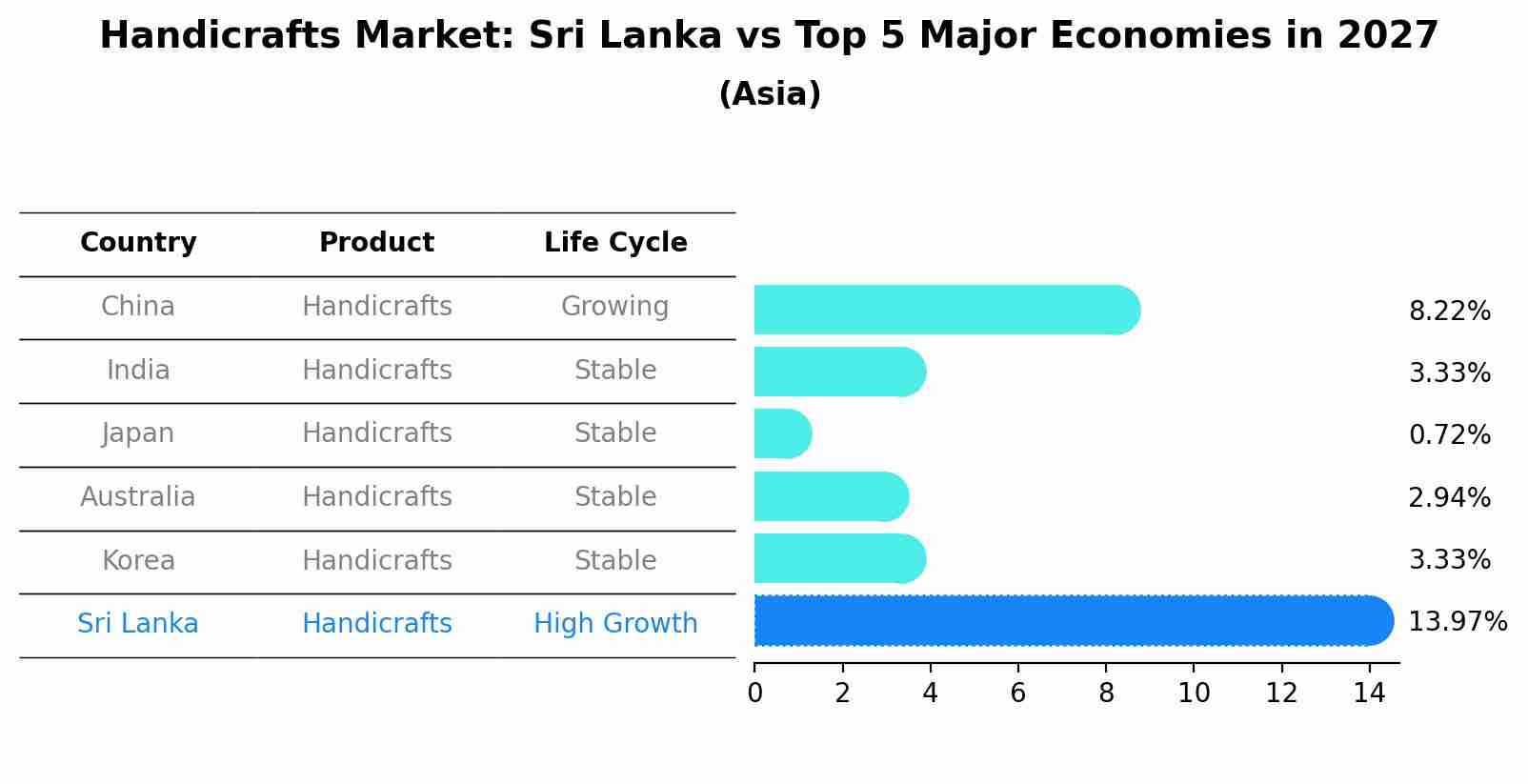
Handicrafts Market: Sri Lanka vs Top 5 Major Economies in 2027 (Asia)
The Handicrafts market in Sri Lanka is projected to grow at a high growth rate of 13.97% by 2027, highlighting the country's increasing focus on advanced technologies within the Asia region, where China holds the dominant position, followed closely by India, Japan, Australia and South Korea, shaping overall regional demand.
Sri Lanka Handicrafts Market Growth Rate
According to 6Wresearch internal database and industry insights, the Sri Lanka Handicrafts Market is projected to grow at a compound annual growth rate (CAGR) of 6.5% during the forecast period (2026-2032).
Topics Covered in the Sri Lanka Handicrafts Market Report
The Sri Lanka Handicrafts Market report thoroughly covers the market by product type, distribution channel and end-users. The market report provides an unbiased and detailed analysis of ongoing market trends, opportunities/high growth areas, and market drivers, which help stakeholders devise and align their market strategies according to the current and future market dynamics.
| Report Name | Sri Lanka Handicrafts Market |
| Forecast Period | 2026–2032 |
| CAGR | 6.5% |
| Growing Sector | Online Stores |
Sri Lanka Handicrafts Market Synopsis
Sri Lanka Handicrafts Market is anticipated to record notable growth due to its cultural heritage linked with traditional crafts and also due to the growing demand for traditional decorative items domestically as well as globally. The handicraft sector of Sri Lanka comprises wood carvings, batik fabrics, metallic crafts, and handmade jewelry, which are in demand by tourists and also for export purposes. Further, the growing popularity of digital platforms has helped artisans expand their customer base beyond traditional store outlets. The government schemes introduced to sustain traditional craftsmanship and support rural artisans are also helping the handicrafts sector of Sri Lanka grow further.
Evaluation of Growth Drivers in the Sri Lanka Handicrafts Market
Below mentioned are some prominent drivers and their influence on the market dynamics:
| Drivers | Primary Segments Affected | Why it Matters (Evidence) |
| Expansion of Cultural Tourism | Woodware; Sculptures | Tourists frequently purchase traditional handicrafts as souvenirs and decorative items. |
| Growth of Online Retail Platforms | Hand printed Textiles and Scarves; Online Stores | Digital platforms allow artisans to reach global customers and increase product visibility. |
| Government Support for Artisan Communities | Art metal Ware; Zari Goods | Craft development programs provide training and financial assistance to artisans. |
| Rising Global Demand for Handmade Products | Imitation Jewellery; Embroidered Goods | Consumers increasingly prefer authentic handmade and sustainable decorative items. |
| Growth of Interior Decoration Market | Woodware; Residential | Handmade décor products are widely used in home decoration and interior design. |
Sri Lanka Handicrafts Market is expected to grow at the CAGR of 6.5% during the forecast period of 2026-2032. The main factors contributing to growth are globally rising demand for genuine handmade products and the continuous growth of cultural tourism throughout the country. The world has recognized the beauty and uniqueness of local crafts in Sri Lanka and thus international buyers are coming to the island to fill their homes with such beautiful decorative and artistic items. On top of that, the government initiatives for the development of artisan communities and promotion of exports of craft products have created a very supportive environment for the industry.
Evaluation of Restraints in the Sri Lanka Handicrafts Market
Below mentioned are some major restraints and their influence on the market dynamics:
| Restraints | Primary Segments Affected | What This Means (Evidence) |
| Limited Access to Modern Tools | Woodware; Sculptures | Traditional artisans are mostly dependent on manual tools, which limits their production capacity. |
| High Competition from Machine-Made Products | Hand Printed Textiles; Imitation Jewellery | Mass-produced decorative goods lower the demand for handcrafted alternatives. |
| Limited Global Marketing Capabilities | Zari Goods; Online Stores | Small-scale craftsmen cannot efficiently locate and sell their products to international buyers. |
| Raw Material Cost Fluctuations | Art Metal Ware; Woodware | Changes in prices of wood and metals affect production costs. |
| Skill Shortage Among Younger Generations | All Types | Decreasing interest of young people in traditional crafts threatens the survival of these crafts. |
Sri Lanka Handicrafts Industry Challenges
Despite strong cultural value and international recognition, the Sri Lanka Handicrafts Industry faces several challenges that influence its growth potential. Many artisans operate small-scale workshops and rely on traditional production methods, which often limits their capacity to meet growing demand. In addition, competition from low-cost machine-made decorative products in international markets creates pricing pressure for handmade crafts. Limited access to advanced marketing channels and export networks also restricts the ability of rural artisans to reach global consumers. Moreover, the diminishing enthusiasm of the young generation to learn traditional crafts is a major long, term concern for the sustainability of the industry.
Sri Lanka Handicrafts Market Trends
Key trends evaluating the landscape of the Sri Lanka Handicrafts Market Growth are:
- Growth of Online Craft Marketplaces: Digital platforms and online stores alongside physical stores are instead becoming the major sales channels for handicraft products. Artisans are now able to showcase their products to international audiences through e-commerce platforms and social media.
- Rising Demand for Sustainable Handmade Products: Worldwide consumers have been displaying an ever, increasing preference for eco, friendly and handmade decorative goods. Sri Lanka handicrafts made from natural materials such as wood and fabric are now getting attention in sustainable product markets.
- Integration of Contemporary Designs: Modern design elements are increasingly being incorporated into traditional handicraft products. This combination of tradition and contemporary aesthetics is helping attract younger consumers and global buyers.
- Expansion of Craft-Based Tourism: Cultural tourism activities are helping to attract visitors to artisan villages and handicraft workshops. This will help to increase sales for artisans, in addition to promoting handicrafts in Sri Lanka.
- Growth of Export-Oriented Craft Businesses: Some handicraft manufacturers are targeting the export market, including Europe and the USA. This will help to increase the revenue earned by artisans, in addition to increasing international recognition of Sri Lanka handicrafts.
Investment Opportunities in the Sri Lanka Handicrafts Market
Some prominent investment opportunities in the Sri Lanka Handicrafts Market include:
- Artisan Training and Skill Development Centers: Establishing training centers to impart skill development training to artisans will help to preserve traditional crafts, in addition to introducing modern design techniques to artisans.
- Handicraft Export Businesses: Developing dedicated digital platforms to market handicrafts will allow artisans to reach international markets, in addition to providing marketing support to artisans.
- Sustainable Craft Manufacturing: Producing handicrafts using environmentally friendly materials presents strong market potential. Eco-conscious consumers worldwide increasingly prefer sustainable decorative products.
Top 5 Leading Players in the Sri Lanka Handicrafts Market
Some leading players operating in the Sri Lanka Handicrafts Market include:
1. DSL (Pvt) Ltd.
| Company Name | DSL (Pvt) Ltd. |
|---|---|
| Established Year | 1980 |
| Headquarters | Colombo, Sri Lanka |
| Official Website | - |
DSL (Pvt) Ltd. is a prominent company involved in the production and export of Sri Lanka handicrafts to international markets. The company works closely with local artisans to manufacture a wide range of traditional craft products, including decorative items, handmade souvenirs, and gift articles. Through its export-oriented operations and strong distribution networks, DSL (Pvt) Ltd. plays an important role in promoting Sri Lanka handicrafts globally.
2. Maximus (Pvt) Ltd.
| Company Name | Maximus (Pvt) Ltd. |
|---|---|
| Established Year | 2004 |
| Headquarters | Colombo, Sri Lanka |
| Official Website | - |
Maximus (Pvt) Ltd. is well known for producing eco-friendly handmade paper and sustainable craft products in Sri Lanka. The company specializes in manufacturing recycled paper-based items such as notebooks, stationery, gift packaging, and decorative products. With a strong focus on sustainability and environmental responsibility, Maximus has positioned itself as a key supplier of eco-friendly handicrafts to both domestic and export markets.
3. Laksala (Sri Lanka Handicrafts Board)
| Company Name | Laksala (Sri Lanka Handicrafts Board) |
|---|---|
| Established Year | 1964 |
| Headquarters | Colombo, Sri Lanka |
| Official Website | Click Here |
Laksala, operated by the Sri Lanka Handicrafts Board, is the only state-owned gift and souvenir retail network in Sri Lanka dedicated to promoting locally made handicrafts. The organization supports thousands of local artisans by providing them with a platform to market their products through Laksala retail outlets across the country. Its product range includes traditional wood carvings, batik textiles, masks, pottery, and handloom items, making it a key institution in preserving Sri Lanka’s cultural heritage.
4. Ariyapala & Sons
| Company Name | Ariyapala & Sons |
|---|---|
| Established Year | 1920 |
| Headquarters | Ambalangoda, Sri Lanka |
| Official Website | - |
Ariyapala & Sons is one of the most renowned traditional handicraft producers in Sri Lanka, particularly famous for its handcrafted wooden masks. Located in Ambalangoda, the company has preserved the centuries-old Sri Lanka mask-making tradition, producing ceremonial, decorative, and cultural masks. The brand is recognized internationally and attracts tourists and collectors interested in authentic Sri Lanka craftsmanship.
5. National Crafts Council (NCC) / National Design Center (NDC)
| Company Name | National Crafts Council (NCC) / National Design Center (NDC) |
|---|---|
| Established Year | 1982 |
| Headquarters | Colombo, Sri Lanka |
| Official Website | Click Here |
The National Crafts Council (NCC) and the National Design Center (NDC) are government institutions responsible for the development and promotion of Sri Lanka’s handicrafts sector. These organizations provide training, design development, and technical support to artisans across the country. By promoting innovation, preserving traditional craftsmanship, and facilitating market access, NCC and NDC play a vital role in strengthening the handicrafts industry and improving the livelihoods of local artisans.
Government Regulations Introduced in the Sri Lanka Handicrafts Market
According to Sri Lanka’s Government Data, several measures have been taken to encourage the handicrafts industry. By way of example, the Sri Lanka Handicrafts Board is an organisation that provides training and financial assistance to rural artisans. Additionally, export promotion measures by the government motivate handicraft manufacturers to take their products to the world through trade fairs and other export facilitation measures. Likewise, the Ministry of Industries is backing craft villages and artisan development programs for rural economy development. These initiatives are going to improve product quality, increase export potential and thus, be able to ensure the continuity of traditional handicrafts in Sri Lanka for the long term.
Future Insights of the Sri Lanka Handicrafts Market
Sri Lanka Handicrafts Market is expected to witness consistent growth as global consumers increasingly value handmade products that reflect cultural heritage and sustainability. The expansion of digital commerce platforms will enable artisans to access international markets more efficiently while promoting authentic Sri Lanka crafts worldwide. Continued government support for artisan development programs and export promotion initiatives is expected to strengthen industry capabilities. Moreover, handicraft manufacturers have the opportunity to incorporate new design trends with traditional handicraft products to appeal to the younger generation and thus, broaden the market. With growing cultural tourism and increasing demand for handcrafted décor products, the handicrafts industry is likely to maintain steady growth during the forecast period.
Market Segmentation Analysis
The report offers a comprehensive study of the subsequent market segments and their leading categories.
Woodware to Dominate the Market – By Product Type
According to Mohit, Senior Research Analyst, 6Wresearch, the Woodware category holds the largest market segment in the Sri Lanka Handicrafts Market Share due to its long-standing cultural significance and widespread use in decorative and functional products. Sri Lanka woodcraft includes intricately carved sculptures, masks, furniture, and home décor items that attract both local buyers and international tourists. In addition, the availability of locally sourced timber and skilled artisans has enabled consistent production of wood-based handicrafts. As demand for authentic handcrafted décor continues to increase globally, woodware products are expected to maintain their dominant position within the Sri Lanka handicrafts market.
Key Attractiveness of the Report
- 10 Years of Market Numbers.
- Historical Data Starting from 2022 to 2025.
- Base Year: 2025.
- Forecast Data until 2032.
- Key Performance Indicators Impacting the Market.
- Major Upcoming Developments and Projects.
Key Highlights of the Report:
- Sri Lanka Handicrafts Market Outlook
- Market Size of Sri Lanka Handicrafts Market, 2025
- Forecast of Sri Lanka Handicrafts Market, 2032
- Historical Data and Forecast of Sri Lanka Handicrafts Revenues & Volume for the Period 2022-2032
- Sri Lanka Handicrafts Market Trend Evolution
- Sri Lanka Handicrafts Market Drivers and Challenges
- Sri Lanka Handicrafts Price Trends
- Sri Lanka Handicrafts Porter's Five Forces
- Sri Lanka Handicrafts Industry Life Cycle
- Historical Data and Forecast of Sri Lanka Handicrafts Market Revenues & Volume By Product Type for the Period 2022-2032
- Historical Data and Forecast of Sri Lanka Handicrafts Market Revenues & Volume By Woodware for the Period 2022-2032
- Historical Data and Forecast of Sri Lanka Handicrafts Market Revenues & Volume By Art metal Ware for the Period 2022-2032
- Historical Data and Forecast of Sri Lanka Handicrafts Market Revenues & Volume By Hand printed Textiles and Scarves for the Period 2022-2032
- Historical Data and Forecast of Sri Lanka Handicrafts Market Revenues & Volume By Embroidered and Crocheted Goods for the Period 2022-2032
- Historical Data and Forecast of Sri Lanka Handicrafts Market Revenues & Volume By Zari and Zari Goods for the Period 2022-2032
- Historical Data and Forecast of Sri Lanka Handicrafts Market Revenues & Volume By Imitation Jewellery for the Period 2022-2032
- Historical Data and Forecast of Sri Lanka Handicrafts Market Revenues & Volume By Sculptures for the Period 2022-2032
- Historical Data and Forecast of Sri Lanka Woodware Handicrafts Market Revenues & Volume By Others for the Period 2022-2032
- Historical Data and Forecast of Sri Lanka Handicrafts Market Revenues & Volume By Distribution Channel for the Period 2022-2032
- Historical Data and Forecast of Sri Lanka Handicrafts Market Revenues & Volume By Mass Retailers for the Period 2022-2032
- Historical Data and Forecast of Sri Lanka Handicrafts Market Revenues & Volume By Departmental Stores for the Period 2022-2032
- Historical Data and Forecast of Sri Lanka Handicrafts Market Revenues & Volume By Independent Retailers for the Period 2022-2032
- Historical Data and Forecast of Sri Lanka Handicrafts Market Revenues & Volume By Specialty Stores for the Period 2022-2032
- Historical Data and Forecast of Sri Lanka Handicrafts Market Revenues & Volume By Online Stores for the Period 2022-2032
- Historical Data and Forecast of Sri Lanka Handicrafts Market Revenues & Volume By Others for the Period 2022-2032
- Historical Data and Forecast of Sri Lanka Handicrafts Market Revenues & Volume By End-users for the Period 2022-2032
- Historical Data and Forecast of Sri Lanka Handicrafts Market Revenues & Volume By Residential for the Period 2022-2032
- Historical Data and Forecast of Sri Lanka Handicrafts Market Revenues & Volume By Commercial for the Period 2022-2032
- Sri Lanka Handicrafts Import Export Trade Statistics
- Market Opportunity Assessment By Product Type
- Market Opportunity Assessment By Distribution Channel
- Market Opportunity Assessment By End-users
- Sri Lanka Handicrafts Top Companies Market Share
- Sri Lanka Handicrafts Competitive Benchmarking By Technical and Operational Parameters
- Sri Lanka Handicrafts Company Profiles
- Sri Lanka Handicrafts Key Strategic Recommendations
Market Covered
The report offers a comprehensive study of the subsequent market segments:
By Product Type
- Woodware
- Art metal Ware
- Hand printed Textiles and Scarves
- Embroidered and Crocheted Goods
- Zari and Zari Goods
- Imitation Jewellery
- Sculptures
- Others
By Distribution Channel
- Mass Retailers
- Departmental Stores
- Independent Retailers
- Specialty Stores
- Online Stores
- Others
By End-users
- Residential
- Commercial






































