Sri Lanka IoT Connectivity Market Size & Growth Rate (2026-2032)
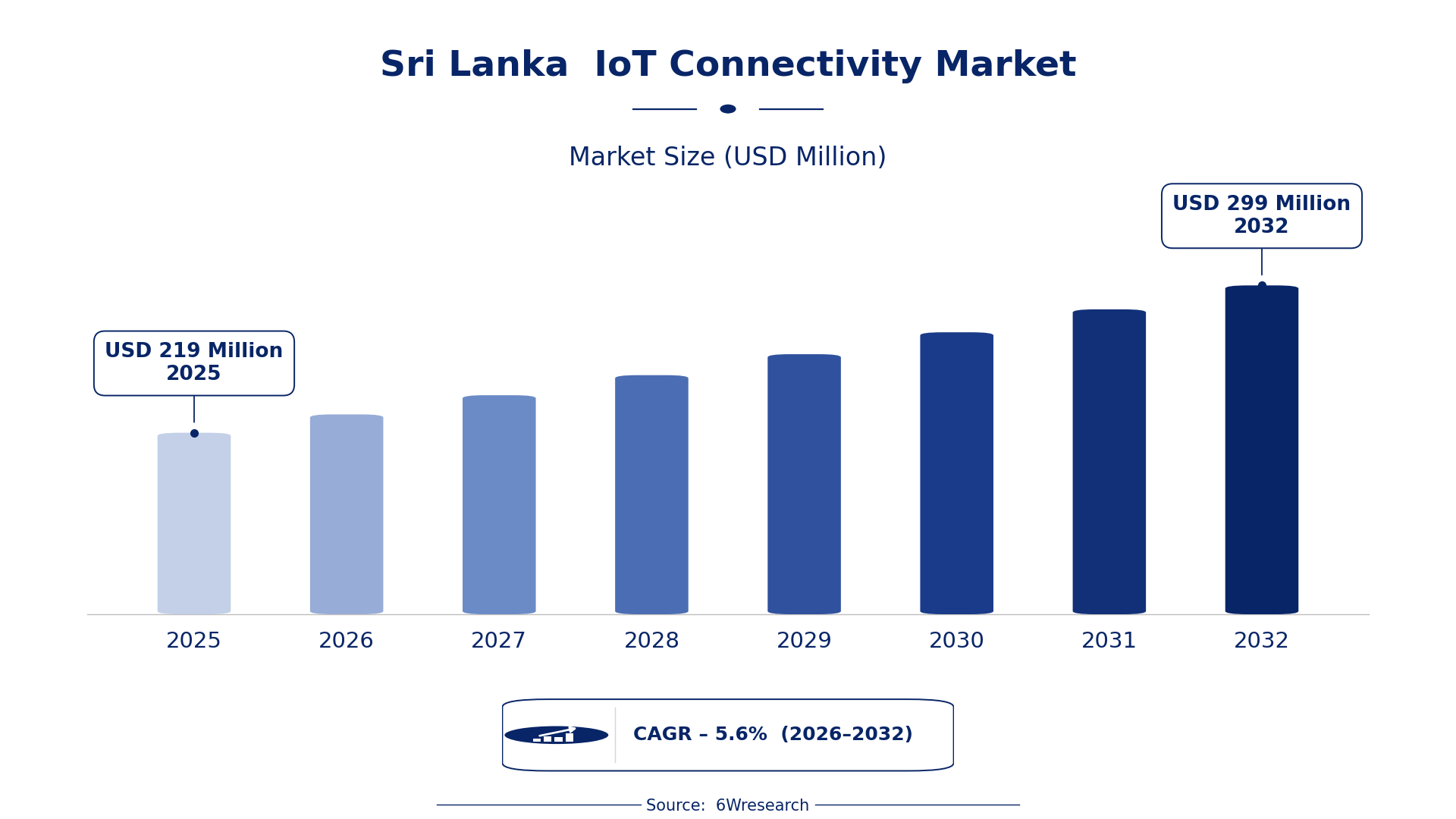
The Sri Lanka IoT Connectivity Market was estimated at USD 219 Million in 2025 and is projected to reach USD 299 Million by 2032, growing at a CAGR of 5.6% from 2026 to 2032.
Sri Lanka IoT Connectivity Market Synopsis
In Sri Lanka, the rapid advancement of wireless technologies such as 4G LTE and the upcoming 5G networks is driving the IoT connectivity market. Telecom providers are actively expanding their offerings to cater to a diverse range of industries, from smart cities to industrial automation.
As demand for reliable high-speed connectivity solutions surges, the IoT market is becoming increasingly vital across various sectors including agriculture, transportation, and urban development. This growth is indicative of a broader trend towards digital transformation in the country.
Sri Lanka IoT Connectivity Market Year-wise Growth Rate and Key Drivers
This graph illustrates the annual growth rates of the Sri Lanka IoT Connectivity Market from 2021 to 2032, highlighting a steady upward trajectory and projected expansion over the forecast period.
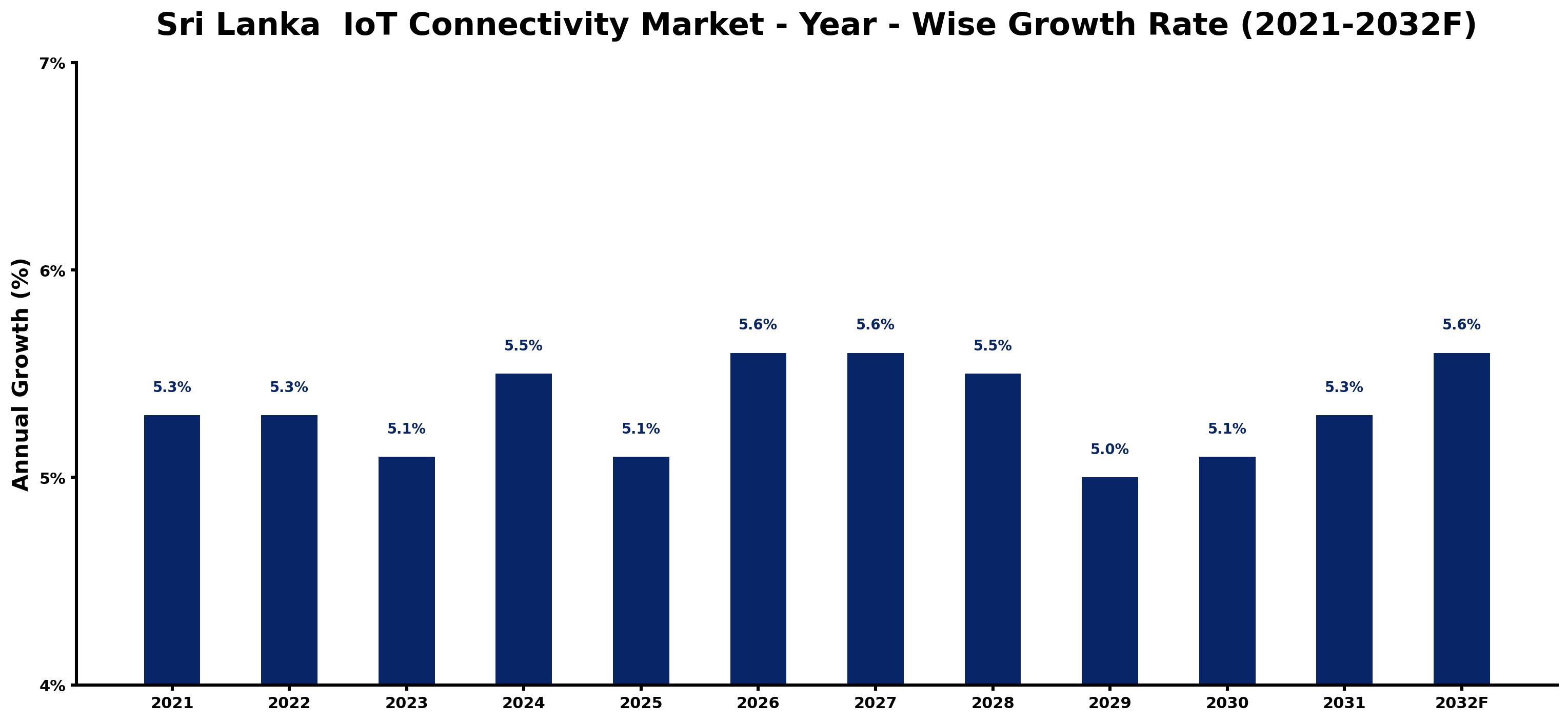
The table below presents the year‑wise growth rates along with the key drivers influencing the market
| Year | Growth Rate | Major Drivers |
| 2021 | 5.3% | Government's Smart Sri Lanka initiative promotes IoT adoption. |
| 2022 | 5.3% | Increased mobile subscriber penetration boosts IoT connectivity demand. |
| 2023 | 5.1% | Emergence of local IoT startups accelerates market innovations. |
| 2024 | 5.5% | Increased investment in smart agriculture technologies enhances growth. |
| 2025 | 5.1% | Rising interest in healthcare monitoring systems supports IoT expansion. |
| 2026 | 5.6% | Collaborations between telecom operators and tech firms bolster services. |
| 2027 | 5.6% | Adoption of smart city projects fuels IoT infrastructure needs. |
| 2028 | 5.5% | Government incentives for digital transformation boost IoT investments. |
| 2029 | 5.0% | Corporate focus on operational efficiency drives IoT deployments. |
| 2030 | 5.1% | Public awareness of IoT benefits increases consumer adoption rates. |
| 2031 | 5.3% | Regulatory support for data protection strengthens IoT market trust. |
| 2032 | 5.6% | Rise of smart logistics solutions enhances connectivity requirements. |
Note: Market size estimations and growth projections presented in this report are based on 6Wresearch's proprietary forecasting methodology, utilizing the latest available industry data, government publications, and primary research inputs.
Sri Lanka IoT Connectivity Market Key Takeaways
Below are some of the specific key takeaways from the market, including:
- The Sri Lanka IoT connectivity market is being shaped by the expansion of 4G and emerging 5G networks.
- Challenges such as limited rural connectivity still hinder market growth.
- Government initiatives are focused on improving broadband access and infrastructure.
- Key sectors driving demand include agriculture, transportation, and smart city projects.
- Continuous technological advancements are expected to enhance connectivity solutions further.
Evaluation of Restraints in Sri Lanka IoT Connectivity Market
The Sri Lanka IoT connectivity market faces several limitations that restrain its growth. One of the primary issues is the lack of reliable network infrastructure, especially in rural regions. Service quality can be inconsistent, which poses significant barriers for industries like agriculture and utilities that require expansive geographical coverage. on top of that, the pace of infrastructure development has not always kept up with the rapid growth in demand for IoT applications. This disconnect can deter potential investments in IoT solutions.
Sri Lanka IoT Connectivity Market Trends
Several key trends are influencing the Sri Lanka IoT connectivity market. The shift towards smart city initiatives is gaining momentum, with local governments prioritizing digital infrastructure to enhance urban living. Additionally, industrial automation is becoming more prominent as businesses look to improve efficiency through IoT solutions.
On the consumer side, there is increasing adoption of smart home devices, contributing to a rise in demand for robust connectivity solutions. The convergence of IoT with emerging technologies like AI and big data analytics is also reshaping how businesses approach their operations.
Sri Lanka IoT Connectivity Market Opportunities
Opportunities for growth in the Sri Lanka IoT connectivity market are emerging across various sectors. The agricultural sector, for instance, stands to benefit from IoT applications that enhance productivity and resource management. Investments in smart transportation solutions can also drive efficiency in urban mobility.
on top of that, the ongoing expansion of broadband infrastructure presents a chance for telecom providers to diversify their IoT offerings. Collaborations between public and private sectors could unlock additional funding and technological resources, paving the way for innovative solutions.
Government Initiatives in the Sri Lanka IoT Connectivity Market
Government policies in Sri Lanka are shaping the IoT connectivity market by emphasizing the need for improved network infrastructure and increased broadband access. Recent initiatives aim to enhance coverage, particularly in rural areas, making affordable IoT solutions more accessible. These regulatory measures are crucial for fostering a conducive environment for diverse IoT applications across various sectors.
- A national broadband access initiative launched in 2024 aims to improve internet connectivity in underserved regions.
- Ongoing partnerships with telecom providers are designed to enhance rural connectivity through targeted infrastructure upgrades.
- A regulatory framework introduced in 2025 focuses on streamlining spectrum allocation for IoT applications.
- Plans for a smart city development program are set to be unveiled in late 2026, promoting advanced IoT integrations in urban planning.
- Current discussions are underway to establish a public-private partnership expected to further enhance telecom infrastructure access by 2028.
Future Insights of the Sri Lanka IoT Connectivity Market
Looking ahead to 2026-2032, the Sri Lanka IoT connectivity market is positioned for steady growth. The expansion of 5G networks will likely catalyze innovations and new applications across multiple sectors, significantly enhancing connectivity quality. Enhanced government support and investment in digital infrastructure will further bolster market confidence.
As the demand for IoT solutions continues to rise, businesses that adapt to the changing technological environment will find ample opportunities for success. The interplay between IoT, AI, and big data will also redefine operational efficiencies, creating a robust ecosystem for various industries.
Sri Lanka IoT Connectivity Market Latest Developments
In the past 12-14 months, the Sri Lanka IoT connectivity market has seen a flurry of activity, reflecting its growth potential. Telecom providers are actively rolling out new services and enhancing existing infrastructure to meet increasing demands for connectivity. This surge in activity indicates a clear recognition of the market's importance in the digital economy.
- A major technology vendor initiated a nationwide pilot project in early 2025 focused on deploying smart sensors in urban environments.
- In Q3 2025, a leading regional operator announced the launch of an IoT platform aimed at small and medium enterprises to facilitate smart applications.
- Ongoing upgrades to network infrastructure have been reported by several telecom providers, with enhancements expected to be completed by mid-2026.
- A planned rollout of a 5G network is anticipated to begin in the second half of 2026, promising to revolutionize connectivity capabilities.
- Recent partnerships between technology firms and local governments are underway, aimed at developing smart city frameworks by late 2025.
Sri Lanka IoT Connectivity Market - Key Attractiveness of the Report
- 10 Years of Market Numbers
- Historical Data Starting from 2022 to 2025
- Base Year: 2025
- Forecast Data until 2032
- Key Performance Indicators Impacting the Market
- Major Upcoming Developments and Projects
Key Highlights of the Report:
- Sri Lanka IoT Connectivity Market Outlook
- Market Size of Sri Lanka IoT Connectivity Market, 2025
- Forecast of Sri Lanka IoT Connectivity Market, 2032
- Historical Data and Forecast of Sri Lanka IoT Connectivity Revenues & Volume for the Period 2022-2032F
- Sri Lanka IoT Connectivity Market Trend Evolution
- Sri Lanka IoT Connectivity Market Drivers and Challenges
- Sri Lanka IoT Connectivity Price Trends
- Sri Lanka IoT Connectivity Porter's Five Forces
- Sri Lanka IoT Connectivity Industry Life Cycle
- Historical Data and Forecast of Sri Lanka IoT Connectivity Market Revenues & Volume By Component for the Period 2022-2032F
- Historical Data and Forecast of Sri Lanka IoT Connectivity Market Revenues & Volume By Platform for the Period 2022-2032F
- Historical Data and Forecast of Sri Lanka IoT Connectivity Market Revenues & Volume By Services for the Period 2022-2032F
- Historical Data and Forecast of Sri Lanka IoT Connectivity Market Revenues & Volume By Application Areas for the Period 2022-2032F
- Historical Data and Forecast of Sri Lanka IoT Connectivity Market Revenues & Volume By Building & Home Automation for the Period 2022-2032F
- Historical Data and Forecast of Sri Lanka IoT Connectivity Market Revenues & Volume By Smart Energy & Utility for the Period 2022-2032F
- Historical Data and Forecast of Sri Lanka IoT Connectivity Market Revenues & Volume By Smart Manufacturing for the Period 2022-2032F
- Historical Data and Forecast of Sri Lanka IoT Connectivity Market Revenues & Volume By Connected Health for the Period 2022-2032F
- Historical Data and Forecast of Sri Lanka IoT Connectivity Market Revenues & Volume By Smart Retail for the Period 2022-2032F
- Historical Data and Forecast of Sri Lanka IoT Connectivity Market Revenues & Volume By Smart Transportation for the Period 2022-2032F
- Historical Data and Forecast of Sri Lanka IoT Connectivity Market Revenues & Volume By Others (Education and Agriculture) for the Period 2022-2032F
- Historical Data and Forecast of Sri Lanka IoT Connectivity Market Revenues & Volume By Organization Size for the Period 2022-2032F
- Historical Data and Forecast of Sri Lanka IoT Connectivity Market Revenues & Volume By Large Enterprises for the Period 2022-2032F
- Historical Data and Forecast of Sri Lanka IoT Connectivity Market Revenues & Volume By SMEs for the Period 2022-2032F
- Sri Lanka IoT Connectivity Import Export Trade Statistics
- Market Opportunity Assessment By Component
- Market Opportunity Assessment By Application Areas
- Market Opportunity Assessment By Organization Size
- Sri Lanka IoT Connectivity Top Companies Market Share
- Sri Lanka IoT Connectivity Competitive Benchmarking By Technical and Operational Parameters
- Sri Lanka IoT Connectivity Company Profiles
- Sri Lanka IoT Connectivity Key Strategic Recommendations






































