Sri Lanka Knife Market Size Growth Rate
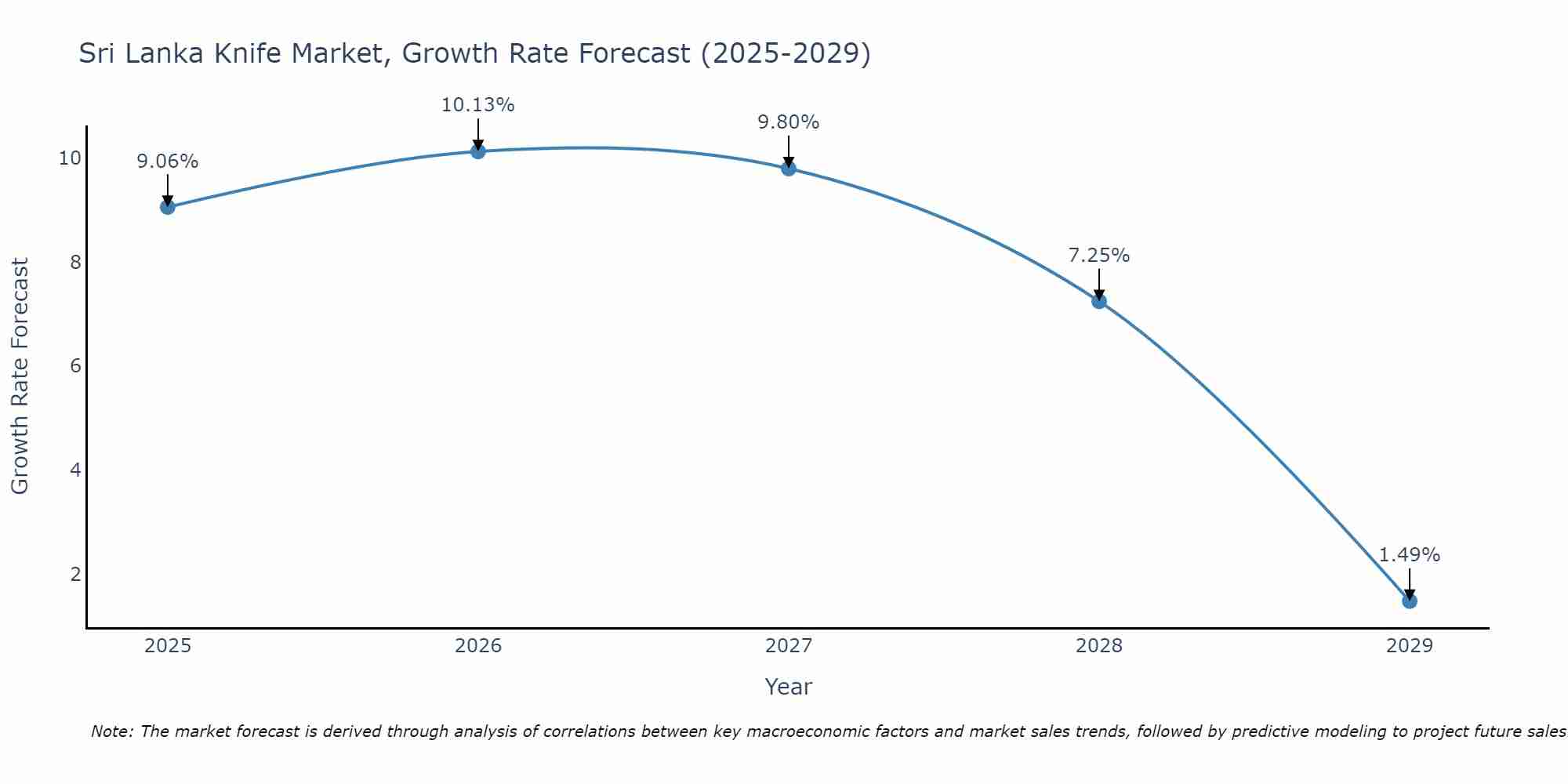
The Sri Lanka Knife Market is projected to witness mixed growth rate patterns during 2025 to 2029. Growth accelerates to 10.13% in 2026, following an initial rate of 9.06%, before easing to 1.49% at the end of the period.
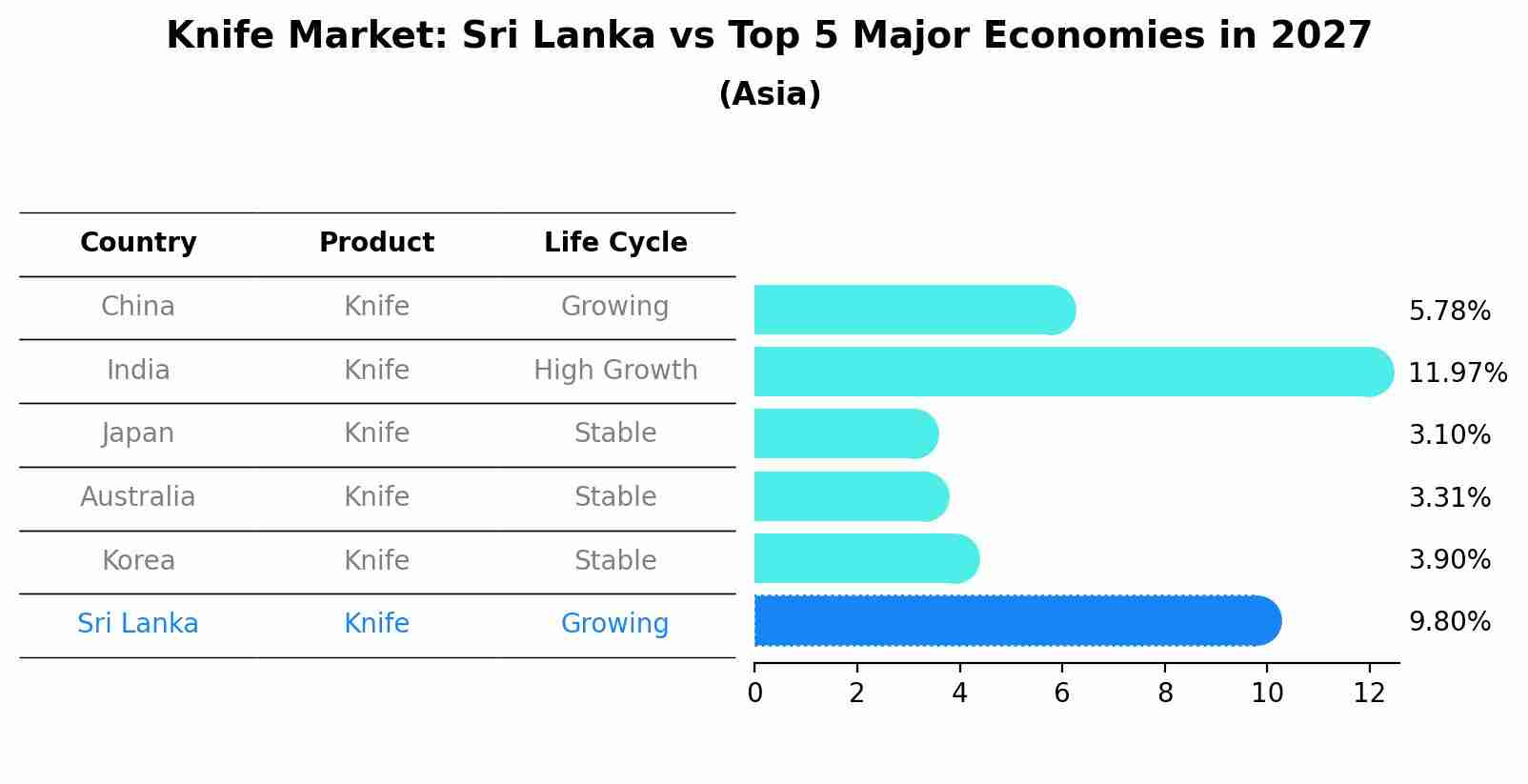
Knife Market: Sri Lanka vs Top 5 Major Economies in 2027 (Asia)
The Knife market in Sri Lanka is projected to grow at a growing growth rate of 9.80% by 2027, highlighting the country's increasing focus on advanced technologies within the Asia region, where China holds the dominant position, followed closely by India, Japan, Australia and South Korea, shaping overall regional demand.
Sri Lanka Knife Market Overview
The Sri Lanka Knife Market is characterized by a diverse range of products catering to various consumer needs. Traditional knives such as kiridashi and kukri knives are popular among locals for everyday use and cultural practices. Additionally, modern kitchen knives and utility knives are gaining traction among urban consumers seeking high-quality, durable options. The market is witnessing a growing trend towards stainless steel and carbon steel knives due to their durability and sharpness. Key players in the market include local manufacturers as well as international brands offering a wide selection of knives at different price points. The market is driven by factors such as increasing disposable income, changing consumer preferences, and a growing culinary culture, presenting opportunities for both local and foreign knife manufacturers to expand their presence in Sri Lanka.
Sri Lanka Knife Market Trends
The Sri Lanka Knife Market is currently experiencing a shift towards high-quality, durable knives with ergonomic designs and versatile functionality. Consumers are increasingly seeking knives made from premium materials such as stainless steel or high carbon steel, known for their sharpness and long-lasting edge retention. There is also a growing demand for multi-purpose knives that can handle various kitchen tasks effectively. Additionally, eco-friendly and sustainable knife options, such as those made from recycled materials or with environmentally conscious production processes, are gaining popularity among environmentally conscious consumers. Brands that offer innovative designs, superior performance, and a commitment to sustainability are likely to succeed in the evolving Sri Lanka Knife Market.
Sri Lanka Knife Market Challenges
In the Sri Lanka knife market, challenges primarily revolve around competition from cheap, low-quality imports flooding the market, which can undermine the demand for locally made, higher-quality knives. Additionally, fluctuating raw material prices, especially for steel, can impact production costs for knife manufacturers. Strict regulations on knife sales and ownership also pose challenges, requiring manufacturers and retailers to navigate complex licensing and registration processes. Furthermore, changing consumer preferences and the rise of alternative kitchen tools and gadgets could potentially shift demand away from traditional knives. Overall, the Sri Lanka knife market faces challenges related to competition, cost management, regulatory compliance, and evolving consumer trends.
Sri Lanka Knife Market Investment Opportunities
The Sri Lanka Knife Market presents promising investment opportunities due to its growing demand driven by various sectors such as hospitality, culinary arts, and outdoor activities. Investors can explore opportunities in manufacturing high-quality knives to cater to the domestic market as well as for export purposes. Additionally, there is potential in introducing innovative and specialized knives targeting niche markets such as professional chefs, outdoor enthusiasts, or collectors. Collaborating with local artisans to produce handcrafted knives using traditional techniques can also be a unique selling point. With the rising trend of cooking shows and culinary tourism in Sri Lanka, investing in the knife market can be a lucrative venture with the right product positioning and marketing strategies in place.
Sri Lanka Knife Market Government Policy
The Sri Lankan government has implemented strict regulations on the sale and possession of knives in order to address public safety concerns. The possession of certain types of knives, such as switchblades and butterfly knives, is prohibited without a valid permit. Additionally, the government has imposed age restrictions on the purchase of knives to prevent minors from accessing them. Retailers are required to maintain records of knife sales and report any suspicious purchases to the authorities. These policies aim to reduce the incidence of knife-related crimes and promote responsible ownership of knives in Sri Lanka. It is important for businesses operating in the knife market to comply with these regulations to avoid legal repercussions and contribute to the overall safety of the community.
Sri Lanka Knife Market Future Outlook
The Sri Lanka knife market is expected to see moderate growth in the coming years, driven by factors such as increasing consumer demand for high-quality kitchen tools, rising disposable income levels, and a growing culinary culture in the country. With a focus on innovation and product differentiation, manufacturers are likely to introduce more advanced and specialized knives to cater to the evolving needs of consumers. Additionally, the market is expected to benefit from the rising trend of home cooking and gourmet food preparation, leading to a higher demand for premium knives. However, challenges such as price competition and the availability of cheaper imported knives may impact the market dynamics. Overall, the Sri Lanka knife market is poised for steady growth with a shift towards more sophisticated and durable knife options.
Key Highlights of the Report:
- Sri Lanka Knife Market Outlook
- Market Size of Sri Lanka Knife Market, 2021
- Forecast of Sri Lanka Knife Market, 2027
- Historical Data and Forecast of Sri Lanka Knife Revenues & Volume for the Period 2018 - 2027
- Sri Lanka Knife Market Trend Evolution
- Sri Lanka Knife Market Drivers and Challenges
- Sri Lanka Knife Price Trends
- Sri Lanka Knife Porter's Five Forces
- Sri Lanka Knife Industry Life Cycle
- Historical Data and Forecast of Sri Lanka Knife Market Revenues & Volume By Product Type for the Period 2018 - 2027
- Historical Data and Forecast of Sri Lanka Knife Market Revenues & Volume By Stainless Steel for the Period 2018 - 2027
- Historical Data and Forecast of Sri Lanka Knife Market Revenues & Volume By Carbon Steel for the Period 2018 - 2027
- Historical Data and Forecast of Sri Lanka Knife Market Revenues & Volume By Alloy Steel for the Period 2018 - 2027
- Historical Data and Forecast of Sri Lanka Knife Market Revenues & Volume By Other Materials for the Period 2018 - 2027
- Historical Data and Forecast of Sri Lanka Knife Market Revenues & Volume By End-Users for the Period 2018 - 2027
- Historical Data and Forecast of Sri Lanka Knife Market Revenues & Volume By Utensils& Kitchen Tools for the Period 2018 - 2027
- Historical Data and Forecast of Sri Lanka Knife Market Revenues & Volume By Weapons& Defence for the Period 2018 - 2027
- Historical Data and Forecast of Sri Lanka Knife Market Revenues & Volume By Others for the Period 2018 - 2027
- Sri Lanka Knife Import Export Trade Statistics
- Market Opportunity Assessment By Product Type
- Market Opportunity Assessment By End-Users
- Sri Lanka Knife Top Companies Market Share
- Sri Lanka Knife Competitive Benchmarking By Technical and Operational Parameters
- Sri Lanka Knife Company Profiles
- Sri Lanka Knife Key Strategic Recommendations






































