Sri Lanka Medicinal Herbs Market: Import Trend Analysis
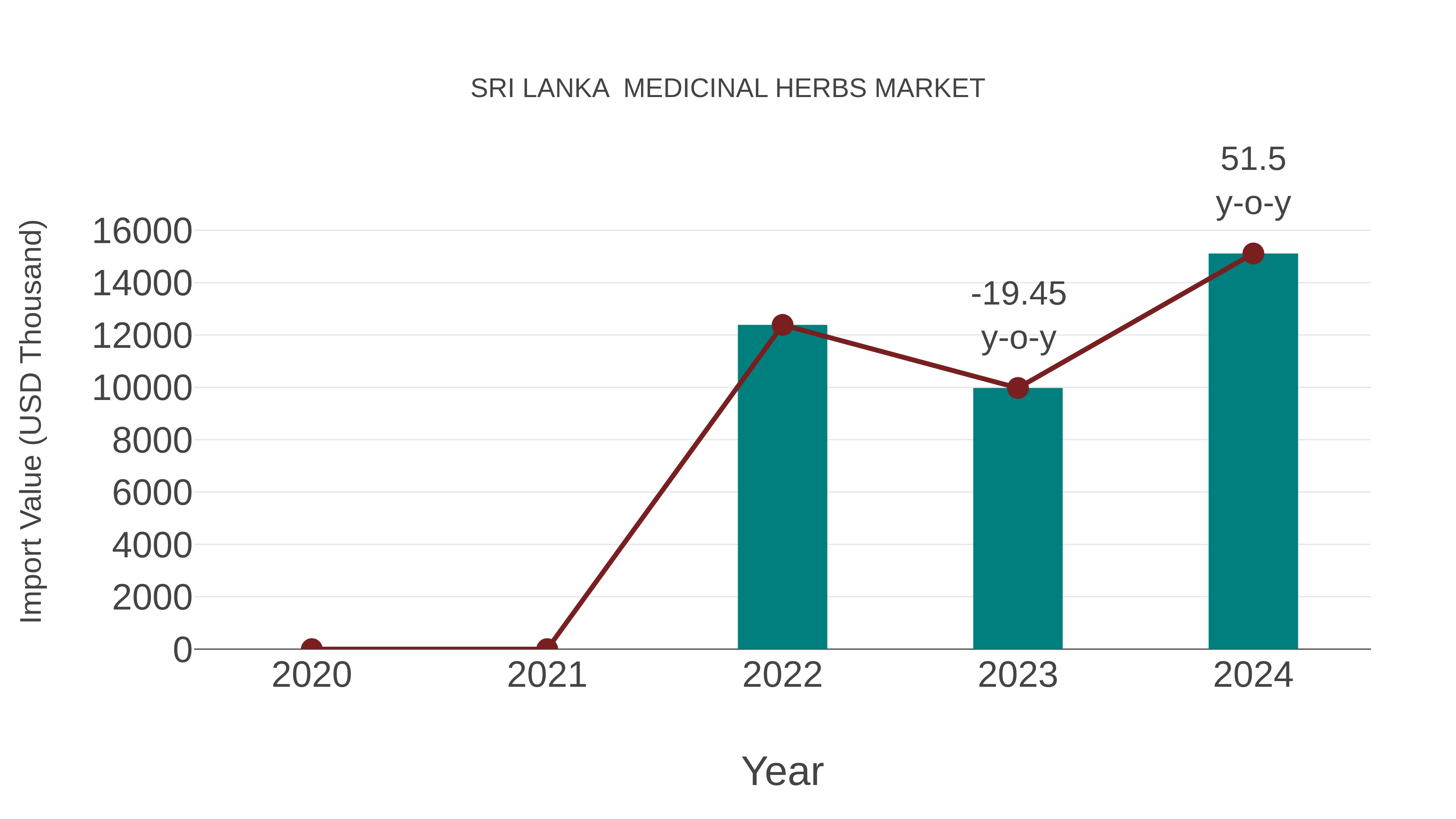
Sri Lanka import trend for the medicinal herbs market showed significant growth, with a 51.5% increase from 2023 to 2024. The compound annual growth rate (CAGR) for 2020-2024 stood at 10.47%. This growth can be attributed to the rising consumer awareness of the health benefits of medicinal herbs.
Sri Lanka Medicinal Herbs Market Overview
The medicinal herbs market in Sri Lanka is experiencing significant growth due to the rising popularity of natural and traditional forms of medicine. Consumers are increasingly turning to medicinal herbs for their various health benefits and minimal side effects compared to synthetic pharmaceuticals. The rich biodiversity of Sri Lanka provides a wide variety of indigenous herbs with potent healing properties, attracting both domestic and international interest. Key players in the market are focusing on sustainable sourcing practices and organic cultivation methods to meet the growing demand for high-quality medicinal herbs. With increasing awareness about the importance of holistic health and wellness, the Sri Lankan medicinal herbs market is poised for further expansion in the coming years.
Sri Lanka Medicinal Herbs Market Trends
In Sri Lanka, the Medicinal Herbs Market is experiencing a growing demand for traditional herbal remedies and natural healthcare products due to increasing awareness about the benefits of using herbal medicines. Consumers are seeking alternative treatments that are perceived as safer and more sustainable than conventional medicines. There is a rising interest in Ayurvedic herbs and products, as well as an increased focus on organic and locally sourced herbs. The market is also witnessing a surge in research and development activities to explore the therapeutic properties of indigenous herbs for various health conditions. With the government promoting traditional medicine systems and the wellness tourism industry booming in Sri Lanka, the Medicinal Herbs Market is poised for further growth and innovation.
Sri Lanka Medicinal Herbs Market Challenges
The Sri Lanka Medicinal Herbs Market faces several challenges, including issues related to quality control and standardization of products, limited research and development activities, lack of awareness among consumers about the benefits of medicinal herbs, and inadequate infrastructure for cultivation and processing. Additionally, there are regulatory challenges in terms of obtaining proper certifications and approvals for herbal products, as well as the presence of counterfeit products in the market. The industry also struggles with sustainability issues, such as over-harvesting of wild herbs and environmental degradation. Addressing these challenges will require collaboration between government bodies, industry stakeholders, and research institutions to promote sustainable practices, improve product quality, and educate consumers about the value of medicinal herbs.
Sri Lanka Medicinal Herbs Market Investment Opportunities
In Sri Lanka, the Medicinal Herbs Market presents promising investment opportunities due to the country`s rich biodiversity and traditional knowledge of herbal medicine. Investors can explore opportunities in cultivating and processing medicinal herbs for domestic consumption and export. The growing global trend towards natural and organic products further enhances the market potential. Additionally, investing in research and development to identify new medicinal properties of local herbs can lead to innovative products with high market demand. Collaborating with local farmers and communities to promote sustainable harvesting practices can also create a socially responsible investment opportunity in the Sri Lankan Medicinal Herbs Market. Overall, the market offers a unique chance for investors to capitalize on the growing demand for natural healthcare products while supporting local communities and preserving traditional knowledge.
Sri Lanka Medicinal Herbs Market Government Policy
The Sri Lankan government has implemented various policies to support and regulate the Medicinal Herbs Market in the country. These policies include setting quality standards for herbal products, promoting sustainable cultivation practices, providing financial incentives for farmers, and encouraging research and development in the sector. Additionally, the government has established regulatory bodies such as the Department of Ayurveda and the Department of Indigenous Medicine to oversee the industry and ensure compliance with relevant laws and regulations. These policies aim to enhance the competitiveness of Sri Lanka`s Medicinal Herbs Market, promote the export of herbal products, and safeguard the health of consumers by ensuring the safety and efficacy of medicinal herbs.
Sri Lanka Medicinal Herbs Market Future Outlook
The future outlook for the Sri Lanka Medicinal Herbs Market appears promising as the growing global trend towards natural and herbal remedies continues to drive demand. Factors such as increasing awareness about the health benefits of traditional medicinal herbs, rising interest in alternative medicine practices, and a growing emphasis on wellness and preventive healthcare are expected to fuel market growth. Additionally, the Sri Lankan government`s initiatives to promote the cultivation and export of medicinal herbs, coupled with advancements in technology for cultivation and processing, are likely to further boost the market. With a rich history of indigenous medicinal plants and a reputation for high-quality herbs, Sri Lanka is well-positioned to capitalize on the increasing demand for natural remedies, making the medicinal herbs market a lucrative opportunity for growth and investment.
Key Highlights of the Report:
- Sri Lanka Medicinal Herbs Market Outlook
- Market Size of Sri Lanka Medicinal Herbs Market, 2025
- Forecast of Sri Lanka Medicinal Herbs Market, 2032
- Historical Data and Forecast of Sri Lanka Medicinal Herbs Revenues & Volume for the Period 2022 - 2032F
- Sri Lanka Medicinal Herbs Market Trend Evolution
- Sri Lanka Medicinal Herbs Market Drivers and Challenges
- Sri Lanka Medicinal Herbs Price Trends
- Sri Lanka Medicinal Herbs Porter's Five Forces
- Sri Lanka Medicinal Herbs Industry Life Cycle
- Historical Data and Forecast of Sri Lanka Medicinal Herbs Market Revenues & Volume By Type for the Period 2022 - 2032F
- Historical Data and Forecast of Sri Lanka Medicinal Herbs Market Revenues & Volume By Horsetail for the Period 2022 - 2032F
- Historical Data and Forecast of Sri Lanka Medicinal Herbs Market Revenues & Volume By Dandelion for the Period 2022 - 2032F
- Historical Data and Forecast of Sri Lanka Medicinal Herbs Market Revenues & Volume By Echinacea for the Period 2022 - 2032F
- Historical Data and Forecast of Sri Lanka Medicinal Herbs Market Revenues & Volume By Valerian for the Period 2022 - 2032F
- Historical Data and Forecast of Sri Lanka Medicinal Herbs Market Revenues & Volume By St. John??s Wort for the Period 2022 - 2032F
- Historical Data and Forecast of Sri Lanka Medicinal Herbs Market Revenues & Volume By Lemon Balm for the Period 2022 - 2032F
- Historical Data and Forecast of Sri Lanka Medicinal Herbs Market Revenues & Volume By Yarrow for the Period 2022 - 2032F
- Historical Data and Forecast of Sri Lanka Horsetail Medicinal Herbs Market Revenues & Volume By Calendula for the Period 2022 - 2032F
- Historical Data and Forecast of Sri Lanka Medicinal Herbs Market Revenues & Volume By Nature for the Period 2022 - 2032F
- Historical Data and Forecast of Sri Lanka Medicinal Herbs Market Revenues & Volume By Organic for the Period 2022 - 2032F
- Historical Data and Forecast of Sri Lanka Medicinal Herbs Market Revenues & Volume By Conventional for the Period 2022 - 2032F
- Historical Data and Forecast of Sri Lanka Medicinal Herbs Market Revenues & Volume By Form for the Period 2022 - 2032F
- Historical Data and Forecast of Sri Lanka Medicinal Herbs Market Revenues & Volume By Whole for the Period 2022 - 2032F
- Historical Data and Forecast of Sri Lanka Medicinal Herbs Market Revenues & Volume By Powder for the Period 2022 - 2032F
- Historical Data and Forecast of Sri Lanka Medicinal Herbs Market Revenues & Volume By Liquid for the Period 2022 - 2032F
- Historical Data and Forecast of Sri Lanka Medicinal Herbs Market Revenues & Volume By End-Use for the Period 2022 - 2032F
- Historical Data and Forecast of Sri Lanka Medicinal Herbs Market Revenues & Volume By Medicinal Tea for the Period 2022 - 2032F
- Historical Data and Forecast of Sri Lanka Medicinal Herbs Market Revenues & Volume By Health Supplement for the Period 2022 - 2032F
- Historical Data and Forecast of Sri Lanka Medicinal Herbs Market Revenues & Volume By Nutritive Jams for the Period 2022 - 2032F
- Historical Data and Forecast of Sri Lanka Medicinal Herbs Market Revenues & Volume By Herbal Medicines for the Period 2022 - 2032F
- Historical Data and Forecast of Sri Lanka Medicinal Herbs Market Revenues & Volume By Cosmeceuticals for the Period 2022 - 2032F
- Historical Data and Forecast of Sri Lanka Medicinal Herbs Market Revenues & Volume By Other Uses for the Period 2022 - 2032F
- Sri Lanka Medicinal Herbs Import Export Trade Statistics
- Market Opportunity Assessment By Type
- Market Opportunity Assessment By Nature
- Market Opportunity Assessment By Form
- Market Opportunity Assessment By End-Use
- Sri Lanka Medicinal Herbs Top Companies Market Share
- Sri Lanka Medicinal Herbs Competitive Benchmarking By Technical and Operational Parameters
- Sri Lanka Medicinal Herbs Company Profiles
- Sri Lanka Medicinal Herbs Key Strategic Recommendations






































