Sri Lanka Organic Fertilizers Market: Import Trend Analysis
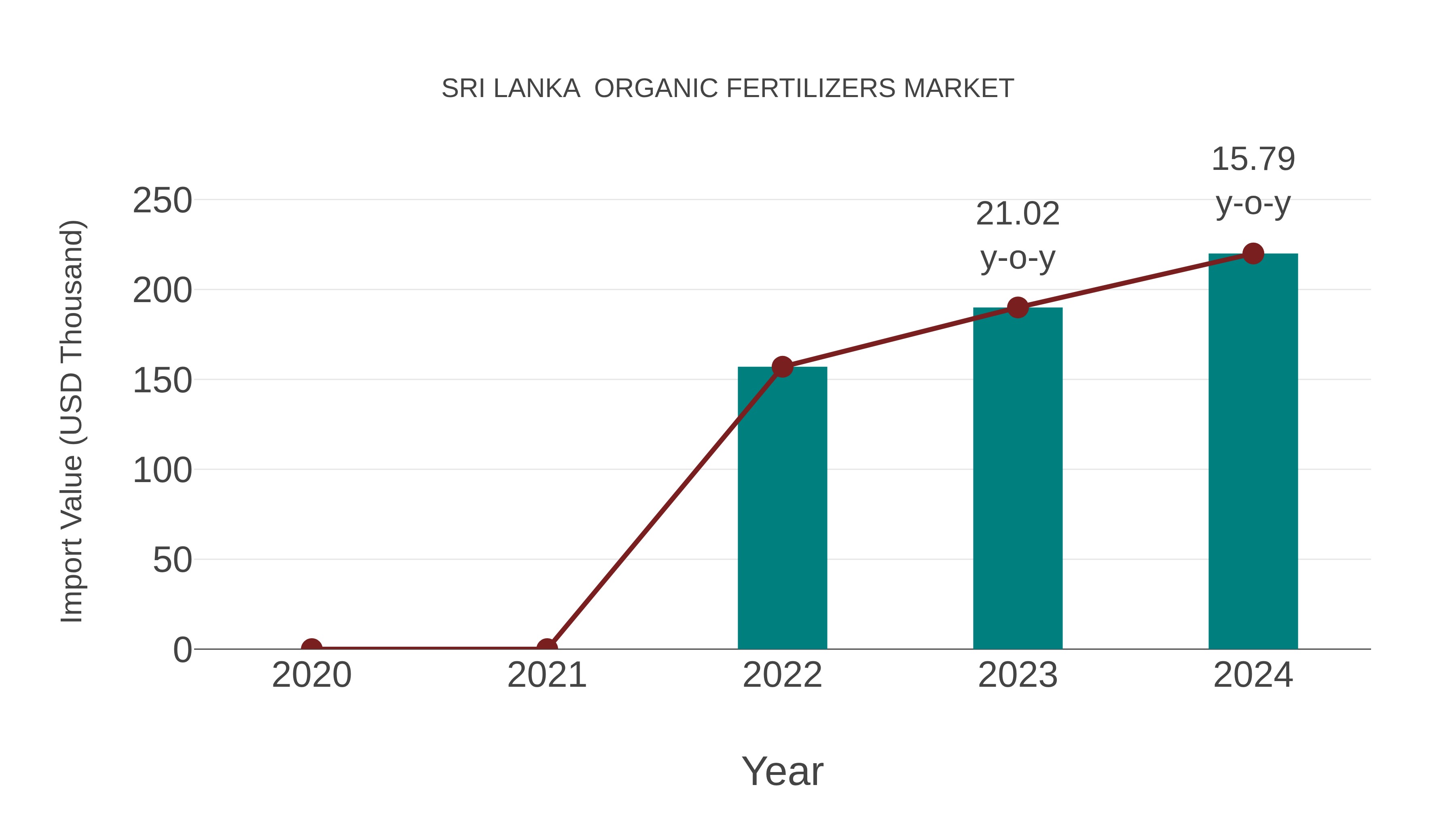
Sri Lanka organic fertilizers market witnessed a 15.79% import growth rate from 2023 to 2024, with a compound annual growth rate (CAGR) of 18.38% from 2020 to 2024. This increase can be attributed to the growing awareness and adoption of sustainable agricultural practices in the region.
Organic Fertilizers Market: Sri Lanka vs Top 5 Major Economies in 2027 (Asia)
The Organic Fertilizers market in Sri Lanka is projected to grow at a high growth rate of 10.13% by 2027, within the Asia region led by China, along with other countries like India, Japan, Australia and South Korea, collectively shaping a dynamic and evolving market environment driven by innovation and increasing adoption of emerging technologies.

Sri Lanka Organic Fertilizers Market Overview
The Sri Lanka organic fertilizers market is experiencing steady growth due to increasing awareness about the benefits of organic farming practices and the rising demand for chemical-free agricultural products. The market is driven by the government`s initiatives to promote sustainable agriculture and reduce the environmental impact of conventional fertilizers. Key players in the market are focusing on product innovation and expanding their distribution networks to reach a wider customer base. The use of organic fertilizers is gaining popularity among farmers as they help improve soil health, increase crop yields, and reduce the risk of environmental pollution. Overall, the Sri Lanka organic fertilizers market is poised for further expansion as consumers continue to prioritize sustainable and eco-friendly agricultural practices.
Sri Lanka Organic Fertilizers Market Trends
The Sri Lanka organic fertilizers market is experiencing a growing trend due to increasing awareness among farmers about the benefits of organic farming practices. Consumers are becoming more conscious of the impact of chemical fertilizers on soil health and environmental sustainability, leading them to shift towards organic alternatives. The government`s initiatives to promote organic farming and provide subsidies for organic inputs are also driving the market growth. Manufacturers are focusing on developing innovative organic fertilizer products to cater to the rising demand in the market. Additionally, the trend of urban farming and home gardening is further boosting the sales of organic fertilizers in Sri Lanka as more people are embracing sustainable and healthy food production practices.
Sri Lanka Organic Fertilizers Market Challenges
In the Sri Lanka Organic Fertilizers Market, some key challenges include limited awareness and understanding among farmers about the benefits and proper usage of organic fertilizers, leading to lower adoption rates compared to traditional chemical fertilizers. Additionally, the availability and accessibility of high-quality organic fertilizers may be limited, affecting the overall market growth. Infrastructure constraints, such as inefficient distribution networks and storage facilities, also pose challenges in reaching remote and rural areas where organic farming practices are gaining momentum. Moreover, the lack of standardized regulations and certifications for organic fertilizers can create confusion among consumers and hinder the development of a trusted market ecosystem. Overall, addressing these challenges will be crucial for the sustainable growth of the organic fertilizers market in Sri Lanka.
Sri Lanka Organic Fertilizers Market Investment Opportunities
The Sri Lankan organic fertilizers market presents promising investment opportunities due to increasing awareness and demand for sustainable agriculture practices. With the government`s focus on promoting organic farming and reducing chemical usage, there is a growing market for organic fertilizers made from natural materials such as compost, animal manure, and bio-based ingredients. Investors can explore opportunities in manufacturing and distributing organic fertilizers, investing in research and development for innovative organic fertilizer products, or partnering with local farmers to provide organic farming solutions. Additionally, leveraging technology for production efficiency and developing eco-friendly packaging solutions can further enhance the market presence and appeal of organic fertilizers in Sri Lanka. Overall, the organic fertilizers market in Sri Lanka offers potential for growth and profitability in line with the increasing demand for sustainable and environmentally friendly agricultural practices.
Sri Lanka Organic Fertilizers Market Government Policy
The Sri Lankan government has been promoting the use of organic fertilizers to reduce chemical usage in agriculture and improve sustainability. In 2020, the government announced a ban on chemical fertilizers to encourage the adoption of organic alternatives. Subsidies are provided to farmers to support the transition to organic farming practices. Additionally, the government has introduced certification programs to ensure the quality and authenticity of organic fertilizers in the market. These policies aim to promote environmental conservation, improve soil health, and enhance the quality of agricultural products in Sri Lanka.
Sri Lanka Organic Fertilizers Market Future Outlook
The future outlook for the Sri Lanka Organic Fertilizers Market appears promising, driven by increasing awareness about sustainable agricultural practices and the rising demand for chemical-free crop production. With growing concerns over environmental degradation and health issues associated with chemical fertilizers, farmers are increasingly adopting organic alternatives. The government`s initiatives to promote organic farming and provide subsidies for organic inputs further support market growth. Additionally, the rising disposable income and shifting consumer preferences towards organic food products are expected to drive the demand for organic fertilizers in Sri Lanka. As a result, the Sri Lanka Organic Fertilizers Market is projected to witness steady growth in the coming years, with opportunities for market players to capitalize on the growing trend towards organic agriculture.
Key Highlights of the Report:
- Sri Lanka Organic Fertilizers Market Outlook
- Market Size of Sri Lanka Organic Fertilizers Market, 2021
- Forecast of Sri Lanka Organic Fertilizers Market, 2031
- Historical Data and Forecast of Sri Lanka Organic Fertilizers Revenues & Volume for the Period 2018 - 2031
- Sri Lanka Organic Fertilizers Market Trend Evolution
- Sri Lanka Organic Fertilizers Market Drivers and Challenges
- Sri Lanka Organic Fertilizers Price Trends
- Sri Lanka Organic Fertilizers Porter's Five Forces
- Sri Lanka Organic Fertilizers Industry Life Cycle
- Historical Data and Forecast of Sri Lanka Organic Fertilizers Market Revenues & Volume By Source for the Period 2018 - 2031
- Historical Data and Forecast of Sri Lanka Organic Fertilizers Market Revenues & Volume By Animal-Based for the Period 2018 - 2031
- Historical Data and Forecast of Sri Lanka Organic Fertilizers Market Revenues & Volume By Blood Meal for the Period 2018 - 2031
- Historical Data and Forecast of Sri Lanka Organic Fertilizers Market Revenues & Volume By Manure for the Period 2018 - 2031
- Historical Data and Forecast of Sri Lanka Organic Fertilizers Market Revenues & Volume By Bone Meal for the Period 2018 - 2031
- Historical Data and Forecast of Sri Lanka Organic Fertilizers Market Revenues & Volume By Others for the Period 2018 - 2031
- Historical Data and Forecast of Sri Lanka Organic Fertilizers Market Revenues & Volume By Plant-Based for the Period 2018 - 2031
- Historical Data and Forecast of Sri Lanka Organic Fertilizers Market Revenues & Volume By Green Manure for the Period 2018 - 2031
- Historical Data and Forecast of Sri Lanka Animal-Based Organic Fertilizers Market Revenues & Volume By Others for the Period 2018 - 2031
- Historical Data and Forecast of Sri Lanka Organic Fertilizers Market Revenues & Volume By Form for the Period 2018 - 2031
- Historical Data and Forecast of Sri Lanka Organic Fertilizers Market Revenues & Volume By Dry for the Period 2018 - 2031
- Historical Data and Forecast of Sri Lanka Organic Fertilizers Market Revenues & Volume By Granular for the Period 2018 - 2031
- Historical Data and Forecast of Sri Lanka Organic Fertilizers Market Revenues & Volume By Pellets for the Period 2018 - 2031
- Historical Data and Forecast of Sri Lanka Organic Fertilizers Market Revenues & Volume By Powder for the Period 2018 - 2031
- Historical Data and Forecast of Sri Lanka Organic Fertilizers Market Revenues & Volume By Others for the Period 2018 - 2031
- Historical Data and Forecast of Sri Lanka Organic Fertilizers Market Revenues & Volume By Liquid for the Period 2018 - 2031
- Historical Data and Forecast of Sri Lanka Organic Fertilizers Market Revenues & Volume By Application for the Period 2018 - 2031
- Historical Data and Forecast of Sri Lanka Organic Fertilizers Market Revenues & Volume By Broadcasting for the Period 2018 - 2031
- Historical Data and Forecast of Sri Lanka Organic Fertilizers Market Revenues & Volume By Fertigation for the Period 2018 - 2031
- Historical Data and Forecast of Sri Lanka Organic Fertilizers Market Revenues & Volume By Foliar Application for the Period 2018 - 2031
- Historical Data and Forecast of Sri Lanka Organic Fertilizers Market Revenues & Volume By Others for the Period 2018 - 2031
- Historical Data and Forecast of Sri Lanka Organic Fertilizers Market Revenues & Volume By Crop Type for the Period 2018 - 2031
- Historical Data and Forecast of Sri Lanka Organic Fertilizers Market Revenues & Volume By Cereals and Grains for the Period 2018 - 2031
- Historical Data and Forecast of Sri Lanka Organic Fertilizers Market Revenues & Volume By Wheat for the Period 2018 - 2031
- Historical Data and Forecast of Sri Lanka Organic Fertilizers Market Revenues & Volume By Maize for the Period 2018 - 2031
- Historical Data and Forecast of Sri Lanka Organic Fertilizers Market Revenues & Volume By Rice for the Period 2018 - 2031
- Historical Data and Forecast of Sri Lanka Organic Fertilizers Market Revenues & Volume By Other Cereals and Grains for the Period 2018 - 2031
- Historical Data and Forecast of Sri Lanka Organic Fertilizers Market Revenues & Volume By Fruits and Vegetables for the Period 2018 - 2031
- Historical Data and Forecast of Sri Lanka Organic Fertilizers Market Revenues & Volume By Oilseeds and Pulses for the Period 2018 - 2031
- Historical Data and Forecast of Sri Lanka Organic Fertilizers Market Revenues & Volume By Turf and Ornaments for the Period 2018 - 2031
- Sri Lanka Organic Fertilizers Import Export Trade Statistics
- Market Opportunity Assessment By Source
- Market Opportunity Assessment By Form
- Market Opportunity Assessment By Application
- Market Opportunity Assessment By Crop Type
- Sri Lanka Organic Fertilizers Top Companies Market Share
- Sri Lanka Organic Fertilizers Competitive Benchmarking By Technical and Operational Parameters
- Sri Lanka Organic Fertilizers Company Profiles
- Sri Lanka Organic Fertilizers Key Strategic Recommendations






































