Sri Lanka Pearl Jewelry Market Size, Share & Growth Rate
The Sri Lanka Pearl Jewelry Market was estimated at USD 423 Million in 2025 and is projected to reach USD 582 Million by 2032, growing at a CAGR of 4.7% from 2026 to 2032. This growth trajectory is fueled by the increasing demand for high-quality, ethically sourced pearls and luxury items, as well as rising disposable incomes among consumers. Sri Lankas strong heritage in pearl cultivation and craftsmanship further solidifies its position in both domestic and international markets.
Sri Lanka Pearl Jewelry Market Year-wise Growth Rate and Key Drivers
This graph highlights how the Sri Lanka Pearl Jewelry Market has steadily grown over the years, supported by major growth factors.
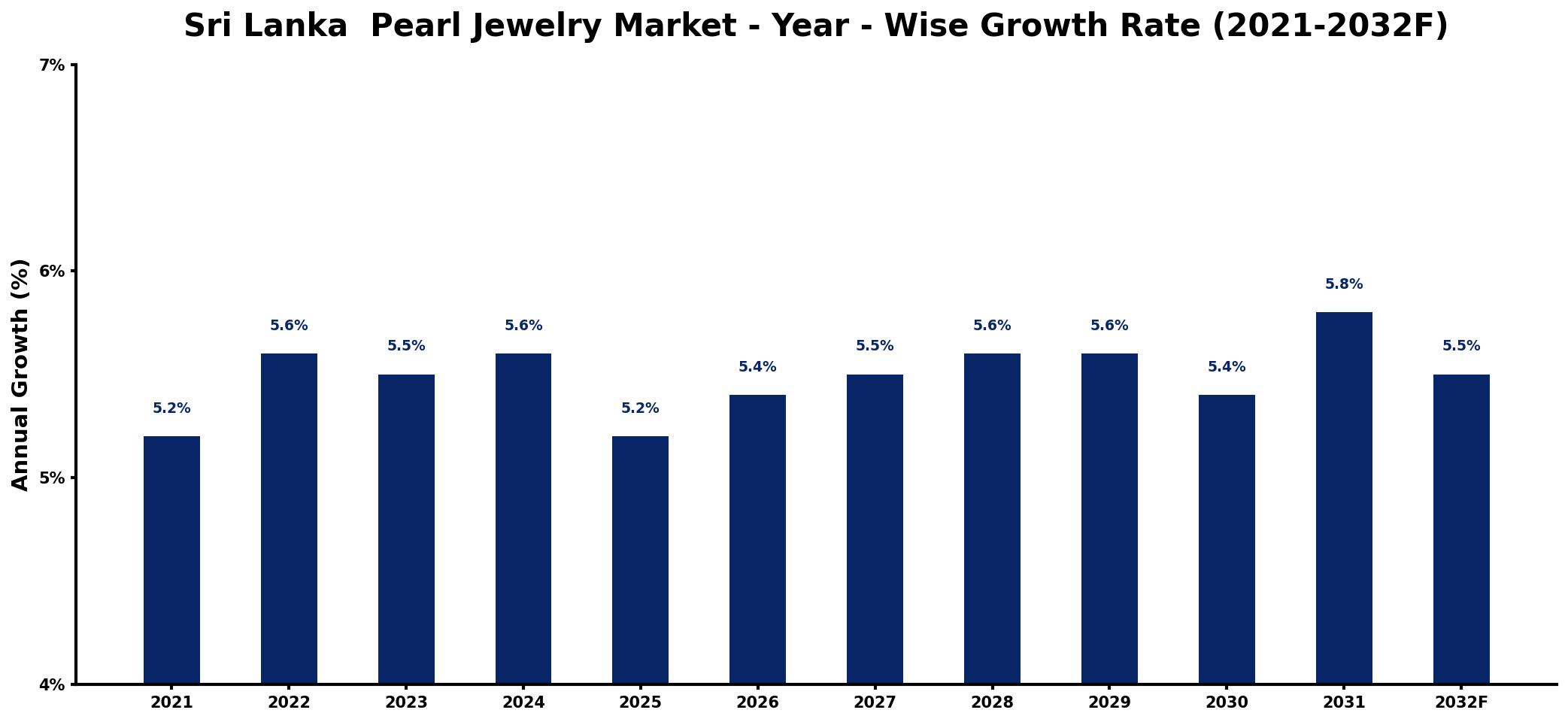
The table below presents the year‑wise growth rates along with the key drivers influencing the market
| Year | Growth Rate | Major Drivers |
| 2021 | 5.2% | Rising consumer interest in luxury |
| 2022 | 5.6% | Increase in tourism and exports |
| 2023 | 5.5% | Growing e-commerce platforms availability |
| 2024 | 5.6% | Expansion of retail distribution channels |
| 2025 | 5.2% | Higher disposable income among consumers |
| 2026 | 5.4% | Strengthened cultural heritage promotion |
| 2027 | 5.5% | Emerging markets demand growth |
| 2028 | 5.6% | Sustainable sourcing gaining traction |
| 2029 | 5.6% | Innovative marketing strategies implemented |
| 2030 | 5.4% | Collaborations with fashion designers |
| 2031 | 5.8% | Investment in artisan craftsmanship initiatives |
| 2032 | 5.5% | Rising popularity of bespoke offerings |
Note: Market size estimations and growth projections presented in this report are based on 6Wresearch's proprietary forecasting methodology, utilizing the latest available industry data, government publications, and primary research inputs.
Sri Lanka Pearl Jewelry Market Synopsis
A significant force currently shaping the Sri Lanka Pearl Jewelry Market is the growing consumer preference for ethically sourced and sustainably produced jewelry. This shift reflects a broader trend towards conscious consumerism, where buyers are increasingly valuing the origin and environmental impact of their purchases.
Additionally, the local craftsmanship steeped in tradition is being blended with contemporary designs, resulting in unique offerings that appeal to a diverse audience. The rise of online shopping platforms is also enhancing accessibility, allowing consumers to explore a wider variety of pearl jewelry, thus stimulating market growth.
Sri Lanka Pearl Jewelry Market Key Takeaways
- The market is driven by a combination of traditional craftsmanship and modern design innovations.
- Growing consumer demand for sustainable and ethically sourced jewelry pieces is reshaping purchasing behaviors.
- Online retail platforms are expanding market reach, providing consumers with more options and convenience.
- Investment opportunities lie in collaborations with local artisans and pearl farms to promote unique offerings.
- Strategic marketing efforts are crucial for increasing brand visibility and consumer trust amidst global competition.
Evaluation of Restraints in Sri Lanka Pearl Jewelry Market
Despite its growth potential, the Sri Lanka Pearl Jewelry Market faces several constraints. The presence of counterfeit products threatens the authenticity and quality perception of genuine Ceylon pearls, which can deter consumers. Furthermore, competition from other luxury materials, such as diamonds and gold, complicates market positioning. Limited awareness and promotional efforts in international markets also hinder expansion opportunities. Addressing these issues requires a multifaceted strategy focusing on education, marketing, and quality assurance to bolster the markets reputation.
Sri Lanka Pearl Jewelry Market Trends
A notable trend within the Sri Lanka Pearl Jewelry Market is the increasing emphasis on customization and personalization. Consumers are seeking unique pieces that resonate with their individual styles, prompting jewelers to offer bespoke services. Additionally, theres a rising interest in designs that marry traditional Sri Lankan motifs with contemporary aesthetics, appealing to both local and international tastes. The movement towards sustainable practices is also gaining momentum, influencing both pearl cultivation and jewelry production, ensuring that eco-conscious consumers feel aligned with their purchases.
Sri Lanka Pearl Jewelry Market Opportunities
The market presents substantial investment opportunities, particularly in the realm of sustainable and ethically sourced jewelry. Investors can capitalize on the growing segment of environmentally conscious consumers by forging partnerships with local pearl farms committed to eco-friendly practices. Additionally, highlighting Sri Lankas rich cultural heritage can attract affluent buyers looking for authentic luxury items. There is also potential for innovation in online retailing, enhancing consumer engagement and expanding market reach.
Government Initiatives in the Sri Lanka Pearl Jewelry Market
The Sri Lankan government has implemented various policies aimed at promoting the pearl jewelry industry, which includes establishing strict quality standards for pearls to protect the reputation of Ceylon pearls globally. Initiatives to support local artisans through training programs and financial assistance have also been put in place. Furthermore, regulations promoting sustainable pearl farming practices are essential for preserving the natural habitats of pearl-producing oysters, ensuring the long-term viability of this important sector.
Future Insights of the Sri Lanka Pearl Jewelry Market
Looking ahead, the Sri Lanka Pearl Jewelry Market is well-positioned for significant growth through 2032. As consumers continue to seek luxury goods, the demand for high-quality pearl jewelry will likely increase. The rise of e-commerce and a focus on sustainable practices further bolster this outlook, aligning perfectly with modern consumer values. By leveraging its strengths in craftsmanship and ethical sourcing, Sri Lanka can enhance its competitive edge in the global market, making it an exciting space for both investors and consumers.
Sri Lanka Pearl Jewelry Market Latest Developments (2025 - 2026)
Recent developments in the Sri Lanka Pearl Jewelry Market include an uptick in collaborations between local artisans and international designers, fostering innovative product lines that appeal to global consumers. There is also a growing movement towards using digital platforms for showcasing and selling pearl jewelry, facilitating broader consumer engagement. Additionally, trade shows and exhibitions are being organized to promote Ceylon pearls and educate consumers about their unique qualities and the artisans behind them.
Sri Lanka Pearl Jewelry Market - Key Attractiveness of the Report
- 10 Years of Market Numbers
- Historical Data Starting from 2022 to 2025
- Base Year: 2025
- Forecast Data until 2032
- Key Performance Indicators Impacting the Market
- Major Upcoming Developments and Projects
Key Highlights of the Report:
- Sri Lanka Pearl Jewelry Market Outlook
- Market Size of Sri Lanka Pearl Jewelry Market, 2025
- Forecast of Sri Lanka Pearl Jewelry Market, 2032
- Historical Data and Forecast of Sri Lanka Pearl Jewelry Revenues & Volume for the Period 2022-2032F
- Sri Lanka Pearl Jewelry Market Trend Evolution
- Sri Lanka Pearl Jewelry Market Drivers and Challenges
- Sri Lanka Pearl Jewelry Price Trends
- Sri Lanka Pearl Jewelry Porter's Five Forces
- Sri Lanka Pearl Jewelry Industry Life Cycle
- Historical Data and Forecast of Sri Lanka Pearl Jewelry Market Revenues & Volume By Pearl Type for the Period 2022-2032F
- Historical Data and Forecast of Sri Lanka Pearl Jewelry Market Revenues & Volume By Freshwater for the Period 2022-2032F
- Historical Data and Forecast of Sri Lanka Pearl Jewelry Market Revenues & Volume By Saltwater for the Period 2022-2032F
- Historical Data and Forecast of Sri Lanka Pearl Jewelry Market Revenues & Volume By Material Type for the Period 2022-2032F
- Historical Data and Forecast of Sri Lanka Pearl Jewelry Market Revenues & Volume By Gold for the Period 2022-2032F
- Historical Data and Forecast of Sri Lanka Pearl Jewelry Market Revenues & Volume By Silver for the Period 2022-2032F
- Historical Data and Forecast of Sri Lanka Pearl Jewelry Market Revenues & Volume By Others for the Period 2022-2032F
- Historical Data and Forecast of Sri Lanka Pearl Jewelry Market Revenues & Volume By Jewelry Type for the Period 2022-2032F
- Historical Data and Forecast of Sri Lanka Pearl Jewelry Market Revenues & Volume By Necklace for the Period 2022-2032F
- Historical Data and Forecast of Sri Lanka Pearl Jewelry Market Revenues & Volume By Earrings for the Period 2022-2032F
- Historical Data and Forecast of Sri Lanka Pearl Jewelry Market Revenues & Volume By Rings for the Period 2022-2032F
- Historical Data and Forecast of Sri Lanka Pearl Jewelry Market Revenues & Volume By Others for the Period 2022-2032F
- Sri Lanka Pearl Jewelry Import Export Trade Statistics
- Market Opportunity Assessment By Pearl Type
- Market Opportunity Assessment By Material Type
- Market Opportunity Assessment By Jewelry Type
- Sri Lanka Pearl Jewelry Top Companies Market Share
- Sri Lanka Pearl Jewelry Competitive Benchmarking By Technical and Operational Parameters
- Sri Lanka Pearl Jewelry Company Profiles
- Sri Lanka Pearl Jewelry Key Strategic Recommendations






































