Sri Lanka Peat Market: Import Trend Analysis
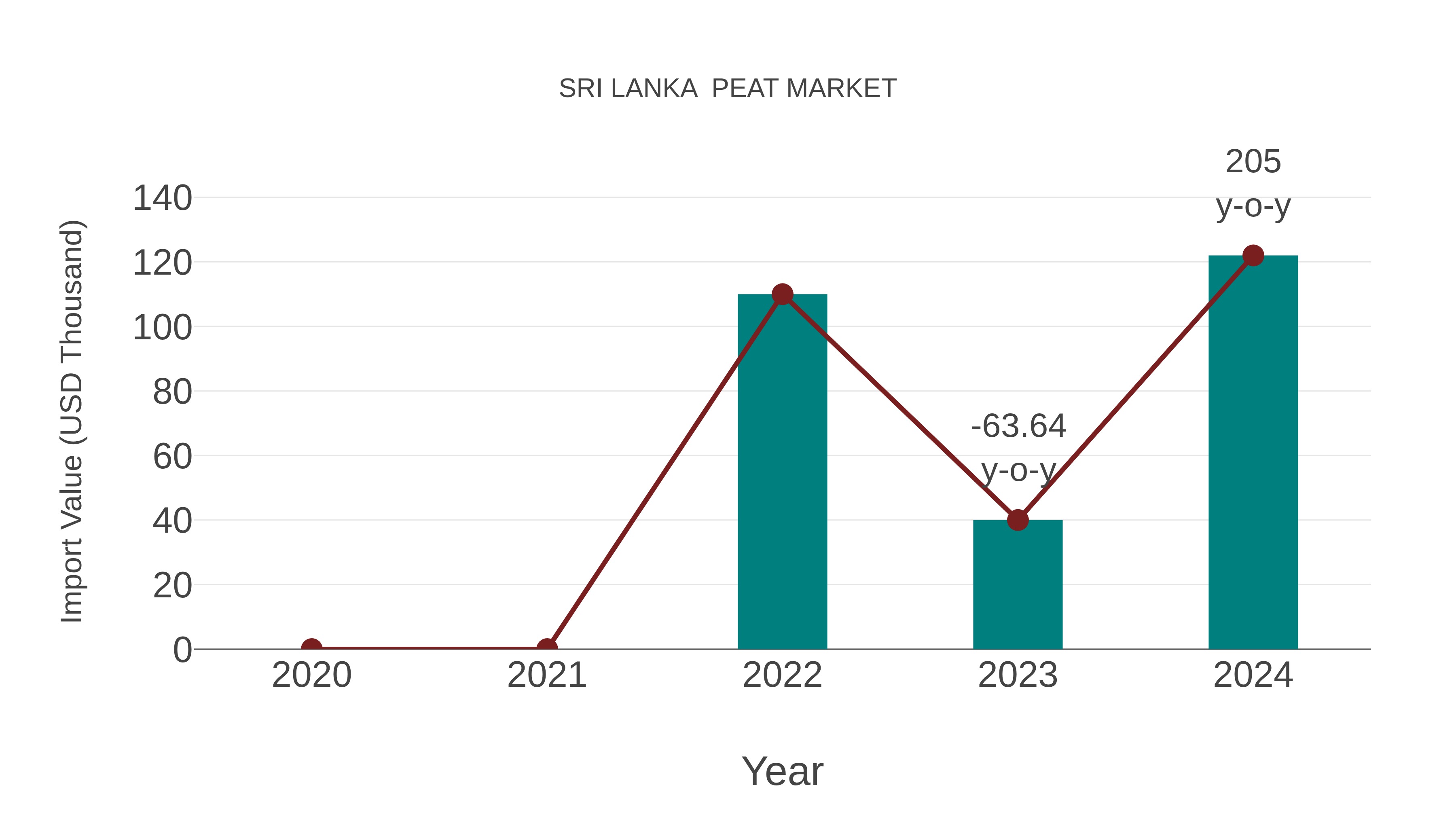
Sri Lanka import trend for the peat market saw significant growth from 2023 to 2024 at 205.0%, with a compound annual growth rate (CAGR) of 5.31% from 2020 to 2024. This surge in imports could be attributed to increased demand for peat-based products in agriculture and horticulture sectors.
Sri Lanka Peat Market Overview
The Sri Lanka peat market is experiencing steady growth driven by increasing demand from various industries such as agriculture, horticulture, and energy production. Peat is a valuable resource in Sri Lanka for its moisture retention properties and ability to improve soil quality, making it a popular choice among farmers and gardeners. Additionally, the use of peat as a renewable energy source is gaining traction in the country. However, the market is facing challenges in terms of sustainable peat extraction practices and environmental concerns. As a result, there is a growing emphasis on peatland preservation and responsible peat harvesting methods. Overall, the Sri Lanka peat market is poised for further development, with a focus on sustainable practices and innovation to meet the increasing demand for peat products.
Sri Lanka Peat Market Trends
The Sri Lanka Peat Market is witnessing a growing demand due to its widespread applications in agriculture, horticulture, and gardening. The market is experiencing a trend towards sustainable and organic farming practices, leading to an increase in the use of peat as a soil amendment and growing medium. Additionally, the rising interest in eco-friendly products is driving the demand for peat-based products like peat pots and pellets. The market is also seeing a shift towards premium quality peat products that offer higher water retention and aeration properties. With the emphasis on environmental conservation and sustainable resource management, there is a growing focus on responsible peat extraction practices in Sri Lanka to ensure the long-term viability of the market.
Sri Lanka Peat Market Challenges
In the Sri Lanka peat market, some challenges faced include limited availability of peatlands due to environmental conservation efforts, increasing awareness about the negative impacts of peat extraction on the ecosystem, and regulatory restrictions on peat mining activities. Additionally, competition from alternative renewable energy sources and the high cost of peat extraction and processing further hinder the growth of the market. The lack of standardized quality control measures and limited technological advancements in peat harvesting and processing also pose challenges for industry players. Overall, navigating these constraints while meeting the growing demand for peat products presents a significant hurdle for stakeholders in the Sri Lanka peat market.
Sri Lanka Peat Market Investment Opportunities
The Sri Lankan peat market offers various investment opportunities due to the country`s abundance of peatlands and increasing demand for peat-based products in agriculture, horticulture, and energy sectors. Investors can explore opportunities in peat extraction and processing facilities, as well as in the development of value-added products such as peat-based fertilizers, soil conditioners, and biofuels. Additionally, there is potential for investment in peatland restoration projects to promote sustainable peatland management practices. With growing awareness of the environmental benefits of peatlands and increasing government support for sustainable development initiatives, the Sri Lankan peat market presents a promising investment landscape for those looking to capitalize on the country`s natural resources and contribute to sustainable economic growth.
Sri Lanka Peat Market Government Policy
The Sri Lankan government has implemented policies aimed at regulating and promoting sustainable practices within the peat market. These policies include the Peatland Management Policy, which focuses on conserving peatlands and ensuring responsible extraction practices to prevent environmental degradation. Additionally, the government has introduced regulations to control peat extraction activities, enforce environmental impact assessments, and promote reforestation initiatives in peatland areas. Furthermore, initiatives such as the National Peatland Strategy aim to enhance the sustainable management of peatlands, protect biodiversity, and mitigate climate change impacts. Overall, the government`s policies in the Sri Lankan peat market prioritize environmental conservation, sustainable resource management, and the preservation of peatland ecosystems for future generations.
Sri Lanka Peat Market Future Outlook
The future outlook for the Sri Lanka Peat Market appears promising due to increasing demand from various industries such as agriculture, horticulture, and energy generation. Peat is valued for its ability to improve soil quality, retain moisture, and serve as a renewable energy source. With the government`s focus on sustainable agriculture practices and renewable energy sources, the peat market is expected to experience steady growth in the coming years. Additionally, as consumers become more environmentally conscious, there is a growing preference for organic and sustainable products, which further fuels the demand for peat-based products. However, it is essential for stakeholders in the industry to address environmental concerns related to peat extraction and promote responsible sourcing practices to ensure the long-term sustainability of the market.
Key Highlights of the Report:
- Sri Lanka Peat Market Outlook
- Market Size of Sri Lanka Peat Market, 2025
- Forecast of Sri Lanka Peat Market, 2032
- Historical Data and Forecast of Sri Lanka Peat Revenues & Volume for the Period 2022 - 2032F
- Sri Lanka Peat Market Trend Evolution
- Sri Lanka Peat Market Drivers and Challenges
- Sri Lanka Peat Price Trends
- Sri Lanka Peat Porter's Five Forces
- Sri Lanka Peat Industry Life Cycle
- Historical Data and Forecast of Sri Lanka Peat Market Revenues & Volume By Type for the Period 2022 - 2032F
- Historical Data and Forecast of Sri Lanka Peat Market Revenues & Volume By Coco Peat for the Period 2022 - 2032F
- Historical Data and Forecast of Sri Lanka Peat Market Revenues & Volume By Sod Peat for the Period 2022 - 2032F
- Historical Data and Forecast of Sri Lanka Peat Market Revenues & Volume By Other for the Period 2022 - 2032F
- Historical Data and Forecast of Sri Lanka Peat Market Revenues & Volume By Material Type for the Period 2022 - 2032F
- Historical Data and Forecast of Sri Lanka Peat Market Revenues & Volume By Fibric for the Period 2022 - 2032F
- Historical Data and Forecast of Sri Lanka Peat Market Revenues & Volume By Hemic for the Period 2022 - 2032F
- Historical Data and Forecast of Sri Lanka Peat Market Revenues & Volume By Sapric for the Period 2022 - 2032F
- Historical Data and Forecast of Sri Lanka Peat Market Revenues & Volume By Others for the Period 2022 - 2032F
- Historical Data and Forecast of Sri Lanka Peat Market Revenues & Volume By Application for the Period 2022 - 2032F
- Historical Data and Forecast of Sri Lanka Peat Market Revenues & Volume By Agriculture for the Period 2022 - 2032F
- Historical Data and Forecast of Sri Lanka Peat Market Revenues & Volume By Fuel & Energy for the Period 2022 - 2032F
- Historical Data and Forecast of Sri Lanka Peat Market Revenues & Volume By Others for the Period 2022 - 2032F
- Sri Lanka Peat Import Export Trade Statistics
- Market Opportunity Assessment By Type
- Market Opportunity Assessment By Material Type
- Market Opportunity Assessment By Application
- Sri Lanka Peat Top Companies Market Share
- Sri Lanka Peat Competitive Benchmarking By Technical and Operational Parameters
- Sri Lanka Peat Company Profiles
- Sri Lanka Peat Key Strategic Recommendations






































