Sri Lanka Piano Market Size Growth Rate
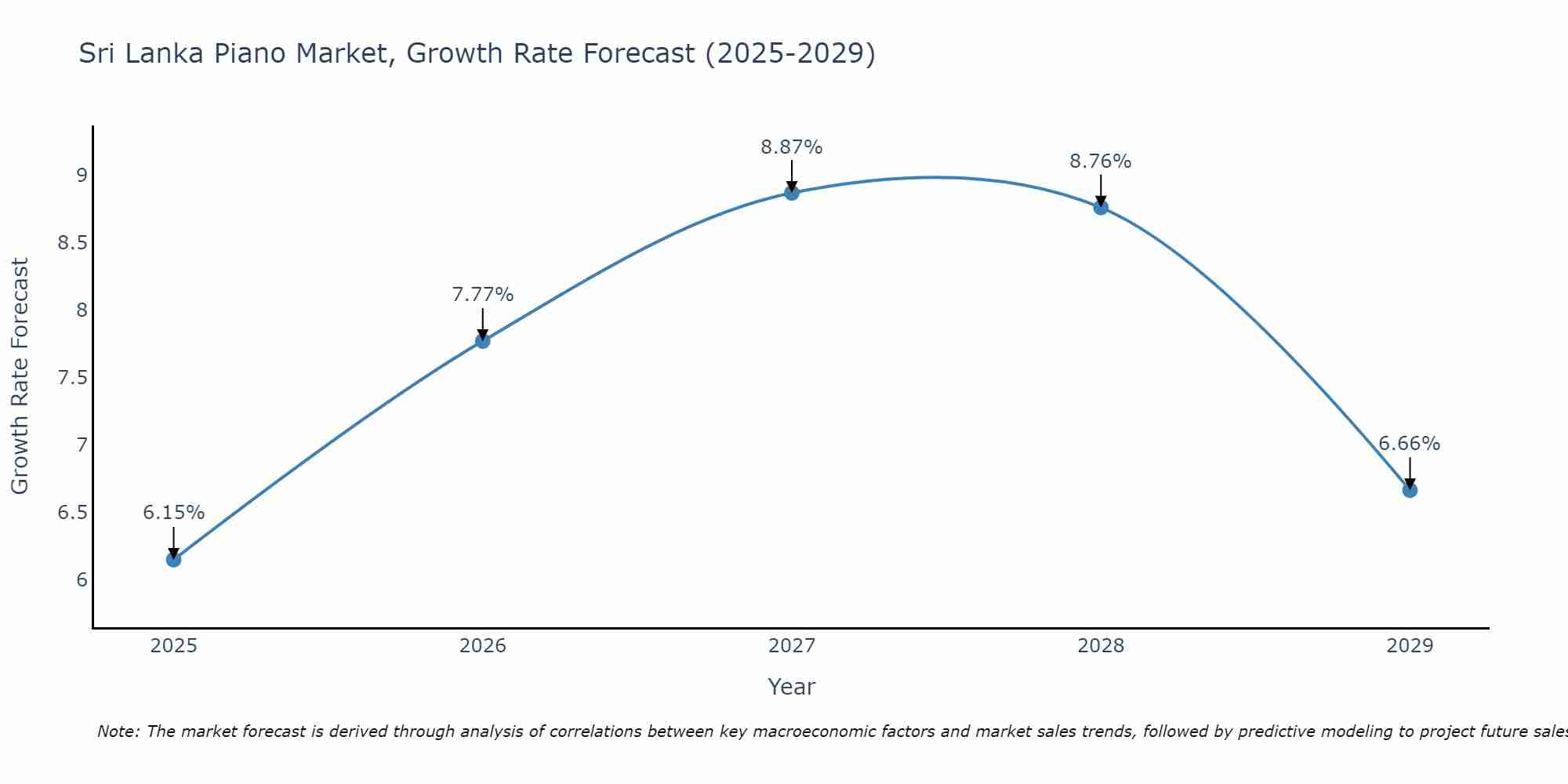
The Sri Lanka Piano Market is projected to witness mixed growth rate patterns during 2025 to 2029. Starting at 6.15% in 2025, the market peaks at 8.87% in 2027, and settles at 6.66% by 2029.
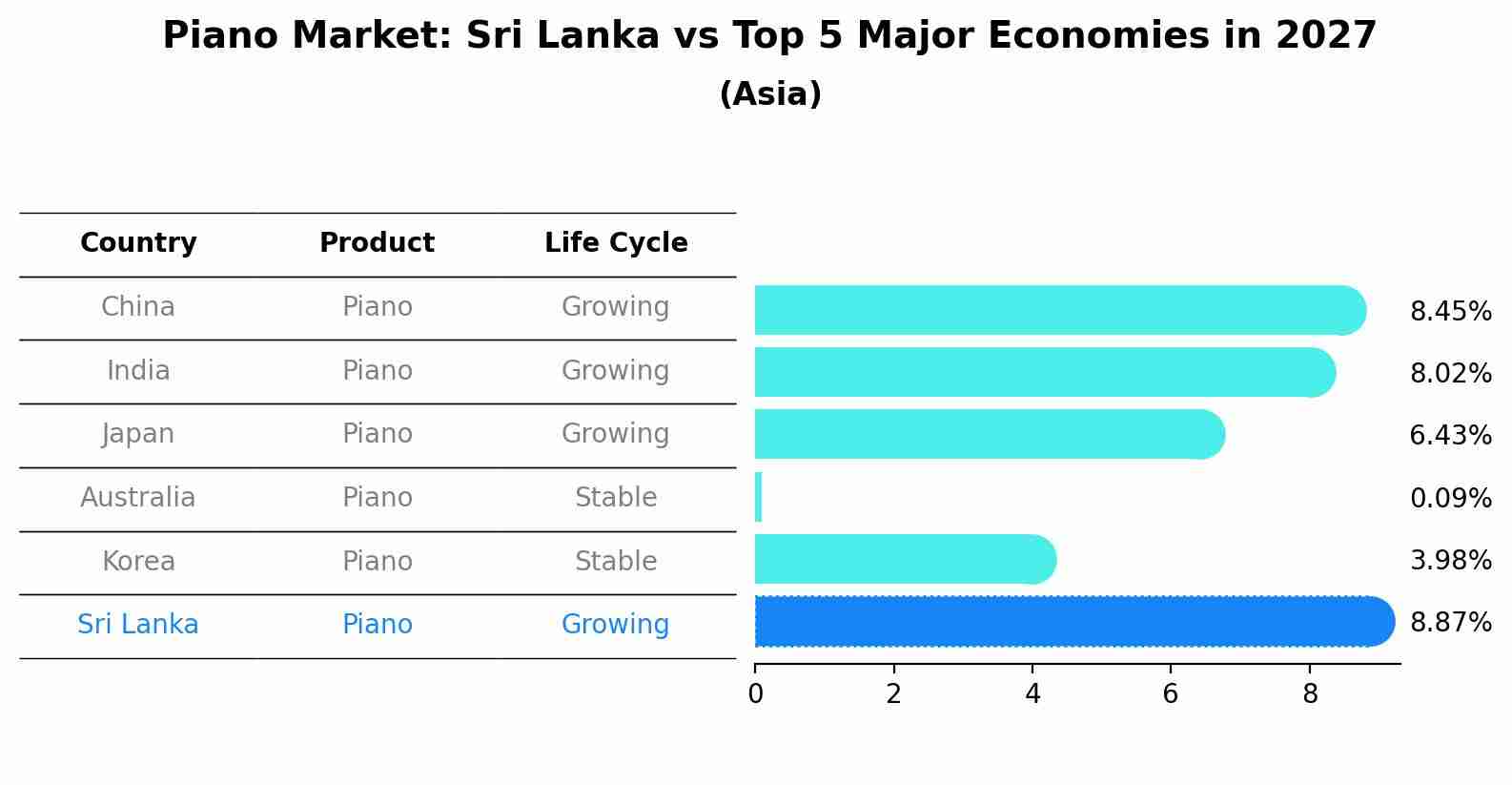
Piano Market: Sri Lanka vs Top 5 Major Economies in 2027 (Asia)
Sri Lanka's Piano market is anticipated to experience a growing growth rate of 8.87% by 2027, reflecting trends observed in the largest economy China, followed by India, Japan, Australia and South Korea.
Sri Lanka Piano Market Overview
The piano market in Sri Lanka is a niche but growing segment within the country`s musical instrument industry. The market primarily consists of acoustic pianos, digital pianos, and electric keyboards. Acoustic pianos are favored by traditional musicians and music schools, while digital pianos and keyboards are popular among modern musicians and those looking for more portable options. Yamaha, Kawai, and Casio are among the leading brands in the Sri Lankan piano market, offering a range of products to cater to different customer preferences and budgets. The market is driven by a growing interest in music education, increasing disposable income levels, and a rising number of music enthusiasts in the country. Retail outlets, online platforms, and music schools are the primary distribution channels for pianos in Sri Lanka.
Sri Lanka Piano Market Trends
In the Sri Lanka piano market, there is a growing trend towards digital pianos due to their portability, affordability, and advanced features such as multiple instrument sounds, recording capabilities, and connectivity options. Traditional acoustic pianos remain popular among serious musicians and those seeking a more authentic playing experience. Additionally, there is a demand for compact and space-saving pianos, such as upright and slim models, to cater to the urban population living in smaller homes and apartments. The market also sees a rise in interest in beginner-friendly pianos with learning aids and online connectivity to facilitate music education and practice. Overall, the Sri Lanka piano market is witnessing a shift towards modern, technologically advanced instruments that cater to a diverse range of musical preferences and lifestyles.
Sri Lanka Piano Market Challenges
In the Sri Lanka piano market, one of the main challenges faced is the relatively low demand for pianos due to cultural preferences and limited exposure to Western classical music. This results in a smaller target market for piano manufacturers and retailers. Additionally, the high cost associated with purchasing and maintaining pianos poses a significant barrier for many potential customers in Sri Lanka, where disposable income levels may be lower compared to other regions. Furthermore, limited availability of skilled technicians for piano tuning and repairs can also hinder the growth of the market, as customers may be deterred by the lack of after-sales service and support. Overall, increasing awareness about the benefits of learning and playing the piano, as well as offering more affordable options and reliable servicing, are key strategies to address these challenges and expand the piano market in Sri Lanka.
Sri Lanka Piano Market Investment Opportunities
The Sri Lanka piano market presents promising investment opportunities due to the country`s growing interest in music education and cultural appreciation. As the economy continues to develop, there is an increasing demand for high-quality musical instruments, including pianos. Investing in importing and distributing pianos from reputable international brands or setting up piano retail and rental services could be lucrative ventures. Additionally, offering piano lessons and music education services could cater to the growing interest in learning to play the piano among Sri Lankans. With the right marketing strategies and partnerships with music schools or institutions, investors can tap into this niche market and capitalize on the rising demand for pianos in Sri Lanka.
Sri Lanka Piano Market Government Policy
In Sri Lanka, the government has implemented policies to promote the growth of the piano market. These include reducing import duties on musical instruments, providing financial incentives for local piano manufacturers, and supporting music education programs in schools to increase demand for pianos. Additionally, the government has encouraged the establishment of music schools and academies to train more piano players, thereby expanding the market. Overall, these policies aim to stimulate the piano market in Sri Lanka by making instruments more accessible, fostering local production, and nurturing a culture of music appreciation and education.
Sri Lanka Piano Market Future Outlook
The future outlook for the Sri Lanka Piano Market shows promising growth potential driven by factors such as increasing disposable income levels, a growing interest in music education, and a rising trend of home entertainment. As more Sri Lankans seek to enhance their cultural experiences and invest in musical pursuits, the demand for pianos is expected to rise. Additionally, advancements in technology have made digital pianos more accessible and affordable, appealing to a wider range of consumers. However, challenges such as competition from other musical instruments and economic fluctuations may impact market growth. Overall, with the right marketing strategies and product diversification, the Sri Lanka Piano Market is poised for expansion in the coming years.
Key Highlights of the Report:
- Sri Lanka Piano Market Outlook
- Market Size of Sri Lanka Piano Market, 2024
- Forecast of Sri Lanka Piano Market, 2031
- Historical Data and Forecast of Sri Lanka Piano Revenues & Volume for the Period 2021 - 2031
- Sri Lanka Piano Market Trend Evolution
- Sri Lanka Piano Market Drivers and Challenges
- Sri Lanka Piano Price Trends
- Sri Lanka Piano Porter's Five Forces
- Sri Lanka Piano Industry Life Cycle
- Historical Data and Forecast of Sri Lanka Piano Market Revenues & Volume By Type for the Period 2021 - 2031
- Historical Data and Forecast of Sri Lanka Piano Market Revenues & Volume By Grand Piano for the Period 2021 - 2031
- Historical Data and Forecast of Sri Lanka Piano Market Revenues & Volume By Upright Piano for the Period 2021 - 2031
- Historical Data and Forecast of Sri Lanka Piano Market Revenues & Volume By Application for the Period 2021 - 2031
- Historical Data and Forecast of Sri Lanka Piano Market Revenues & Volume By Learning and Teaching for the Period 2021 - 2031
- Historical Data and Forecast of Sri Lanka Piano Market Revenues & Volume By Entertainment for the Period 2021 - 2031
- Historical Data and Forecast of Sri Lanka Piano Market Revenues & Volume By Other for the Period 2021 - 2031
- Sri Lanka Piano Import Export Trade Statistics
- Market Opportunity Assessment By Type
- Market Opportunity Assessment By Application
- Sri Lanka Piano Top Companies Market Share
- Sri Lanka Piano Competitive Benchmarking By Technical and Operational Parameters
- Sri Lanka Piano Company Profiles
- Sri Lanka Piano Key Strategic Recommendations






































