Sri Lanka Plastic Furniture Market Size Growth Rate
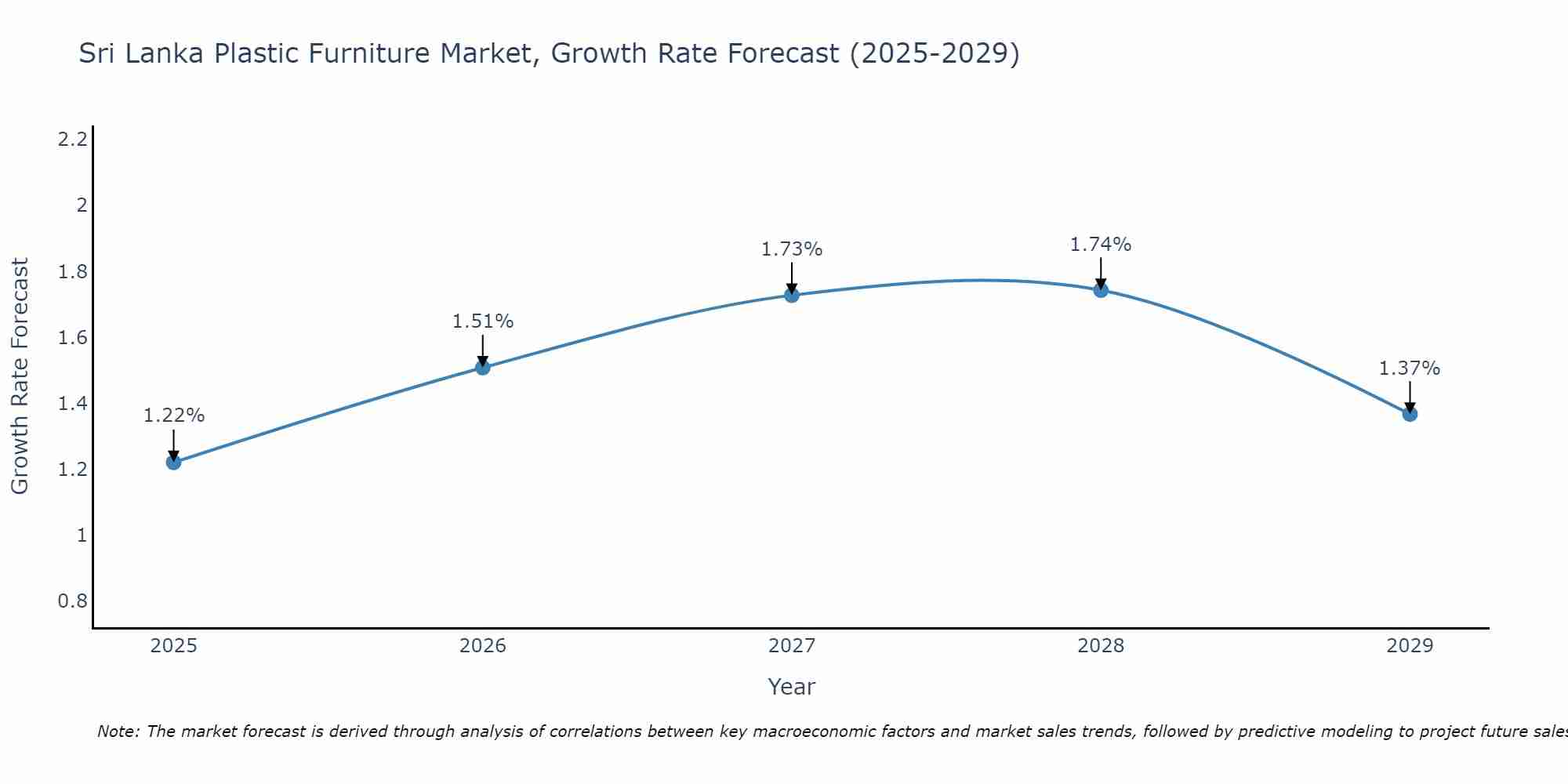
The Sri Lanka Plastic Furniture Market is projected to witness mixed growth rate patterns during 2025 to 2029. Growth accelerates to 1.74% in 2028, following an initial rate of 1.22%, before easing to 1.37% at the end of the period.
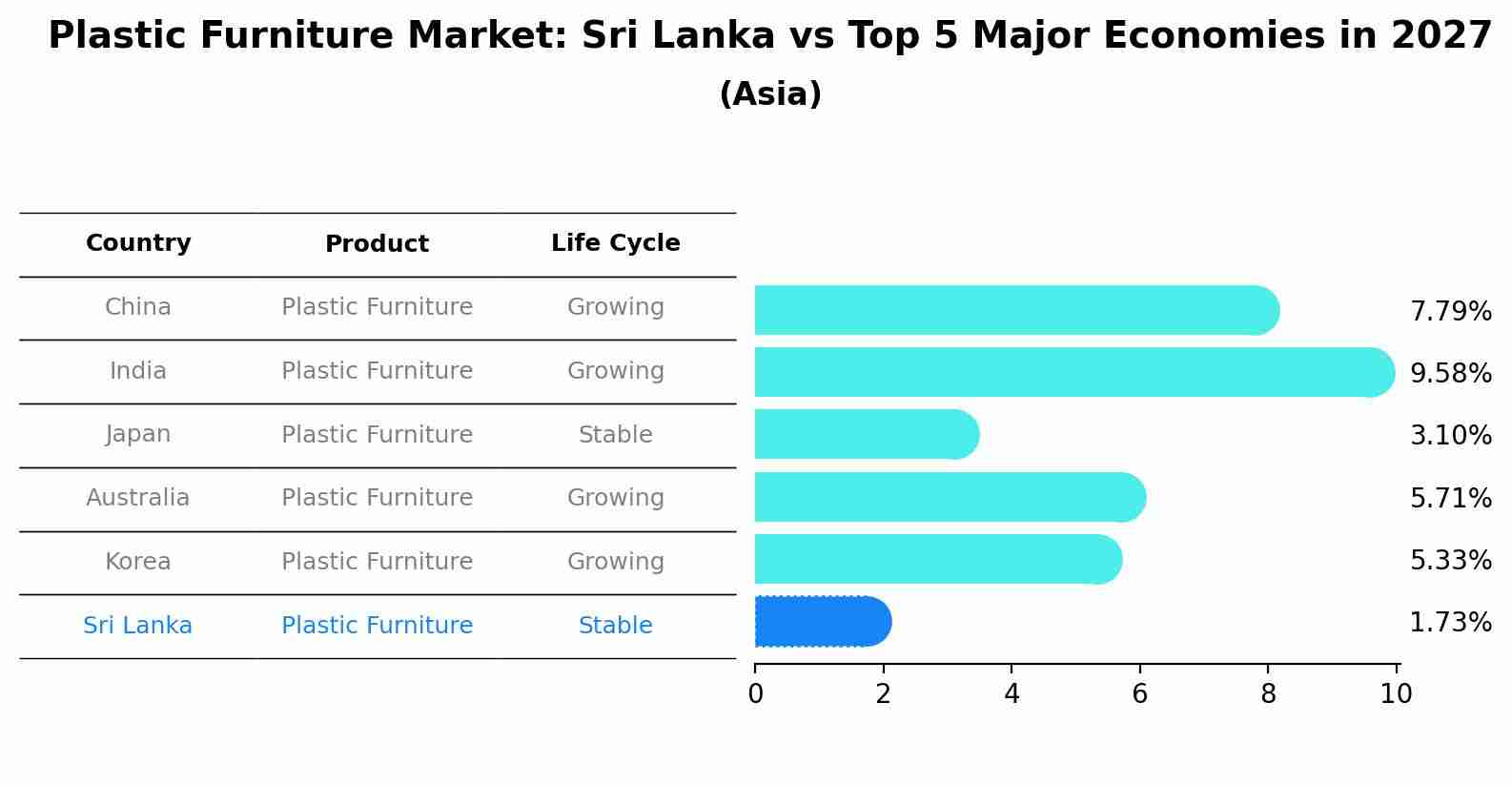
Plastic Furniture Market: Sri Lanka vs Top 5 Major Economies in 2027 (Asia)
By 2027, Sri Lanka's Plastic Furniture market is forecasted to achieve a stable growth rate of 1.73%, with China leading the Asia region, followed by India, Japan, Australia and South Korea.
Sri Lanka Plastic Furniture Market Overview
The plastic furniture market in Sri Lanka is growing with increasing demand from residential, commercial, and outdoor settings. Plastic furniture offers benefits such as durability, lightweight, and resistance to weather elements, making it suitable for diverse applications. Market growth is driven by urbanization, hospitality sector expansion, and consumer preference for low-maintenance and affordable furniture solutions. Innovations in furniture design, such as ergonomic features and aesthetic appeal, are influencing market dynamics. Sustainable practices in plastic furniture manufacturing, including the use of recycled materials, are also shaping industry trends.
Drivers of the market
The Sri Lanka plastic furniture market is growing with increasing consumer preferences for durable, weather-resistant, and aesthetically appealing furniture solutions for indoor and outdoor spaces. Plastic furniture offers advantages such as lightweight construction, low maintenance requirements, and design versatility in Sri Lanka. Market drivers include urbanization, housing development projects, and lifestyle trends favoring functional and cost-effective furnishings. Furniture manufacturers, retailers, and interior designers are introducing innovative designs, eco-friendly materials, and customization options to meet diverse customer needs and enhance the appeal of plastic furniture in Sri Lanka competitive home and outdoor furniture market.
Challenges of the market
The plastic furniture market in Sri Lanka faces several challenges, including high costs of raw materials and production processes, which impact pricing and market competitiveness. There is limited local manufacturing capacity and a reliance on imported plastic furniture, which can be affected by international trade policies and price fluctuations. Additionally, competition from alternative materials such as wood and metal poses a significant challenge. The market also suffers from a shortage of skilled professionals and advanced manufacturing technologies required for high-quality plastic furniture production. Limited consumer awareness and understanding of the benefits of plastic furniture also affect market demand.
Government Policy of the market
The Sri Lankan government promotes the plastic furniture market by encouraging local production and innovation in furniture design. Policies include providing financial incentives for the production of plastic furniture, supporting research in material technologies and design innovation, and ensuring regulatory compliance with environmental and safety standards to promote sustainable and durable furniture products.
Key Highlights of the Report:
- Sri Lanka Plastic Furniture Market Outlook
- Market Size of Sri Lanka Plastic Furniture Market, 2021
- Forecast of Sri Lanka Plastic Furniture Market, 2028
- Historical Data and Forecast of Sri Lanka Plastic Furniture Revenues & Volume for the Period 2018 - 2028
- Sri Lanka Plastic Furniture Market Trend Evolution
- Sri Lanka Plastic Furniture Market Drivers and Challenges
- Sri Lanka Plastic Furniture Price Trends
- Sri Lanka Plastic Furniture Porter's Five Forces
- Sri Lanka Plastic Furniture Industry Life Cycle
- Historical Data and Forecast of Sri Lanka Plastic Furniture Market Revenues & Volume By Distribution Channel for the Period 2018 - 2028
- Historical Data and Forecast of Sri Lanka Plastic Furniture Market Revenues & Volume By Online for the Period 2018 - 2028
- Historical Data and Forecast of Sri Lanka Plastic Furniture Market Revenues & Volume By Offline for the Period 2018 - 2028
- Historical Data and Forecast of Sri Lanka Plastic Furniture Market Revenues & Volume By Application for the Period 2018 - 2028
- Historical Data and Forecast of Sri Lanka Plastic Furniture Market Revenues & Volume By Residential for the Period 2018 - 2028
- Historical Data and Forecast of Sri Lanka Plastic Furniture Market Revenues & Volume By Commercial for the Period 2018 - 2028
- Sri Lanka Plastic Furniture Import Export Trade Statistics
- Market Opportunity Assessment By Distribution Channel
- Market Opportunity Assessment By Application
- Sri Lanka Plastic Furniture Top Companies Market Share
- Sri Lanka Plastic Furniture Competitive Benchmarking By Technical and Operational Parameters
- Sri Lanka Plastic Furniture Company Profiles
- Sri Lanka Plastic Furniture Key Strategic Recommendations






































