Sri Lanka Policy Management in Telecom Market Size & Growth Rate (2026-2032)
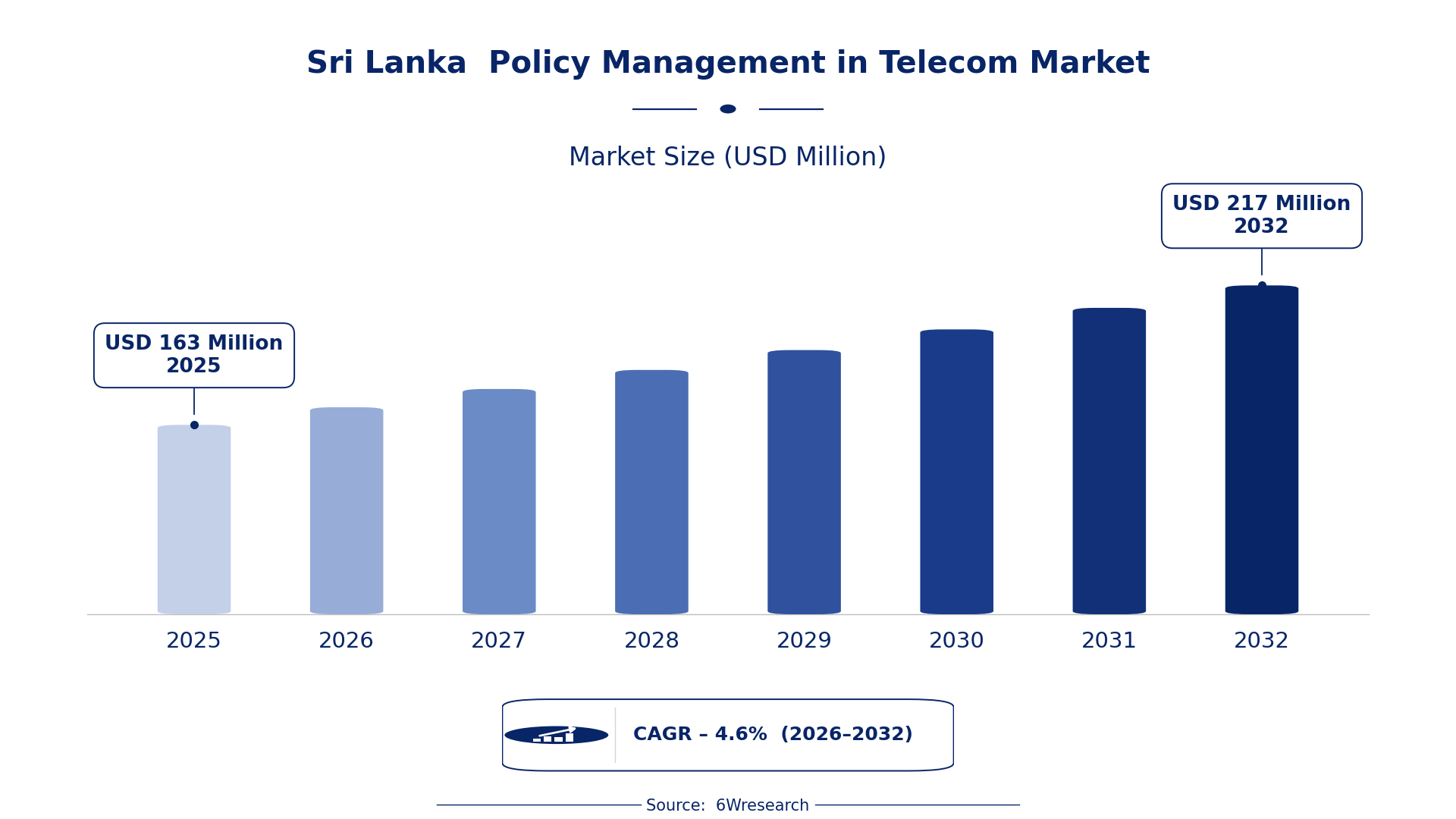
The Sri Lanka Policy Management in Telecom Market was estimated at USD 163 Million in 2025 and is projected to reach USD 217 Million by 2032, growing at a CAGR of 4.6% from 2026 to 2032.
Sri Lanka Policy Management in Telecom Market Synopsis
The primary force shaping the Sri Lanka Policy Management in Telecom Market is the rapid increase in mobile data consumption. As users demand more bandwidth and faster services, telecom operators are investing heavily in policy management systems that ensure effective network traffic control and subscriber satisfaction.
Simultaneously, regulatory compliance is becoming a critical aspect of telecom operations. With the government imposing stricter data privacy and fair usage regulations, operators are compelled to adopt advanced policy management solutions that support compliance while enhancing service offerings.
Sri Lanka Policy Management in Telecom Market Year-wise Growth Rate and Key Drivers
This graph illustrates the annual growth rates of the Sri Lanka Policy Management in Telecom Market from 2021 to 2032, highlighting a steady upward trajectory and projected expansion over the forecast period.
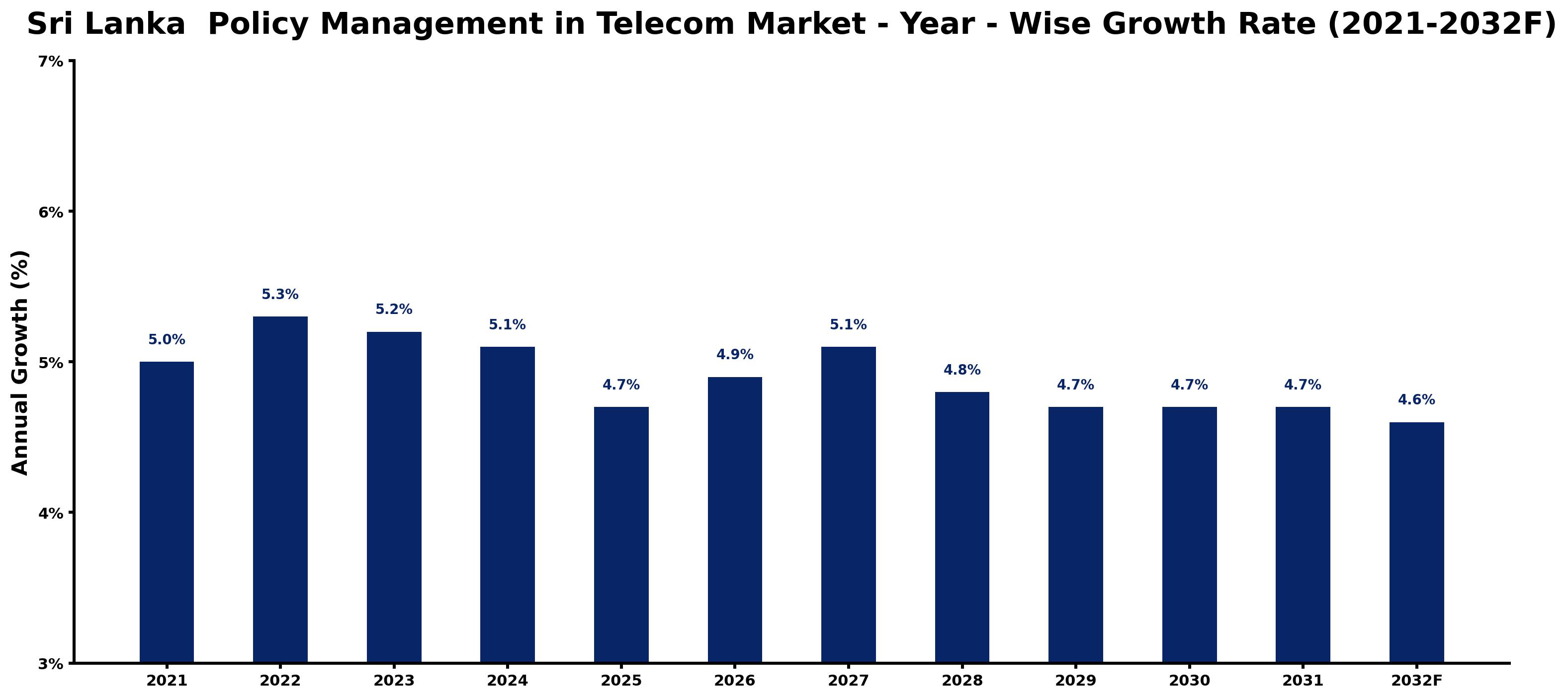
The table below presents the year‑wise growth rates along with the key drivers influencing the market
| Year | Growth Rate | Major Drivers |
| 2021 | 5.0% | Implementation of Telecom Regulatory Commission's new compliance standards. |
| 2022 | 5.3% | Increase in mobile broadband penetration driving service policy updates. |
| 2023 | 5.2% | Promotion of digital infrastructure by Ministry of Telecommunication. |
| 2024 | 5.1% | Adoption of 5G technology supporting new regulatory frameworks. |
| 2025 | 4.7% | Government incentives for telecom infrastructure investments enhance policies. |
| 2026 | 4.9% | Rising cybersecurity mandates from local authorities encouraging compliance. |
| 2027 | 5.1% | Regulatory frameworks aligning with global telecom best practices. |
| 2028 | 4.8% | Increased focus on consumer privacy regulations affecting policies. |
| 2029 | 4.7% | Government initiatives promoting local telecom innovations and startups. |
| 2030 | 4.7% | Emergence of new frequency spectrum allocation policies boosting growth. |
| 2031 | 4.7% | Support for remote work regulations stimulating telecom service demand. |
| 2032 | 4.6% | Shift toward sustainable telecom practices aligning with regulatory trends. |
Note: Market size estimations and growth projections presented in this report are based on 6Wresearch's proprietary forecasting methodology, utilizing the latest available industry data, government publications, and primary research inputs.
Sri Lanka Policy Management in Telecom Market Key Takeaways
Below are some of the specific key takeaways from the market, including:
- Increasing mobile data usage is driving demand for effective policy management solutions.
- Real-time analytics and dynamic policy controls are key features in modern policy management software.
- Regulatory frameworks are influencing service offerings and operational strategies in the telecom sector.
- High costs and reliance on imported technologies pose challenges to market growth.
- Government initiatives play a crucial role in fostering market development and compliance.
Evaluation of Restraints in Sri Lanka Policy Management in Telecom Market
The Sri Lanka Policy Management in Telecom Market faces notable restraints that hinder its growth. High costs associated with implementing advanced policy management technologies often limit the ability of local operators to invest fully in these systems. Furthermore, a reliance on imported solutions can make the market vulnerable to fluctuations in international trade policies, impacting affordability and accessibility.
Additionally, regulatory compliance can create a complex environment for telecom operators, particularly concerning data privacy and telecom standards. A general lack of awareness about policy management solutions among local operators can also stifle demand, as many remain unconvinced of the tangible benefits such systems offer.
Sri Lanka Policy Management in Telecom Market Trends
Several trends are emerging in the Sri Lanka Policy Management in Telecom Market. There is a marked shift toward real-time analytics in policy management systems, allowing for immediate adjustments to service policies and network traffic. Operators are increasingly implementing dynamic policy controls that enable personalized service offerings, which are critical to retaining competitive advantages in a saturated market.
Partnerships with technology vendors are on the rise, enhancing operational efficiency and customer experience. As telecom companies look for innovative solutions to manage their growing subscriber bases, the emphasis on technology integration in policy management solutions continues to grow.
Sri Lanka Policy Management in Telecom Market Opportunities
Looking ahead, significant growth and investment opportunities exist in the Sri Lanka Policy Management in Telecom Market. As mobile penetration rises, operators have the chance to harness new technologies that provide enhanced policy management capabilities. Additionally, the increasing focus on data privacy regulations will push operators to invest in compliance-focused solutions, potentially leading to collaborative projects with tech providers.
The ongoing digital transformation in Sri Lanka's economy also presents an opening for telecom operators to innovate their service offerings, driving demand for advanced policy management systems that can support diverse applications across various sectors.
Government Initiatives in the Sri Lanka Policy Management in Telecom Market
The Sri Lankan government is actively shaping the Policy Management in Telecom Market through various initiatives aimed at fostering a conducive regulatory environment. By encouraging fair competition and supporting technological advancements, the government is promoting the growth of a robust telecom sector. These public-sector priorities include ensuring consumer protection through data security and privacy regulations.
- A regulatory framework introduced in 2025 mandating billing transparency, ensuring that consumers are better informed about charges.
- A national digital infrastructure upgrade programme now in its rollout phase, aimed at enhancing connectivity and service quality across the nation.
- Financial incentives for the deployment of advanced telecom technologies, encouraging operators to modernize their infrastructure.
- A planned public-private initiative expected to expand telecom infrastructure access by 2028, targeting underserved regions.
- Current collaborations between government bodies and telecom operators to develop best practices for data privacy compliance.
Future Insights of the Sri Lanka Policy Management in Telecom Market
Between 2026 and 2032, the Sri Lanka Policy Management in Telecom Market is expected to see progressive changes driven by technological advancements and regulatory pressures. As mobile usage continues to escalate, telecom operators will need to implement more sophisticated policy management solutions to handle increased demand while maintaining service quality.
The push towards data privacy will also be a central focus, requiring operators to invest in systems that ensure compliance with evolving regulations. In this dynamic environment, the ability to adapt and innovate will determine which operators thrive in a competitive market.
Sri Lanka Policy Management in Telecom Market Latest Developments
Recent activities in the Sri Lanka Policy Management in Telecom Market have focused on enhancing the capabilities of telecom operators amid growing regulatory demands and consumer expectations. There has been a noticeable uptick in partnerships between telecom companies and technology providers as operators aim to upgrade their systems and ensure compliance with emerging regulations.
- A major technology vendor announced a partnership in mid-2025 to implement a next-gen policy management system for a leading operator, which is currently underway.
- An initiative that began in early 2025 to enhance real-time analytics capabilities in policy management software has been successfully completed.
- Several operators are currently exploring advanced AI-driven policy management solutions, with trials expected to commence in Q3 2026.
- A rollout expected to begin in the second half of 2026 aims to introduce dynamic pricing models across multiple service tiers.
- In late 2024, a major operator upgraded its policy management system to integrate enhanced data security measures, ensuring compliance with new regulations.
Sri Lanka Policy Management in Telecom Market - Key Attractiveness of the Report
- 10 Years of Market Numbers
- Historical Data Starting from 2022 to 2025
- Base Year: 2025
- Forecast Data until 2032
- Key Performance Indicators Impacting the Market
- Major Upcoming Developments and Projects
Key Highlights of the Report:
- Sri Lanka Policy Management in Telecom Market Outlook
- Market Size of Sri Lanka Policy Management in Telecom Market, 2025
- Forecast of Sri Lanka Policy Management in Telecom Market, 2032
- Historical Data and Forecast of Sri Lanka Policy Management in Telecom Revenues & Volume for the Period 2022-2032F
- Sri Lanka Policy Management in Telecom Market Trend Evolution
- Sri Lanka Policy Management in Telecom Market Drivers and Challenges
- Sri Lanka Policy Management in Telecom Price Trends
- Sri Lanka Policy Management in Telecom Porter's Five Forces
- Sri Lanka Policy Management in Telecom Industry Life Cycle
- Historical Data and Forecast of Sri Lanka Policy Management in Telecom Market Revenues & Volume By Network for the Period 2022-2032F
- Historical Data and Forecast of Sri Lanka Policy Management in Telecom Market Revenues & Volume By Fixed for the Period 2022-2032F
- Historical Data and Forecast of Sri Lanka Policy Management in Telecom Market Revenues & Volume By Wireless for the Period 2022-2032F
- Historical Data and Forecast of Sri Lanka Policy Management in Telecom Market Revenues & Volume By Component for the Period 2022-2032F
- Historical Data and Forecast of Sri Lanka Policy Management in Telecom Market Revenues & Volume By Solutions for the Period 2022-2032F
- Historical Data and Forecast of Sri Lanka Policy Management in Telecom Market Revenues & Volume By Services for the Period 2022-2032F
- Historical Data and Forecast of Sri Lanka Policy Management in Telecom Market Revenues & Volume By Deployment for the Period 2022-2032F
- Historical Data and Forecast of Sri Lanka Policy Management in Telecom Market Revenues & Volume By Cloud for the Period 2022-2032F
- Historical Data and Forecast of Sri Lanka Policy Management in Telecom Market Revenues & Volume By On-Premises for the Period 2022-2032F
- Sri Lanka Policy Management in Telecom Import Export Trade Statistics
- Market Opportunity Assessment By Network
- Market Opportunity Assessment By Component
- Market Opportunity Assessment By Deployment
- Sri Lanka Policy Management in Telecom Top Companies Market Share
- Sri Lanka Policy Management in Telecom Competitive Benchmarking By Technical and Operational Parameters
- Sri Lanka Policy Management in Telecom Company Profiles
- Sri Lanka Policy Management in Telecom Key Strategic Recommendations






































