Sri Lanka Potato Chips Market: Import Trend Analysis
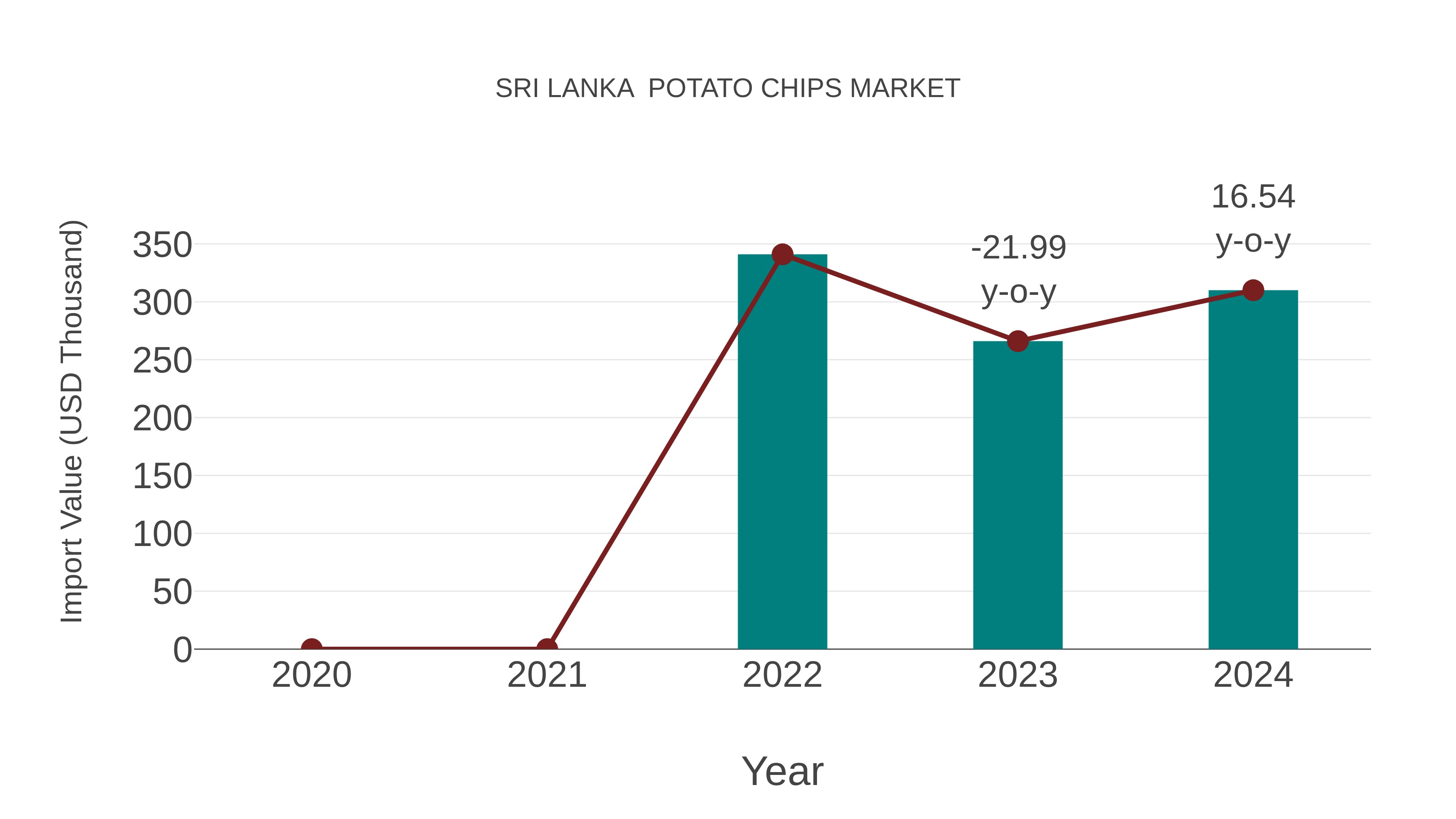
Sri Lanka import trend for the potato chips market showed a growth rate of 16.54% from 2023 to 2024, with a compound annual growth rate (CAGR) of -4.65% from 2020 to 2024. This fluctuation could be attributed to changing consumer preferences or shifts in trade policies impacting import volumes.
Potato Chips Market: Sri Lanka vs Top 5 Major Economies in 2027 (Asia)
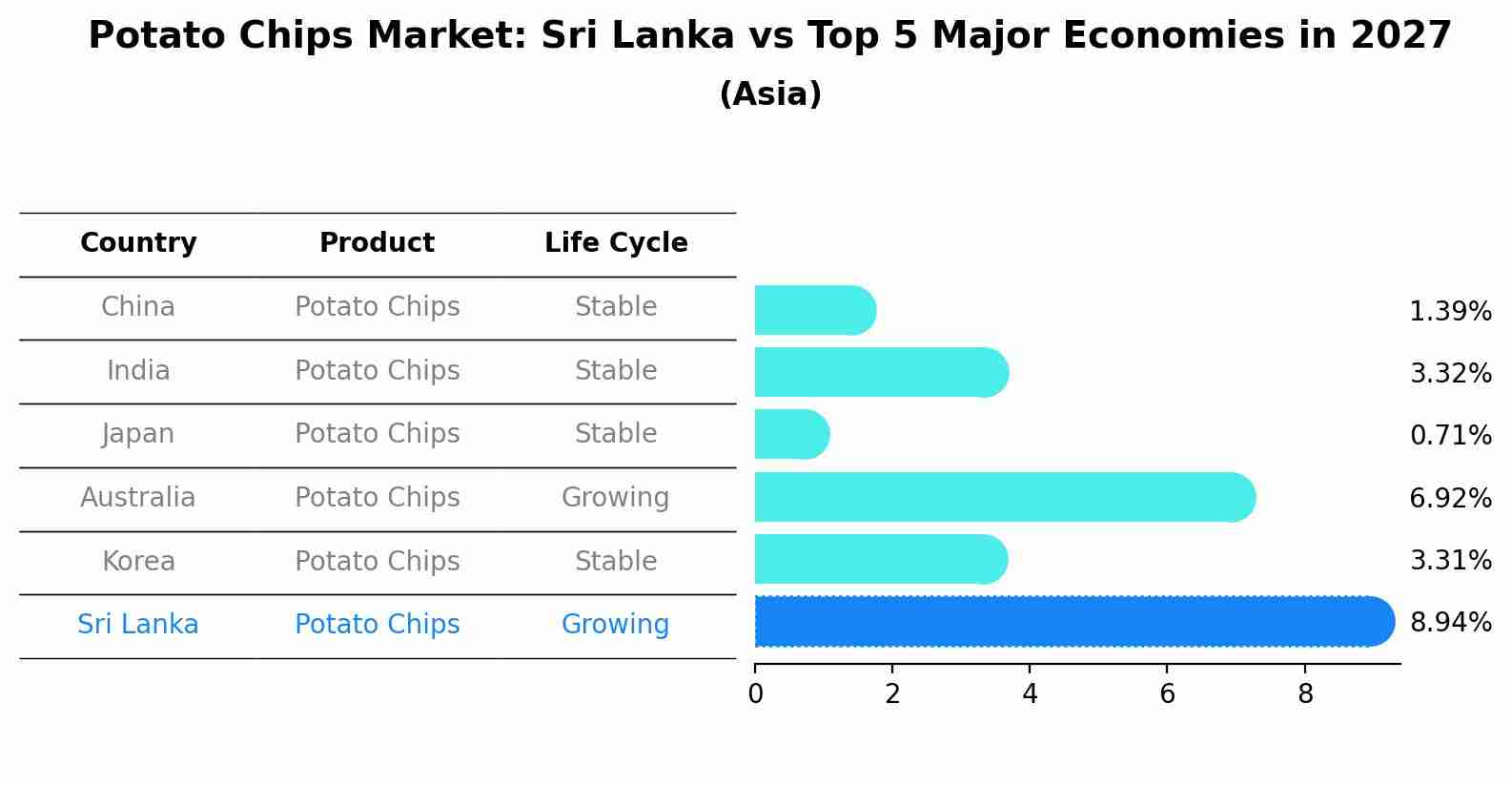
The Potato Chips market in Sri Lanka is projected to grow at a growing growth rate of 8.94% by 2027, within the Asia region led by China, along with other countries like India, Japan, Australia and South Korea, collectively shaping a dynamic and evolving market environment driven by innovation and increasing adoption of emerging technologies.
Sri Lanka Potato Chips Market Overview
The Sri Lanka potato chips market is an integral part of the snack food industry, catering to the growing demand for convenient and tasty snack options among consumers. Potato chips are widely consumed across various demographics and are favored for their crispy texture and wide range of flavors. The market is influenced by factors such as changing consumer lifestyles, urbanization, and increasing disposable incomes. Key players in the market focus on product innovation, including healthier and gourmet varieties, to meet evolving consumer preferences. Market trends include the adoption of sustainable packaging solutions, expansion of distribution networks to reach rural areas, and partnerships with local farmers to ensure a steady supply of quality potatoes.
Drivers of the market
The Sri Lanka potato chips market is experiencing robust growth driven by changing consumer lifestyles, increasing disposable incomes, and growing demand for convenient snack options. Potato chips, known for their wide variety of flavors and crispy textures, have become a popular choice among Sri Lankan consumers across different age groups. Market expansion is fueled by expanding retail channels, including supermarkets, convenience stores, and online platforms, which enhance product accessibility and visibility. Snack manufacturers are focusing on product innovation, healthier ingredient formulations, and sustainable packaging solutions to cater to evolving consumer preferences and enhance market competitiveness in Sri Lanka dynamic potato chips market.
Challenges of the market
The Potato Chips market in Sri Lanka faces several challenges, including high production costs and limited local raw material supply. The market is heavily reliant on imported potatoes, which leads to increased costs and vulnerability to global market dynamics. Additionally, there is a need for better technology and expertise to improve production efficiency and product quality. Health concerns and the demand for healthier snack options further complicate the market, requiring investments in product innovation and healthier alternatives.
Government Policy of the market
The Sri Lankan government promotes the potato chips market by supporting local production and processing of potatoes into chips. Policies include financial incentives for manufacturers, research and development support for innovative flavors and packaging, and regulatory measures to ensure food safety and product quality, thereby enhancing market competitiveness.
Key Highlights of the Report:
- Sri Lanka Potato Chips Market Outlook
- Market Size of Sri Lanka Potato Chips Market, 2019
- Forecast of Sri Lanka Potato Chips Market, 2026
- Historical Data and Forecast of Sri Lanka Potato Chips Revenues & Volume for the Period 2016 - 2026
- Sri Lanka Potato Chips Market Trend Evolution
- Sri Lanka Potato Chips Market Drivers and Challenges
- Sri Lanka Potato Chips Price Trends
- Sri Lanka Potato Chips Porter's Five Forces
- Sri Lanka Potato Chips Industry Life Cycle
- Historical Data and Forecast of Sri Lanka Potato Chips Market Revenues & Volume By Flavor for the Period 2016 - 2026
- Historical Data and Forecast of Sri Lanka Potato Chips Market Revenues & Volume By Plain/Salted for the Period 2016 - 2026
- Historical Data and Forecast of Sri Lanka Potato Chips Market Revenues & Volume By Flavored for the Period 2016 - 2026
- Historical Data and Forecast of Sri Lanka Potato Chips Market Revenues & Volume By Type for the Period 2016 - 2026
- Historical Data and Forecast of Sri Lanka Potato Chips Market Revenues & Volume By Baked for the Period 2016 - 2026
- Historical Data and Forecast of Sri Lanka Potato Chips Market Revenues & Volume By Fried for the Period 2016 - 2026
- Historical Data and Forecast of Sri Lanka Potato Chips Market Revenues & Volume By Distribution Channel for the Period 2016 - 2026
- Historical Data and Forecast of Sri Lanka Potato Chips Market Revenues & Volume By Supermarket/Hypermarket for the Period 2016 - 2026
- Historical Data and Forecast of Sri Lanka Potato Chips Market Revenues & Volume By Convenience Stores for the Period 2016 - 2026
- Historical Data and Forecast of Sri Lanka Potato Chips Market Revenues & Volume By Specialist Stores for the Period 2016 - 2026
- Historical Data and Forecast of Sri Lanka Potato Chips Market Revenues & Volume By Online Retail Stores for the Period 2016 - 2026
- Historical Data and Forecast of Sri Lanka Potato Chips Market Revenues & Volume By Other for the Period 2016 - 2026
- Sri Lanka Potato Chips Import Export Trade Statistics
- Market Opportunity Assessment By Flavor
- Market Opportunity Assessment By Type
- Market Opportunity Assessment By Distribution Channel
- Sri Lanka Potato Chips Top Companies Market Share
- Sri Lanka Potato Chips Competitive Benchmarking By Technical and Operational Parameters
- Sri Lanka Potato Chips Company Profiles
- Sri Lanka Potato Chips Key Strategic Recommendations






































