Sri Lanka Pressure Vessel Market: Import Trend Analysis
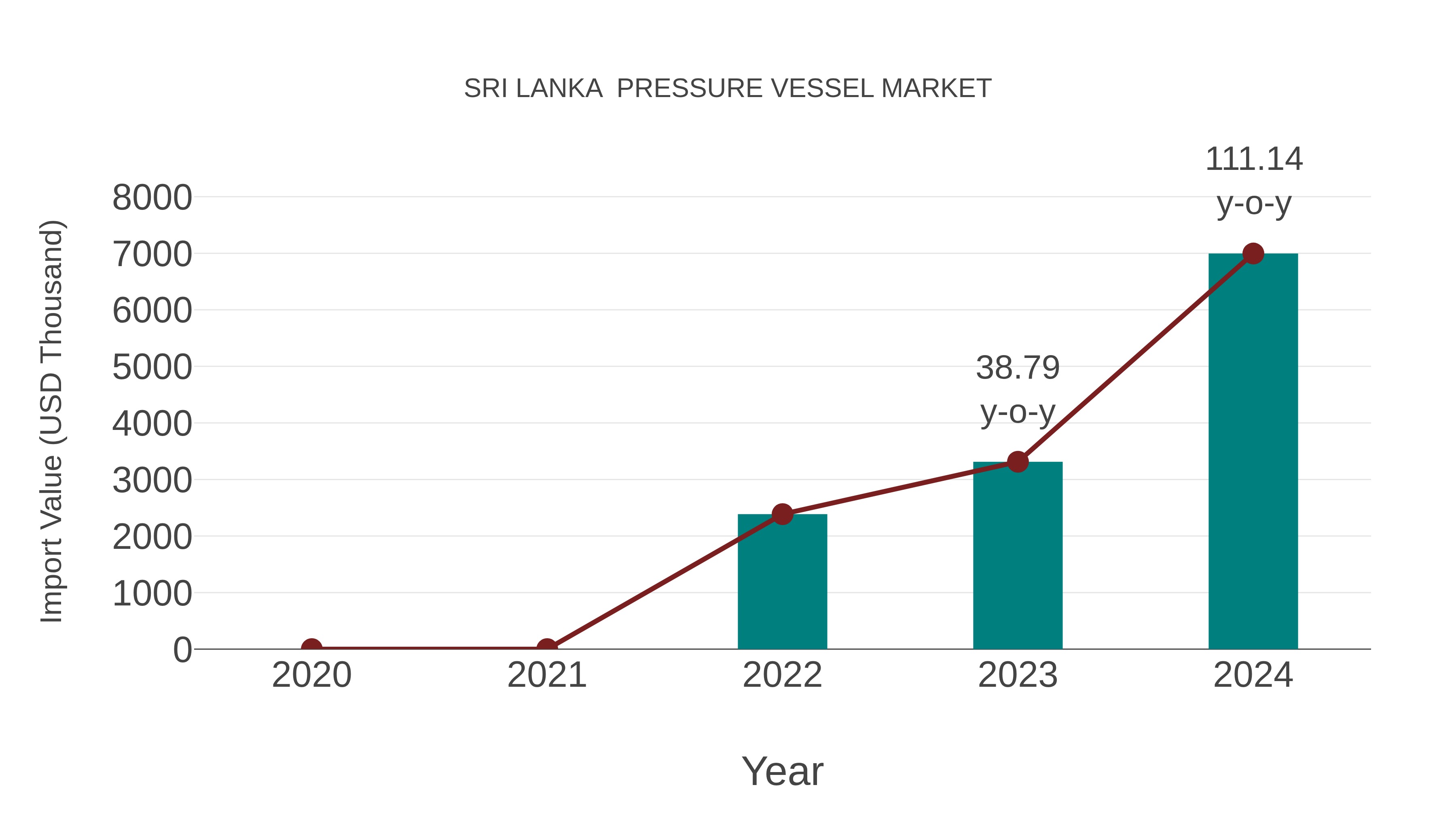
In the Sri Lankan pressure vessel market, the import trend showed significant growth from 2023 to 2024, increasing by 111.14%. The compound annual growth rate (CAGR) for imports between 2020 and 2024 stood at 71.19%. This surge can be attributed to increasing industrial activities and infrastructure development in the country.
Sri Lanka Pressure Vessel Market Overview
The Sri Lanka pressure vessel market supports industries such as oil and gas, chemical processing, and water treatment by providing containers designed to hold gases or liquids at pressures substantially different from ambient conditions. Pressure vessels play a critical role in storing and transporting compressed gases, chemicals, and process fluids safely and efficiently. Market demand is driven by industrial infrastructure investments, expansion of manufacturing capacities, and regulatory requirements for pressure vessel safety standards. Key stakeholders include pressure vessel manufacturers, engineering firms, and end-user industries seeking reliable and durable vessel solutions for diverse applications. Market trends include the adoption of advanced materials for pressure vessel construction, development of high-pressure vessel designs, and collaborations to innovate vessel technologies for emerging industrial requirements.
Drivers of the market
The Sri Lanka pressure vessel market is growing with applications in chemical processing, oil & gas storage, and power generation requiring safe and efficient containment of liquids and gases under high pressure conditions. Pressure vessels, designed to withstand internal pressure loads, play a critical role in industrial manufacturing processes and energy production in Sri Lanka. Market drivers include capacity expansion projects, safety regulations, and demand for customized vessel designs. Fabricators, engineering consultants, and energy companies are investing in material innovations, welding technologies, and quality assurance standards to ensure product integrity and compliance in Sri Lanka evolving pressure vessel market.
Challenges of the market
The Pressure Vessel market in Sri Lanka encounters significant challenges, including high production and import costs. The market`s reliance on imported materials and technology increases costs and susceptibility to global market fluctuations. There is a need for skilled professionals and better infrastructure to support the growth and maintenance of pressure vessels. Additionally, regulatory requirements and the need for adherence to strict safety and quality standards add complexity to the market dynamics. Environmental concerns and the push for sustainable solutions further complicate the market.
Government Policy of the market
Government policies in Sri Lanka for the pressure vessel market focus on promoting the production and use of high-quality pressure vessels in industrial applications. Initiatives include financial incentives for manufacturers, research and development support for advanced pressure vessel designs, and regulatory measures to ensure compliance with safety and quality standards. These efforts aim to enhance industrial safety and operational efficiency.
Key Highlights of the Report:
- Sri Lanka Pressure Vessel Market Outlook
- Market Size of Sri Lanka Pressure Vessel Market, 2025
- Forecast of Sri Lanka Pressure Vessel Market, 2032
- Historical Data and Forecast of Sri Lanka Pressure Vessel Revenues & Volume for the Period 2022-2032F
- Sri Lanka Pressure Vessel Market Trend Evolution
- Sri Lanka Pressure Vessel Market Drivers and Challenges
- Sri Lanka Pressure Vessel Price Trends
- Sri Lanka Pressure Vessel Porter's Five Forces
- Sri Lanka Pressure Vessel Industry Life Cycle
- Historical Data and Forecast of Sri Lanka Pressure Vessel Market Revenues & Volume By Type for the Period 2022-2032F
- Historical Data and Forecast of Sri Lanka Pressure Vessel Market Revenues & Volume By Boiler for the Period 2022-2032F
- Historical Data and Forecast of Sri Lanka Pressure Vessel Market Revenues & Volume By Reactor for the Period 2022-2032F
- Historical Data and Forecast of Sri Lanka Pressure Vessel Market Revenues & Volume By Separator for the Period 2022-2032F
- Historical Data and Forecast of Sri Lanka Pressure Vessel Market Revenues & Volume By Heat Source for the Period 2022-2032F
- Historical Data and Forecast of Sri Lanka Pressure Vessel Market Revenues & Volume By Fired Pressure Vessel for the Period 2022-2032F
- Historical Data and Forecast of Sri Lanka Pressure Vessel Market Revenues & Volume By Unfired Pressure Vessel for the Period 2022-2032F
- Historical Data and Forecast of Sri Lanka Pressure Vessel Market Revenues & Volume By Application for the Period 2022-2032F
- Historical Data and Forecast of Sri Lanka Pressure Vessel Market Revenues & Volume By Storage Vessels for the Period 2022-2032F
- Historical Data and Forecast of Sri Lanka Pressure Vessel Market Revenues & Volume By Processing Vessels for the Period 2022-2032F
- Sri Lanka Pressure Vessel Import Export Trade Statistics
- Market Opportunity Assessment By Type
- Market Opportunity Assessment By Heat Source
- Market Opportunity Assessment By Application
- Sri Lanka Pressure Vessel Top Companies Market Share
- Sri Lanka Pressure Vessel Competitive Benchmarking By Technical and Operational Parameters
- Sri Lanka Pressure Vessel Company Profiles
- Sri Lanka Pressure Vessel Key Strategic Recommendations






































