Sri Lanka Scuba Diving Equipment Market Size, Share & Growth Rate
The Sri Lanka Scuba Diving Equipment Market was estimated at USD 1276 Million in 2025 and is projected to reach USD 1860 Million by 2032, growing at a CAGR of 5.5% from 2026 to 2032. This robust growth trajectory is primarily driven by the surge in tourism and the increasing allure of water sports activities among both local and international diving enthusiasts. The country's stunning marine biodiversity and acclaimed diving sites continue to be significant factors attracting more divers, thus spurring demand for quality equipment.
Sri Lanka Scuba Diving Equipment Market Year-wise Growth Rate and Key Drivers
This graph highlights how the Sri Lanka Scuba Diving Equipment Market has steadily grown over the years, supported by major growth factors.
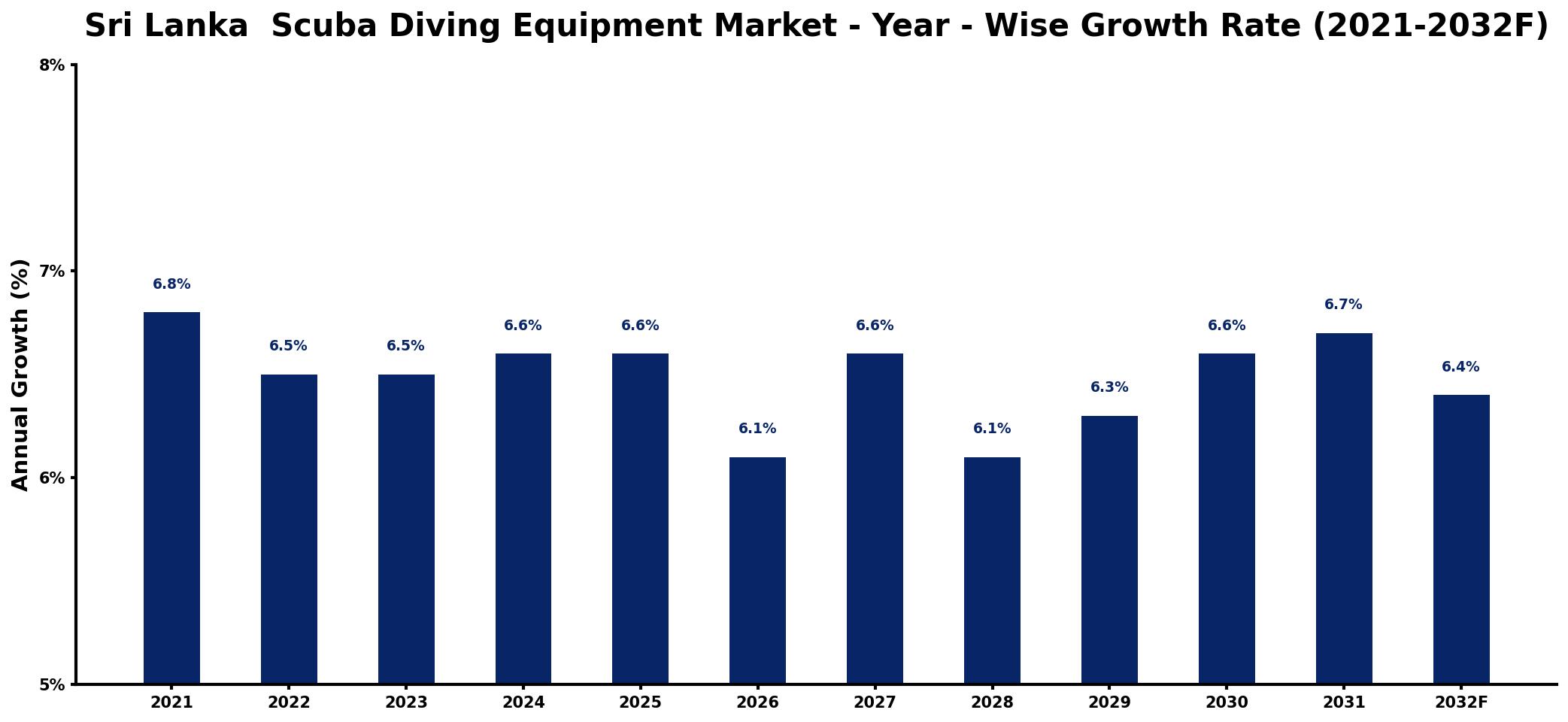
The table below presents the year‑wise growth rates along with the key drivers influencing the market
| Year | Growth Rate | Major Drivers |
| 2021 | 6.8% | Growing tourism interest in activities |
| 2022 | 6.5% | Increased investment in marine conservation |
| 2023 | 6.5% | Expansion of training certification programs |
| 2024 | 6.6% | Rising popularity of underwater photography |
| 2025 | 6.6% | Emergence of eco-friendly travel trends |
| 2026 | 6.1% | Enhanced focus on adventure sports |
| 2027 | 6.6% | Development of new coastal resorts |
| 2028 | 6.1% | Improvement in marine infrastructure projects |
| 2029 | 6.3% | Surge in social media promotions |
| 2030 | 6.6% | Growth in youth adventure tourism |
| 2031 | 6.7% | expanding industrial usage applications |
| 2032 | 6.4% | expanding healthcare application demand |
Note: Market size estimations and growth projections presented in this report are based on 6Wresearch's proprietary forecasting methodology, utilizing the latest available industry data, government publications, and primary research inputs.
Sri Lanka Scuba Diving Equipment Market Synopsis
In Sri Lanka, the demand for scuba diving equipment is growing, propelled by an expanding tourist base eager to explore the underwater wonders of the Indian Ocean. The nation's renowned diving locations, including Trincomalee and Hikkaduwa, are key attractions that motivate both recreational and professional divers to invest in high-quality gear.
The market is marked by a diverse range of products, from traditional scuba gear to advanced eco-friendly options. Local manufacturers are increasingly collaborating with international brands, focusing on innovation and sustainable practices to meet the rising expectations of environmentally conscious consumers.
Sri Lanka Scuba Diving Equipment Market Key Takeaways
- The market is experiencing steady growth, fueled by rising adventure tourism.
- Local production and international collaboration are enhancing the quality of available equipment.
- Eco-friendly diving gear is becoming increasingly popular among environmentally conscious divers.
- Technological advancements are leading to innovative diving equipment, enhancing user experience.
- Prominent diving locations in Sri Lanka contribute significantly to equipment demand.
Evaluation of Restraints in Sri Lanka Scuba Diving Equipment Market
Despite the promising growth in the Sri Lanka scuba diving equipment market, several obstacles impede its full potential. Limited public awareness about scuba diving as a recreational activity hinders broader market engagement. Additionally, high import costs for specialized equipment restrict affordability, especially for local consumers. Inadequate infrastructure in certain regions poses challenges for diving tourism, while seasonal fluctuations due to monsoonal weather conditions also impact market stability. Overcoming these barriers will require unified efforts among stakeholders to promote sustainable practices and enhance diving tourism visibility.
Sri Lanka Scuba Diving Equipment Market Trends
Current trends in the Sri Lanka scuba diving equipment market highlight a shift towards lightweight and durable materials, with products such as carbon fiber fins gaining popularity. The increasing interest in sustainable practices has spurred demand for eco-friendly equipment made from recycled materials. Technological innovations are also on the rise, with compact dive computers and high-resolution underwater cameras catering to both enthusiasts and professional photographers, enriching the overall diving experience.
Sri Lanka Scuba Diving Equipment Market Opportunities
Investment opportunities within the Sri Lanka scuba diving equipment market are particularly promising. As tourism flourishes, theres a lucrative potential in establishing distribution and rental businesses for diving equipment. The market for eco-friendly gear is ripe for development, appealing to the growing demographic that prioritizes sustainability. Collaborating with local diving operators to create tailored packages could significantly enhance profitability, driving further growth in this vibrant sector.
Government Initiatives in the Sri Lanka Scuba Diving Equipment Market
The Sri Lankan government plays a pivotal role in regulating the scuba diving industry, with policies aimed at ensuring safety standards and environmental protection. Regulatory measures by the Sri Lanka Customs department govern the importation of diving equipment, imposing duties that can affect pricing. Additionally, the Sri Lanka Tourism Development Authority has set forth safety guidelines for diving operators, encouraging responsible practices. Government initiatives focused on marine conservation are also instrumental in promoting sustainable diving practices, ensuring that the ecological balance is maintained while boosting the tourism sector.
Future Insights of the Sri Lanka Scuba Diving Equipment Market
Looking ahead to the years 2026-2032, the Sri Lanka scuba diving equipment market is set for continued expansion. The increasing enthusiasm for water sports among locals and tourists, coupled with ongoing advancements in diving technology, positions the market for steady growth. The emphasis on sustainability is expected to persist, influencing product development and consumer choices. However, the market's progression may face challenges from environmental regulations and economic fluctuations, necessitating adaptive strategies to ensure resilience and sustainability in growth.
Sri Lanka Scuba Diving Equipment Market Latest Developments (2025 - 2026)
Recent developments in the Sri Lanka scuba diving equipment market indicate a strong shift towards innovative product offerings. There has been a noticeable increase in the introduction of lightweight and technologically advanced gear designed for enhanced performance and user comfort. Furthermore, collaborations between local manufacturers and international brands are on the rise, aimed at expanding product lines and improving quality. As the government continues to prioritize sustainable tourism, initiatives supporting eco-friendly diving practices are becoming more prevalent.
Sri Lanka Scuba Diving Equipment Market - Key Attractiveness of the Report
- 10 Years of Market Numbers
- Historical Data Starting from 2022 to 2025
- Base Year: 2025
- Forecast Data until 2032
- Key Performance Indicators Impacting the Market
- Major Upcoming Developments and Projects
Key Highlights of the Report:
- Sri Lanka Scuba Diving Equipment Market Outlook
- Market Size of Sri Lanka Scuba Diving Equipment Market, 2025
- Forecast of Sri Lanka Scuba Diving Equipment Market, 2032
- Historical Data and Forecast of Sri Lanka Scuba Diving Equipment Revenues & Volume for the Period 2022-2032F
- Sri Lanka Scuba Diving Equipment Market Trend Evolution
- Sri Lanka Scuba Diving Equipment Market Drivers and Challenges
- Sri Lanka Scuba Diving Equipment Price Trends
- Sri Lanka Scuba Diving Equipment Porter's Five Forces
- Sri Lanka Scuba Diving Equipment Industry Life Cycle
- Historical Data and Forecast of Sri Lanka Scuba Diving Equipment Market Revenues & Volume By Product for the Period 2022-2032F
- Historical Data and Forecast of Sri Lanka Scuba Diving Equipment Market Revenues & Volume By Regulators and Rebreathers for the Period 2022-2032F
- Historical Data and Forecast of Sri Lanka Scuba Diving Equipment Market Revenues & Volume By Bags and Apparel for the Period 2022-2032F
- Historical Data and Forecast of Sri Lanka Scuba Diving Equipment Market Revenues & Volume By Gauges and Dive Computers for the Period 2022-2032F
- Historical Data and Forecast of Sri Lanka Scuba Diving Equipment Market Revenues & Volume By Other Products for the Period 2022-2032F
- Historical Data and Forecast of Sri Lanka Scuba Diving Equipment Market Revenues & Volume By Distribution Channel for the Period 2022-2032F
- Historical Data and Forecast of Sri Lanka Scuba Diving Equipment Market Revenues & Volume By E-Commerce for the Period 2022-2032F
- Historical Data and Forecast of Sri Lanka Scuba Diving Equipment Market Revenues & Volume By Hypermarkets and Supermarkets for the Period 2022-2032F
- Historical Data and Forecast of Sri Lanka Scuba Diving Equipment Market Revenues & Volume By Specialty Stores for the Period 2022-2032F
- Historical Data and Forecast of Sri Lanka Scuba Diving Equipment Market Revenues & Volume By Other Distribution Channels for the Period 2022-2032F
- Sri Lanka Scuba Diving Equipment Import Export Trade Statistics
- Market Opportunity Assessment By Product
- Market Opportunity Assessment By Distribution Channel
- Sri Lanka Scuba Diving Equipment Top Companies Market Share
- Sri Lanka Scuba Diving Equipment Competitive Benchmarking By Technical and Operational Parameters
- Sri Lanka Scuba Diving Equipment Company Profiles
- Sri Lanka Scuba Diving Equipment Key Strategic Recommendations






































