Sri Lanka Syrup Market: Import Trend Analysis
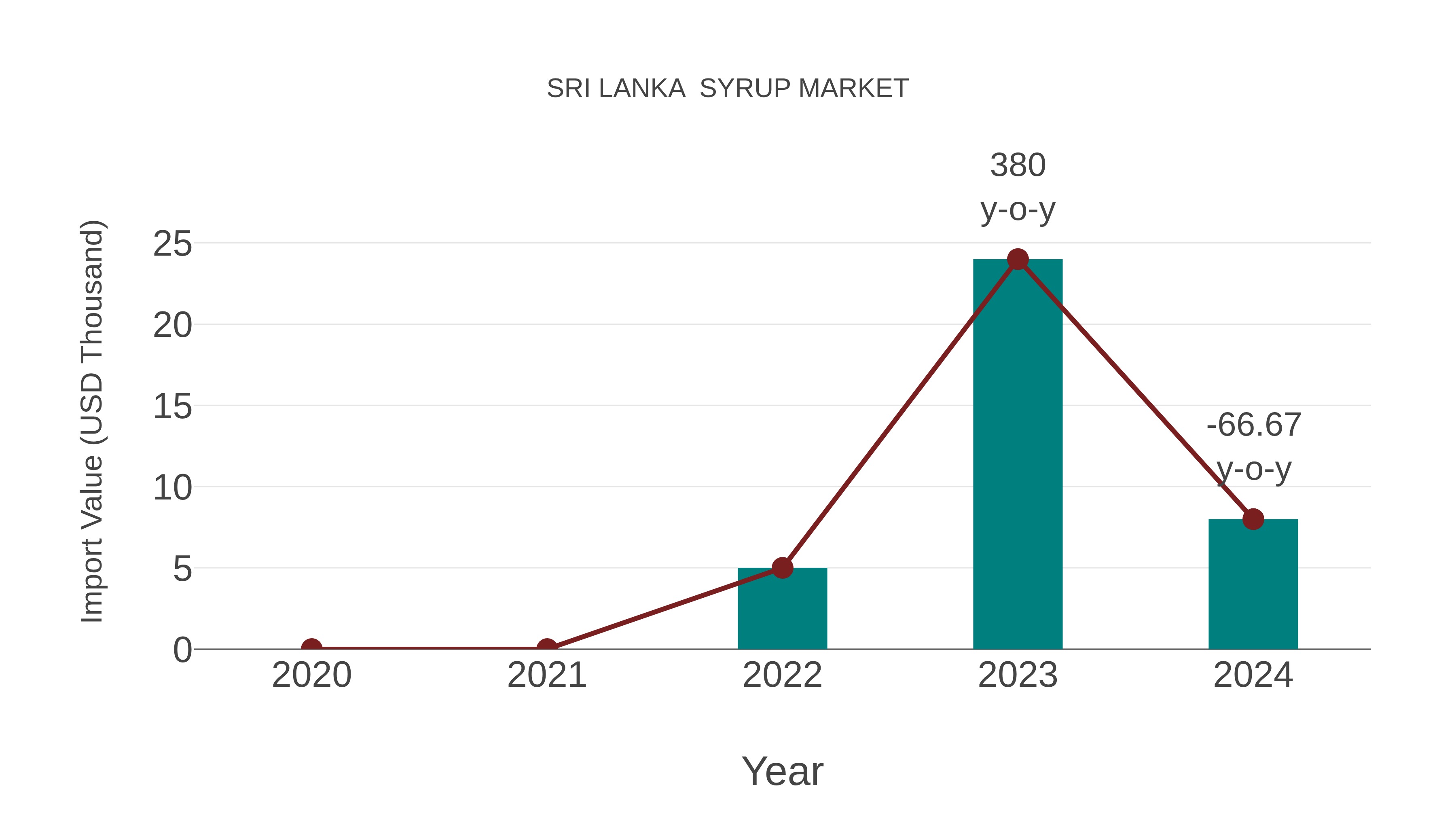
In 2023-2024, Sri Lanka syrup market experienced a -66.67% decline in imports, with a 26.49% CAGR for 2020-2024. This drastic drop may be attributed to shifts in consumer preferences or changes in trade policies impacting the market`s dynamics.
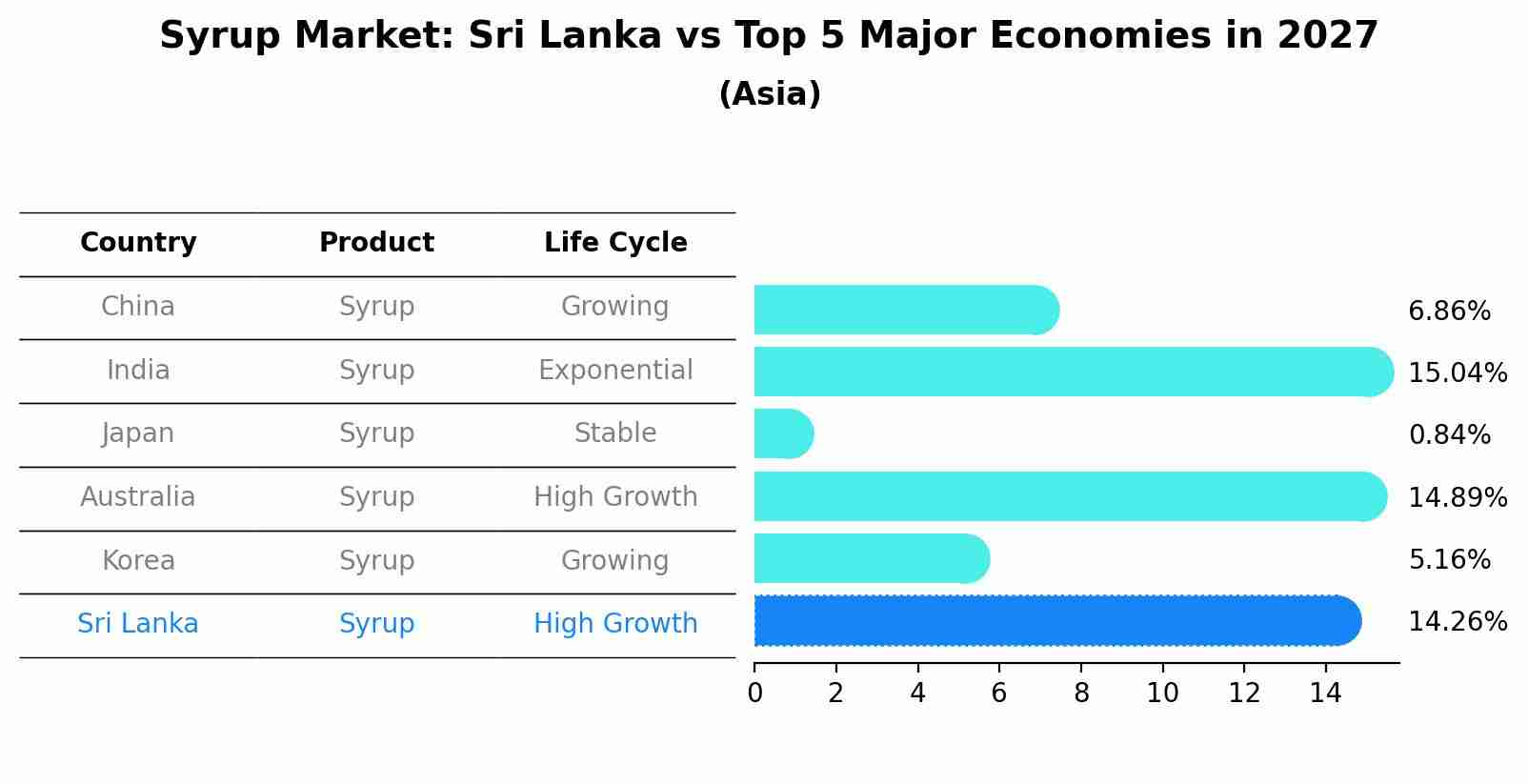
Syrup Market: Sri Lanka vs Top 5 Major Economies in 2027 (Asia)
The Syrup market in Sri Lanka is projected to grow at a high growth rate of 14.26% by 2027, highlighting the country's increasing focus on advanced technologies within the Asia region, where China holds the dominant position, followed closely by India, Japan, Australia and South Korea, shaping overall regional demand.
Sri Lanka Syrup Market Overview
The Sri Lanka Syrup Market is experiencing steady growth, driven by factors such as increasing disposable income, changing consumer preferences towards healthier and natural beverages, and the growing popularity of flavored syrups in cocktails and mocktails. Key players in the market are focusing on product innovation, introducing new flavors and natural ingredients to cater to the evolving consumer demands. The market is highly competitive, with players adopting strategies such as marketing campaigns, product diversification, and partnerships to gain a competitive edge. With a rising trend towards at-home consumption and the popularity of beverages such as iced teas, flavored coffees, and smoothies, the Sri Lanka Syrup Market is expected to continue its growth trajectory in the coming years.
Sri Lanka Syrup Market Trends
The Sri Lanka Syrup Market is witnessing several key trends. One prominent trend is the increasing demand for natural and organic syrup products. Consumers are becoming more health-conscious and are opting for syrups made from natural ingredients without any artificial additives. Another trend is the rising popularity of flavored syrups, such as fruit-flavored and exotic flavor options, catering to the evolving taste preferences of consumers. Moreover, there is a growing focus on innovative packaging designs and convenient formats, such as squeezable bottles and resealable packaging, enhancing the overall customer experience. Additionally, the market is seeing a surge in the adoption of online retail channels for purchasing syrups, providing consumers with convenient access to a wide range of products and flavors.
Sri Lanka Syrup Market Challenges
In the Sri Lankan Syrup Market, some challenges faced include intense competition from both local and international brands, fluctuating raw material prices impacting production costs, and stringent regulatory requirements for product labeling and quality standards. Additionally, consumer preferences and tastes are evolving, leading to the need for continuous innovation and product development to meet changing demands. Distribution and logistics can also be challenging, especially in reaching remote or rural areas across the island. In such a competitive market, building brand loyalty and ensuring consistent quality while keeping prices competitive can be a constant struggle for companies operating in the Sri Lankan Syrup Market.
Sri Lanka Syrup Market Investment Opportunities
The Sri Lanka syrup market presents attractive investment opportunities due to the growing consumer demand for flavored syrups in various applications such as beverages, desserts, and confectionery products. With changing consumer preferences and a trend towards experimenting with different flavors, there is a rising demand for premium and innovative syrups in the market. Investing in the Sri Lanka syrup market offers the potential for strong growth and profitability, especially for companies that can offer unique and high-quality products that cater to the local taste preferences. Furthermore, the increasing urbanization, rising disposable incomes, and expanding foodservice industry in Sri Lanka provide a conducive environment for market expansion and product diversification, making it a promising sector for investment.
Sri Lanka Syrup Market Government Policy
The Sri Lankan government has implemented various policies to regulate the syrup market in the country. These policies focus on ensuring the quality and safety of syrups consumed by the public. The Food Act and the Food Regulations Act provide guidelines for the manufacturing, labeling, and distribution of syrups to meet specified standards. Additionally, the government imposes strict monitoring and inspection measures to prevent the sale of counterfeit or substandard syrups in the market. The Food Advisory Committee plays a significant role in advising the government on policy matters related to food safety and quality, including syrups. Overall, these policies aim to safeguard consumer health and promote transparency in the Sri Lankan syrup market.
Sri Lanka Syrup Market Future Outlook
The Sri Lanka Syrup Market is expected to witness steady growth in the coming years due to increasing consumer demand for convenient and ready-to-use beverage solutions. The market is likely to be driven by factors such as changing consumer lifestyles, rising disposable incomes, and a growing preference for flavored beverages. Additionally, the introduction of new and innovative syrup flavors and formulations by manufacturers is expected to further stimulate market growth. With a focus on product development, marketing strategies, and distribution channels, the Sri Lanka Syrup Market is poised for expansion in both urban and rural areas. However, market players will need to address challenges such as competition from other beverage categories and changing consumer preferences to capitalize on the market`s potential growth opportunities.
Key Highlights of the Report:
- Sri Lanka Syrup Market Outlook
- Market Size of Sri Lanka Syrup Market, 2021
- Forecast of Sri Lanka Syrup Market, 2027
- Historical Data and Forecast of Sri Lanka Syrup Revenues & Volume for the Period 2018 - 2027
- Sri Lanka Syrup Market Trend Evolution
- Sri Lanka Syrup Market Drivers and Challenges
- Sri Lanka Syrup Price Trends
- Sri Lanka Syrup Porter's Five Forces
- Sri Lanka Syrup Industry Life Cycle
- Historical Data and Forecast of Sri Lanka Syrup Market Revenues & Volume By Type for the Period 2018 - 2027
- Historical Data and Forecast of Sri Lanka Syrup Market Revenues & Volume By Chocolate syrup for the Period 2018 - 2027
- Historical Data and Forecast of Sri Lanka Syrup Market Revenues & Volume By Maple syrup for the Period 2018 - 2027
- Historical Data and Forecast of Sri Lanka Syrup Market Revenues & Volume By High fructose corn syrup for the Period 2018 - 2027
- Historical Data and Forecast of Sri Lanka Syrup Market Revenues & Volume By Malt syrup for the Period 2018 - 2027
- Historical Data and Forecast of Sri Lanka Syrup Market Revenues & Volume By Tapioca syrup for the Period 2018 - 2027
- Historical Data and Forecast of Sri Lanka Syrup Market Revenues & Volume By Honey for the Period 2018 - 2027
- Historical Data and Forecast of Sri Lanka Syrup Market Revenues & Volume By Fruit syrup for the Period 2018 - 2027
- Historical Data and Forecast of Sri Lanka Chocolate syrup Syrup Market Revenues & Volume By Others for the Period 2018 - 2027
- Historical Data and Forecast of Sri Lanka Syrup Market Revenues & Volume By Distribution Channel for the Period 2018 - 2027
- Historical Data and Forecast of Sri Lanka Syrup Market Revenues & Volume By Supermarket and Hypermarket for the Period 2018 - 2027
- Historical Data and Forecast of Sri Lanka Syrup Market Revenues & Volume By Convenience Store for the Period 2018 - 2027
- Historical Data and Forecast of Sri Lanka Syrup Market Revenues & Volume By Online Retail Stores for the Period 2018 - 2027
- Historical Data and Forecast of Sri Lanka Syrup Market Revenues & Volume By Other Distribution Channels for the Period 2018 - 2027
- Sri Lanka Syrup Import Export Trade Statistics
- Market Opportunity Assessment By Type
- Market Opportunity Assessment By Distribution Channel
- Sri Lanka Syrup Top Companies Market Share
- Sri Lanka Syrup Competitive Benchmarking By Technical and Operational Parameters
- Sri Lanka Syrup Company Profiles
- Sri Lanka Syrup Key Strategic Recommendations






































