Sri Lanka Textile Finishing Chemicals Market: Import Trend Analysis
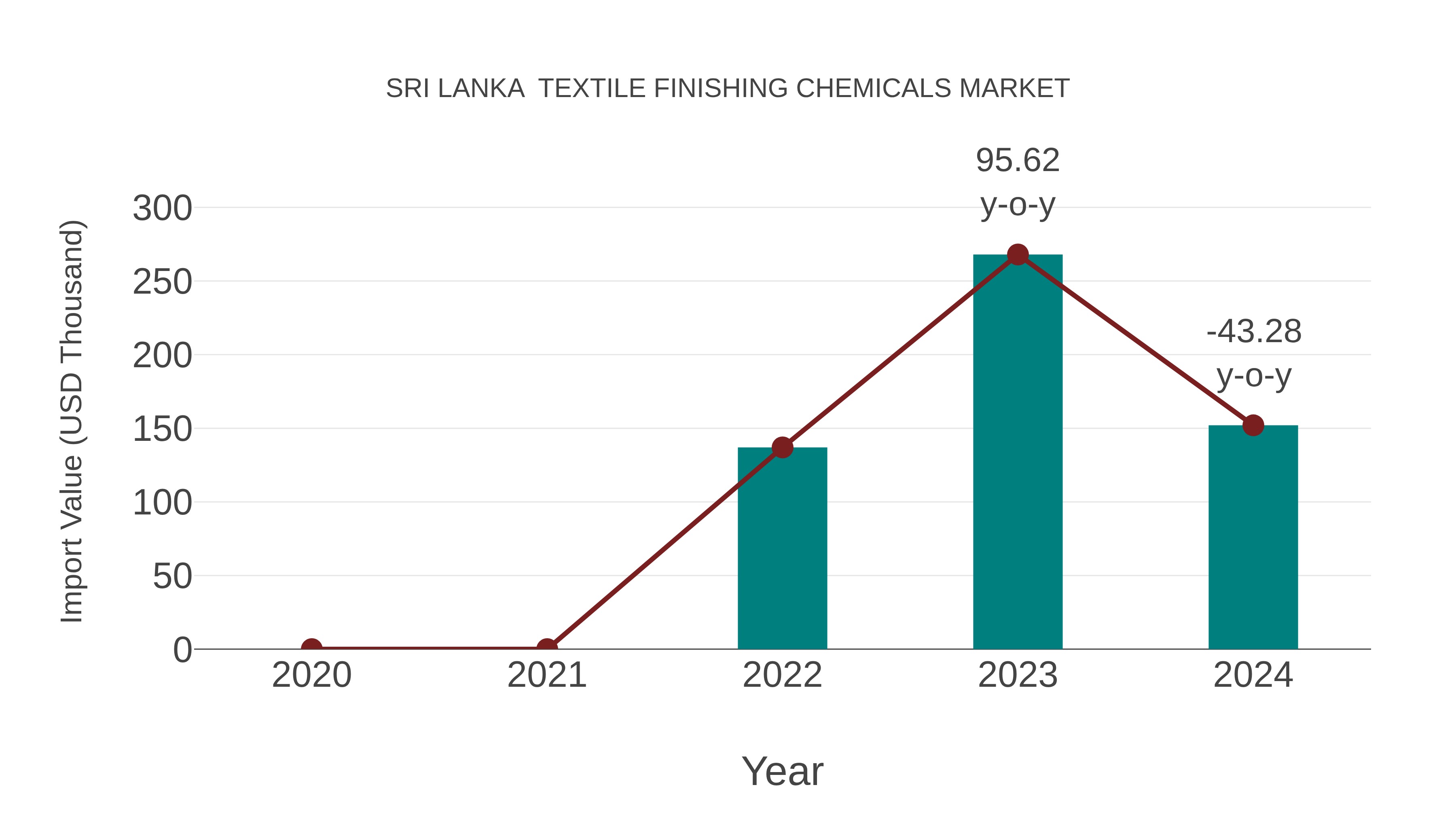
Sri Lanka import trend for textile finishing chemicals experienced a decline with a growth rate of -43.28% from 2023 to 2024. However, the compound annual growth rate (CAGR) for 2020-2024 stood at 5.33%. This decline could be attributed to shifts in demand patterns or changes in trade policies impacting the market.
Sri Lanka Textile Finishing Chemicals Market Overview
The Sri Lanka Textile Finishing Chemicals Market is witnessing steady growth driven by the country`s expanding textile industry. Textile finishing chemicals are essential for enhancing the properties of fabrics, such as softness, durability, and water resistance. Key factors contributing to market growth include increasing demand for high-quality finished textiles in both domestic and export markets, as well as the government`s initiatives to promote the textile industry. The market is characterized by the presence of both domestic and international chemical manufacturers offering a wide range of finishing chemicals to cater to the diverse needs of textile producers. With the growing focus on sustainable and eco-friendly solutions, there is a rising trend towards the adoption of bio-based and environmentally friendly textile finishing chemicals in Sri Lanka.
Sri Lanka Textile Finishing Chemicals Market Trends and Opportunities
The Sri Lanka Textile Finishing Chemicals Market is experiencing a shift towards sustainable and eco-friendly solutions, driven by increasing awareness about environmental concerns among consumers and regulatory bodies. Manufacturers are focusing on developing innovative products that are biodegradable and comply with stringent environmental regulations. Opportunities lie in the development of bio-based finishing chemicals, such as enzymes and natural dyes, as well as in the growing demand for functional finishes like water repellency and UV protection. Collaborations between textile manufacturers and chemical suppliers to create customized solutions for specific applications are also on the rise, catering to the diverse needs of the textile industry in Sri Lanka. Overall, the market is poised for growth as sustainability becomes a key driver of innovation and competitiveness.
Sri Lanka Textile Finishing Chemicals Market Challenges
In the Sri Lanka Textile Finishing Chemicals Market, several challenges are faced including environmental regulations, fluctuating raw material prices, and increasing competition. Environmental regulations are becoming more stringent, requiring companies to invest in eco-friendly and sustainable solutions which can increase operational costs. Fluctuating raw material prices, especially for key chemicals used in textile finishing, can impact profit margins and overall business stability. Additionally, the market is becoming more competitive with the entry of new players offering innovative products and solutions, leading to price wars and pressure on existing companies to differentiate themselves. Overall, companies operating in the Sri Lanka Textile Finishing Chemicals Market need to navigate these challenges effectively to sustain growth and profitability.
Sri Lanka Textile Finishing Chemicals Market Drivers
The Sri Lanka Textile Finishing Chemicals Market is primarily driven by the growth of the textile industry in the country, which is fueled by increasing demand for textiles both domestically and internationally. The rising disposable income of consumers, changing fashion trends, and a growing focus on sustainable and eco-friendly textile production are also key drivers of the market. Additionally, advancements in textile finishing technologies, such as nanotechnology and digital printing, are driving the demand for innovative finishing chemicals. The government`s initiatives to promote the textile sector, favorable investment policies, and increasing investments in research and development activities related to textile finishing chemicals are further contributing to the market growth in Sri Lanka.
Sri Lanka Textile Finishing Chemicals Market Government Policy
The Sri Lankan government has implemented various policies related to the Textile Finishing Chemicals Market to promote sustainable practices and environmental protection. These policies include regulations on the use of chemicals to ensure the safety of workers and consumers, as well as to minimize the impact on the environment. Additionally, the government has introduced incentives and subsidies for companies that adopt eco-friendly practices and technologies in their textile finishing processes. Furthermore, there are restrictions on the importation of certain harmful chemicals, encouraging local manufacturers to develop and produce safer alternatives. Overall, the government`s policies aim to foster a responsible and competitive textile finishing chemicals market in Sri Lanka that prioritizes sustainability and innovation.
Sri Lanka Textile Finishing Chemicals Market Future Outlook
The future outlook for the Sri Lanka Textile Finishing Chemicals Market appears promising, driven by several factors. The increasing demand for high-quality finished textiles, growing awareness of sustainable and eco-friendly chemical solutions, and advancements in textile manufacturing technologies are expected to propel market growth. Additionally, the government`s support for the textile industry, favorable trade policies, and investments in research and development are likely to create opportunities for market expansion. However, challenges such as fluctuating raw material prices, stringent environmental regulations, and competition from international players may pose some hurdles. Overall, the market is anticipated to witness steady growth in the coming years as textile manufacturers in Sri Lanka continue to focus on innovation, sustainability, and meeting the evolving demands of consumers.
Key Highlights of the Report:
- Sri Lanka Textile Finishing Chemicals Market Outlook
- Market Size of Sri Lanka Textile Finishing Chemicals Market, 2025
- Forecast of Sri Lanka Textile Finishing Chemicals Market, 2032
- Historical Data and Forecast of Sri Lanka Textile Finishing Chemicals Revenues & Volume for the Period 2022 - 2032F
- Sri Lanka Textile Finishing Chemicals Market Trend Evolution
- Sri Lanka Textile Finishing Chemicals Market Drivers and Challenges
- Sri Lanka Textile Finishing Chemicals Price Trends
- Sri Lanka Textile Finishing Chemicals Porter's Five Forces
- Sri Lanka Textile Finishing Chemicals Industry Life Cycle
- Historical Data and Forecast of Sri Lanka Textile Finishing Chemicals Market Revenues & Volume By Type for the Period 2022 - 2032F
- Historical Data and Forecast of Sri Lanka Textile Finishing Chemicals Market Revenues & Volume By Softening Finishes for the Period 2022 - 2032F
- Historical Data and Forecast of Sri Lanka Textile Finishing Chemicals Market Revenues & Volume By Repellent Finishes for the Period 2022 - 2032F
- Historical Data and Forecast of Sri Lanka Textile Finishing Chemicals Market Revenues & Volume By Wrinkle Free Finishes for the Period 2022 - 2032F
- Historical Data and Forecast of Sri Lanka Textile Finishing Chemicals Market Revenues & Volume By Coating Finishes for the Period 2022 - 2032F
- Historical Data and Forecast of Sri Lanka Textile Finishing Chemicals Market Revenues & Volume By Mothproofing Finishes for the Period 2022 - 2032F
- Historical Data and Forecast of Sri Lanka Textile Finishing Chemicals Market Revenues & Volume By Process for the Period 2022 - 2032F
- Historical Data and Forecast of Sri Lanka Textile Finishing Chemicals Market Revenues & Volume By Pad-Dry Cure Process for the Period 2022 - 2032F
- Historical Data and Forecast of Sri Lanka Textile Finishing Chemicals Market Revenues & Volume By Exhaust Dyeing Process for the Period 2022 - 2032F
- Sri Lanka Textile Finishing Chemicals Import Export Trade Statistics
- Market Opportunity Assessment By Type
- Market Opportunity Assessment By Process
- Sri Lanka Textile Finishing Chemicals Top Companies Market Share
- Sri Lanka Textile Finishing Chemicals Competitive Benchmarking By Technical and Operational Parameters
- Sri Lanka Textile Finishing Chemicals Company Profiles
- Sri Lanka Textile Finishing Chemicals Key Strategic Recommendations






































