Sri Lanka Used Car Market Summary
The sri lanka used car market was estimated at USD 173 Million in 2025 and is projected to reach USD 190 Million by 2032, growing at a CAGR of 1.5% from 2026 to 2032.
Sri Lanka Used Car Market Year-wise Growth Rate and Key Drivers
This graph highlights how the Sri Lanka Used Car Market has steadily grown over the past five years, supported by major growth factors.
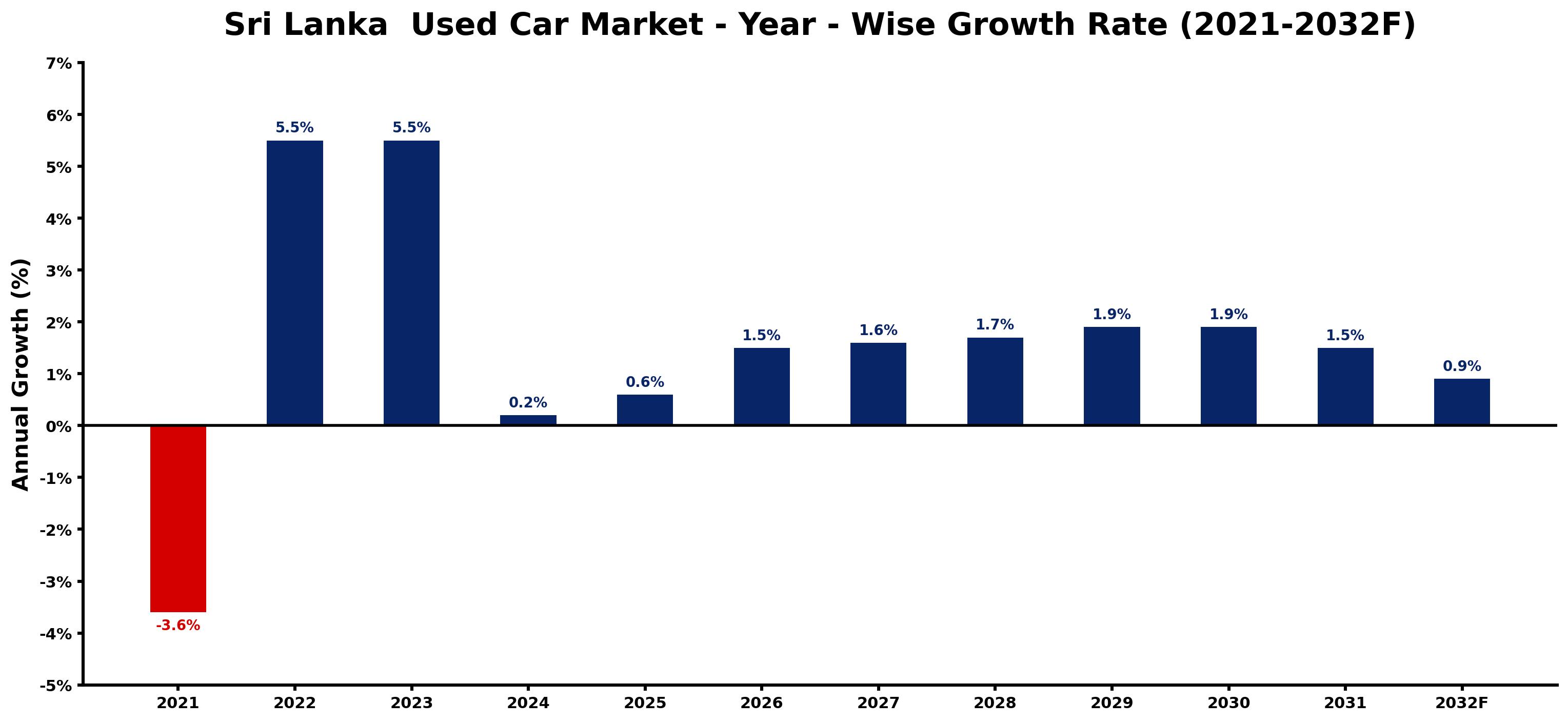
The table below presents the year wise growth rates along with the key drivers influencing the market
| Year | Growth Rate | Major Drivers |
| 2021 | -3.6% | Economic uncertainty and currency depreciation diminished purchasing power, leading to reduced demand for used vehicles. |
| 2022 | 5.5% | Increased internet penetration facilitated online listings and purchasing processes for buyers. |
| 2023 | 5.5% | Inflationary pressures prompted cost-conscious consumers to explore pre-owned vehicle options. |
| 2024 | 0.2% | Enhanced financing options made used cars more accessible to a larger demographic. |
| 2025 | 0.6% | Infrastructure improvements boosted regional connectivity, enhancing vehicle market accessibility. |
| 2026 | 1.5% | E-commerce platforms gained popularity, significantly transforming the traditional car buying experience. |
| 2027 | 1.6% | Environmental considerations led to a surge in demand for fuel-efficient used cars. |
| 2028 | 1.7% | Increased urbanization patterns highlighted the need for compact vehicles in metropolitan areas. |
| 2029 | 1.9% | Regulatory changes encouraged more dealerships to enter the pre-owned market segment. |
| 2030 | 1.9% | Technological advancements in vehicle inspection improved consumer confidence in used cars. |
| 2031 | 1.5% | Shifts in consumer behavior highlighted preferences for certified pre-owned vehicles over traditional options. |
| 2032 | 0.9% | Market diversification led to the inclusion of electric used vehicles in retail offerings. |
Note - Market size estimations and growth projections presented in this report are based on 6Wresearch's advanced forecasting approach, validated with industry datasets as of June 2026.
Sri Lanka Used Car Market Synopsis
The Sri Lanka Used Car Market is projected to reach 1.5% and witness significant growth during the forecast period (2026-2032). The market is experiencing a transformative phase influenced by a combination of economic factors, consumer preferences, and evolving technology that shapes the automotive landscape in the country. A key driver of this growth is the rising disposable income among Sri Lankans, which provides more individuals with the financial means to consider pre-owned vehicles as viable transportation options.
Sri Lanka Used Car Market Growth Drivers
Several critical factors are contributing to the expansion of the Sri Lanka Used Car Market. Firstly, the accessibility of financing options is growing, enabling consumers to obtain loans and credit for purchasing used vehicles, which has significantly broadened the buyer demographic. Secondly, an increasing number of consumers are becoming aware of the benefits of purchasing pre-owned cars, including lower price points and the potential for acquiring well-maintained vehicles at reduced costs. Thirdly, the dominance of Japanese vehicles, known for their reliability and durability, enhances trust and preference among local buyers. Furthermore, the expansion of online platforms and dealerships is making the marketplace more accessible and transparent, allowing consumers to compare options and prices effectively. Lastly, the economic impact stemming from the COVID-19 pandemic has shifted consumer preferences towards budget-friendly alternatives, predominantly favoring smaller, fuel-efficient used cars that serve both practical and economic needs.
Sri Lanka Used Car Market Trends and Opportunities
A number of trends are currently shaping the landscape of the Sri Lanka Used Car Market. A notable trend is the increasing demand for fuel-efficient and eco-friendly vehicles, which reflects a growing consumer consciousness regarding environmental impact and operating costs. Additionally, buyers exhibit a pronounced preference for brands that offer high resale value, further boosting the popularity of Japanese and Korean vehicles. The expansion of digital marketplaces for buying and selling used cars also transforms transaction dynamics, fostering increased accessibility and transparency. The notable shift towards smaller, more economical vehicles is accentuated by the ongoing economic pressures forcing consumers to prioritize affordability. Combined, these trends present lucrative opportunities for investors looking to enter or expand within this evolving market.
Sri Lanka Used Car Market Challenges and Restraints
While the Sri Lanka Used Car Market offers numerous opportunities, it is not without challenges. One prominent issue is the concern over vehicle quality and transparency; buyers often lack reliable information regarding the actual condition of the cars. This uncertainty is compounded by the absence of standardized pricing and valuation methods, leading to inconsistencies that can mislead consumers. The prevalence of counterfeit spare parts and instances of odometer tampering further erode trust within the market. Additionally, the existing lack of robust consumer protection regulations makes it difficult for buyers to seek recourse in disputes or fraudulent practices, emphasizing the need for improved standards and transparency to fortify buyer confidence.
Sri Lanka Used Car Market Investment Opportunities
The Sri Lanka Used Car Market presents a wealth of investment opportunities, particularly for those keen on harnessing the potential of a burgeoning middle class. A focus on certified pre-owned dealerships is among the most promising ventures, catering to consumers seeking quality assurance. Additionally, establishing online platforms dedicated to the trade of used vehicles can capitalize on the trend towards digital transactions. There is also considerable potential in offering tailored financing solutions aimed at used car purchases, providing added value to consumers navigating affordability challenges. Moreover, the growing interest in electric vehicles creates avenues for investors to facilitate the resale of used electric cars, aligning with environmental goals. As the market continues to evolve, understanding consumer needs and enhancing transaction transparency will be critical for success.
Sri Lanka Used Car Market Government Investment and Initiatives
The Sri Lankan government plays an integral role in shaping the dynamics of the used car market through various policies and initiatives aimed at regulating vehicle imports and promoting sustainable practices. To discourage the importation of older, less environmentally friendly vehicles, the government imposes higher import duties and taxes on used cars compared to new vehicles. This not only incentivizes the purchase of locally manufactured vehicles but also aligns with broader environmental goals of reducing emissions. Furthermore, age restrictions on imported used cars ensure that only relatively newer, safer models are available in the market. These regulatory measures support the government's objectives of balancing economic development with public safety and environmental stewardship.
Sri Lanka Used Car Market Latest Developments (May 2025 - June 2026)
In the period from May 2025 to June 2026, the Sri Lanka Used Car Market has witnessed notable developments reflective of changing consumer behavior and market dynamics. The increasing integration of digital platforms for the buying and selling of used cars has significantly enhanced market accessibility, allowing consumers to make informed decisions with ease. Furthermore, there is an increasing emphasis on vehicle certification to assure buyers of quality and reliability, addressing prevalent concerns regarding vehicle conditions. The government is also expected to continue refining its import policies to encourage the influx of safer, eco-friendlier vehicles, aligning with global trends towards sustainability. Overall, these developments indicate a progressive shift in the market, fostering a more informed and responsible consumer base.
Sri Lanka Used Car Market - Key Attractiveness of the Report
- 10 Years of Market Numbers
- Historical Data Starting from 2022 to 2025
- Base Year: 2025
- Forecast Data until 2032
- Key Performance Indicators Impacting the Market
- Major Upcoming Developments and Projects
Key Highlights of the Report:
- Sri Lanka Used Car Market Outlook
- Market Size of Sri Lanka Used Car Market, 2025
- Forecast of Sri Lanka Used Car Market, 2032F
- Historical Data and Forecast of Sri Lanka Used Car Revenues & Volume for the Period 2022-2032F
- Sri Lanka Used Car Market Trend Evolution
- Sri Lanka Used Car Market Drivers and Challenges
- Sri Lanka Used Car Price Trends
- Sri Lanka Used Car Porter's Five Forces
- Sri Lanka Used Car Industry Life Cycle
- Historical Data and Forecast of Sri Lanka Used Car Market Revenues & Volume By Vehicle Type for the Period 2022-2032F
- Historical Data and Forecast of Sri Lanka Used Car Market Revenues & Volume By Hatchbacks for the Period 2022-2032F
- Historical Data and Forecast of Sri Lanka Used Car Market Revenues & Volume By Sedan for the Period 2022-2032F
- Historical Data and Forecast of Sri Lanka Used Car Market Revenues & Volume By Sports Utility Vehicle for the Period 2022-2032F
- Historical Data and Forecast of Sri Lanka Used Car Market Revenues & Volume By Others for the Period 2022-2032F
- Historical Data and Forecast of Sri Lanka Used Car Market Revenues & Volume By Vendor for the Period 2022-2032F
- Historical Data and Forecast of Sri Lanka Used Car Market Revenues & Volume By Organized for the Period 2022-2032F
- Historical Data and Forecast of Sri Lanka Used Car Market Revenues & Volume By Unorganized for the Period 2022-2032F
- Historical Data and Forecast of Sri Lanka Used Car Market Revenues & Volume By Fuel Type for the Period 2022-2032F
- Historical Data and Forecast of Sri Lanka Used Car Market Revenues & Volume By Gasoline for the Period 2022-2032F
- Historical Data and Forecast of Sri Lanka Used Car Market Revenues & Volume By Diesel for the Period 2022-2032F
- Historical Data and Forecast of Sri Lanka Used Car Market Revenues & Volume By Alternative Fuel Vehicles for the Period 2022-2032F
- Sri Lanka Used Car Import Export Trade Statistics
- Market Opportunity Assessment By Vehicle Type
- Market Opportunity Assessment By Vendor
- Market Opportunity Assessment By Fuel Type
- Sri Lanka Used Car Top Companies Market Share
- Sri Lanka Used Car Competitive Benchmarking By Technical and Operational Parameters
- Sri Lanka Used Car Company Profiles
- Sri Lanka Used Car Key Strategic Recommendations






































