Sri Lanka Wood Charcoal Market Size, Share & Growth Rate
The Sri Lanka Wood Charcoal Market was estimated at USD 486 Million in 2025 and is projected to reach USD 609 Million by 2032, growing at a CAGR of 3.3% from 2026 to 2032. This trajectory is significantly influenced by the increasing consumer demand for eco-friendly cooking fuels, driven by a rising barbecue culture and a shift towards sustainable energy sources. Furthermore, industrial applications are expanding, adding to the market's robust growth potential.
Sri Lanka Wood Charcoal Market Growth Rate Analysis (2021-2032)
The Sri Lankan wood charcoal market is witnessing a marked decline, with growth rates decreasing steadily from 5.5% in 2021 to a projected 2.2% by 2032. The initial growth was fueled by robust domestic demand for traditional cooking methods. However, by 2022, a shift towards alternative energy sources and increasing environmental regulations began to exert significant pressure on the sector. Factors such as competition from cheaper, more efficient energy solutions and the gradual urbanization of consumer preferences have contributed to this trend. As the market adapts to these technological shifts and changing consumer expectations, growth is expected to continue declining, reflecting broader dynamics within the energy transition landscape.
Sri Lanka Wood Charcoal Market Year-wise Growth Rate and Key Drivers
This graph highlights how the Sri Lanka Wood Charcoal Market has steadily grown over the past five years, supported by major growth factors.
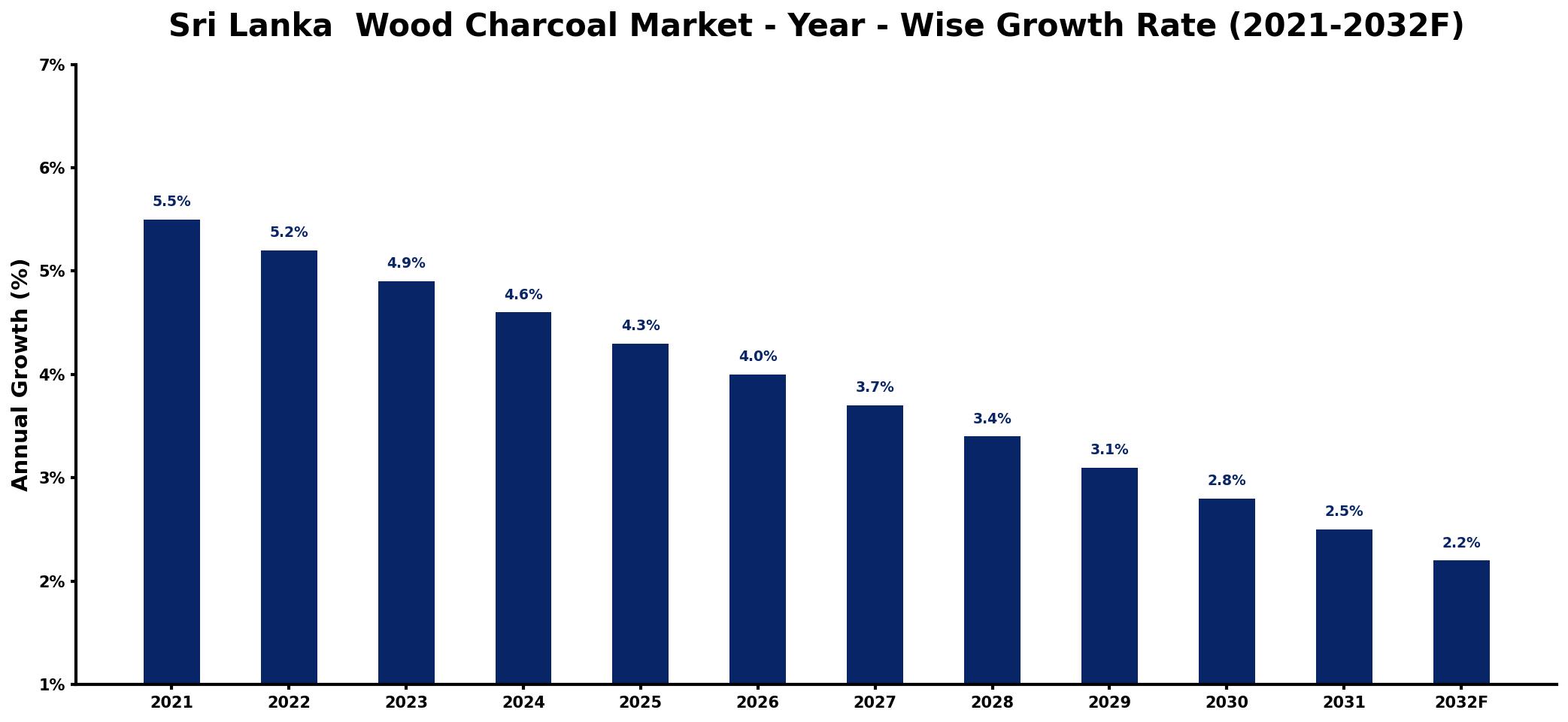
The table below presents the year‑wise growth rates along with the key drivers influencing the market
| Year | Growth Rate | Major Drivers |
| 2021 | 5.5% | Rising demand from restaurants sector |
| 2022 | 5.2% | Increased exports to international markets |
| 2023 | 4.9% | Growing popularity in barbecue events |
| 2024 | 4.6% | Expansion of retail distribution channels |
| 2025 | 4.3% | Surge in eco-friendly cooking options |
| 2026 | 4.0% | Higher investments in production facilities |
| 2027 | 3.7% | Increased awareness of sustainability practices |
| 2028 | 3.4% | Boost in local tourism activities |
| 2029 | 3.1% | Emergence of innovative packaging solutions |
| 2030 | 2.8% | Growing interest in outdoor grilling |
| 2031 | 2.5% | expanding industrial usage applications |
| 2032 | 2.2% | Increased collaboration with hospitality industry |
Note: Market size estimations and growth projections presented in this report are based on 6Wresearch's proprietary forecasting methodology, utilizing the latest available industry data, government publications, and primary research inputs.
Sri Lanka Wood Charcoal Market Synopsis
In Sri Lanka, wood charcoal is increasingly recognized for its high calorific value, making it a preferred choice for both residential and commercial cooking. The market's focus on sustainable forestry practices ensures a consistent supply while addressing environmental concerns, setting it apart in the regional landscape.
Additionally, the rise in charcoal briquette production has opened new avenues for innovation and market penetration. This shift not only caters to local preferences for convenience and efficiency but also aligns with global trends favoring sustainable and environmentally friendly fuel alternatives.
Sri Lanka Wood Charcoal Market Key Takeaways
- Growing consumer awareness of sustainable fuels is propelling demand in various sectors.
- Barbecue culture is contributing significantly to market expansion, especially in urban areas.
- Government regulations are fostering responsible forestry practices and charcoal production.
- Technological advancements in production methods are enhancing quality and efficiency.
- Challenges related to production costs and raw material availability continue to impact market dynamics.
Evaluation of Restraints in Sri Lanka Wood Charcoal Market
While the Sri Lanka Wood Charcoal Market is poised for growth, several restraints hinder its full potential. High production costs present a significant barrier, often making locally produced charcoal less competitive compared to cheaper, less sustainable alternatives. Additionally, limited access to raw materials, due to both environmental regulations and the challenges of sustainable harvesting, constrains production capabilities. Furthermore, there is a notable lack of awareness among some consumer segments regarding the benefits of modern wood charcoal, which inhibits broader market adoption. Lastly, economic fluctuations can affect consumer spending, impacting overall demand.
Sri Lanka Wood Charcoal Market Trends
Several key trends are shaping the Sri Lanka Wood Charcoal Market. The increased preference for charcoal briquettes over traditional lump charcoal indicates a shift towards more convenient and eco-friendly options. Additionally, the rising global demand for Sri Lankan barbecue charcoal in international markets is fostering export opportunities, providing local producers with a competitive edge. Technological innovations are also making significant strides, with new production processes emerging that minimize environmental impact while maximizing output.
Sri Lanka Wood Charcoal Market Opportunities
The Sri Lanka Wood Charcoal Market presents numerous opportunities for growth and investment. The increasing trend towards sustainable energy sources opens avenues for companies that prioritize environmentally friendly production practices. Furthermore, expanding consumer interest in outdoor cooking and barbecuing presents a lucrative opportunity for manufacturers to develop specialized products tailored to these needs. Additionally, strengthening partnerships with community-based forestry initiatives can enhance raw material availability while supporting local economies.
Government Initiatives in the Sri Lanka Wood Charcoal Market
The Sri Lankan government has implemented various initiatives to ensure the sustainable growth of the wood charcoal market. Policies focus on promoting sustainable forestry practices and regulating charcoal production to prevent illegal logging. Moreover, the government is actively involved in supporting community-based forestry programs, which not only enhance local livelihoods but also encourage the production of certified sustainable charcoal. These regulatory frameworks aim to balance economic benefits with environmental protection, ensuring a healthier market landscape.
Future Insights of the Sri Lanka Wood Charcoal Market
Looking ahead to 2026-2032, the Sri Lanka Wood Charcoal Market is expected to evolve significantly. As environmental sustainability becomes increasingly important, both consumers and businesses will likely prioritize eco-friendly fuel sources. The continued emphasis on responsible forestry management will foster a more resilient supply chain, while advancements in production technology will improve efficiency and reduce costs. Overall, the market is set to capitalize on emerging consumer trends, positioning itself as a leader in sustainable charcoal production.
Sri Lanka Wood Charcoal Market Latest Developments (2025 - 2026)
In recent months, the Sri Lanka Wood Charcoal Market has witnessed a surge in innovation, with new production techniques gaining traction that enhance the quality of charcoal while lowering the carbon footprint. Moreover, industry stakeholders have been focusing on expanding export markets, particularly in regions with a burgeoning barbecue culture. Collaborative efforts between local producers and international distributors are becoming more common, indicating a positive outlook for market expansion.
Sri Lanka Wood Charcoal Market - Key Attractiveness of the Report
- 10 Years of Market Numbers
- Historical Data Starting from 2022 to 2025
- Base Year: 2025
- Forecast Data until 2032
- Key Performance Indicators Impacting the Market
- Major Upcoming Developments and Projects
Key Highlights of the Report:
- Sri Lanka Wood Charcoal Market Outlook
- Market Size of Sri Lanka Wood Charcoal Market, 2025
- Forecast of Sri Lanka Wood Charcoal Market, 2032
- Historical Data and Forecast of Sri Lanka Wood Charcoal Revenues & Volume for the Period 2022-2032F
- Sri Lanka Wood Charcoal Market Trend Evolution
- Sri Lanka Wood Charcoal Market Drivers and Challenges
- Sri Lanka Wood Charcoal Price Trends
- Sri Lanka Wood Charcoal Porter's Five Forces
- Sri Lanka Wood Charcoal Industry Life Cycle
- Historical Data and Forecast of Sri Lanka Wood Charcoal Market Revenues & Volume By Product for the Period 2022-2032F
- Historical Data and Forecast of Sri Lanka Wood Charcoal Market Revenues & Volume By Charcoal Lumps for the Period 2022-2032F
- Historical Data and Forecast of Sri Lanka Wood Charcoal Market Revenues & Volume By Charcoal Briquettes for the Period 2022-2032F
- Historical Data and Forecast of Sri Lanka Wood Charcoal Market Revenues & Volume By Charcoal Powder for the Period 2022-2032F
- Historical Data and Forecast of Sri Lanka Wood Charcoal Market Revenues & Volume By Wood for the Period 2022-2032F
- Historical Data and Forecast of Sri Lanka Wood Charcoal Market Revenues & Volume By Softwood for the Period 2022-2032F
- Historical Data and Forecast of Sri Lanka Wood Charcoal Market Revenues & Volume By Hardwood for the Period 2022-2032F
- Historical Data and Forecast of Sri Lanka Wood Charcoal Market Revenues & Volume By Application for the Period 2022-2032F
- Historical Data and Forecast of Sri Lanka Wood Charcoal Market Revenues & Volume By Fuel Feedstock for the Period 2022-2032F
- Historical Data and Forecast of Sri Lanka Wood Charcoal Market Revenues & Volume By Reducing Agent for the Period 2022-2032F
- Historical Data and Forecast of Sri Lanka Wood Charcoal Market Revenues & Volume By Filtration Agent & Gas Masking for the Period 2022-2032F
- Historical Data and Forecast of Sri Lanka Wood Charcoal Market Revenues & Volume By Decolorizing Agent for the Period 2022-2032F
- Historical Data and Forecast of Sri Lanka Wood Charcoal Market Revenues & Volume By Gastric Medicine for the Period 2022-2032F
- Historical Data and Forecast of Sri Lanka Wood Charcoal Market Revenues & Volume By Sketches & Paints for the Period 2022-2032F
- Historical Data and Forecast of Sri Lanka Wood Charcoal Market Revenues & Volume By Soil Conditioning for the Period 2022-2032F
- Historical Data and Forecast of Sri Lanka Wood Charcoal Market Revenues & Volume By Others for the Period 2022-2032F
- Historical Data and Forecast of Sri Lanka Wood Charcoal Market Revenues & Volume By End Use for the Period 2022-2032F
- Historical Data and Forecast of Sri Lanka Wood Charcoal Market Revenues & Volume By Residential for the Period 2022-2032F
- Historical Data and Forecast of Sri Lanka Wood Charcoal Market Revenues & Volume By Cooking Fuel for the Period 2022-2032F
- Historical Data and Forecast of Sri Lanka Wood Charcoal Market Revenues & Volume By Gardening for the Period 2022-2032F
- Historical Data and Forecast of Sri Lanka Wood Charcoal Market Revenues & Volume By Commercial Paints & Sketches for the Period 2022-2032F
- Historical Data and Forecast of Sri Lanka Wood Charcoal Market Revenues & Volume By Water Treatment for the Period 2022-2032F
- Historical Data and Forecast of Sri Lanka Wood Charcoal Market Revenues & Volume By Industrial for the Period 2022-2032F
- Sri Lanka Wood Charcoal Import Export Trade Statistics
- Market Opportunity Assessment By Product
- Market Opportunity Assessment By Wood
- Market Opportunity Assessment By Application
- Market Opportunity Assessment By End Use
- Sri Lanka Wood Charcoal Top Companies Market Share
- Sri Lanka Wood Charcoal Competitive Benchmarking By Technical and Operational Parameters
- Sri Lanka Wood Charcoal Company Profiles
- Sri Lanka Wood Charcoal Key Strategic Recommendations






































