Sri Lanka Wood Flooring Market Summary
The sri lanka wood flooring market was estimated at USD 311 Million in 2025 and is projected to reach USD 409 Million by 2032, growing at a CAGR of 4.5% from 2026 to 2032.
Sri Lanka Wood Flooring Market Year-wise Growth Rate and Key Drivers
This graph highlights how the Sri Lanka Wood Flooring Market has steadily grown over the past five years, supported by major growth factors.
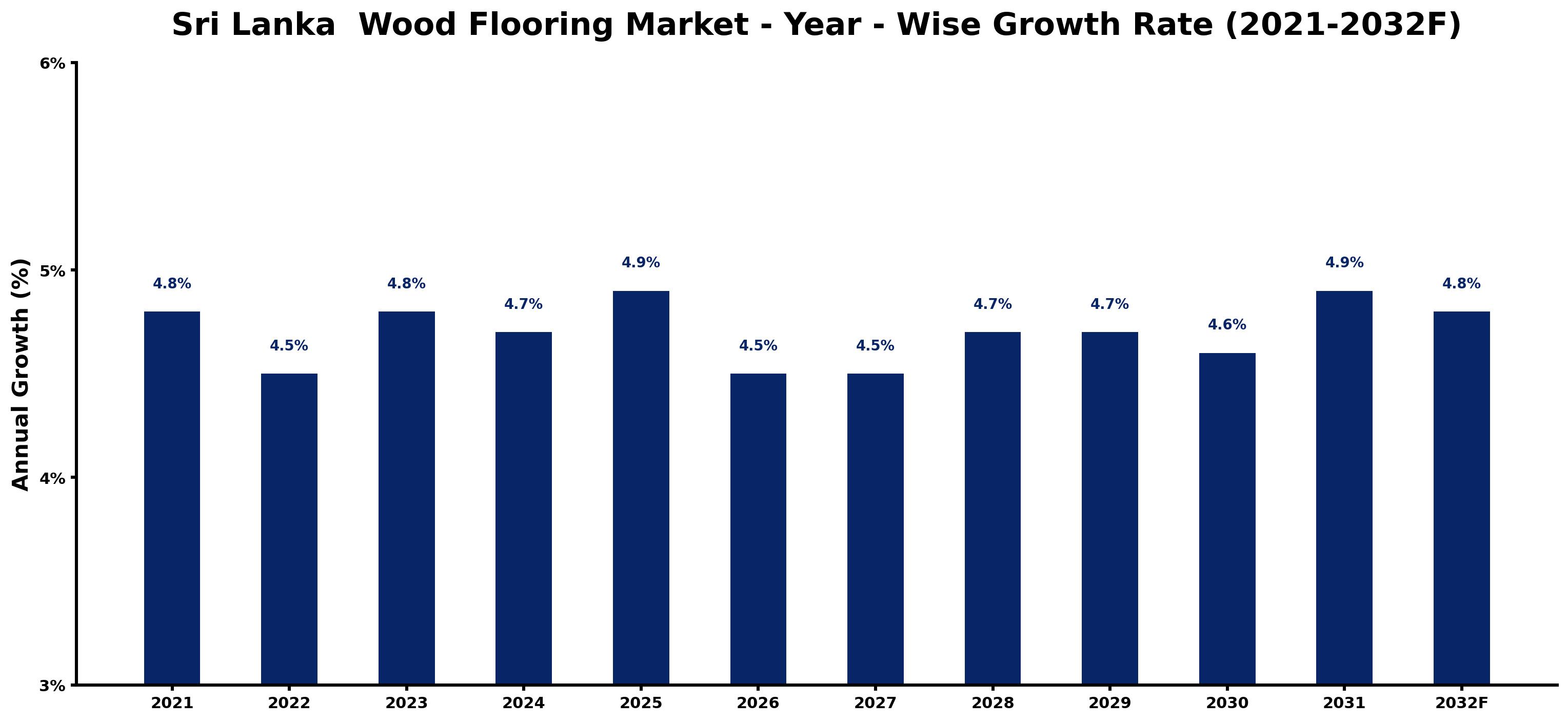
The table below presents the year wise growth rates along with the key drivers influencing the market
| Year | Growth Rate | Major Drivers |
| 2021 | 4.8% | Post-pandemic recovery led to a spike in residential renovation projects. |
| 2022 | 4.5% | Rising tourism in Sri Lanka increased demand for high-quality hospitality flooring solutions. |
| 2023 | 4.8% | Urbanization trends shifted focus towards sustainable and aesthetically pleasing flooring options. |
| 2024 | 4.7% | Increased foreign investment sparked development of residential and commercial properties. |
| 2025 | 4.9% | Emerging middle class sought premium flooring materials for modern interior designs. |
| 2026 | 4.5% | Construction sector expansion fueled by infrastructure projects enhanced wood flooring popularity. |
| 2027 | 4.5% | Local manufacturers innovated to meet demand for eco-friendly flooring alternatives. |
| 2028 | 4.7% | Export opportunities in Asia highlighted Sri Lankan wood flooring craftsmanship and quality. |
| 2029 | 4.7% | Growing awareness of health benefits promoted natural materials, boosting wood flooring sales. |
| 2030 | 4.6% | Technological advancements in manufacturing processes improved efficiency and reduced costs. |
| 2031 | 4.9% | Customization options gained traction as consumers sought unique design solutions. |
| 2032 | 4.8% | Increased collaboration between architects and wood flooring suppliers fostered innovative designs. |
Note - Market size estimations and growth projections presented in this report are based on 6Wresearch's advanced forecasting approach, validated with industry datasets as of June 2026.
Sri Lanka Wood Flooring Market Synopsis
The Sri Lanka Wood Flooring Market is projected to reach 4.5% and witness significant growth during the forecast period (2026-2032). The market encompasses a diverse range of flooring solutions including hardwood, engineered wood, and laminate options, catering to the residential, commercial, and hospitality sectors. In recent years, the demand for wood flooring has surged, driven by its aesthetic appeal, durability, and the warmth it adds to interior environments.
Sri Lanka Wood Flooring Market Growth Drivers
Several key factors are propelling the growth of the Sri Lanka Wood Flooring Market. These include:
- The ongoing development of residential and commercial properties significantly fuels the demand for high-quality flooring solutions.
- Interior design trends increasingly favor natural materials, with wood flooring providing an eco-friendly option that resonates with modern aesthetics.
- There is a growing preference for durable flooring materials that can withstand the wear and tear associated with high foot traffic in commercial spaces.
- Customization options in wood flooring allow consumers to select various finishes, colors, and textures, thus enhancing the appeal of these products.
- Sustainability preferences among consumers are leading to a surge in the demand for wood products sourced from responsibly managed forests, driving growth in this sector.
Sri Lanka Wood Flooring Market Challenges and Restraints
Despite its growth potential, the Sri Lanka Wood Flooring Market faces several challenges that could hinder its progress. These challenges include:
- The high production costs associated with wood flooring manufacturing can limit profitability and market accessibility.
- Limited availability of high-quality raw materials, due to constrained local forestry resources, can impact production rates.
- There is a lack of awareness and education among consumers regarding the benefits and maintenance of modern wood flooring, which may inhibit market uptake.
- Competition from alternative flooring materials, such as tiles and vinyl, poses a risk as consumers may opt for cheaper or more familiar options.
- Economic fluctuations can affect construction and renovation spending, consequently impacting demand for wood flooring products.
Sri Lanka Wood Flooring Market Trends and Opportunities
The Sri Lanka Wood Flooring Market is witnessing several trends that present opportunities for growth:
- The increasing emphasis on sustainability is prompting manufacturers to innovate and offer products certified by the Forest Stewardship Council (FSC).
- Customization trends are expanding, allowing consumers to create personalized spaces that reflect their individual style through bespoke wood flooring solutions.
- Technological advancements in production processes are improving the quality and durability of wood flooring, making it more appealing to consumers.
- The rise of e-commerce platforms provides manufacturers with new sales avenues, enhancing accessibility for consumers looking for wood flooring options.
- Awareness campaigns on the benefits of wood flooring can educate consumers and stimulate demand, particularly in urban areas.
Sri Lanka Wood Flooring Market Government Investment and Initiatives
Government policies in Sri Lanka are playing a pivotal role in supporting the wood flooring market. Initiatives focus on promoting quality assurance and sustainable practices, encouraging the use of certified wood sources. Policies also aim to enhance consumer protection through standards for installation and maintenance, thus ensuring the longevity of wood flooring products. Public investments are directed towards innovation in eco-friendly materials, aligning with global sustainability goals. Additionally, the government is actively involved in consumer awareness campaigns, designed to highlight the advantages of wood flooring and compliance with ecological regulations.
Sri Lanka Wood Flooring Market Latest Developments (May 2025 - June 2026)
Recent industry developments within the Sri Lanka Wood Flooring Market indicate a shift towards increased sustainability and product innovation. There has been a notable rise in demand for eco-certified wood products driven by consumer preferences for environmentally friendly building materials. Manufacturers are investing in R&D to enhance the performance attributes of wood flooring, especially in terms of durability and ease of maintenance. Moreover, industry participants have begun exploring strategic partnerships to expand market reach and enhance product offerings, particularly in urban areas where building activity is thriving. These trends suggest a proactive approach to addressing both consumer demands and environmental responsibilities.
Sri Lanka Wood Flooring Market - Key Attractiveness of the Report
- 10 Years of Market Numbers
- Historical Data Starting from 2022 to 2025
- Base Year: 2025
- Forecast Data until 2032
- Key Performance Indicators Impacting the Market
- Major Upcoming Developments and Projects
Key Highlights of the Report:
- Sri Lanka Wood Flooring Market Outlook
- Market Size of Sri Lanka Wood Flooring Market, 2025
- Forecast of Sri Lanka Wood Flooring Market, 2032
- Historical Data and Forecast of Sri Lanka Wood Flooring Revenues & Volume for the Period 2022-2032F
- Sri Lanka Wood Flooring Market Trend Evolution
- Sri Lanka Wood Flooring Market Drivers and Challenges
- Sri Lanka Wood Flooring Price Trends
- Sri Lanka Wood Flooring Porter's Five Forces
- Sri Lanka Wood Flooring Industry Life Cycle
- Historical Data and Forecast of Sri Lanka Wood Flooring Market Revenues & Volume By Product Type for the Period 2022-2032F
- Historical Data and Forecast of Sri Lanka Wood Flooring Market Revenues & Volume By Solid Wood for the Period 2022-2032F
- Historical Data and Forecast of Sri Lanka Wood Flooring Market Revenues & Volume By Engineered Wood for the Period 2022-2032F
- Historical Data and Forecast of Sri Lanka Wood Flooring Market Revenues & Volume By Distribution Channel for the Period 2022-2032F
- Historical Data and Forecast of Sri Lanka Wood Flooring Market Revenues & Volume By Home Centers for the Period 2022-2032F
- Historical Data and Forecast of Sri Lanka Wood Flooring Market Revenues & Volume By Flagship Stores for the Period 2022-2032F
- Historical Data and Forecast of Sri Lanka Wood Flooring Market Revenues & Volume By Specialty Stores for the Period 2022-2032F
- Historical Data and Forecast of Sri Lanka Wood Flooring Market Revenues & Volume By Online for the Period 2022-2032F
- Historical Data and Forecast of Sri Lanka Wood Flooring Market Revenues & Volume By Other for the Period 2022-2032F
- Historical Data and Forecast of Sri Lanka Wood Flooring Market Revenues & Volume By End-User for the Period 2022-2032F
- Historical Data and Forecast of Sri Lanka Wood Flooring Market Revenues & Volume By Residential for the Period 2022-2032F
- Historical Data and Forecast of Sri Lanka Wood Flooring Market Revenues & Volume By Commercial for the Period 2022-2032F
- Sri Lanka Wood Flooring Import Export Trade Statistics
- Market Opportunity Assessment By Product Type
- Market Opportunity Assessment By Distribution Channel
- Market Opportunity Assessment By End-User
- Sri Lanka Wood Flooring Top Companies Market Share
- Sri Lanka Wood Flooring Competitive Benchmarking By Technical and Operational Parameters
- Sri Lanka Wood Flooring Company Profiles
- Sri Lanka Wood Flooring Key Strategic Recommendations






































