Eswatini Confectionery Market Growth Rate Analysis (2025 - 2031)
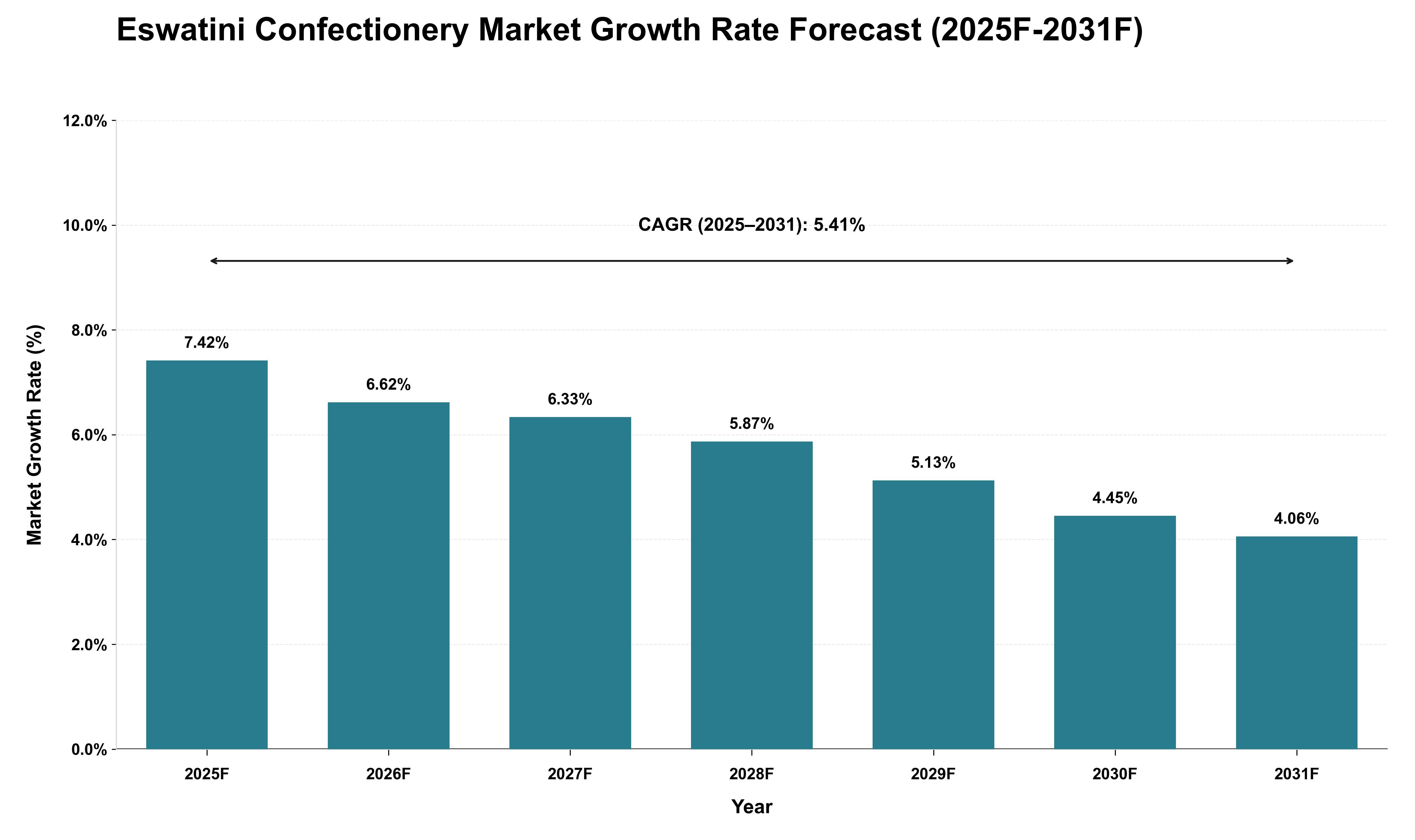
The forecasted growth trajectory for the Eswatini confectionery market will exhibit a notable deceleration from 2025 to 2031, with the initial robust growth rate of 7.42% in 2025 tapering to 4.06% by 2031. This trend reflects anticipated shifts in supply chain dynamics and input costs, particularly as global commodity prices fluctuate and import dependencies become more pronounced. The confectionery sector will likely face rising costs associated with raw materials, influenced by both local agricultural outputs and international supply chain disruptions. As consumer preferences evolve and competition intensifies, manufacturers may need to adapt their pricing strategies, potentially impacting profit margins. The projected compound annual growth rate of 5.41% underscores a resilient market; however, the declining annual growth rates suggest that stakeholders must navigate increasing operational challenges while capitalizing on emerging consumer trends within this evolving landscape.
Key Highlights of the Report:
- Swaziland Confectionery Market Outlook
- Market Size of Swaziland Confectionery Market, 2024
- Forecast of Swaziland Confectionery Market, 2031
- Historical Data and Forecast of Swaziland Confectionery Revenues & Volume for the Period 2021-2031
- Swaziland Confectionery Market Trend Evolution
- Swaziland Confectionery Market Drivers and Challenges
- Swaziland Confectionery Price Trends
- Swaziland Confectionery Porter`s Five Forces
- Swaziland Confectionery Industry Life Cycle
- Historical Data and Forecast of Swaziland Confectionery Market Revenues & Volume By Type for the Period 2021-2031
- Historical Data and Forecast of Swaziland Confectionery Market Revenues & Volume By Sugar for the Period 2021-2031
- Historical Data and Forecast of Swaziland Confectionery Market Revenues & Volume By Chocolate for the Period 2021-2031
- Historical Data and Forecast of Swaziland Confectionery Market Revenues & Volume By Fine Bakery Wares for the Period 2021-2031
- Historical Data and Forecast of Swaziland Confectionery Market Revenues & Volume By Others for the Period 2021-2031
- Historical Data and Forecast of Swaziland Confectionery Market Revenues & Volume By Distribution Channel for the Period 2021-2031
- Historical Data and Forecast of Swaziland Confectionery Market Revenues & Volume By Supermarket/Hypermarket for the Period 2021-2031
- Historical Data and Forecast of Swaziland Confectionery Market Revenues & Volume By Specialist Retailers for the Period 2021-2031
- Historical Data and Forecast of Swaziland Confectionery Market Revenues & Volume By Online Retail Stores for the Period 2021-2031
- Historical Data and Forecast of Swaziland Confectionery Market Revenues & Volume By Convenience Stores for the Period 2021-2031
- Historical Data and Forecast of Swaziland Confectionery Market Revenues & Volume By Other Distribution Channels for the Period 2021-2031
- Swaziland Confectionery Import Export Trade Statistics
- Market Opportunity Assessment By Type
- Market Opportunity Assessment By Distribution Channel
- Swaziland Confectionery Top Companies Market Share
- Swaziland Confectionery Competitive Benchmarking By Technical and Operational Parameters
- Swaziland Confectionery Company Profiles
- Swaziland Confectionery Key Strategic Recommendations






































