Eswatini Construction Machinery Market Growth Rate Analysis (2025 - 2031)
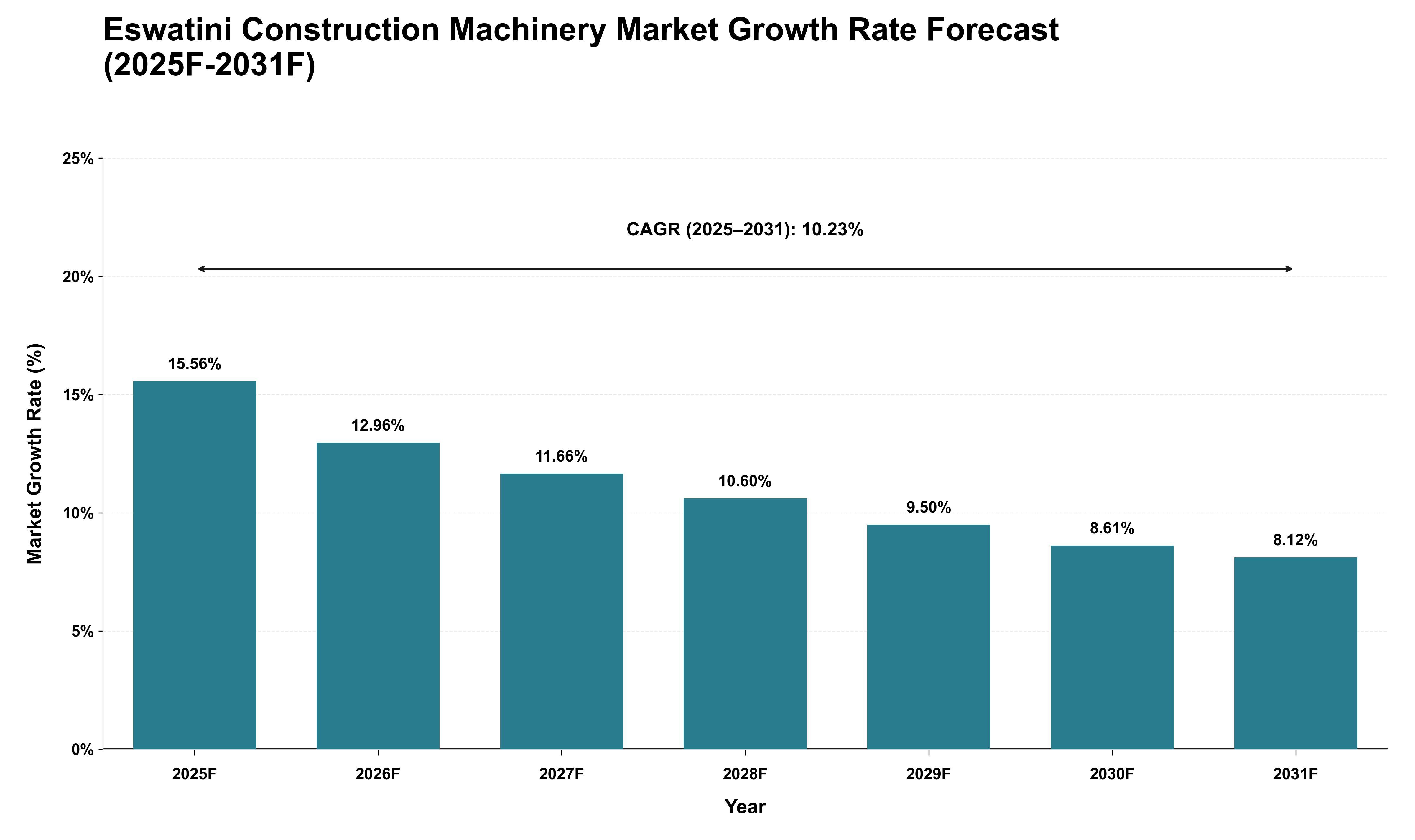
The Eswatini construction machinery market is poised for robust growth, driven primarily by increasing infrastructure investments and urbanization trends that will elevate demand for construction equipment. The forecasted CAGR of 10.23% from 2025 to 2031 reflects a strong trajectory, with annual growth rates peaking at 15.56% in 2025 before gradually tapering off. This pattern suggests an initial surge in demand as projects ramp up, likely influenced by government initiatives and foreign direct investment aimed at enhancing the country’s infrastructure. However, fluctuations in global supply chains and input costs will play a critical role; anticipated increases in raw material prices and logistical challenges may constrain production capacity and affect pricing strategies. As these factors unfold, the market will need to navigate the complexities of import dependencies while adapting to cyclical trends inherent in the construction sector, ensuring sustained growth throughout the forecast period.
Key Highlights of the Report:
- Swaziland Construction Machinery Market Outlook
- Market Size of Swaziland Construction Machinery Market, 2024
- Forecast of Swaziland Construction Machinery Market, 2031
- Historical Data and Forecast of Swaziland Construction Machinery Revenues & Volume for the Period 2021- 2031
- Swaziland Construction Machinery Market Trend Evolution
- Swaziland Construction Machinery Market Drivers and Challenges
- Swaziland Construction Machinery Price Trends
- Swaziland Construction Machinery Porter's Five Forces
- Swaziland Construction Machinery Industry Life Cycle
- Historical Data and Forecast of Swaziland Construction Machinery Market Revenues & Volume By Machine Type for the Period 2021- 2031
- Historical Data and Forecast of Swaziland Construction Machinery Market Revenues & Volume By Cranes for the Period 2021- 2031
- Historical Data and Forecast of Swaziland Construction Machinery Market Revenues & Volume By Excavators for the Period 2021- 2031
- Historical Data and Forecast of Swaziland Construction Machinery Market Revenues & Volume By Loaders for the Period 2021- 2031
- Historical Data and Forecast of Swaziland Construction Machinery Market Revenues & Volume By Backhoe for the Period 2021- 2031
- Historical Data and Forecast of Swaziland Construction Machinery Market Revenues & Volume By Motor Graders for the Period 2021- 2031
- Historical Data and Forecast of Swaziland Construction Machinery Market Revenues & Volume By Other Machine Types for the Period 2021- 2031
- Historical Data and Forecast of Swaziland Construction Machinery Market Revenues & Volume By Application for the Period 2021- 2031
- Historical Data and Forecast of Swaziland Construction Machinery Market Revenues & Volume By Concrete and Road Construction for the Period 2021- 2031
- Historical Data and Forecast of Swaziland Construction Machinery Market Revenues & Volume By Earth Moving for the Period 2021- 2031
- Historical Data and Forecast of Swaziland Construction Machinery Market Revenues & Volume By Material Handling for the Period 2021- 2031
- Swaziland Construction Machinery Import Export Trade Statistics
- Market Opportunity Assessment By Machine Type
- Market Opportunity Assessment By Application
- Swaziland Construction Machinery Top Companies Market Share
- Swaziland Construction Machinery Competitive Benchmarking By Technical and Operational Parameters
- Swaziland Construction Machinery Company Profiles
- Swaziland Construction Machinery Key Strategic Recommendations






































