Eswatini Lead Market Growth Rate Analysis (2025 - 2031)
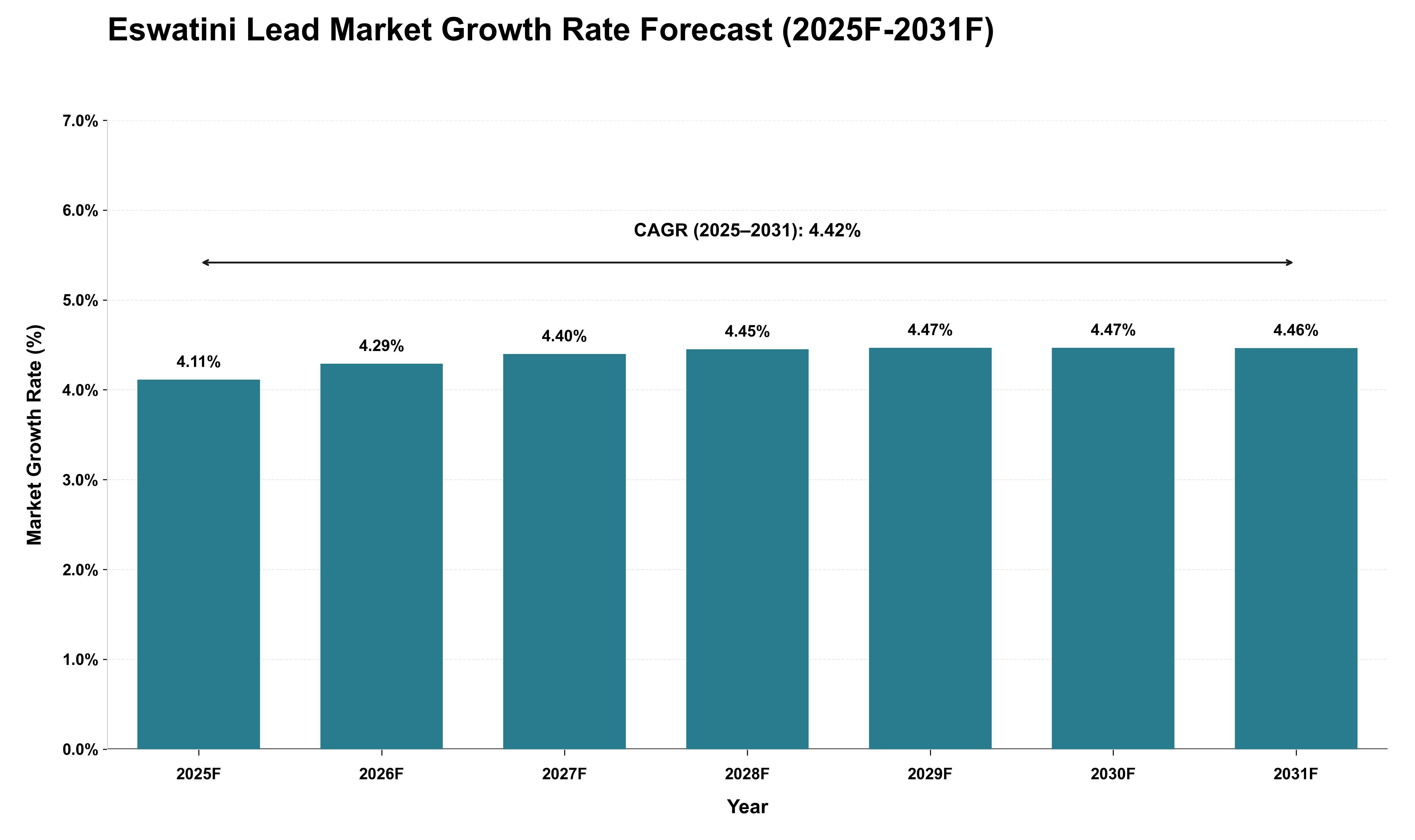
From 2025 onward, the Eswatini lead market is expected to experience a steady growth trajectory, with a compound annual growth rate (CAGR) of 4.42%. This growth will be underpinned by increasing demand for lead in various industrial applications, particularly in battery production and construction materials. The annual growth rates will show a gradual increase from 4.11% in 2025 to a peak of 4.47% in both 2029 and 2030, reflecting an anticipated rise in import dependencies as domestic production may not fully meet the burgeoning demand. As global supply chains adapt to fluctuating commodity prices and environmental regulations, Eswatini's trade flows will likely become more integrated with regional markets, enhancing export opportunities while also necessitating strategic partnerships for sustainable sourcing. Overall, these dynamics will shape the competitive landscape for lead imports and exports throughout the forecast period.
Key Highlights of the Report:
- Swaziland Lead Market Outlook
- Market Size of Swaziland Lead Market, 2024
- Forecast of Swaziland Lead Market, 2031
- Historical Data and Forecast of Swaziland Lead Revenues & Volume for the Period 2021-2031
- Swaziland Lead Market Trend Evolution
- Swaziland Lead Market Drivers and Challenges
- Swaziland Lead Price Trends
- Swaziland Lead Porter`s Five Forces
- Swaziland Lead Industry Life Cycle
- Historical Data and Forecast of Swaziland Lead Market Revenues & Volume By Isotopesfor the Period 2021-2031
- Historical Data and Forecast of Swaziland Lead Market Revenues & Volume By Lead-204 for the Period 2021-2031
- Historical Data and Forecast of Swaziland Lead Market Revenues & Volume By Lead-207 for the Period 2021-2031
- Historical Data and Forecast of Swaziland Lead Market Revenues & Volume By Lead-206 for the Period 2021-2031
- Historical Data and Forecast of Swaziland Lead Market Revenues & Volume By Lead-208 for the Period 2021-2031
- Historical Data and Forecast of Swaziland Lead Market Revenues & Volume By Applications for the Period 2021-2031
- Historical Data and Forecast of Swaziland Lead Market Revenues & Volume By Batteries for the Period 2021-2031
- Historical Data and Forecast of Swaziland Lead Market Revenues & Volume By Cable sheaths for the Period 2021-2031
- Historical Data and Forecast of Swaziland Lead Market Revenues & Volume By Shipbuilding for the Period 2021-2031
- Historical Data and Forecast of Swaziland Lead Market Revenues & Volume By Light industry for the Period 2021-2031
- Historical Data and Forecast of Swaziland Lead Market Revenues & Volume By Others for the Period 2021-2031
- Historical Data and Forecast of Swaziland Lead Market Revenues & Volume By End-users for the Period 2021-2031
- Historical Data and Forecast of Swaziland Lead Market Revenues & Volume By Mechanical Industry for the Period 2021-2031
- Historical Data and Forecast of Swaziland Lead Market Revenues & Volume By Construction Industry for the Period 2021-2031
- Historical Data and Forecast of Swaziland Lead Market Revenues & Volume By Defense for the Period 2021-2031
- Historical Data and Forecast of Swaziland Lead Market Revenues & Volume By Electronics for the Period 2021-2031
- Historical Data and Forecast of Swaziland Lead Market Revenues & Volume By Others for the Period 2021-2031
- Swaziland Lead Import Export Trade Statistics
- Market Opportunity Assessment By Isotopes
- Market Opportunity Assessment By Applications
- Market Opportunity Assessment By End-users
- Swaziland Lead Top Companies Market Share
- Swaziland Lead Competitive Benchmarking By Technical and Operational Parameters
- Swaziland Lead Company Profiles
- Swaziland Lead Key Strategic Recommendations






































