Sweden Aluminium Market Size (2020-2030)
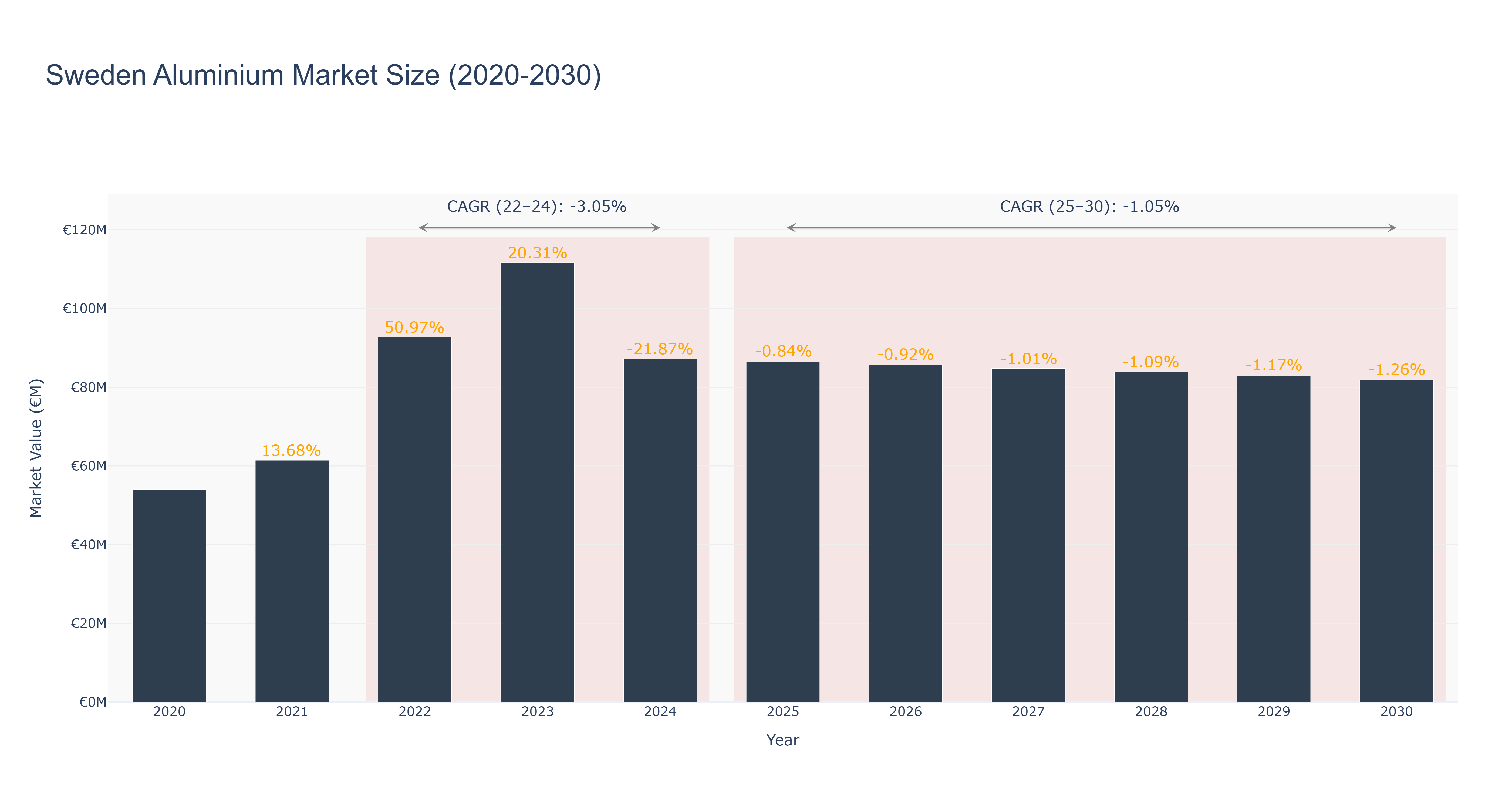
Sweden Aluminium Market has experienced fluctuations in market size over the years. The peak market size of €111.60 million was recorded in 2023, followed by a decline to €87.19 million in 2024. The market is forecasted to continue shrinking, with an expected size of €81.85 million in 2030. The CAGR for the period 2022-24 is -3.05%, while for 2025-30, it stands at -1.05%. The downward trend can be attributed to global economic uncertainties impacting demand, while the gradual recovery is anticipated due to increased focus on sustainable practices and technological advancements in the aluminium industry. Recent developments in Sweden include investments in renewable energy sources to power aluminium production, aiming for a more environmentally friendly approach in the market. Industry drivers for the Sweden Aluminium Market include sustainability initiatives, technological innovation, and evolving consumer preferences towards eco-friendly products. These factors are expected to shape the market's future trajectory, driving demand for sustainable aluminium solutions and fostering growth opportunities in the sector.
Sweden Aluminium Market: Production & Trade Performance (2019-2025)
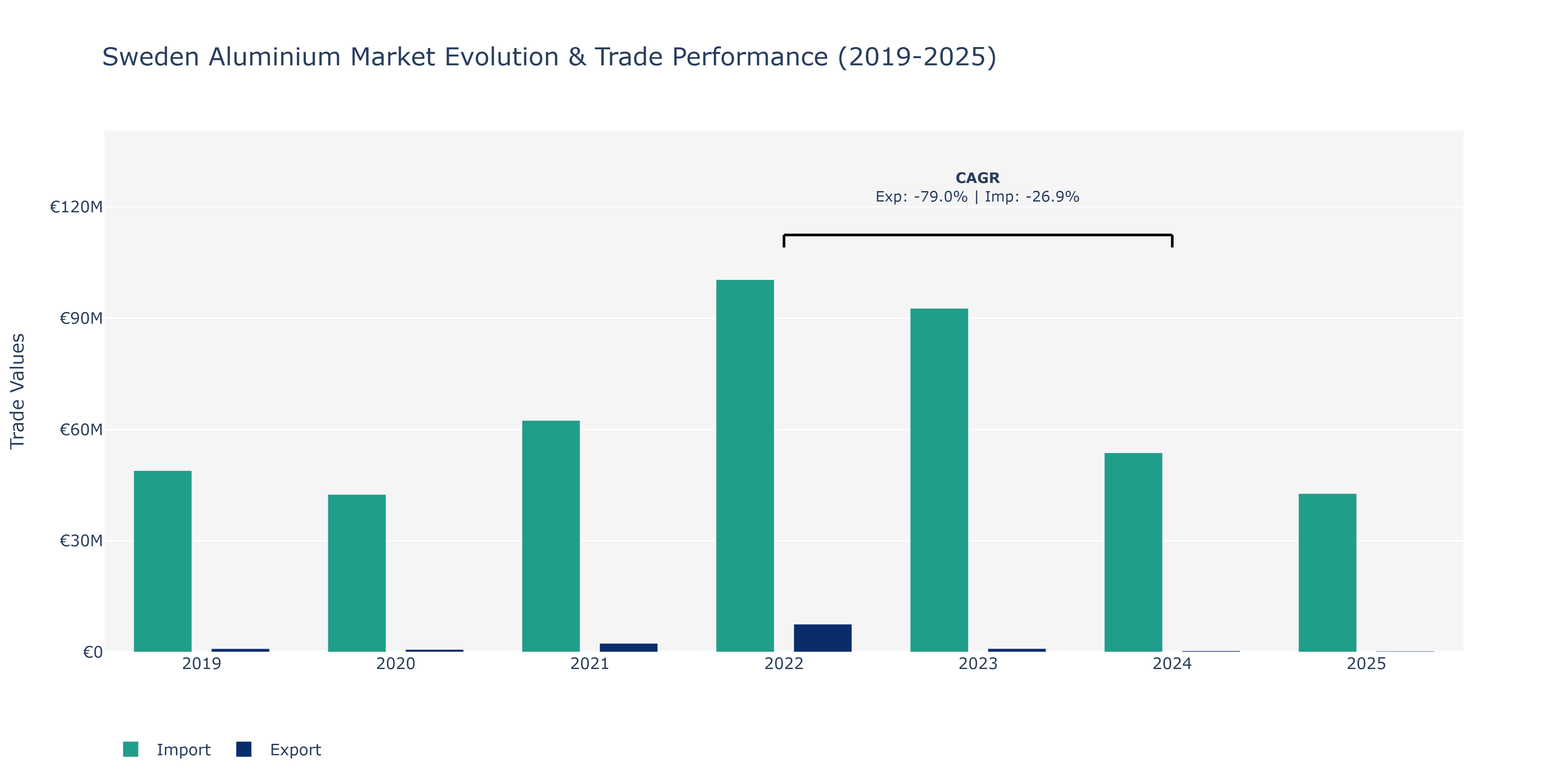
In the Sweden Aluminium Market, exports demonstrated a fluctuating pattern over the years provided. Starting at €917.02 thousand in 2019, exports declined sharply by 62.7% in 2020 to €693.32 thousand before rebounding significantly in 2021 to €2.36 million, marking an impressive 240.6% increase. The trend reversed in 2022 with exports soaring to €7.54 million, only to fall drastically by 96.9% in 2023 to €946.15 thousand. By 2024, exports further decreased to €332.86 thousand. Conversely, imports followed a more stable trajectory, peaking at €100.4 million in 2022, then experiencing a slight decline in 2023 and 2024. The substantial decrease from 2022 to 2024 in exports and imports can be attributed to international trade dynamics, global economic conditions, and fluctuations in aluminium prices impacting Sweden's market competitiveness and trade relationships.
Key Highlights of the Report:
- Sweden Aluminium Market Outlook
- Market Size of Sweden Aluminium Market, 2024
- Forecast of Sweden Aluminium Market, 2031
- Historical Data and Forecast of Sweden Aluminium Revenues & Volume for the Period 2021-2031
- Sweden Aluminium Market Trend Evolution
- Sweden Aluminium Market Drivers and Challenges
- Sweden Aluminium Price Trends
- Sweden Aluminium Porter`s Five Forces
- Sweden Aluminium Industry Life Cycle
- Historical Data and Forecast of Sweden Aluminium Market Revenues & Volume By End-Use for the Period 2021-2031
- Historical Data and Forecast of Sweden Aluminium Market Revenues & Volume By Construction for the Period 2021-2031
- Historical Data and Forecast of Sweden Aluminium Market Revenues & Volume By Transportation for the Period 2021-2031
- Historical Data and Forecast of Sweden Aluminium Market Revenues & Volume By Packaging for the Period 2021-2031
- Historical Data and Forecast of Sweden Aluminium Market Revenues & Volume By Electrical for the Period 2021-2031
- Historical Data and Forecast of Sweden Aluminium Market Revenues & Volume By Consumer Durables for the Period 2021-2031
- Historical Data and Forecast of Sweden Aluminium Market Revenues & Volume By Machinery & Equipment for the Period 2021-2031
- Historical Data and Forecast of Sweden Aluminium Market Revenues & Volume By Others for the Period 2021-2031
- Sweden Aluminium Import Export Trade Statistics
- Market Opportunity Assessment By End-Use
- Sweden Aluminium Top Companies Market Share
- Sweden Aluminium Competitive Benchmarking By Technical and Operational Parameters
- Sweden Aluminium Company Profiles
- Sweden Aluminium Key Strategic Recommendations






































