Sweden Kids Footwear Market Size (2020-2030)
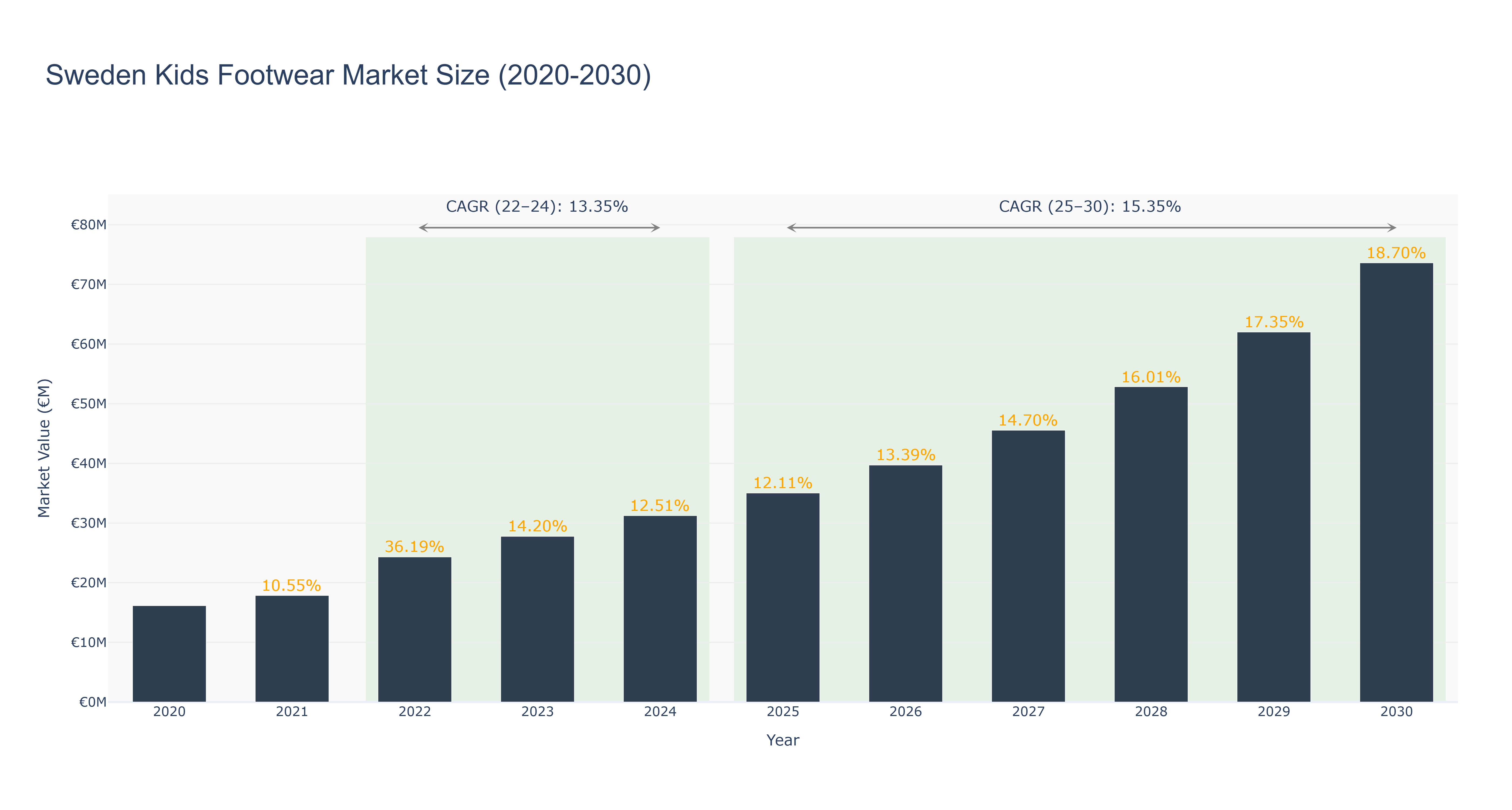
The Sweden Kids Footwear Market demonstrated significant growth from €16.15 million in 2020 to €31.25 million in 2024, achieving a remarkable Compound Annual Growth Rate (CAGR) of 13.35% during the actual period from 2022 to 2024. This growth can be attributed to increased consumer spending on children's products, a rising awareness of children's health and comfort, and an expanding range of eco-friendly and fashionable footwear options. Looking ahead, the market is projected to continue its robust expansion, with an anticipated CAGR of 15.35% from 2025 to 2030, reaching a market size of €73.62 million by 2030. Key drivers for this future growth include ongoing innovations in materials technology, the rising trend of online shopping, and a growing emphasis on sustainable practices within the industry. These factors are expected to solidify the market's upward trajectory in the coming years.
Sweden Kids Footwear Market: Production & Trade Performance (2019-2025)
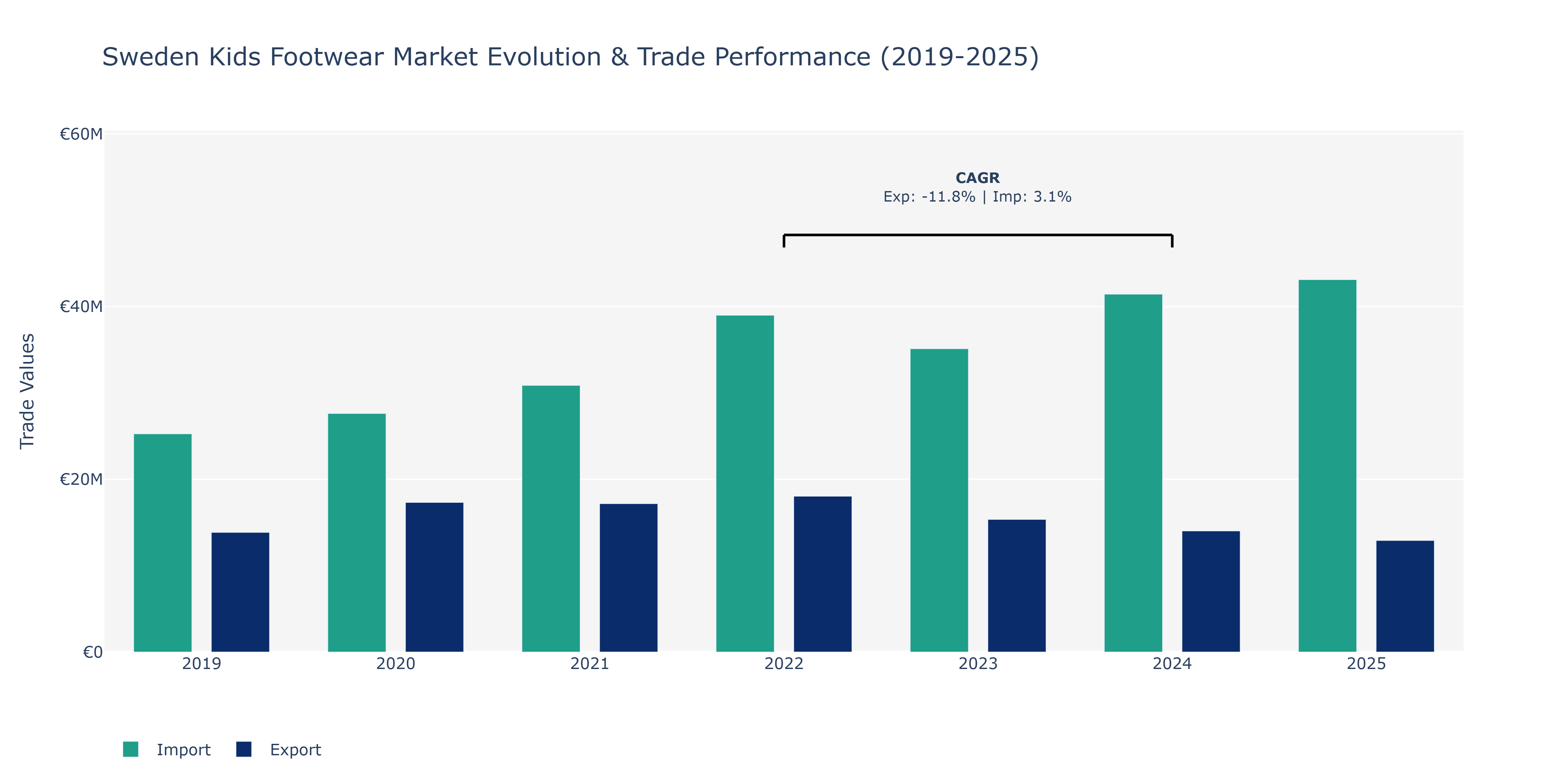
The Sweden Kids Footwear Market witnessed fluctuations in both Exports and Imports over the years. In 2025, Exports amounted to approximately €12.91 million, showing a downward trend from the previous year. Meanwhile, Imports peaked in 2025 at around €43.12 million, marking a continuous increase since 2019. The surge in Imports could be attributed to the growing demand for international brands and a wider variety of children's footwear options in the Swedish market. In contrast, the decline in Exports may reflect shifting consumer preferences towards domestic products or changes in global trade dynamics impacting the export of kids' footwear from Sweden. These trends align with the reported CAGR for Exports between 2022 and 2024, showcasing a negative growth rate, while Imports experienced a modest positive growth during the same period. Such market movements emphasize the need for market players to adapt to changing consumer behaviors and international trade patterns to remain competitive in the evolving kids' footwear segment.
Key Highlights of the Report:
- Sweden Kids Footwear Market Outlook
- Market Size of Sweden Kids Footwear Market, 2025
- Forecast of Sweden Kids Footwear Market, 2032
- Historical Data and Forecast of Sweden Kids Footwear Revenues & Volume for the Period 2022 - 2032F
- Sweden Kids Footwear Market Trend Evolution
- Sweden Kids Footwear Market Drivers and Challenges
- Sweden Kids Footwear Price Trends
- Sweden Kids Footwear Porter`s Five Forces
- Sweden Kids Footwear Industry Life Cycle
- Historical Data and Forecast of Sweden Kids Footwear Market Revenues & Volume By Product Type for the Period 2022 - 2032F
- Historical Data and Forecast of Sweden Kids Footwear Market Revenues & Volume By Casual for the Period 2022 - 2032F
- Historical Data and Forecast of Sweden Kids Footwear Market Revenues & Volume By Sports for the Period 2022 - 2032F
- Historical Data and Forecast of Sweden Kids Footwear Market Revenues & Volume By Formal for the Period 2022 - 2032F
- Historical Data and Forecast of Sweden Kids Footwear Market Revenues & Volume By Others for the Period 2022 - 2032F
- Historical Data and Forecast of Sweden Kids Footwear Market Revenues & Volume By End-users for the Period 2022 - 2032F
- Historical Data and Forecast of Sweden Kids Footwear Market Revenues & Volume By Boys for the Period 2022 - 2032F
- Historical Data and Forecast of Sweden Kids Footwear Market Revenues & Volume By Girls for the Period 2022 - 2032F
- Historical Data and Forecast of Sweden Kids Footwear Market Revenues & Volume By Unisex for the Period 2022 - 2032F
- Sweden Kids Footwear Import Export Trade Statistics
- Market Opportunity Assessment By Product Type
- Market Opportunity Assessment By End-users
- Sweden Kids Footwear Top Companies Market Share
- Sweden Kids Footwear Competitive Benchmarking By Technical and Operational Parameters
- Sweden Kids Footwear Company Profiles
- Sweden Kids Footwear Key Strategic Recommendations






































