Sweden Wax Market Size (2020-2030)
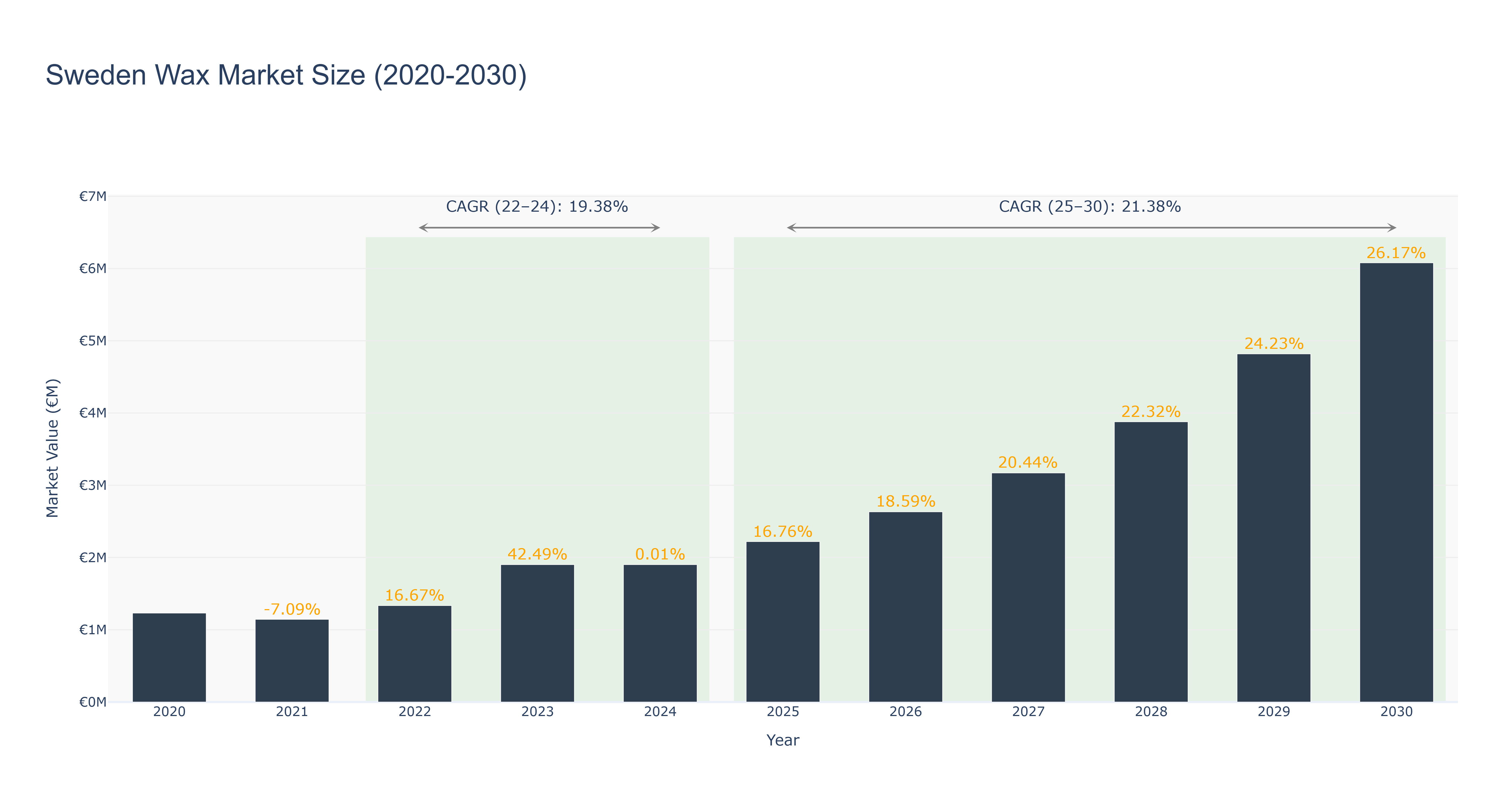
Sweden Wax Market has shown a steady growth trajectory since 2020, reaching a peak market size of €6.08 million in 2030. The market size increased from €1.23 million in 2020 to €1.90 million in 2024, with a slight dip in growth rate in 2021 due to external economic factors. The forecasted market size is projected to continue its upward trend, reaching €6.08 million by 2030, with a CAGR of 21.38% from 2025 to 2030. The market's growth can be attributed to increasing demand for wax products in various industries, such as cosmetics and automotive. Recent developments in sustainable wax production methods are expected to further boost market growth in the coming years, positioning Sweden as a key player in the global wax market.
Sweden Wax Market: Production & Trade Performance (2019-2025)
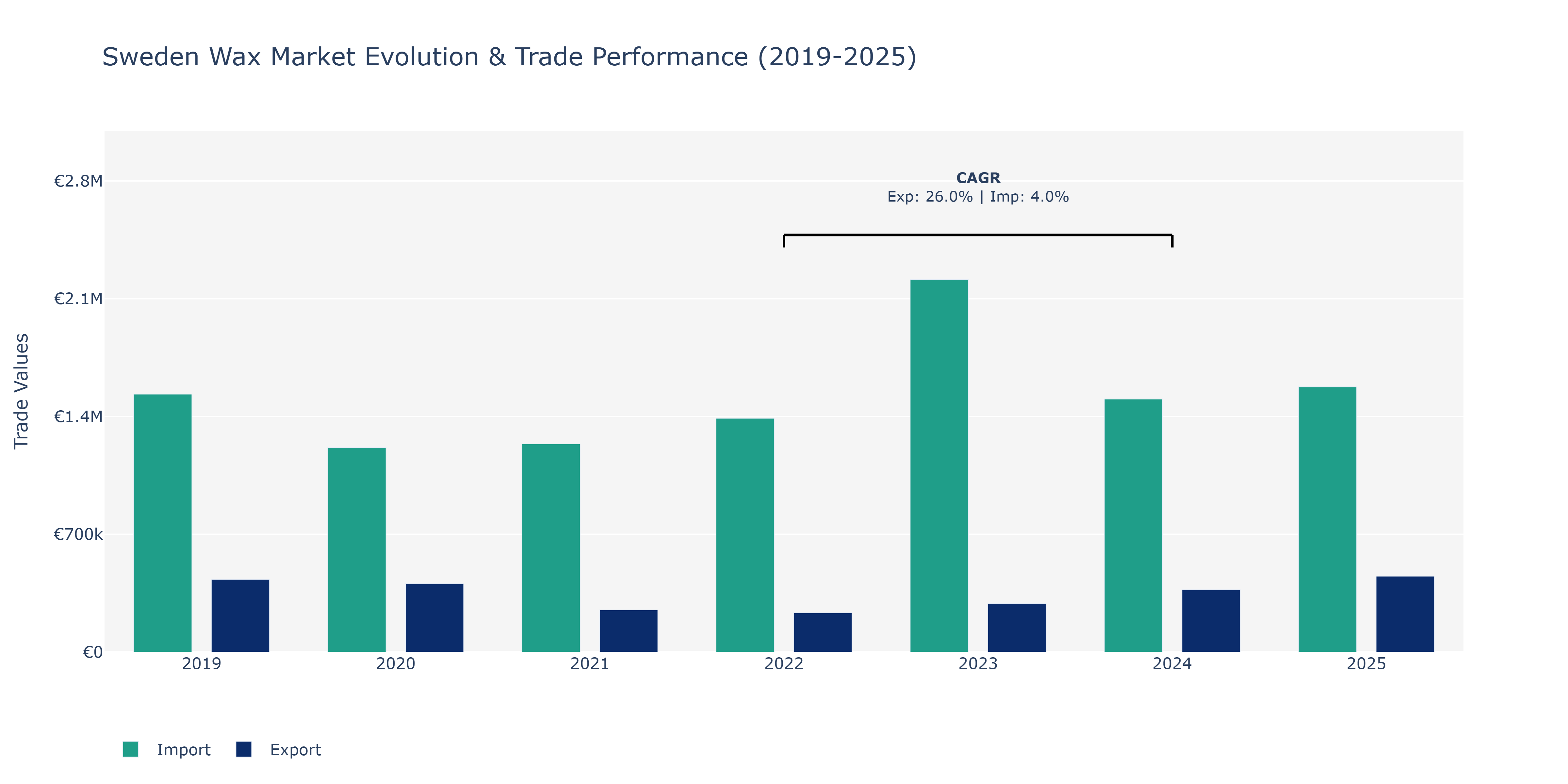
In the Sweden Wax Market, exports showed a fluctuating pattern over the years. Starting at €431.38 thousand in 2019, exports decreased to €250.41 thousand in 2021 but rebounded in 2025 to reach €451.11 thousand. Conversely, imports followed a more stable trajectory, declining from €1.53 million in 2019 to €1.22 million in 2020 before steadily increasing to €1.58 million in 2025. The peak for exports during this period was seen in 2025, while imports peaked in 2023. The rise in exports in 2025 could be attributed to increased international demand for Swedish waxes, possibly due to the product quality or unique manufacturing processes in the country. On the other hand, the growth in imports might reflect a strategic effort to access specific types of waxes not readily available domestically, aligning with global trade patterns in specialty chemicals.
Sweden Wax Market Overview
The wax market in Sweden includes products derived from petroleum, beeswax, and synthetic sources, used in cosmetics, candles, and industrial applications. The market is growing as consumers and industries seek more sustainable and eco-friendly alternatives. The increasing use of wax in personal care products and packaging is driving demand.
Drivers of the market
The Wax market in Sweden is influenced by the rising demand for wax in various applications, including cosmetics, packaging, and food. The growing consumer preference for natural and sustainable products is driving manufacturers to explore eco-friendly wax options, such as plant-based waxes. Additionally, the expansion of the personal care and packaging industries further enhances the demand for high-quality wax products.
Challenges of the market
In the Wax market, challenges include fluctuating raw material prices and the demand for sustainable and biodegradable options. Manufacturers must innovate to develop high-quality waxes that meet diverse consumer needs while adhering to environmental regulations. Additionally, competition from synthetic alternatives can impact market dynamics and pricing strategies.
Government Policy of the market
Government regulations in Sweden support the Wax market by promoting the development of eco-friendly wax products. Policies encourage manufacturers to minimize the use of harmful substances in wax formulations, focusing on safety and environmental sustainability. The government also supports research initiatives aimed at exploring new applications for wax in various industries, including cosmetics and packaging.
Key Highlights of the Report:
- Sweden Wax Market Outlook
- Market Size of Sweden Wax Market, 2025
- Forecast of Sweden Wax Market, 2032
- Historical Data and Forecast of Sweden Wax Revenues & Volume for the Period 2022 - 2032
- Sweden Wax Market Trend Evolution
- Sweden Wax Market Drivers and Challenges
- Sweden Wax Price Trends
- Sweden Wax Porter`s Five Forces
- Sweden Wax Industry Life Cycle
- Historical Data and Forecast of Sweden Wax Market Revenues & Volume By Product for the Period 2022 - 2032
- Historical Data and Forecast of Sweden Wax Market Revenues & Volume By Mineral for the Period 2022 - 2032
- Historical Data and Forecast of Sweden Wax Market Revenues & Volume By Synthetic for the Period 2022 - 2032
- Historical Data and Forecast of Sweden Wax Market Revenues & Volume By Natural for the Period 2022 - 2032
- Historical Data and Forecast of Sweden Wax Market Revenues & Volume By Applications for the Period 2022 - 2032
- Historical Data and Forecast of Sweden Wax Market Revenues & Volume By Candles for the Period 2022 - 2032
- Historical Data and Forecast of Sweden Wax Market Revenues & Volume By Packaging for the Period 2022 - 2032
- Historical Data and Forecast of Sweden Wax Market Revenues & Volume By Plastic & Rubber for the Period 2022 - 2032
- Historical Data and Forecast of Sweden Wax Market Revenues & Volume By Cosmetics & Toiletries for the Period 2022 - 2032
- Historical Data and Forecast of Sweden Wax Market Revenues & Volume By Fire Logs for the Period 2022 - 2032
- Historical Data and Forecast of Sweden Wax Market Revenues & Volume By Adhesives for the Period 2022 - 2032
- Historical Data and Forecast of Sweden Wax Market Revenues & Volume By Others for the Period 2022 - 2032
- Sweden Wax Import Export Trade Statistics
- Market Opportunity Assessment By Product
- Market Opportunity Assessment By Applications
- Sweden Wax Top Companies Market Share
- Sweden Wax Competitive Benchmarking By Technical and Operational Parameters
- Sweden Wax Company Profiles
- Sweden Wax Key Strategic Recommendations






































