Switzerland Electrolyte and Vitamin Water Market: Import Trend Analysis
Switzerland import trend for electrolyte and vitamin water showed a growth rate of -2.58% from 2023 to 2024, with a compound annual growth rate (CAGR) of 5.82% from 2020 to 2024. This decline in growth could be attributed to shifting consumer preferences or changes in trade policies impacting imports.
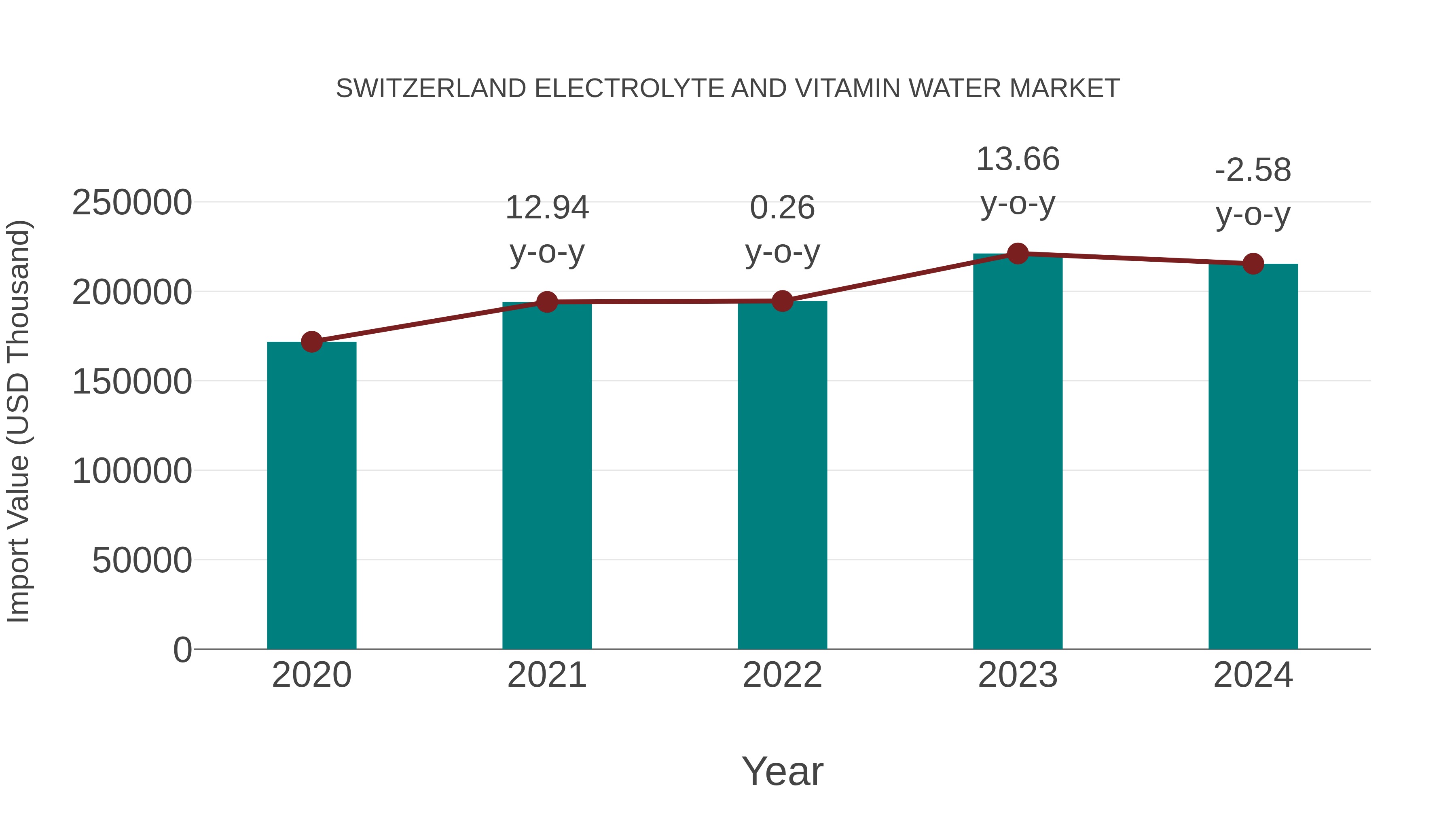
Switzerland Electrolyte and Vitamin Water Market Growth Rate
According to 6Wresearch internal database and industry insights, the Switzerland Electrolyte and Vitamin Water Market is projected to grow at a compound annual growth rate (CAGR) of 6.2% during the forecast period 2026–2032.
Topics Covered in the Switzerland Electrolyte and Vitamin Water Market Report
The Switzerland Electrolyte and Vitamin Water Market report thoroughly covers the market by fortification, variants, type, packaging, and distribution channel. It provides an unbiased and detailed analysis of ongoing market trends, opportunities, challenges, and market drivers, helping stakeholders align their strategies with current and future market dynamics.
Switzerland Electrolyte and Vitamin Water Market Highlights
| Report Name |
Switzerland Electrolyte and Vitamin Water Market |
| Forecast period | 2026-2032 |
| CAGR | 6.2% |
| Growing Sector |
Functional Beverages |
Switzerland Electrolyte and Vitamin Water Market Synopsis
The Switzerland Electrolyte and Vitamin Water Market is predicted to undergo steady growth. This is owing to the increasing need for health-focused beverages. Hence, consumers are transitioning to electrolyte and vitamin-enhanced water for hydration and wellness and major factors contributing to this need consist of rising health consciousness, fitness trends, and rising awareness of the importance of hydration. Both local and international brands are continuously creatively innovating to give a variety of options, leading to the growth of the market in Switzerland.
Evaluation of Growth Drivers in the Switzerland Electrolyte and Vitamin Water Market
Below mentioned are some prominent drivers and their influence on the Switzerland Electrolyte and Vitamin Water Market dynamics:
| Drivers | Primary Segment Affected | Why It Matters (Evidence) |
| Health Consciousness | All Segments | Growing awareness of healthy living leads to higher consumption of functional beverages. |
| Fitness and Active Lifestyles | Electrolyte & Vitamin Water | The rise of fitness enthusiasts is increasing demand for beverages that enhance hydration. |
| Premium Product Demand | All Segments | Consumer preference for premium ingredients drives the demand for higher quality offerings. |
| Availability of Flavored Options | Flavored Variants | Increased availability of flavored options attracts consumers, especially younger demographics. |
| Rising Disposable Income | All Segments | With higher disposable income, consumers are opting for premium and organic electrolyte drinks |
The Switzerland Electrolyte and Vitamin Water Market is projected to grow at a CAGR of 6.2% from 2026 to 2032. This growth is driven by the growing focus on health, fitness, and wellness among consumers. Increase in the need for functional beverages enriched with electrolytes and vitamins, especially among sports enthusiasts and health-conscious individuals, is contributing to the market’s growth. Rising product offerings and availability through various distribution channels, consisting of e-commerce and supermarkets, further promote this growth trajectory.
Evaluation of Restraints in the Switzerland Electrolyte and Vitamin Water Market
Below mentioned are some major restraints and their influence on the Switzerland Electrolyte and Vitamin Water Market dynamics:
| Restraints | Primary Segment Affected | What This Means (Evidence) |
| High Product Prices | All Segments | Premium prices for electrolyte and vitamin waters may limit accessibility for price-sensitive consumers. |
| Limited Consumer Awareness | Electrolyte Only | The advantages of electrolyte-drinks might not be in knowledge to some consumers. |
| Competition from Traditional Beverages | All Segments | Some consumers might be seeking traditional beverages rather than functional drinks. |
| Distribution Challenges | PET Packaging | Attainability can get affected owing to lack of access to specialized stores in some regions. |
| Regulatory Hurdles | All Segments | Increase in compliance prices owing to strict regulations on fortification. |
Switzerland Electrolyte and Vitamin Water Market Challenges
Switzerland Electrolyte and Vitamin Water Industry go through many challenges. it consists of solid market competition and dynamic consumer preferences. Health-conscious consumers highly need low-sugar and clean-label beverages, requiring companies to continuously augment formulations and ingredients. Profit margins can get impacted, especially for smaller brands owing to high manufacturing, packaging, and logistics costs in Switzerland can impact. Strict food safety standards, labeling rules, and nutritional claim regulations may raise compliance prices and slow down the product launches.
Switzerland Electrolyte and Vitamin Water Market Trends
Several notable trends are shaping the Switzerland Electrolyte and Vitamin Water Market dynamics:
- Rise of Premium and Organic Offerings: Brands that are focusing on high-quality ingredients are getting market share as consumers are highly wanting premium and non-GMO beverages.
- Demand for Flavored Variants: As consumers want variety and taste along with functionality, the transition toward flavoured variants is becoming a leading trend.
- Increased Focus on Hydration for Wellness: There is an increase in demand for electrolyte water owing to people developing higher perception regarding its role in overall wellness.
- Integration of Functional Ingredients: The product’s appeal is growing as there is rising creative innovation in adding additional health benefits.
Investment Opportunities in the Switzerland Electrolyte and Vitamin Water Industry
Some notable investment opportunities in the Switzerland Electrolyte and Vitamin Water Market include:
- Opening Premium and Organic Beverage Brands: Fund allocation in launching premium or organic electrolyte drinks that provide to the rising health-conscious demographic.
- Health-focused Vending Machines: Adopting vending machines in gyms, airports, and offices to encourage easy attainment to functional beverages.
- R&D in Functional Ingredients: Allocating funds in research and development to innovate and incorporate additional functional ingredients such as probiotics, collagen, or plant-based electrolytes.
Top 5 Leading Players in the Switzerland Electrolyte and Vitamin Water Market
Below is the list of prominent companies leading in the Switzerland Electrolyte and Vitamin Water Market:
1. Nestlé
| Company Name | Nestlé |
|---|---|
| Established Year | 1867 |
| Headquarters | Vevey, Switzerland |
| Official Website | Click Here |
Nestlé is a multinational food and beverage company and is one of the world’s dominant producers of electrolyte and vitamin-infused waters.
2. Coca-Cola Company
| Company Name | Coca-Cola Company |
|---|---|
| Established Year | 1892 |
| Headquarters | Atlanta, Georgia, USA |
| Official Website | Click Here |
Coca-Cola has a major presence in the Swiss beverage market, offering vitamin and electrolyte-enriched waters under brands like "Smartwater."
3. PepsiCo
| Company Name | PepsiCo |
|---|---|
| Established Year | 1965 |
| Headquarters | Purchase, New York, USA |
| Official Website | Click Here |
PepsiCo is a dominating multinational food and beverage company with a broad portfolio of health-focused beverages.
4. Danone
| Company Name | Danone |
|---|---|
| Established Year | 1919 |
| Headquarters | Paris, France |
| Official Website | Click Here |
Danone creates a variety of functional beverages, including flavored electrolyte and vitamin water options marketed under the "Evian" and "Volvic" brands.
5. Vitaminwater
| Company Name | Vitaminwater (The Coca-Cola Company) |
|---|---|
| Established Year | 2000 |
| Headquarters | Atlanta, Georgia, USA |
| Official Website | Click Here |
Vitaminwater, a Coca-Cola product, provides a broad range of vitamin-enhanced and electrolyte-infused waters, contributing majorly to the market’s growth in Switzerland.
Government Regulations Introduced in the Switzerland Electrolyte and Vitamin Water Market
According to Switzerland's government data, all companies must adhere to strict food safety, and health guidelines who are engaged in the production and distribution of electrolyte and vitamin-infused waters. The Swiss Federal Food Safety and Veterinary Office (FSVO) monitors all beverage manufacturers to make sure that the water must align with health standards and claims regarding the benefits of electrolytes and vitamins are substantiated by scientific evidence. Brands must also adhere with packaging regulations, consisting of proper labeling for recyclable materials and ingredient transparency.
Future Insights of the Switzerland Electrolyte and Vitamin Water Market
The Switzerland Electrolyte and Vitamin Water Market is poised for continuous growth. This is owing to rising consumer knowledge on the importance of hydration and wellness. The requirement for high-quality, organic, and functional products is predicted to rise. Companies will also creatively innovate to provide more natural and specialized variants. With fitness and active lifestyles continuing to be a major trend, hydration will remain a main part of consumers’ daily routines. This is proliferating sustained demand in the market.
Market Segmentation Analysis
The report offers a comprehensive study of the following market segments and their leading categories:
- By Fortification – Electrolyte & Vitamin to dominate the market: Electrolyte & Vitamin water is projected to dominate the market, driven by increasing consumer demand for beverages that support hydration while also providing additional health benefits such as improved immunity and energy.
- By Variants – Flavored to dominate the market: Flavored electrolyte and vitamin waters are predicted to lead the market as consumers increasingly prefer flavoured variants to plain water, with new flavors being introduced regularly to align with demand.
- By Type – Sweetened to dominate the market: According to Mansi Ahuja, Senior Research Analyst at 6Wresearch, sweetened electrolyte waters are set to sustain dominance, especially among consumers wanting beverages that are both functional and taste appealing.
- By Packaging – PET to dominate the market: PET packaging is expected to continue leading the Switzerland Electrolyte and Vitamin Water Market Share owing to its cost-effectiveness and convenience for consumers.
- By Distribution Channel – Supermarkets to dominate the market: Supermarkets are the leading distribution channel for electrolyte and vitamin waters in Switzerland owing to their large reach and high consumer foot traffic.
Key Attractiveness of the Report
- 10 Years of Market Numbers.
- Historical Data Starting from 2022 to 2025.
- Base Year: 2025.
- Forecast Data until 2032.
- Key Performance Indicators Impacting the Market.
- Major Upcoming Developments and Projects.
Key Highlights of the Report:
- Switzerland Electrolyte and Vitamin Water Market Outlook
- Market Size of Switzerland Electrolyte and Vitamin Water Market, 2025
- Forecast of Switzerland Electrolyte and Vitamin Water Market, 2032
- Historical Data and Forecast of Switzerland Electrolyte and Vitamin Water Revenues & Volume for the Period 2022-2032
- Switzerland Electrolyte and Vitamin Water Market Trend Evolution
- Switzerland Electrolyte and Vitamin Water Market Drivers and Challenges
- Switzerland Electrolyte and Vitamin Water Price Trends
- Switzerland Electrolyte and Vitamin Water Porter's Five Forces
- Switzerland Electrolyte and Vitamin Water Industry Life Cycle
- Historical Data and Forecast of Switzerland Electrolyte and Vitamin Water Market Revenues & Volume By Fortification for the Period 2022-2032
- Historical Data and Forecast of Switzerland Electrolyte and Vitamin Water Market Revenues & Volume By Vitamin Only for the Period 2022-2032
- Historical Data and Forecast of Switzerland Electrolyte and Vitamin Water Market Revenues & Volume By Electrolyte Only for the Period 2022-2032
- Historical Data and Forecast of Switzerland Electrolyte and Vitamin Water Market Revenues & Volume By Electrolyte & Vitamin for the Period 2022-2032
- Historical Data and Forecast of Switzerland Electrolyte and Vitamin Water Market Revenues & Volume By Variants for the Period 2022-2032
- Historical Data and Forecast of Switzerland Electrolyte and Vitamin Water Market Revenues & Volume By Flavored for the Period 2022-2032
- Historical Data and Forecast of Switzerland Electrolyte and Vitamin Water Market Revenues & Volume By Non-flavored for the Period 2022-2032
- Historical Data and Forecast of Switzerland Electrolyte and Vitamin Water Market Revenues & Volume By Type for the Period 2022-2032
- Historical Data and Forecast of Switzerland Electrolyte and Vitamin Water Market Revenues & Volume By Sweetened for the Period 2022-2032
- Historical Data and Forecast of Switzerland Electrolyte and Vitamin Water Market Revenues & Volume By Non-sweetened for the Period 2022-2032
- Historical Data and Forecast of Switzerland Electrolyte and Vitamin Water Market Revenues & Volume By Packaging for the Period 2022-2032
- Historical Data and Forecast of Switzerland Electrolyte and Vitamin Water Market Revenues & Volume By PET for the Period 2022-2032
- Historical Data and Forecast of Switzerland Electrolyte and Vitamin Water Market Revenues & Volume By Glass for the Period 2022-2032
- Historical Data and Forecast of Switzerland Electrolyte and Vitamin Water Market Revenues & Volume By Aluminum for the Period 2022-2032
- Historical Data and Forecast of Switzerland Electrolyte and Vitamin Water Market Revenues & Volume By Distribution Channel for the Period 2022-2032
- Historical Data and Forecast of Switzerland Electrolyte and Vitamin Water Market Revenues & Volume By Supermarkets for the Period 2022-2032
- Historical Data and Forecast of Switzerland Electrolyte and Vitamin Water Market Revenues & Volume By Convenient Stores for the Period 2022-2032
- Historical Data and Forecast of Switzerland Electrolyte and Vitamin Water Market Revenues & Volume By Online Stores for the Period 2022-2032
- Historical Data and Forecast of Switzerland Electrolyte and Vitamin Water Market Revenues & Volume By Specialty Stores for the Period 2022-2032
- Switzerland Electrolyte and Vitamin Water Import Export Trade Statistics
- Market Opportunity Assessment By Fortification
- Market Opportunity Assessment By Variants
- Market Opportunity Assessment By Type
- Market Opportunity Assessment By Packaging
- Market Opportunity Assessment By Distribution Channel
- Switzerland Electrolyte and Vitamin Water Top Companies Market Share
- Switzerland Electrolyte and Vitamin Water Competitive Benchmarking By Technical and Operational Parameters
- Switzerland Electrolyte and Vitamin Water Company Profiles
- Switzerland Electrolyte and Vitamin Water Key Strategic Recommendations
Market Covered
The report offers a comprehensive study of the following segments and their leading categories:
By Fortification
- Vitamin Only
- Electrolyte Only
- Electrolyte & Vitamin
By Variants
- Flavored
- Non-flavored
By Type
- Sweetened
- Non-sweetened
By Packaging
- PET
- Glass
- Aluminum
By Distribution Channel
- Supermarkets
- Convenience Stores
- Online Stores
- Specialty Stores






































