Switzerland Flexible Intermediate Bulk Container Market Growth Rate Analysis (2025 - 2031)
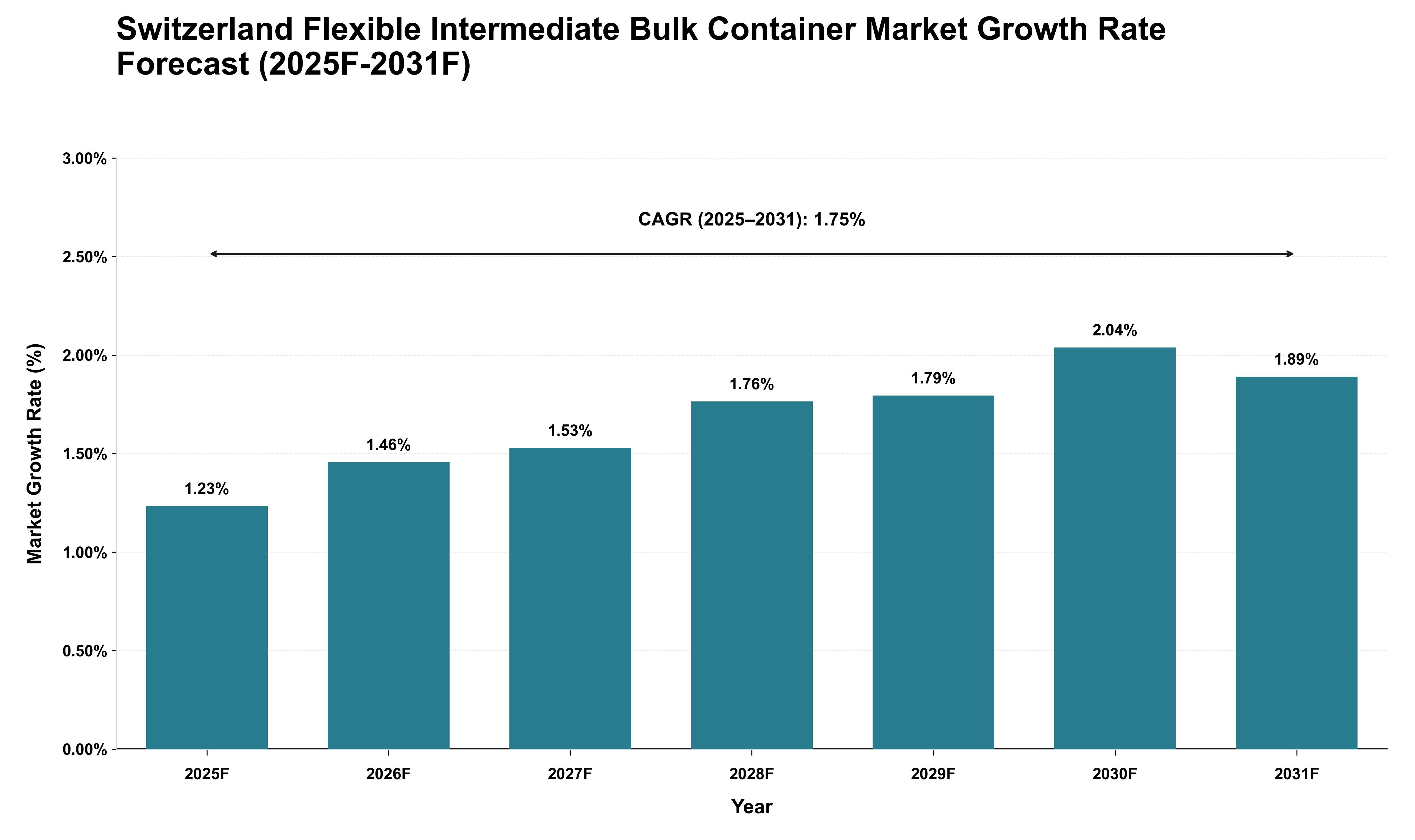
The Switzerland Flexible Intermediate Bulk Container market will experience a gradual upward trajectory, driven by technological advancements and evolving product substitution dynamics. As industries increasingly prioritize efficiency and sustainability, the demand for innovative packaging solutions will rise, fostering a shift towards more versatile and eco-friendly materials. The projected CAGR of 1.75% reflects this transition, with annual growth rates peaking at 2.04% in 2030 as companies adapt to regulatory pressures and consumer preferences for sustainable practices. Import dependencies may influence supply chain dynamics, particularly as global trade patterns evolve in response to geopolitical factors. Additionally, cyclical trends in manufacturing output will likely impact container demand; as production ramps up in various sectors, the need for flexible bulk containers will correspondingly increase. This interplay of technology adoption and market responsiveness will shape the competitive landscape throughout the forecast period.
Key Highlights of the Report:
- Switzerland Flexible Intermediate Bulk Container Market Outlook
- Market Size of Switzerland Flexible Intermediate Bulk Container Market, 2025
- Forecast of Switzerland Flexible Intermediate Bulk Container Market, 2032
- Historical Data and Forecast of Switzerland Flexible Intermediate Bulk Container Revenues & Volume for the Period 2022-2032F
- Switzerland Flexible Intermediate Bulk Container Market Trend Evolution
- Switzerland Flexible Intermediate Bulk Container Market Drivers and Challenges
- Switzerland Flexible Intermediate Bulk Container Price Trends
- Switzerland Flexible Intermediate Bulk Container Porter`s Five Forces
- Switzerland Flexible Intermediate Bulk Container Industry Life Cycle
- Historical Data and Forecast of Switzerland Flexible Intermediate Bulk Container Market Revenues & Volume By Product for the Period 2022-2032F
- Historical Data and Forecast of Switzerland Flexible Intermediate Bulk Container Market Revenues & Volume By Type A for the Period 2022-2032F
- Historical Data and Forecast of Switzerland Flexible Intermediate Bulk Container Market Revenues & Volume By Type B for the Period 2022-2032F
- Historical Data and Forecast of Switzerland Flexible Intermediate Bulk Container Market Revenues & Volume By Type C for the Period 2022-2032F
- Historical Data and Forecast of Switzerland Flexible Intermediate Bulk Container Market Revenues & Volume By Type D for the Period 2022-2032F
- Historical Data and Forecast of Switzerland Flexible Intermediate Bulk Container Market Revenues & Volume By End-Use for the Period 2022-2032F
- Historical Data and Forecast of Switzerland Flexible Intermediate Bulk Container Market Revenues & Volume By Food for the Period 2022-2032F
- Historical Data and Forecast of Switzerland Flexible Intermediate Bulk Container Market Revenues & Volume By Chemical for the Period 2022-2032F
- Historical Data and Forecast of Switzerland Flexible Intermediate Bulk Container Market Revenues & Volume By Pharmaceuticals for the Period 2022-2032F
- Historical Data and Forecast of Switzerland Flexible Intermediate Bulk Container Market Revenues & Volume By Others for the Period 2022-2032F
- Switzerland Flexible Intermediate Bulk Container Import Export Trade Statistics
- Market Opportunity Assessment By Product
- Market Opportunity Assessment By End-Use
- Switzerland Flexible Intermediate Bulk Container Top Companies Market Share
- Switzerland Flexible Intermediate Bulk Container Competitive Benchmarking By Technical and Operational Parameters
- Switzerland Flexible Intermediate Bulk Container Company Profiles
- Switzerland Flexible Intermediate Bulk Container Key Strategic Recommendations






































