Switzerland Glycol Ethers Market Growth Rate Analysis (2025 - 2031)
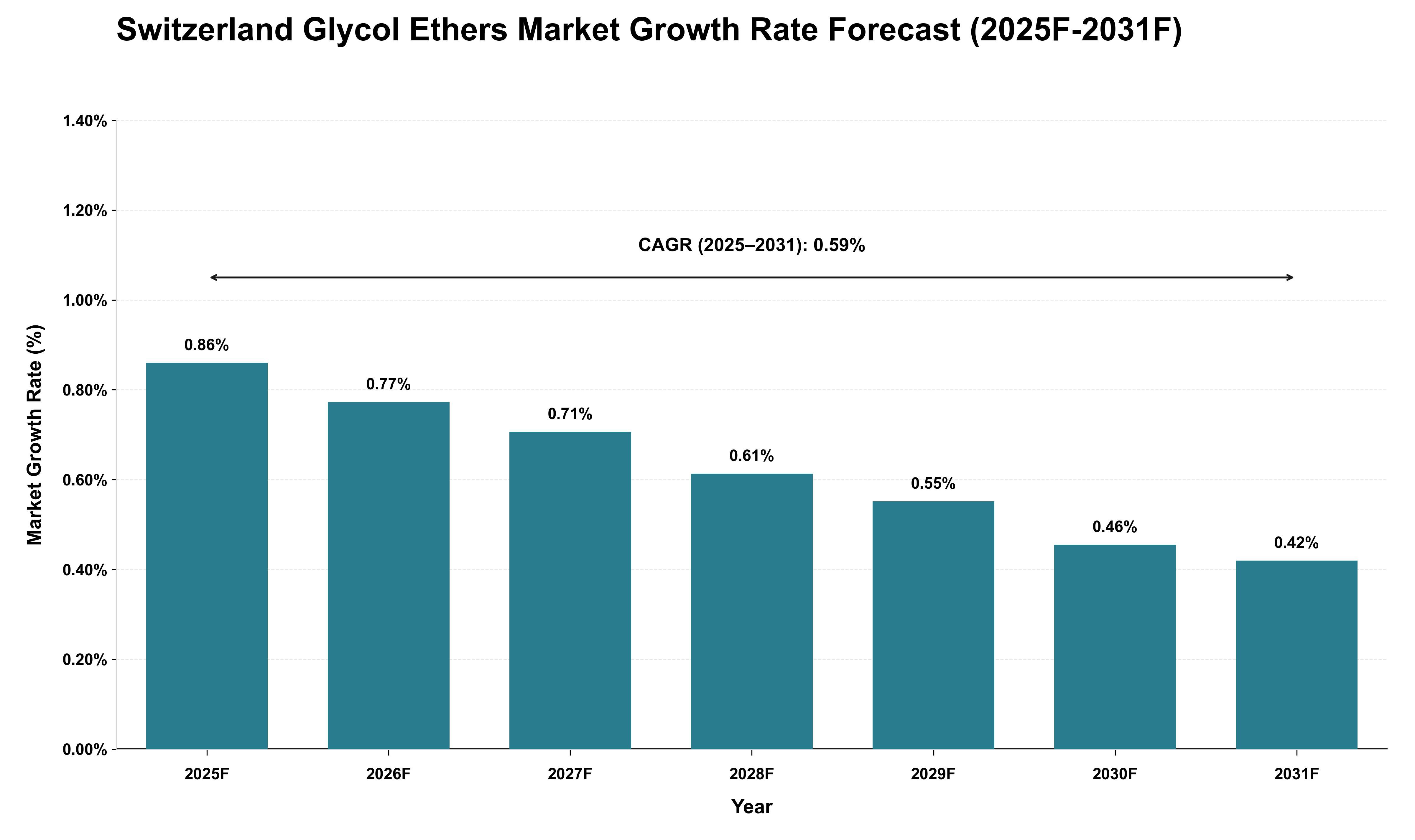
From 2025 onward, the Switzerland glycol ethers market will likely experience a gradual deceleration in growth, with an anticipated compound annual growth rate (CAGR) of 0.59%. This trend will reflect broader macroeconomic cycles influenced by factors such as fluctuating industrial demand and evolving regulatory frameworks impacting chemical usage. The initial growth rate of 0.86% in 2025 will be driven by stable consumption patterns in key sectors like automotive and construction; however, as the forecast progresses, annual growth rates are expected to decline steadily, reaching 0.42% by 2031. This diminishing trajectory may be attributed to increasing import dependencies and potential shifts towards alternative solvents, which could reshape market dynamics. Additionally, cyclical trends in global economic activity may further constrain expansion opportunities within this product class, necessitating strategic adaptations from stakeholders to navigate the changing landscape effectively.
Key Highlights of the Report:
- Switzerland Glycol Ethers Market Outlook
- Market Size of Switzerland Glycol Ethers Market, 2024
- Forecast of Switzerland Glycol Ethers Market, 2031
- Historical Data and Forecast of Switzerland Glycol Ethers Revenues & Volume for the Period 2021-2031
- Switzerland Glycol Ethers Market Trend Evolution
- Switzerland Glycol Ethers Market Drivers and Challenges
- Switzerland Glycol Ethers Price Trends
- Switzerland Glycol Ethers Porter`s Five Forces
- Switzerland Glycol Ethers Industry Life Cycle
- Historical Data and Forecast of Switzerland Glycol Ethers Market Revenues & Volume By Product for the Period 2021-2031
- Historical Data and Forecast of Switzerland Glycol Ethers Market Revenues & Volume By E-Series for the Period 2021-2031
- Historical Data and Forecast of Switzerland Glycol Ethers Market Revenues & Volume By P-Series for the Period 2021-2031
- Historical Data and Forecast of Switzerland Glycol Ethers Market Revenues & Volume By Application for the Period 2021-2031
- Historical Data and Forecast of Switzerland Glycol Ethers Market Revenues & Volume By Paints & Coatings for the Period 2021-2031
- Historical Data and Forecast of Switzerland Glycol Ethers Market Revenues & Volume By Printing for the Period 2021-2031
- Historical Data and Forecast of Switzerland Glycol Ethers Market Revenues & Volume By Pharmaceuticals for the Period 2021-2031
- Historical Data and Forecast of Switzerland Glycol Ethers Market Revenues & Volume By Cosmetics & Personal Care for the Period 2021-2031
- Historical Data and Forecast of Switzerland Glycol Ethers Market Revenues & Volume By Electronics for the Period 2021-2031
- Historical Data and Forecast of Switzerland Glycol Ethers Market Revenues & Volume By Others for the Period 2021-2031
- Switzerland Glycol Ethers Import Export Trade Statistics
- Market Opportunity Assessment By Product
- Market Opportunity Assessment By Application
- Switzerland Glycol Ethers Top Companies Market Share
- Switzerland Glycol Ethers Competitive Benchmarking By Technical and Operational Parameters
- Switzerland Glycol Ethers Company Profiles
- Switzerland Glycol Ethers Key Strategic Recommendations






































