Switzerland Hdpe Market: Import Trend Analysis
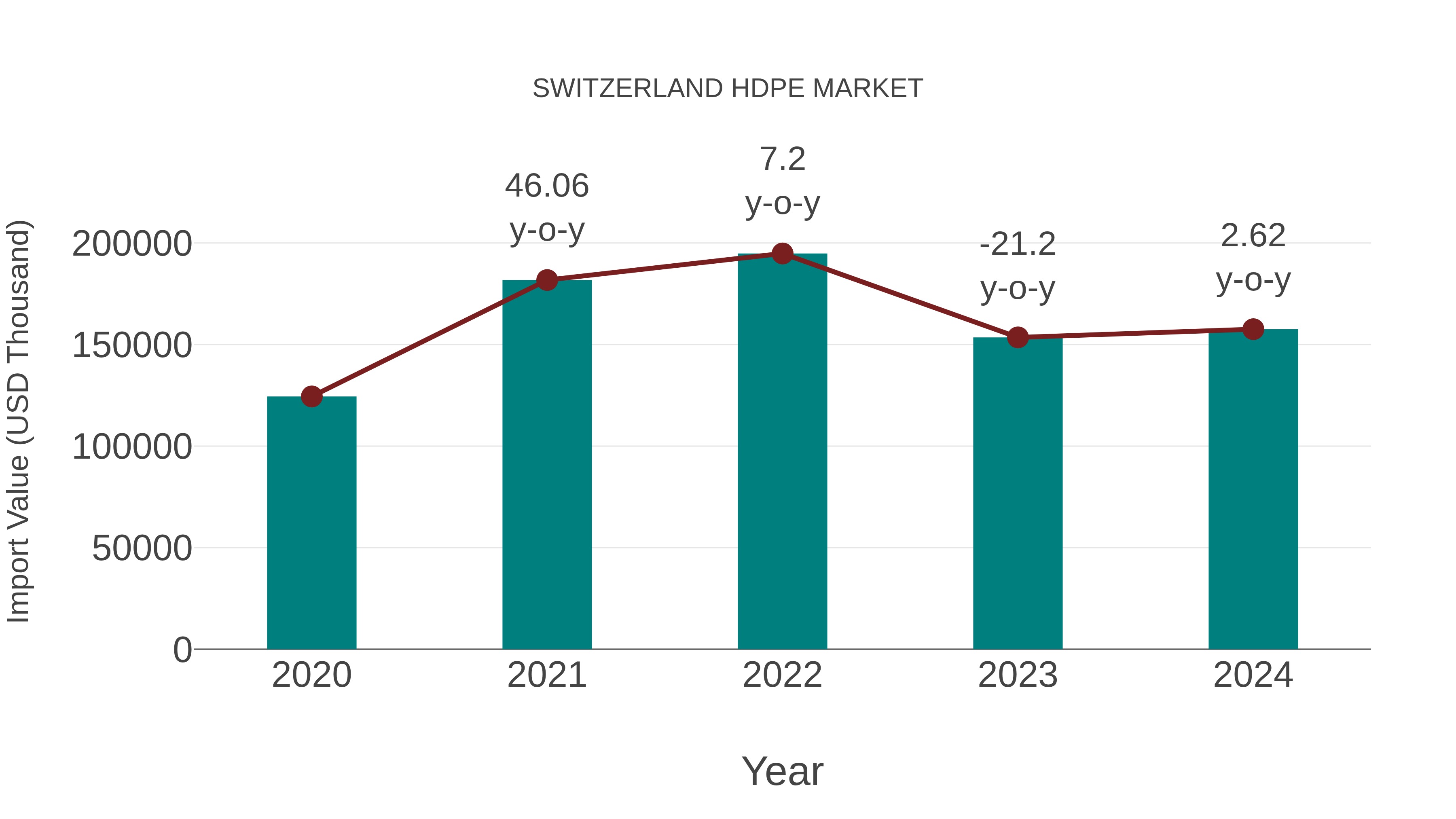
Switzerland HDPE market witnessed a 2.62% import growth rate from 2023 to 2024, with a 6.08% CAGR from 2020 to 2024. This trend could be attributed to increasing demand for HDPE in various industries, driving import volumes during this period.
Switzerland Hdpe Market Overview
The high-density polyethylene (HDPE) market in Switzerland is experiencing steady growth driven by the increasing demand for packaging materials, construction products, and industrial applications. The country`s strong economy, strict environmental regulations promoting the use of recyclable materials, and the emphasis on sustainable practices have further boosted the demand for HDPE products. Key players in the Swiss HDPE market include LyondellBasell, SABIC, and INEOS, among others. The market is characterized by technological advancements in manufacturing processes, leading to improved product quality and performance. Additionally, the rising focus on reducing carbon footprint and the shift towards eco-friendly materials are expected to drive the growth of the HDPE market in Switzerland in the coming years.
Switzerland Hdpe Market Trends
The HDPE market in Switzerland is experiencing steady growth due to its versatile applications across various industries such as packaging, construction, and automotive. The increasing demand for sustainable and recyclable materials is driving the adoption of HDPE, as it is a widely recyclable polymer. Additionally, the emphasis on reducing carbon footprint and promoting circular economy practices is further boosting the market for HDPE in Switzerland. The construction sector is a key driver for HDPE demand, with the material being used in pipes, fittings, and geomembranes. Innovations in HDPE manufacturing processes, such as the development of high-performance grades and enhanced properties, are also contributing to the market growth. Overall, the Switzerland HDPE market is poised for continued expansion in the coming years.
Switzerland Hdpe Market Challenges
In the Switzerland HDPE market, some challenges include increasing competition from low-cost producers in other regions, fluctuating raw material prices, and stringent regulations on environmental sustainability. The competition from low-cost producers can put pressure on local manufacturers to maintain competitive pricing, impacting their profit margins. Fluctuating raw material prices, especially in the petroleum industry, can lead to uncertainty in production costs and profitability. Additionally, Switzerland`s strict regulations on environmental sustainability require HDPE manufacturers to invest in eco-friendly production processes and materials, which can increase operational costs. Navigating these challenges requires companies in the Switzerland HDPE market to focus on innovation, cost efficiency, and sustainable practices to remain competitive in the industry.
Switzerland Hdpe Market Investment Opportunities
In the Switzerland HDPE market, there are several promising investment opportunities. With the increasing demand for HDPE (High-Density Polyethylene) in various industries such as packaging, construction, and agriculture, investing in HDPE manufacturing companies or suppliers could be lucrative. Additionally, the emphasis on sustainable practices and the shift towards recyclable materials presents opportunities in the recycling and circular economy sectors related to HDPE. Furthermore, advancements in technology and innovation in the HDPE production process offer potential for investment in companies driving these developments. Overall, investing in the Switzerland HDPE market can be attractive due to the market growth, diversification of applications, and the country`s reputation for quality and innovation in the plastics industry.
Switzerland Hdpe Market Government Policy
In Switzerland, government policies related to the HDPE (High-Density Polyethylene) market focus on environmental sustainability and waste management. The government has implemented regulations to promote recycling and reduce plastic waste, including initiatives such as extended producer responsibility (EPR) programs and recycling quotas for plastic packaging. Additionally, Switzerland has strict quality standards for recycled HDPE materials to ensure their safety and effectiveness in various applications. The government also encourages innovation and investment in the development of new technologies for recycling and processing HDPE materials. Overall, Switzerland`s policies aim to create a circular economy for plastics, minimize environmental impact, and promote sustainable practices in the HDPE market.
Switzerland Hdpe Market Future Outlook
The future outlook for the Switzerland HDPE market appears positive, driven by increasing demand from industries such as packaging, construction, and automotive. The country`s strong focus on sustainability and environmental regulations is expected to further boost the adoption of HDPE due to its recyclability and versatility. Additionally, the growing trend towards lightweight and durable materials in various applications is likely to drive the demand for HDPE in the coming years. However, challenges such as price volatility of raw materials and competition from alternative materials may pose some constraints on market growth. Overall, with the ongoing technological advancements and increasing applications of HDPE, the Switzerland market is anticipated to witness steady growth in the foreseeable future.
Key Highlights of the Report:
- Switzerland HDPE Market Outlook
- Market Size of Switzerland HDPE Market,2025
- Forecast of Switzerland HDPE Market, 2032
- Historical Data and Forecast of Switzerland HDPE Revenues & Volume for the Period 2022-2032F
- Switzerland HDPE Market Trend Evolution
- Switzerland HDPE Market Drivers and Challenges
- Switzerland HDPE Price Trends
- Switzerland HDPE Porter's Five Forces
- Switzerland HDPE Industry Life Cycle
- Historical Data and Forecast of Switzerland HDPE Market Revenues & Volume By Type for the Period 2022-2032F
- Historical Data and Forecast of Switzerland HDPE Market Revenues & Volume By PE80 Pipe for the Period 2022-2032F
- Historical Data and Forecast of Switzerland HDPE Market Revenues & Volume By PE100 Pipe for the Period 2022-2032F
- Historical Data and Forecast of Switzerland HDPE Market Revenues & Volume By Sales Channel for the Period 2022-2032F
- Historical Data and Forecast of Switzerland HDPE Market Revenues & Volume By Direct Sales for the Period 2022-2032F
- Historical Data and Forecast of Switzerland HDPE Market Revenues & Volume By Distribution Sales for the Period 2022-2032F
- Historical Data and Forecast of Switzerland HDPE Market Revenues & Volume By Application for the Period 2022-2032F
- Historical Data and Forecast of Switzerland HDPE Market Revenues & Volume By Water Supply for the Period 2022-2032F
- Historical Data and Forecast of Switzerland HDPE Market Revenues & Volume By Oil and Gas for the Period 2022-2032F
- Historical Data and Forecast of Switzerland HDPE Market Revenues & Volume By Sewage Systems for the Period 2022-2032F
- Historical Data and Forecast of Switzerland HDPE Market Revenues & Volume By Agricultural Applications for the Period 2022-2032F
- Switzerland HDPE Import Export Trade Statistics
- Market Opportunity Assessment By Type
- Market Opportunity Assessment By Sales Channel
- Market Opportunity Assessment By Application
- Switzerland HDPE Top Companies Market Share
- Switzerland HDPE Competitive Benchmarking By Technical and Operational Parameters
- Switzerland HDPE Company Profiles
- Switzerland HDPE Key Strategic Recommendations






































