Switzerland Instant Pot Market: Import Trend Analysis
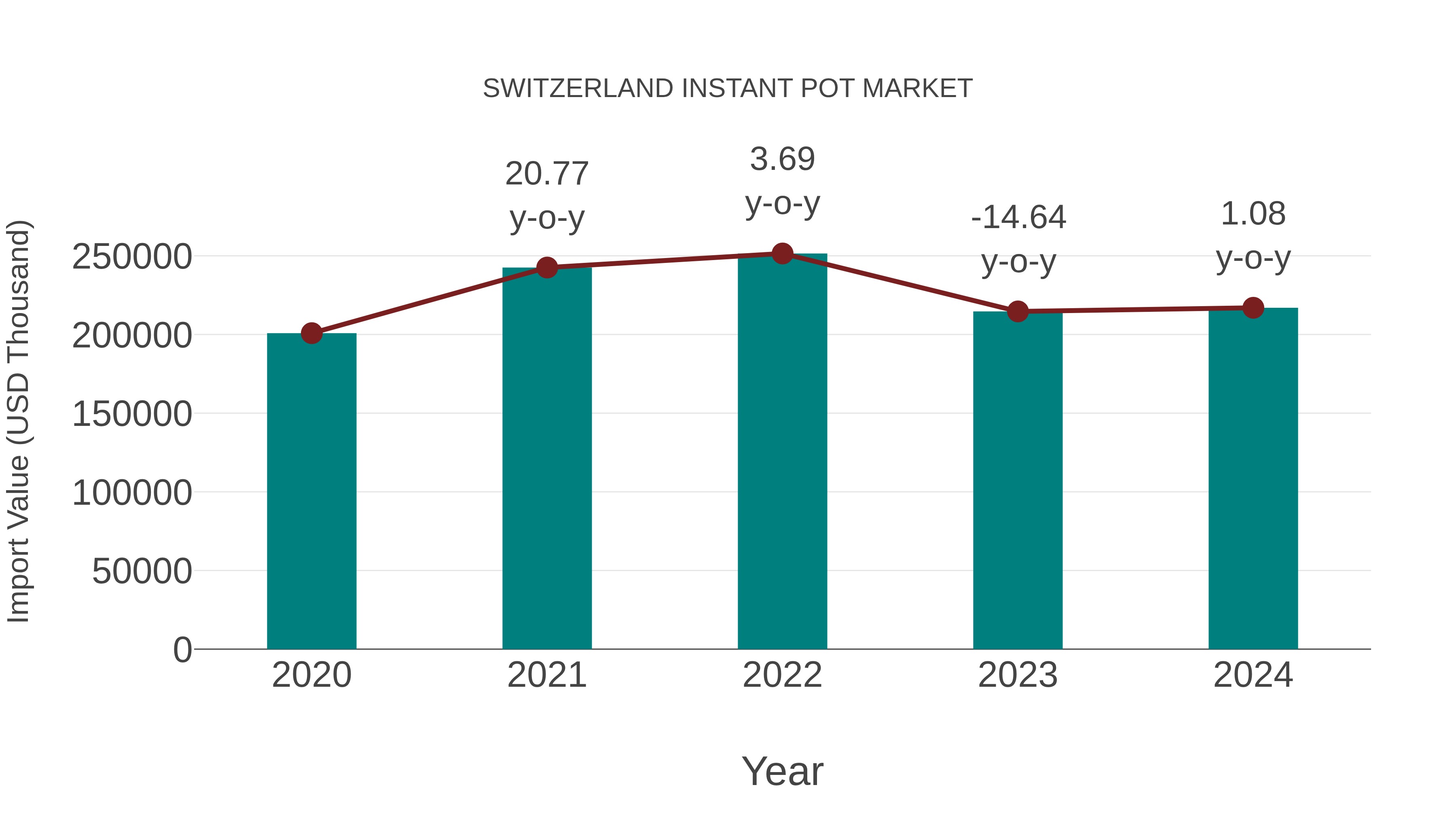
Switzerland import trend for the instant pot market showed a growth rate of 1.08% from 2023 to 2024, with a compound annual growth rate (CAGR) of 1.95% from 2020 to 2024. This steady but moderate growth may be influenced by evolving consumer preferences towards convenient cooking solutions.
Switzerland Instant Pot Market Overview
The Instant Pot market in Switzerland is experiencing significant growth driven by the increasing demand for innovative kitchen appliances that offer convenience and time-saving features. Swiss consumers are increasingly embracing the Instant Pot for its versatility in cooking a wide range of dishes quickly and easily. The market is characterized by a diverse range of Instant Pot models available, catering to different consumer needs and preferences. Key factors contributing to the market growth include the rising trend of home cooking, busy lifestyles that demand efficient meal preparation, and the growing interest in healthy eating. As Swiss consumers continue to prioritize convenience and quality in their cooking routines, the Instant Pot market in Switzerland is expected to expand further, with opportunities for new product developments and market penetration strategies.
Switzerland Instant Pot Market Trends and Opportunities
The Switzerland Instant Pot market is witnessing a growing trend towards convenience and time-saving cooking solutions, driving the demand for multi-functional kitchen appliances like Instant Pots. Consumers in Switzerland are increasingly seeking appliances that offer versatility, energy efficiency, and easy meal preparation. Opportunities in the market lie in the expansion of product offerings to cater to different cooking styles and preferences, as well as the incorporation of smart technology features to enhance user experience. Additionally, promoting the health and wellness aspects of Instant Pot cooking, such as faster cooking times leading to better retention of nutrients, could further attract health-conscious consumers. Partnering with popular chefs or influencers to showcase recipes and usage tips could also help companies capitalize on the growing interest in home cooking and culinary experimentation in Switzerland.
Switzerland Instant Pot Market Challenges
In the Switzerland Instant Pot market, one of the key challenges is competition from traditional cooking methods and appliances. Swiss consumers have a strong culinary heritage and a preference for high-quality cookware, which can make them hesitant to adopt new kitchen gadgets like Instant Pots. Additionally, the high cost of Instant Pots compared to traditional cooking tools can be a barrier for price-conscious Swiss consumers. Another challenge is the need for effective marketing strategies to educate consumers on the benefits and versatility of Instant Pots, as well as to differentiate them from other similar products in the market. Overall, overcoming these challenges will require targeted marketing campaigns, strategic pricing strategies, and a focus on highlighting the convenience and time-saving advantages of Instant Pots to appeal to Swiss consumers.
Switzerland Instant Pot Market Drivers
The Switzerland Instant Pot market is being driven by several key factors. Firstly, the growing trend towards healthy eating and home cooking is fueling demand for convenient kitchen appliances like Instant Pots that offer time-saving cooking solutions. Additionally, the increasing awareness of sustainability and energy efficiency is prompting consumers to choose multi-functional appliances like Instant Pots that can perform various cooking tasks in one device, reducing the need for multiple appliances. The busy lifestyles of consumers in Switzerland are also driving the adoption of Instant Pots, as they offer quick and easy meal preparation without compromising on taste and nutrition. Moreover, the availability of a wide range of recipes and cooking guides tailored for Instant Pots is further driving the market growth by making it easier for consumers to utilize the full potential of these devices.
Switzerland Instant Pot Market Government Policies
In Switzerland, the government has implemented strict regulations regarding product safety and electrical standards that apply to Instant Pots. These regulations ensure that all Instant Pot products sold in the Swiss market meet the necessary safety requirements and quality standards. Additionally, the Swiss government has policies in place to promote sustainable and environmentally friendly practices, which may impact the marketing and distribution of Instant Pot products. Import regulations and tariffs also play a role in shaping the Switzerland Instant Pot market, affecting pricing and availability for both consumers and suppliers. Overall, adherence to government policies is crucial for companies looking to enter and succeed in the Switzerland Instant Pot market.
Switzerland Instant Pot Market Future Outlook
The Switzerland Instant Pot market is expected to experience steady growth in the coming years, driven by factors such as increasing consumer demand for convenient and time-saving cooking solutions, rising awareness of healthy eating habits, and the popularity of home-cooked meals. The market is likely to witness a surge in product innovation and technological advancements, with manufacturers introducing smart features and connectivity options to attract tech-savvy consumers. Additionally, the growing trend of online shopping and e-commerce platforms providing easy access to a wide range of Instant Pot products will further fuel market expansion. Overall, the Switzerland Instant Pot market is poised for a positive trajectory, with a focus on enhancing user experience, sustainability, and versatility to meet evolving consumer preferences.
Key Highlights of the Report:
- Switzerland Instant Pot Market Outlook
- Market Size of Switzerland Instant Pot Market, 2025
- Forecast of Switzerland Instant Pot Market, 2032
- Historical Data and Forecast of Switzerland Instant Pot Revenues & Volume for the Period 2022 - 2032F
- Switzerland Instant Pot Market Trend Evolution
- Switzerland Instant Pot Market Drivers and Challenges
- Switzerland Instant Pot Price Trends
- Switzerland Instant Pot Porter's Five Forces
- Switzerland Instant Pot Industry Life Cycle
- Historical Data and Forecast of Switzerland Instant Pot Market Revenues & Volume By Type for the Period 2022 - 2032F
- Historical Data and Forecast of Switzerland Instant Pot Market Revenues & Volume By Smart for the Period 2022 - 2032F
- Historical Data and Forecast of Switzerland Instant Pot Market Revenues & Volume By Conventional for the Period 2022 - 2032F
- Historical Data and Forecast of Switzerland Instant Pot Market Revenues & Volume By Cooking Mode for the Period 2022 - 2032F
- Historical Data and Forecast of Switzerland Instant Pot Market Revenues & Volume By Low Pressure for the Period 2022 - 2032F
- Historical Data and Forecast of Switzerland Instant Pot Market Revenues & Volume By High Pressure for the Period 2022 - 2032F
- Historical Data and Forecast of Switzerland Instant Pot Market Revenues & Volume By Capacity for the Period 2022 - 2032F
- Historical Data and Forecast of Switzerland Instant Pot Market Revenues & Volume By 3 Quarts for the Period 2022 - 2032F
- Historical Data and Forecast of Switzerland Instant Pot Market Revenues & Volume By 6 Quarts for the Period 2022 - 2032F
- Historical Data and Forecast of Switzerland Instant Pot Market Revenues & Volume By 8 Quarts for the Period 2022 - 2032F
- Historical Data and Forecast of Switzerland Instant Pot Market Revenues & Volume By 10 Quarts for the Period 2022 - 2032F
- Historical Data and Forecast of Switzerland Instant Pot Market Revenues & Volume By End-user for the Period 2022 - 2032F
- Historical Data and Forecast of Switzerland Instant Pot Market Revenues & Volume By Residential for the Period 2022 - 2032F
- Historical Data and Forecast of Switzerland Instant Pot Market Revenues & Volume By Commercial for the Period 2022 - 2032F
- Historical Data and Forecast of Switzerland Instant Pot Market Revenues & Volume By Distribution Channel for the Period 2022 - 2032F
- Historical Data and Forecast of Switzerland Instant Pot Market Revenues & Volume By Online for the Period 2022 - 2032F
- Historical Data and Forecast of Switzerland Instant Pot Market Revenues & Volume By Offline for the Period 2022 - 2032F
- Switzerland Instant Pot Import Export Trade Statistics
- Market Opportunity Assessment By Type
- Market Opportunity Assessment By Cooking Mode
- Market Opportunity Assessment By Capacity
- Market Opportunity Assessment By End-user
- Market Opportunity Assessment By Distribution Channel
- Switzerland Instant Pot Top Companies Market Share
- Switzerland Instant Pot Competitive Benchmarking By Technical and Operational Parameters
- Switzerland Instant Pot Company Profiles
- Switzerland Instant Pot Key Strategic Recommendations






































