Switzerland Intimate Wear Market: Import Trend Analysis
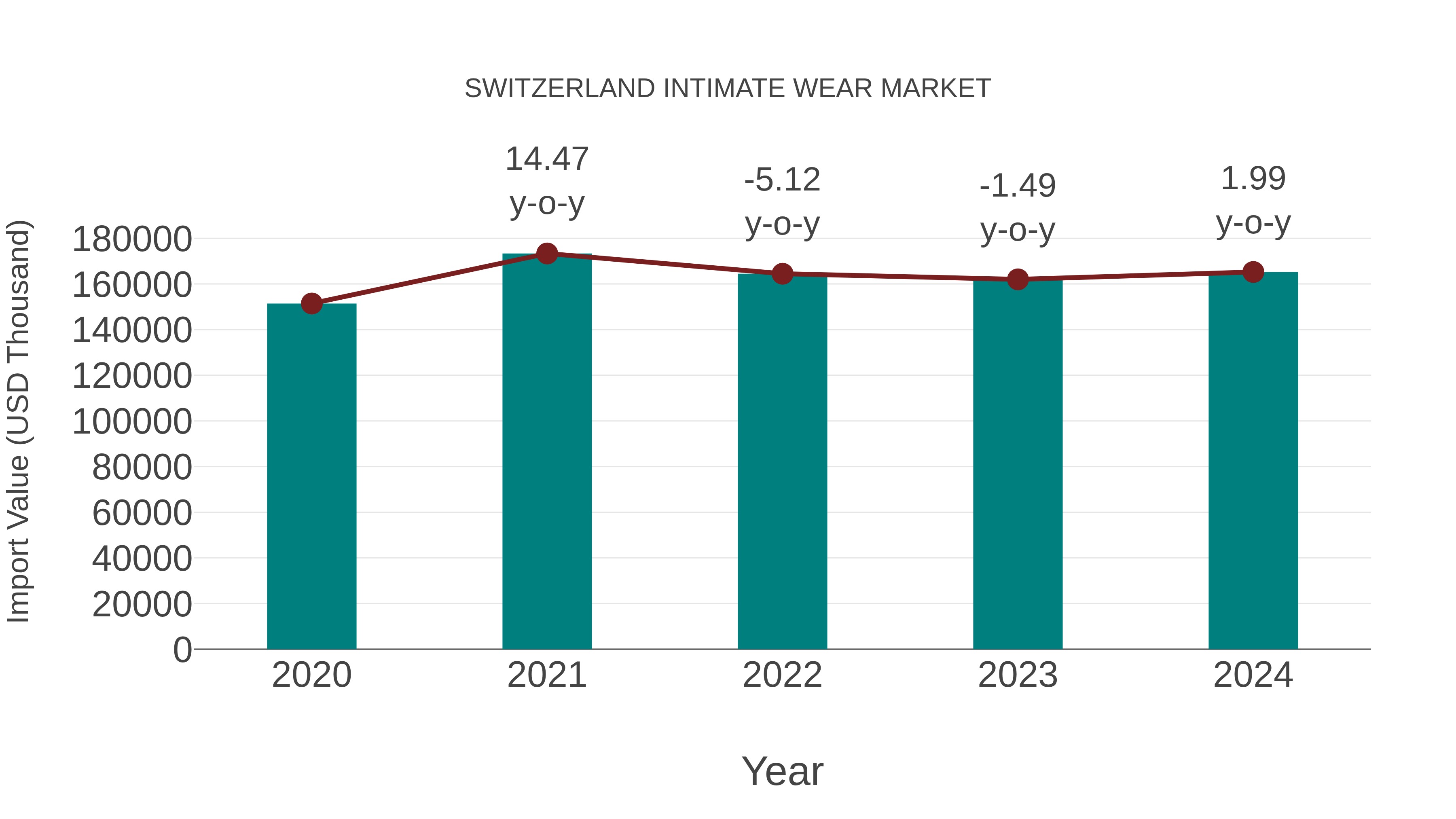
Switzerland import trend for the intimate wear market showed a growth rate of 1.99% from 2023 to 2024, with a compound annual growth rate (CAGR) of 2.21% from 2020 to 2024. This increase can be attributed to shifting consumer preferences towards premium quality products in the market.
Switzerland Intimate Wear Market Overview
The intimate wear market in Switzerland is characterized by a growing demand for high-quality and premium lingerie products. Swiss consumers prioritize comfort, quality, and innovative designs when it comes to intimate wear. Key players in the market include international brands like Calida, Triumph, and Hanro, as well as local Swiss brands such as Zimmerli. The market is competitive, with a focus on sustainability and ethical production practices gaining traction among consumers. E-commerce is also playing an increasingly significant role in the Swiss intimate wear market, offering consumers a convenient way to shop for a wide range of products. Overall, the market is expected to continue to grow as consumers seek out intimate wear that combines both style and functionality.
Switzerland Intimate Wear Market Trends
Currently, the Switzerland intimate wear market is experiencing a shift towards sustainability and inclusivity. Consumers are increasingly demanding eco-friendly materials, ethical production practices, and size-inclusive offerings from intimate wear brands. This trend is driven by a growing awareness of environmental issues and a desire for more diverse and body-positive representation in the industry. Additionally, there is a rising preference for comfortable and versatile intimate wear that can easily transition from loungewear to outerwear. Online shopping and direct-to-consumer brands are also gaining popularity as they offer convenience and a wider range of options for consumers. Overall, the Switzerland intimate wear market is moving towards more conscious and inclusive practices to meet the evolving needs and preferences of consumers.
Switzerland Intimate Wear Market Challenges
In the Switzerland intimate wear market, some challenges include high competition from both local and international brands, price sensitivity among consumers due to the premium nature of the products, and shifting consumer preferences towards more sustainable and ethically produced items. Additionally, the relatively small size of the Swiss market compared to larger countries can pose challenges for brands looking to scale and establish a significant presence. Meeting the diverse needs of a multicultural population and navigating complex regulations related to materials and production processes also present hurdles for intimate wear companies operating in Switzerland. Overall, brands in this market need to stay agile, innovative, and responsive to changing trends and consumer demands to maintain a competitive edge.
Switzerland Intimate Wear Market Investment Opportunities
The Switzerland intimate wear market offers promising investment opportunities due to its strong demand for high-quality, luxury lingerie and underwear products. With the country`s reputation for precision engineering and high standards of craftsmanship, investors can capitalize on the growing trend towards sustainable and ethically sourced materials in intimate wear. Additionally, the Swiss market values innovation and technology, presenting opportunities for companies that offer smart textiles or advanced design solutions. E-commerce is also a growing segment within the Swiss intimate wear market, providing a chance for investors to tap into the convenience and accessibility of online shopping. Overall, investing in the Switzerland intimate wear market allows for leveraging the country`s reputation for quality and innovation to cater to the evolving preferences of consumers.
Switzerland Intimate Wear Market Government Policy
In Switzerland, the intimate wear market is subject to various government policies surrounding consumer protection, labeling requirements, and import regulations. The Swiss Federal Act on Unfair Competition regulates advertising and marketing practices within the industry to ensure transparency and prevent deceptive practices. Additionally, the Swiss Federal Office of Public Health oversees regulations related to the use of certain materials in intimate wear to protect consumer health and safety. Import regulations also play a role in the market, with customs duties and tariffs impacting the cost of imported intimate wear products. Overall, the Swiss government`s policies aim to promote fair competition, protect consumers, and uphold quality standards within the intimate wear market.
Switzerland Intimate Wear Market Future Outlook
The future outlook for the Switzerland intimate wear market appears positive, with growth expected driven by factors such as increasing consumer demand for comfort and style, as well as the rise of sustainable and ethically-produced lingerie. The market is likely to see a shift towards more inclusive sizing options and diverse representation in advertising and product offerings. Additionally, advancements in technology may lead to innovations in materials and design, further enhancing the overall consumer experience. E-commerce is also expected to play a significant role in the market`s growth, providing convenience and accessibility to a wider range of consumers. Overall, with a focus on quality, sustainability, and inclusivity, the Switzerland intimate wear market is poised for steady expansion in the coming years.
Key Highlights of the Report:
- Switzerland Intimate Wear Market Outlook
- Market Size of Switzerland Intimate Wear Market,2025
- Forecast of Switzerland Intimate Wear Market, 2032
- Historical Data and Forecast of Switzerland Intimate Wear Revenues & Volume for the Period 2022-2032F
- Switzerland Intimate Wear Market Trend Evolution
- Switzerland Intimate Wear Market Drivers and Challenges
- Switzerland Intimate Wear Price Trends
- Switzerland Intimate Wear Porter's Five Forces
- Switzerland Intimate Wear Industry Life Cycle
- Historical Data and Forecast of Switzerland Intimate Wear Market Revenues & Volume By Product Type for the Period 2022-2032F
- Historical Data and Forecast of Switzerland Intimate Wear Market Revenues & Volume By Bras for the Period 2022-2032F
- Historical Data and Forecast of Switzerland Intimate Wear Market Revenues & Volume By Panties for the Period 2022-2032F
- Historical Data and Forecast of Switzerland Intimate Wear Market Revenues & Volume By Shapewear for the Period 2022-2032F
- Historical Data and Forecast of Switzerland Intimate Wear Market Revenues & Volume By Loungewear for the Period 2022-2032F
- Historical Data and Forecast of Switzerland Intimate Wear Market Revenues & Volume By Sleepwear for the Period 2022-2032F
- Historical Data and Forecast of Switzerland Intimate Wear Market Revenues & Volume By Gender for the Period 2022-2032F
- Historical Data and Forecast of Switzerland Intimate Wear Market Revenues & Volume By Female for the Period 2022-2032F
- Historical Data and Forecast of Switzerland Intimate Wear Market Revenues & Volume By Male for the Period 2022-2032F
- Historical Data and Forecast of Switzerland Intimate Wear Market Revenues & Volume By Unisex for the Period 2022-2032F
- Historical Data and Forecast of Switzerland Intimate Wear Market Revenues & Volume By Material Type for the Period 2022-2032F
- Historical Data and Forecast of Switzerland Intimate Wear Market Revenues & Volume By Cotton for the Period 2022-2032F
- Historical Data and Forecast of Switzerland Intimate Wear Market Revenues & Volume By Silk for the Period 2022-2032F
- Historical Data and Forecast of Switzerland Intimate Wear Market Revenues & Volume By Lace for the Period 2022-2032F
- Historical Data and Forecast of Switzerland Intimate Wear Market Revenues & Volume By Polyester for the Period 2022-2032F
- Historical Data and Forecast of Switzerland Intimate Wear Market Revenues & Volume By Nylon for the Period 2022-2032F
- Historical Data and Forecast of Switzerland Intimate Wear Market Revenues & Volume By Distribution Channel for the Period 2022-2032F
- Historical Data and Forecast of Switzerland Intimate Wear Market Revenues & Volume By Supermarkets for the Period 2022-2032F
- Historical Data and Forecast of Switzerland Intimate Wear Market Revenues & Volume By Online Retail for the Period 2022-2032F
- Historical Data and Forecast of Switzerland Intimate Wear Market Revenues & Volume By Department Stores for the Period 2022-2032F
- Historical Data and Forecast of Switzerland Intimate Wear Market Revenues & Volume By Specialty Stores for the Period 2022-2032F
- Switzerland Intimate Wear Import Export Trade Statistics
- Market Opportunity Assessment By Product Type
- Market Opportunity Assessment By Gender
- Market Opportunity Assessment By Material Type
- Market Opportunity Assessment By Distribution Channel
- Switzerland Intimate Wear Top Companies Market Share
- Switzerland Intimate Wear Competitive Benchmarking By Technical and Operational Parameters
- Switzerland Intimate Wear Company Profiles
- Switzerland Intimate Wear Key Strategic Recommendations






































