Switzerland Kitchenware Market Growth Rate Analysis (2025 - 2031)
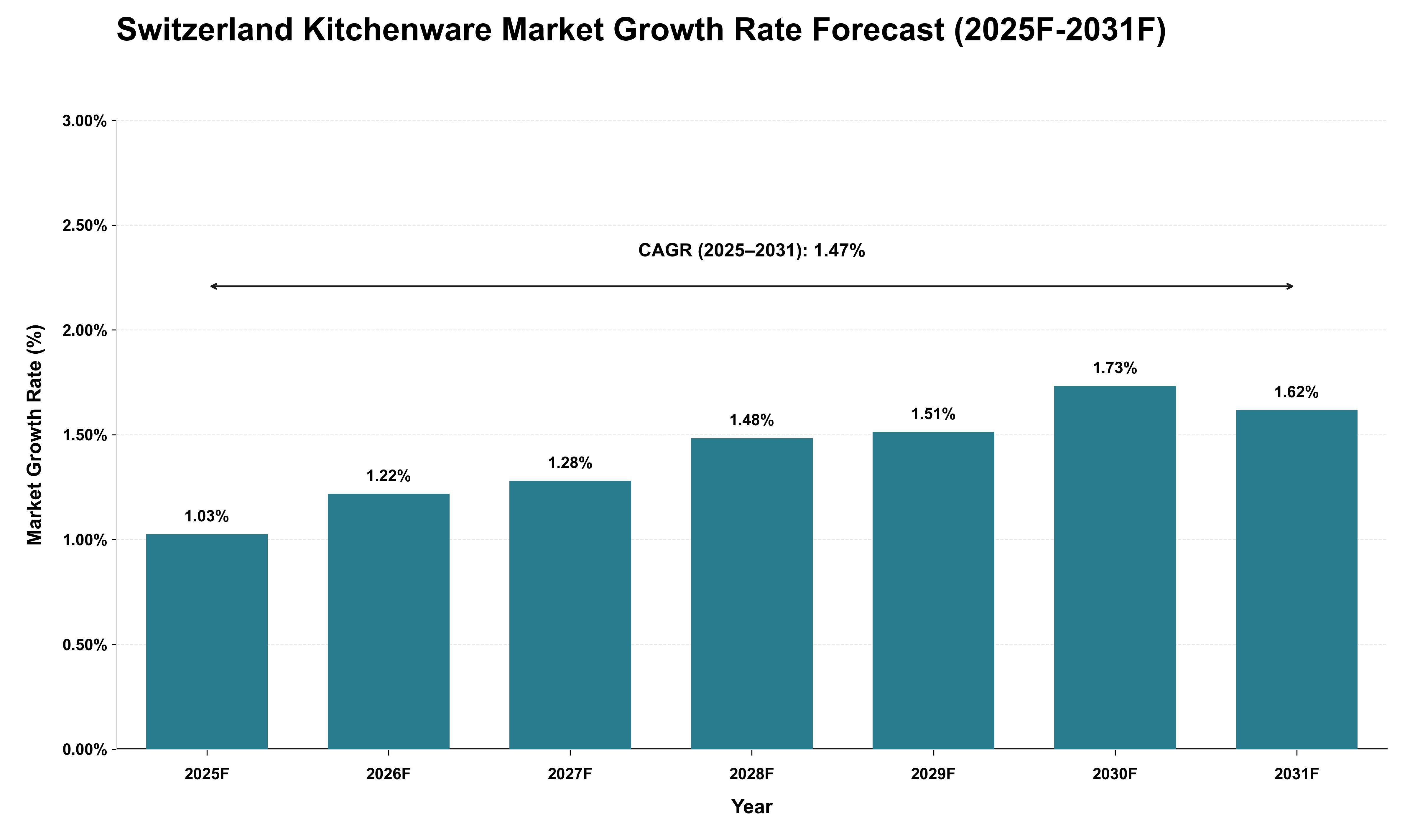
The Switzerland kitchenware market will experience a gradual growth trajectory from 2025 to 2031, driven by evolving consumer preferences and the increasing integration of technology in kitchen products. As the CAGR of 1.47% suggests, this sector will likely benefit from stable input costs and supply chain efficiencies, particularly as manufacturers adapt to shifts in global sourcing strategies. The anticipated annual growth rates indicate a steady rise in demand, with notable increases in 2030 at 1.73%, reflecting potential enhancements in product innovation and sustainability practices that resonate with environmentally conscious consumers. However, fluctuations in import dependencies may pose challenges; disruptions in global supply chains could affect availability and pricing of raw materials, thereby influencing production costs. Overall, the market's resilience will hinge on its ability to navigate these macroeconomic factors while capitalizing on emerging trends within the kitchenware segment.
Key Highlights of the Report:
- Switzerland Kitchenware Market Outlook
- Market Size of Switzerland Kitchenware Market, 2024
- Forecast of Switzerland Kitchenware Market, 2031
- Historical Data and Forecast of Switzerland Kitchenware Revenues & Volume for the Period 2021-2031
- Switzerland Kitchenware Market Trend Evolution
- Switzerland Kitchenware Market Drivers and Challenges
- Switzerland Kitchenware Price Trends
- Switzerland Kitchenware Porter`s Five Forces
- Switzerland Kitchenware Industry Life Cycle
- Historical Data and Forecast of Switzerland Kitchenware Market Revenues & Volume By Product Type for the Period 2021-2031
- Historical Data and Forecast of Switzerland Kitchenware Market Revenues & Volume By Cookware for the Period 2021-2031
- Historical Data and Forecast of Switzerland Kitchenware Market Revenues & Volume By Bakeware for the Period 2021-2031
- Historical Data and Forecast of Switzerland Kitchenware Market Revenues & Volume By Others for the Period 2021-2031
- Historical Data and Forecast of Switzerland Kitchenware Market Revenues & Volume By End User for the Period 2021-2031
- Historical Data and Forecast of Switzerland Kitchenware Market Revenues & Volume By Residential Kitchen for the Period 2021-2031
- Historical Data and Forecast of Switzerland Kitchenware Market Revenues & Volume By Commercial Kitchens for the Period 2021-2031
- Historical Data and Forecast of Switzerland Kitchenware Market Revenues & Volume By Sales Channel for the Period 2021-2031
- Historical Data and Forecast of Switzerland Kitchenware Market Revenues & Volume By Online for the Period 2021-2031
- Historical Data and Forecast of Switzerland Kitchenware Market Revenues & Volume By Offline for the Period 2021-2031
- Switzerland Kitchenware Import Export Trade Statistics
- Market Opportunity Assessment By Product Type
- Market Opportunity Assessment By End User
- Market Opportunity Assessment By Sales Channel
- Switzerland Kitchenware Top Companies Market Share
- Switzerland Kitchenware Competitive Benchmarking By Technical and Operational Parameters
- Switzerland Kitchenware Company Profiles
- Switzerland Kitchenware Key Strategic Recommendations






































