Switzerland Luxury Leather Goods Market: Import Trend Analysis
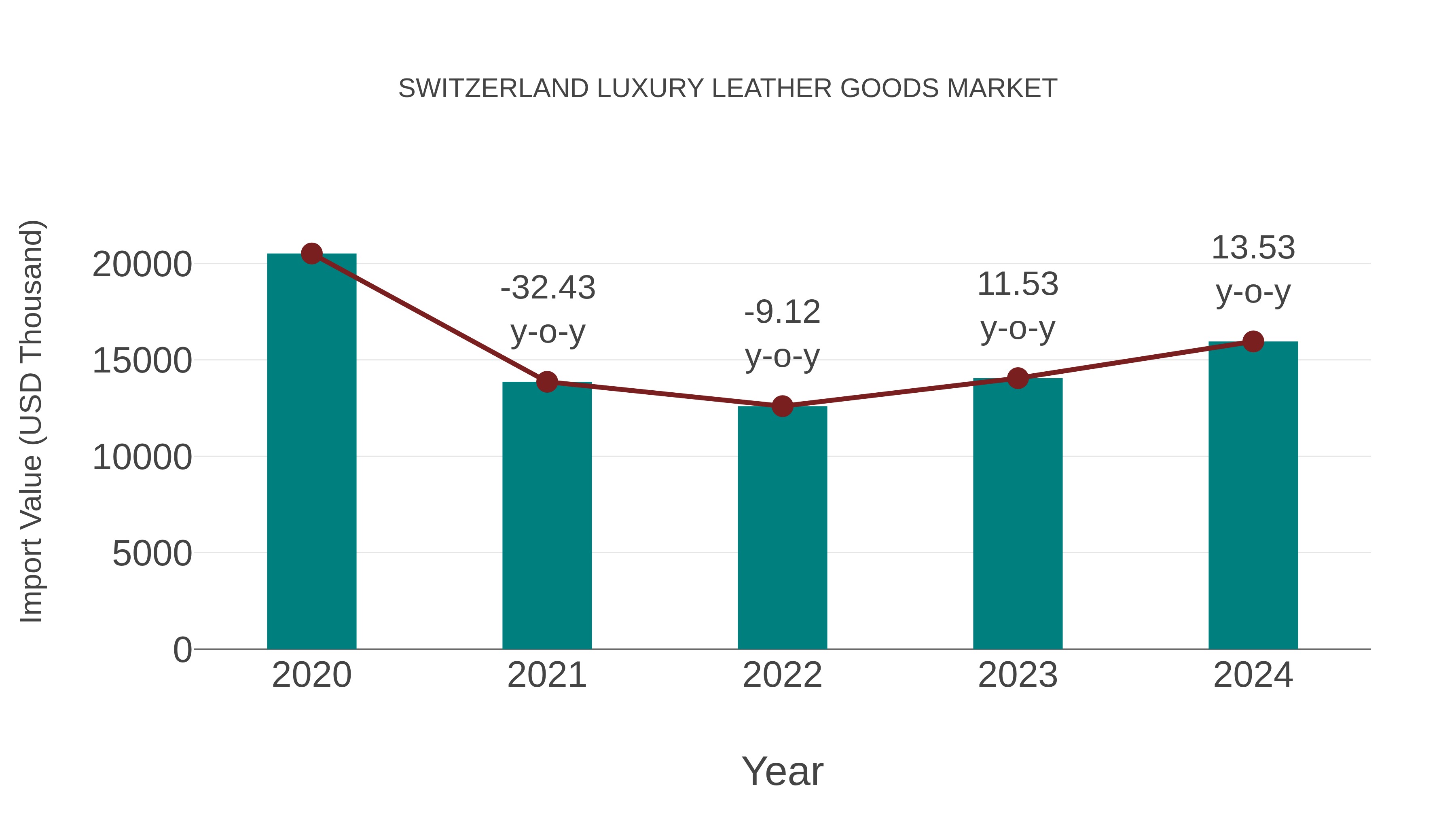
Switzerland luxury leather goods market saw a 13.53% import growth rate from 2023 to 2024, with a -6.09% CAGR for 2020-2024. This fluctuation can be attributed to shifts in consumer preferences and evolving trade dynamics.
Switzerland Luxury Leather Goods Market Synopsis
The Switzerland Luxury Leather Goods Market is characterized by a strong demand for high-quality, premium leather products. The market is driven by affluent consumers who value craftsmanship, quality materials, and timeless design. Swiss consumers prioritize luxury leather goods for their durability, functionality, and style, making items such as handbags, wallets, shoes, and accessories popular choices. Key players in the market include renowned luxury brands like Louis Vuitton, Hermès, Prada, and Gucci, which cater to the discerning tastes of Swiss consumers. The market is also influenced by trends in sustainability and ethical sourcing, with an increasing focus on eco-friendly practices and materials. Overall, the Switzerland Luxury Leather Goods Market offers a lucrative opportunity for luxury brands to cater to a sophisticated and discerning consumer base.
Switzerland Luxury Leather Goods Market Trends
The Switzerland Luxury Leather Goods Market is experiencing a rise in demand for sustainable and ethically produced products, with consumers placing a greater emphasis on quality, craftsmanship, and environmental responsibility. Key trends include the increasing popularity of personalized and customizable leather goods, as well as a growing preference for timeless designs over fast fashion trends. Opportunities in the market lie in leveraging digital platforms for online sales and marketing, as well as expanding into emerging markets with a strong appetite for luxury goods. Collaborations with local artisans and designers can also create unique offerings that cater to the discerning Swiss consumer. Overall, the market presents opportunities for brands that prioritize sustainability, innovation, and authenticity in their luxury leather goods offerings.
Switzerland Luxury Leather Goods Market Challenges
In the Switzerland Luxury Leather Goods Market, several challenges are encountered. One major challenge is the increasingly competitive landscape due to the presence of established luxury brands as well as new entrants in the market. This leads to heightened competition for market share and consumer attention. Additionally, fluctuating consumer preferences and economic uncertainties can impact the demand for luxury leather goods, requiring companies to stay agile and innovative in their product offerings. Furthermore, the rise of e-commerce and online shopping poses a challenge to traditional brick-and-mortar stores, necessitating a strong online presence and effective digital marketing strategies. Overall, navigating these challenges requires companies in the Switzerland Luxury Leather Goods Market to adapt to changing market dynamics, maintain brand relevance, and deliver exceptional quality and customer experience to stand out in the competitive landscape.
Switzerland Luxury Leather Goods Market Investment Opportunities
The Switzerland Luxury Leather Goods Market is primarily driven by the country`s strong reputation for quality craftsmanship, precision engineering, and attention to detail, which are highly valued in the luxury market. The demand for luxury leather goods in Switzerland is also fueled by the country`s high disposable income levels and a culture that appreciates luxury and sophistication. Additionally, the growing trend of sustainable and ethically sourced materials is influencing consumer preferences towards luxury leather goods that are environmentally friendly. The presence of renowned luxury brands and designers in Switzerland further contributes to the market`s growth by attracting both domestic and international consumers seeking high-end, exclusive products. Overall, a combination of tradition, innovation, and affluent consumer base are key drivers propelling the Switzerland Luxury Leather Goods Market forward.
Switzerland Luxury Leather Goods Market Government Polices
In Switzerland, the luxury leather goods market is influenced by various government policies, including regulations on import and export of leather products, taxation on luxury goods, and consumer protection laws. The country has a reputation for high quality and craftsmanship, leading to strict standards for labeling and authenticity of luxury leather goods. Additionally, Switzerland`s commitment to sustainability and ethical sourcing practices impacts the industry, with regulations in place to ensure environmental and social responsibility in the production of leather products. Tax policies may also affect pricing and demand for luxury goods, with potential implications for both domestic and international sales within the Swiss market. Overall, government policies play a significant role in shaping the landscape of the luxury leather goods market in Switzerland, emphasizing quality, authenticity, sustainability, and consumer protection.
Switzerland Luxury Leather Goods Market Future Outlook
The future outlook for the Switzerland Luxury Leather Goods Market appears promising, driven by a combination of factors such as the country`s strong economy, high disposable income levels, and a growing preference for premium and luxury products. Luxury leather goods are perceived as status symbols and are in demand among affluent consumers seeking high-quality, durable, and stylish accessories. Furthermore, the Swiss market benefits from a reputation for precision craftsmanship and attention to detail, positioning it well to cater to the discerning tastes of luxury consumers. With the increasing popularity of luxury brands and a rising trend towards sustainable and ethically sourced products, the Switzerland Luxury Leather Goods Market is likely to continue its growth trajectory in the coming years, offering opportunities for both established luxury brands and emerging designers to thrive in this lucrative market segment.
Key Highlights of the Report:
- Switzerland Luxury Leather Goods Market Outlook
- Market Size of Switzerland Luxury Leather Goods Market, 2025
- Forecast of Switzerland Luxury Leather Goods Market, 2032
- Historical Data and Forecast of Switzerland Luxury Leather Goods Revenues & Volume for the Period 2022 - 2032F
- Switzerland Luxury Leather Goods Market Trend Evolution
- Switzerland Luxury Leather Goods Market Drivers and Challenges
- Switzerland Luxury Leather Goods Price Trends
- Switzerland Luxury Leather Goods Porter's Five Forces
- Switzerland Luxury Leather Goods Industry Life Cycle
- Historical Data and Forecast of Switzerland Luxury Leather Goods Market Revenues & Volume By Product for the Period 2022 - 2032F
- Historical Data and Forecast of Switzerland Luxury Leather Goods Market Revenues & Volume By High- Grade for the Period 2022 - 2032F
- Historical Data and Forecast of Switzerland Luxury Leather Goods Market Revenues & Volume By Low-Grade for the Period 2022 - 2032F
- Historical Data and Forecast of Switzerland Luxury Leather Goods Market Revenues & Volume By Mid-Grade for the Period 2022 - 2032F
- Historical Data and Forecast of Switzerland Luxury Leather Goods Market Revenues & Volume By Application for the Period 2022 - 2032F
- Historical Data and Forecast of Switzerland Luxury Leather Goods Market Revenues & Volume By Men for the Period 2022 - 2032F
- Historical Data and Forecast of Switzerland Luxury Leather Goods Market Revenues & Volume By Women for the Period 2022 - 2032F
- Historical Data and Forecast of Switzerland Luxury Leather Goods Market Revenues & Volume By Distribution Channel for the Period 2022 - 2032F
- Historical Data and Forecast of Switzerland Luxury Leather Goods Market Revenues & Volume By Offline Retail Stores for the Period 2022 - 2032F
- Historical Data and Forecast of Switzerland Luxury Leather Goods Market Revenues & Volume By Online Retail Stores for the Period 2022 - 2032F
- Switzerland Luxury Leather Goods Import Export Trade Statistics
- Market Opportunity Assessment By Product
- Market Opportunity Assessment By Application
- Market Opportunity Assessment By Distribution Channel
- Switzerland Luxury Leather Goods Top Companies Market Share
- Switzerland Luxury Leather Goods Competitive Benchmarking By Technical and Operational Parameters
- Switzerland Luxury Leather Goods Company Profiles
- Switzerland Luxury Leather Goods Key Strategic Recommendations






































