Switzerland Non-Ferrous Metal Market Growth Rate Analysis (2025 - 2031)
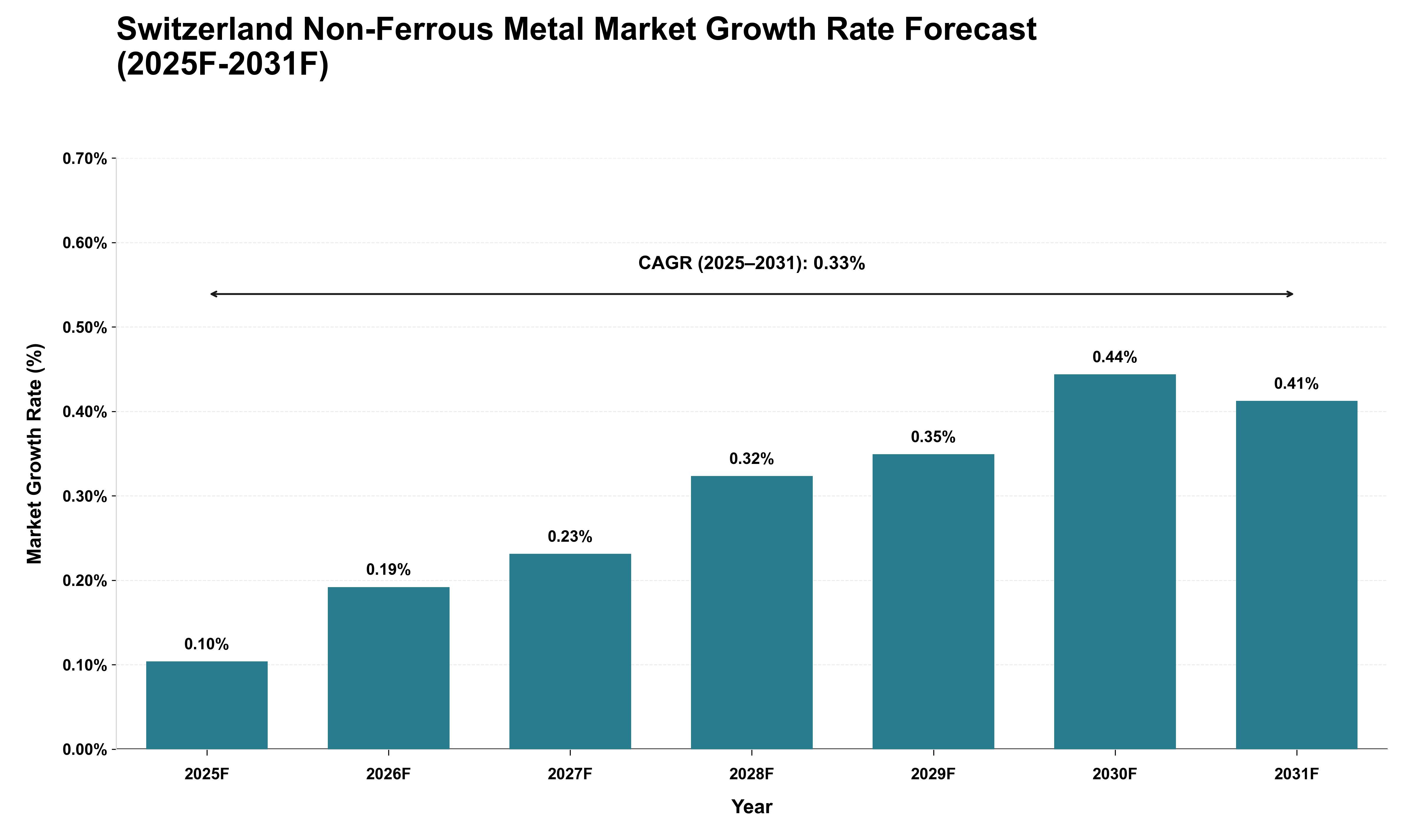
From 2025 onward, the Switzerland non-ferrous metal market will likely experience a gradual increase in growth rates, reflecting broader macroeconomic factors such as supply chain dynamics and input costs. The projected CAGR of 0.33% suggests that while demand may rise modestly, it will be influenced by fluctuating global commodity prices and potential disruptions in supply chains. As input costs for raw materials are expected to remain volatile due to geopolitical tensions and trade policies, manufacturers will face challenges in maintaining margins. The annual growth trajectory indicates an initial slow uptick, with a notable acceleration anticipated around 2030, potentially driven by increased investments in sustainable technologies and recycling initiatives. However, the subsequent slight decline in growth rate for 2031 may signal emerging constraints from rising operational costs or shifts in consumer preferences towards alternative materials. Overall, these factors will shape the competitive landscape of the non-ferrous metal sector during this period.
Key Highlights of the Report:
- Switzerland Non-ferrous Metal Market Outlook
- Market Size of Switzerland Non-ferrous Metal Market, 2025
- Forecast of Switzerland Non-ferrous Metal Market, 2032
- Historical Data and Forecast of Switzerland Non-ferrous Metal Revenues & Volume for the Period 2022-2032F
- Switzerland Non-ferrous Metal Market Trend Evolution
- Switzerland Non-ferrous Metal Market Drivers and Challenges
- Switzerland Non-ferrous Metal Price Trends
- Switzerland Non-ferrous Metal Porter`s Five Forces
- Switzerland Non-ferrous Metal Industry Life Cycle
- Historical Data and Forecast of Switzerland Non-ferrous Metal Market Revenues & Volume By Types for the Period 2022-2032F
- Historical Data and Forecast of Switzerland Non-ferrous Metal Market Revenues & Volume By Aluminum for the Period 2022-2032F
- Historical Data and Forecast of Switzerland Non-ferrous Metal Market Revenues & Volume By Copper for the Period 2022-2032F
- Historical Data and Forecast of Switzerland Non-ferrous Metal Market Revenues & Volume By Lead for the Period 2022-2032F
- Historical Data and Forecast of Switzerland Non-ferrous Metal Market Revenues & Volume By Tin for the Period 2022-2032F
- Historical Data and Forecast of Switzerland Non-ferrous Metal Market Revenues & Volume By Nickel for the Period 2022-2032F
- Historical Data and Forecast of Switzerland Non-ferrous Metal Market Revenues & Volume By Titanium for the Period 2022-2032F
- Historical Data and Forecast of Switzerland Non-ferrous Metal Market Revenues & Volume By Zinc for the Period 2022-2032F
- Historical Data and Forecast of Switzerland Non-ferrous Metal Market Revenues & Volume By Applications for the Period 2022-2032F
- Historical Data and Forecast of Switzerland Non-ferrous Metal Market Revenues & Volume By Automobile Industry for the Period 2022-2032F
- Historical Data and Forecast of Switzerland Non-ferrous Metal Market Revenues & Volume By Electronic Power Industry for the Period 2022-2032F
- Historical Data and Forecast of Switzerland Non-ferrous Metal Market Revenues & Volume By Construction Industry for the Period 2022-2032F
- Historical Data and Forecast of Switzerland Non-ferrous Metal Market Revenues & Volume By Other for the Period 2022-2032F
- Switzerland Non-ferrous Metal Import Export Trade Statistics
- Market Opportunity Assessment By Types
- Market Opportunity Assessment By Applications
- Switzerland Non-ferrous Metal Top Companies Market Share
- Switzerland Non-ferrous Metal Competitive Benchmarking By Technical and Operational Parameters
- Switzerland Non-ferrous Metal Company Profiles
- Switzerland Non-ferrous Metal Key Strategic Recommendations






































