Switzerland Physiological Saline Market: Import Trend Analysis
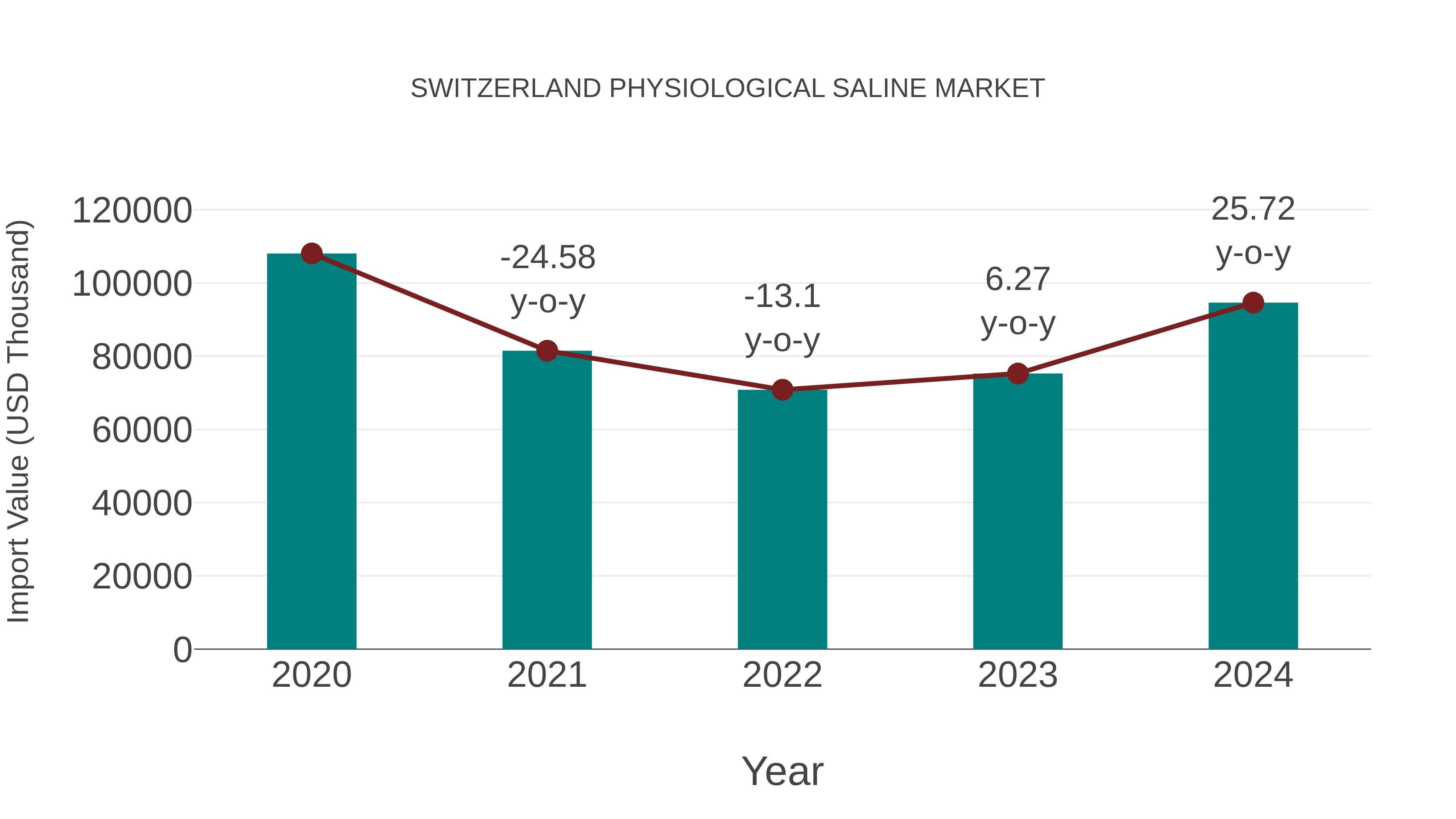
Switzerland import trend for physiological saline saw a notable increase in 2023-2024, with a growth rate of 25.72%. However, the compound annual growth rate (CAGR) for 2020-2024 was -3.26%. This could be attributed to shifting demand patterns or market recovery efforts.
Switzerland Physiological Saline Market Synopsis
The Switzerland Physiological Saline Market is characterized by a steady demand for the sterile solution of sodium chloride in water due to its wide range of medical and healthcare applications. Physiological saline is commonly used in hospitals, clinics, and laboratories for wound cleansing, intravenous infusions, and as a nasal spray. The market is driven by factors such as the increasing prevalence of chronic diseases, rising surgical procedures, and growing awareness about the importance of sterile solutions in healthcare settings. Key players in the Switzerland Physiological Saline Market include major pharmaceutical companies, medical device manufacturers, and healthcare providers. Market trends suggest a shift towards the development of advanced formulations and packaging solutions to cater to the evolving needs of healthcare professionals and patients. Overall, the Switzerland Physiological Saline Market is expected to witness sustained growth in the coming years.
Switzerland Physiological Saline Market Trends
The Switzerland Physiological Saline Market is experiencing steady growth driven by factors such as increasing demand for saline solutions in healthcare settings, particularly for wound cleansing, eye irrigation, and intravenous infusion. The market is also benefiting from the rising prevalence of chronic diseases and the growing emphasis on infection prevention and control. Opportunities exist for market players to innovate and introduce advanced formulations with added functionalities, such as antimicrobial properties or tailored electrolyte concentrations, to cater to specific medical needs. Additionally, the trend towards eco-friendly and sustainable products is shaping consumer preferences, presenting avenues for the development of biodegradable packaging and environmentally conscious manufacturing practices within the physiological saline market in Switzerland. Overall, the market shows promise for continued expansion and diversification in the coming years.
Switzerland Physiological Saline Market Challenges
In the Switzerland Physiological Saline Market, some key challenges include intense competition among various manufacturers leading to pricing pressures, the need for constant innovation to differentiate products in a saturated market, and stringent regulations governing the production and distribution of medical-grade saline solutions. Additionally, fluctuations in raw material prices and supply chain disruptions can impact the cost of production and overall market stability. Market players also need to address growing environmental concerns related to plastic waste generated by single-use saline solution packaging. Overall, navigating these challenges requires companies to strategically position themselves, invest in research and development, maintain compliance with regulations, and adopt sustainable practices to stay competitive in the Switzerland Physiological Saline Market.
Switzerland Physiological Saline Market Investment Opportunities
The Switzerland Physiological Saline Market is primarily driven by the increasing demand for medical-grade saline solutions for various healthcare applications, including wound irrigation, intravenous therapy, and respiratory treatments. The growing prevalence of chronic diseases and the rising number of surgical procedures in the country are fueling the need for physiological saline products. Additionally, the expanding elderly population, with its higher susceptibility to health issues, is contributing to the market growth. Moreover, the emphasis on infection control and patient safety in healthcare facilities is boosting the adoption of sterile and safe saline solutions. Technological advancements in saline production and packaging techniques are also playing a significant role in driving market growth by enhancing product quality and shelf life.
Switzerland Physiological Saline Market Government Polices
In Switzerland, the physiological saline market is regulated by the Swiss Agency for Therapeutic Products (Swissmedic). Swissmedic is responsible for ensuring the safety, efficacy, and quality of physiological saline products through rigorous evaluation and approval processes. The market is also subject to various regulations and guidelines set forth by the Swiss Federal Office of Public Health (FOPH) to ensure compliance with standards related to pharmaceuticals and medical devices. Additionally, the Swiss Competition Commission (COMCO) monitors market activities to prevent anti-competitive practices and ensure fair competition among suppliers. Overall, the Swiss government`s policies aim to safeguard public health, maintain quality standards, and promote a competitive market environment in the physiological saline sector.
Switzerland Physiological Saline Market Future Outlook
The Switzerland Physiological Saline Market is expected to witness steady growth in the coming years due to the increasing demand for saline solutions in medical and healthcare applications. Factors such as the rising prevalence of chronic diseases, growth in surgical procedures, and advancements in healthcare infrastructure are driving the market`s expansion. The market is also benefiting from the growing awareness among consumers regarding the importance of maintaining proper hydration levels and electrolyte balance. Additionally, the increasing adoption of physiological saline solutions in wound care management and intravenous therapies is further propelling market growth. With continuous innovation in product formulations and packaging, along with the focus on stringent quality standards, the Switzerland Physiological Saline Market is poised for sustained growth and is expected to offer lucrative opportunities for market players in the foreseeable future.
Key Highlights of the Report:
- Switzerland Physiological Saline Market Outlook
- Market Size of Switzerland Physiological Saline Market, 2025
- Forecast of Switzerland Physiological Saline Market, 2032
- Historical Data and Forecast of Switzerland Physiological Saline Revenues & Volume for the Period 2022 - 2032F
- Switzerland Physiological Saline Market Trend Evolution
- Switzerland Physiological Saline Market Drivers and Challenges
- Switzerland Physiological Saline Price Trends
- Switzerland Physiological Saline Porter's Five Forces
- Switzerland Physiological Saline Industry Life Cycle
- Historical Data and Forecast of Switzerland Physiological Saline Market Revenues & Volume By Product Type for the Period 2022 - 2032F
- Historical Data and Forecast of Switzerland Physiological Saline Market Revenues & Volume By Flexible Bag for the Period 2022 - 2032F
- Historical Data and Forecast of Switzerland Physiological Saline Market Revenues & Volume By Plastic Bottles for the Period 2022 - 2032F
- Historical Data and Forecast of Switzerland Physiological Saline Market Revenues & Volume By Glass Bottles for the Period 2022 - 2032F
- Historical Data and Forecast of Switzerland Physiological Saline Market Revenues & Volume By Application for the Period 2022 - 2032F
- Historical Data and Forecast of Switzerland Physiological Saline Market Revenues & Volume By Chronic Diseases for the Period 2022 - 2032F
- Historical Data and Forecast of Switzerland Physiological Saline Market Revenues & Volume By Acute Health Conditions for the Period 2022 - 2032F
- Historical Data and Forecast of Switzerland Physiological Saline Market Revenues & Volume By Skin Abrasions and Burns for the Period 2022 - 2032F
- Historical Data and Forecast of Switzerland Physiological Saline Market Revenues & Volume By End Users for the Period 2022 - 2032F
- Historical Data and Forecast of Switzerland Physiological Saline Market Revenues & Volume By Hospitals for the Period 2022 - 2032F
- Historical Data and Forecast of Switzerland Physiological Saline Market Revenues & Volume By Clinics for the Period 2022 - 2032F
- Historical Data and Forecast of Switzerland Physiological Saline Market Revenues & Volume By Recovery Centers for the Period 2022 - 2032F
- Historical Data and Forecast of Switzerland Physiological Saline Market Revenues & Volume By Others for the Period 2022 - 2032F
- Switzerland Physiological Saline Import Export Trade Statistics
- Market Opportunity Assessment By Product Type
- Market Opportunity Assessment By Application
- Market Opportunity Assessment By End Users
- Switzerland Physiological Saline Top Companies Market Share
- Switzerland Physiological Saline Competitive Benchmarking By Technical and Operational Parameters
- Switzerland Physiological Saline Company Profiles
- Switzerland Physiological Saline Key Strategic Recommendations






































