Switzerland Reconstituted Tobacco Leaf Market Growth Rate Analysis (2021 - 2031)
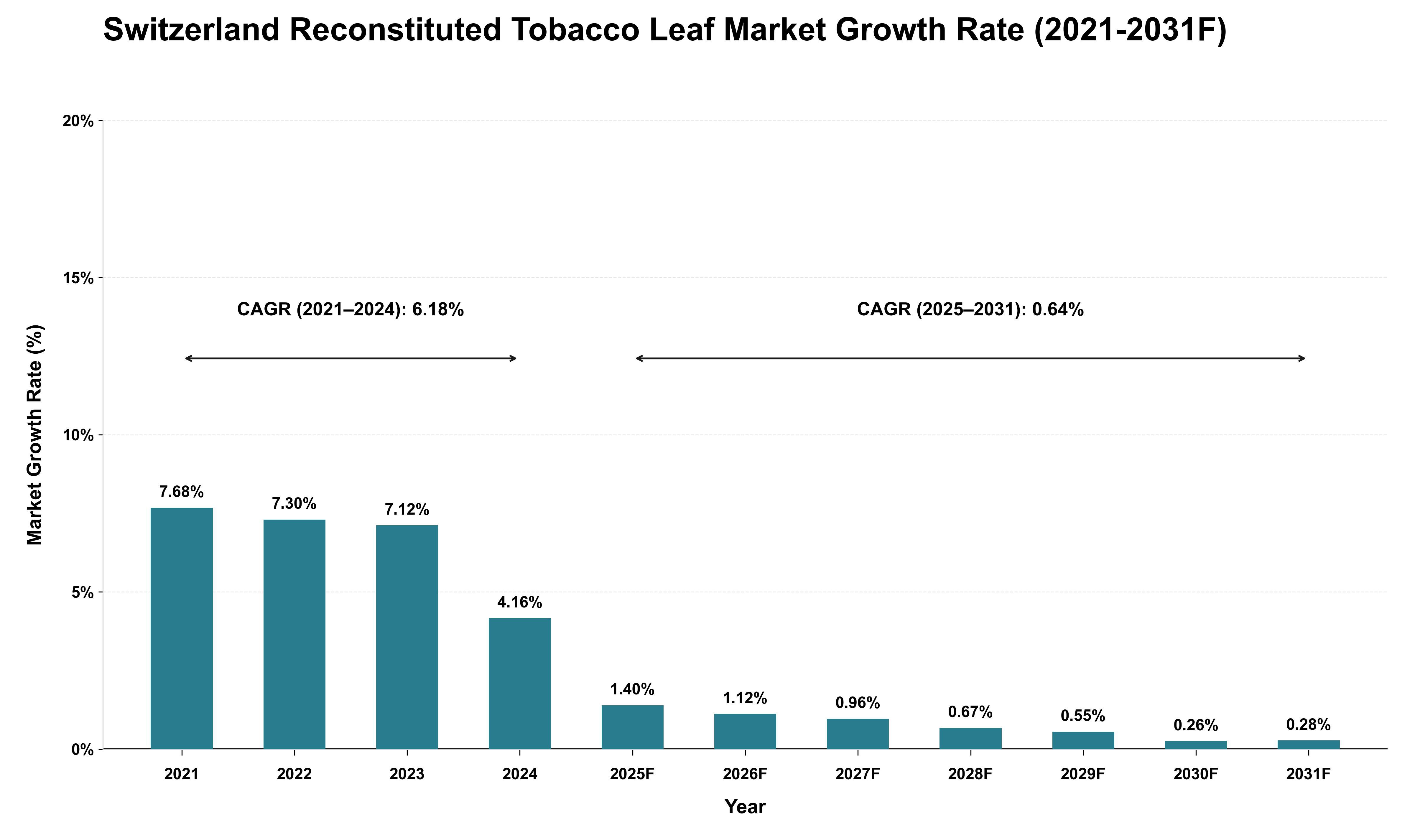
Between 2021 and 2024, the Switzerland reconstituted tobacco leaf market experienced a robust CAGR of 6.18%, driven by post-pandemic recovery dynamics and heightened demand for alternative tobacco products amid shifting consumer preferences. The annual growth rates, peaking at 7.68% in 2021, reflected a rebound from pandemic-induced disruptions, while the gradual decline to 4.16% in 2024 indicated emerging challenges such as increased regulatory scrutiny and evolving health trends. Looking ahead to the forecast period of 2025-2031, the anticipated CAGR of just 0.64% suggests a significant deceleration in growth, likely influenced by broader macroeconomic cycles including potential economic slowdowns and changing import reliance as global supply chains stabilize. This trend may also reflect diminishing returns on innovation within the sector as consumer focus shifts towards more sustainable alternatives, thereby reshaping market dynamics in Switzerland's tobacco landscape.
Key Highlights of the Report:
- Switzerland Reconstituted Tobacco Leaf Market Outlook
- Market Size of Switzerland Reconstituted Tobacco Leaf Market, 2025
- Forecast of Switzerland Reconstituted Tobacco Leaf Market, 2032
- Historical Data and Forecast of Switzerland Reconstituted Tobacco Leaf Revenues & Volume for the Period 2022-2032F
- Switzerland Reconstituted Tobacco Leaf Market Trend Evolution
- Switzerland Reconstituted Tobacco Leaf Market Drivers and Challenges
- Switzerland Reconstituted Tobacco Leaf Price Trends
- Switzerland Reconstituted Tobacco Leaf Porter`s Five Forces
- Switzerland Reconstituted Tobacco Leaf Industry Life Cycle
- Historical Data and Forecast of Switzerland Reconstituted Tobacco Leaf Market Revenues & Volume By Type for the Period 2022-2032F
- Historical Data and Forecast of Switzerland Reconstituted Tobacco Leaf Market Revenues & Volume By Flaky for the Period 2022-2032F
- Historical Data and Forecast of Switzerland Reconstituted Tobacco Leaf Market Revenues & Volume By Filamentous for the Period 2022-2032F
- Historical Data and Forecast of Switzerland Reconstituted Tobacco Leaf Market Revenues & Volume By Application for the Period 2022-2032F
- Historical Data and Forecast of Switzerland Reconstituted Tobacco Leaf Market Revenues & Volume By Conventional Cigarette for the Period 2022-2032F
- Historical Data and Forecast of Switzerland Reconstituted Tobacco Leaf Market Revenues & Volume By Fine Cigarette for the Period 2022-2032F
- Historical Data and Forecast of Switzerland Reconstituted Tobacco Leaf Market Revenues & Volume By Medium Cigarette for the Period 2022-2032F
- Historical Data and Forecast of Switzerland Reconstituted Tobacco Leaf Market Revenues & Volume By Short Cigarette for the Period 2022-2032F
- Switzerland Reconstituted Tobacco Leaf Import Export Trade Statistics
- Market Opportunity Assessment By Type
- Market Opportunity Assessment By Application
- Switzerland Reconstituted Tobacco Leaf Top Companies Market Share
- Switzerland Reconstituted Tobacco Leaf Competitive Benchmarking By Technical and Operational Parameters
- Switzerland Reconstituted Tobacco Leaf Company Profiles
- Switzerland Reconstituted Tobacco Leaf Key Strategic Recommendations






































