Tajikistan Antiseptics and Disinfectants Market Summary
The tajikistan antiseptics and disinfectants market was estimated at USD 1360 Million in 2025 and is projected to reach USD 1962 Million by 2032, growing at a CAGR of 6.4% from 2026 to 2032.
Tajikistan Antiseptics and Disinfectants Market Year-wise Growth Rate and Key Drivers
This graph highlights how the Tajikistan Antiseptics and Disinfectants Market has steadily grown over the past five years, supported by major growth factors.
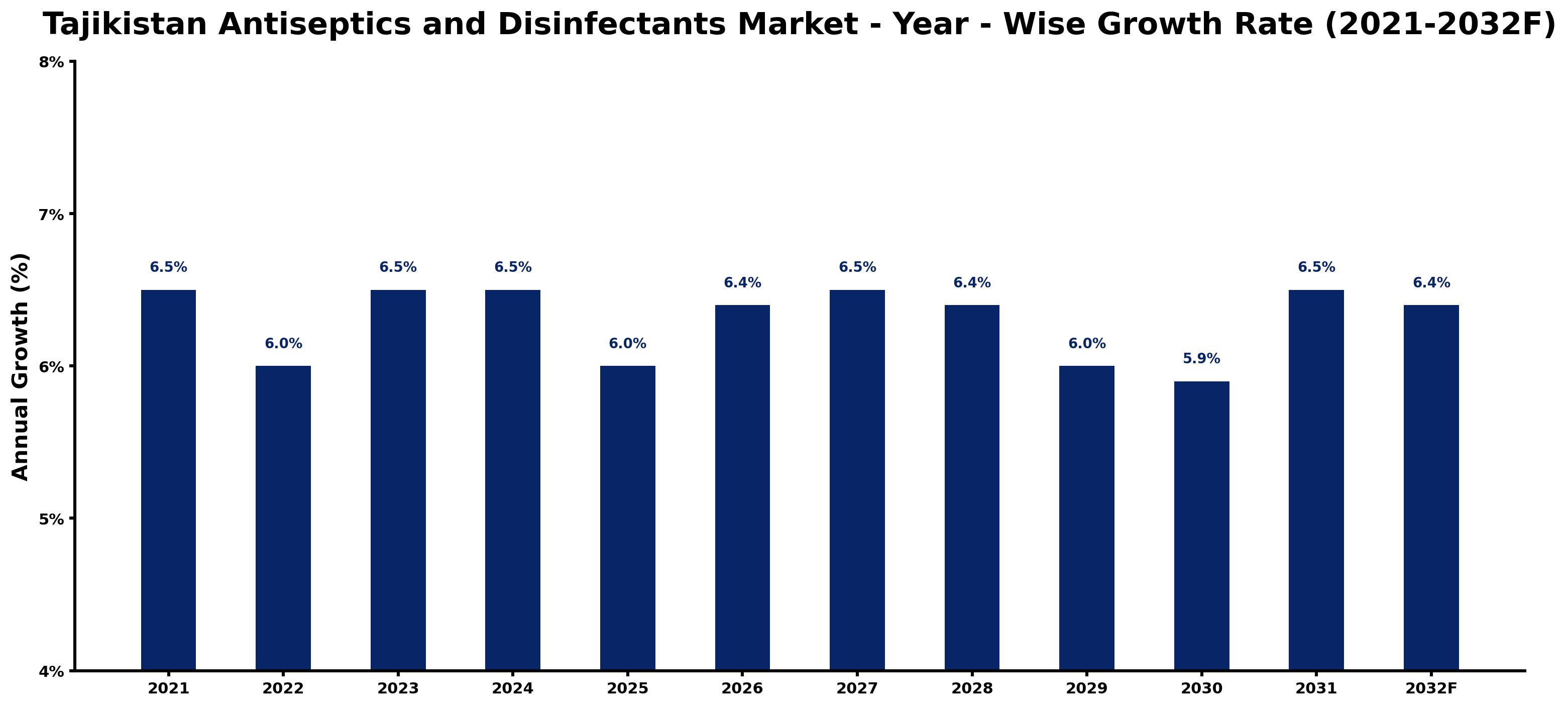
The table below presents the year wise growth rates along with the key drivers influencing the market
| Year | Growth Rate | Major Drivers |
| 2021 | 6.5% | COVID-19 led to a heightened awareness of hygiene across households and businesses. |
| 2022 | 6.0% | Increased importation of global antiseptic brands enhanced competitive offerings in the market. |
| 2023 | 6.5% | Local manufacturers began focusing on eco-friendly formulation to capture conscious consumers. |
| 2024 | 6.5% | E-commerce platforms gained traction, facilitating easier access to various disinfectant products. |
| 2025 | 6.0% | Healthcare facilities expanded, requiring a larger inventory of antiseptic solutions and supplies. |
| 2026 | 6.4% | Consumer sentiment shifted towards quality over price, elevating premium product sales. |
| 2027 | 6.5% | Local regulations began mandating stronger disinfectant standards in public spaces and schools. |
| 2028 | 6.4% | Innovative product launches, such as foaming hand sanitizers, captivated consumer interest quickly. |
| 2029 | 6.0% | The tourism sector's recovery post-pandemic revived demand for high-quality sanitary products. |
| 2030 | 5.9% | Educational campaigns highlighted the importance of regular disinfectant usage among households. |
| 2031 | 6.5% | Cross-border trade with neighboring countries introduced diverse antiseptic products into the market. |
| 2032 | 6.4% | Investment in local production facilities reduced import dependency and boosted job creation. |
Note - Market size estimations and growth projections presented in this report are based on 6Wresearch's advanced forecasting approach, validated with industry datasets as of June 2026.
Tajikistan Antiseptics and Disinfectants Market Synopsis
The Tajikistan Antiseptics and Disinfectants Market is projected to reach 6.4% and witness significant growth during the forecast period (2026-2032). This growth trajectory can be attributed to an increasing emphasis on hygiene and sanitation practices spurred by the ongoing global health challenges, including the COVID-19 pandemic. The demand for various antiseptic and disinfectant products is rising sharply across multiple sectors, including healthcare facilities, public spaces, and residential households. The competitive landscape features both local manufacturers and international brands, each striving to capture market share by offering diverse and effective solutions in the form of liquid sprays, wipes, and gels.
Tajikistan Antiseptics and Disinfectants Market Growth Drivers
The primary growth drivers of the Tajikistan Antiseptics and Disinfectants Market include:
- Increased consumer awareness regarding hygiene and sanitation, particularly after the COVID-19 pandemic, has bolstered demand across various segments.
- Ongoing government initiatives to promote cleanliness, which include public health campaigns and regulations ensuring product safety and efficacy.
- The expansion of healthcare facilities and commercial establishments that require continuous disinfection to maintain safe environments for patients and customers.
- A shift in consumer preferences towards more effective, skin-friendly, and eco-friendly disinfectant solutions, driving manufacturers to innovate product offerings.
- The rising prevalence of infectious diseases necessitates the widespread use of disinfectant products in everyday settings.
Tajikistan Antiseptics and Disinfectants Market Trends and Opportunities
Key trends shaping the Tajikistan Antiseptics and Disinfectants Market include:
- A growing preference for alcohol-based sanitizers and disinfectants, as consumers are increasingly aware of their effectiveness against pathogens.
- The introduction of convenient packaging formats such as travel-sized containers and larger refillable options to cater to varying consumer needs.
- Increased availability of eco-friendly products that utilize natural ingredients, aligning with global sustainability trends and consumer demand for safer options.
- Enhanced market penetration through e-commerce platforms as digital adoption rises, allowing consumers to purchase products conveniently.
- Focus on product innovation, including formulations with added benefits such as moisturizing agents, which addresses consumer concerns about skin irritation.
Tajikistan Antiseptics and Disinfectants Market Challenges and Restraints
The market faces several challenges that could impede growth:
- The limited availability of high-quality antiseptic and disinfectant products in certain regions, particularly rural areas where distribution channels may be inadequate.
- Consumer skepticism about the effectiveness of certain products due to a lack of awareness and education regarding hygiene practices.
- Regulatory barriers that complicate market entry for new companies and may deter innovation and the introduction of new products.
- Economic instability and low purchasing power among consumers, which can lead to price sensitivity and limit the market for premium products.
- Supply chain disruptions that affect the timely delivery of products, particularly in remote areas, leading to market inefficiencies.
Tajikistan Antiseptics and Disinfectants Market Investment Opportunities
With an increasing focus on hygiene practices, the Tajikistan Antiseptics and Disinfectants Market offers various investment opportunities:
- Investment in manufacturing facilities to produce innovative antiseptic and disinfectant products, aligning with local needs and international safety standards.
- Opportunities for distribution partnerships with local businesses and healthcare facilities to enhance product reach.
- Development of marketing strategies that tailor messaging to educate consumers on the importance of hygiene products, fostering brand loyalty and trust.
- Exploration of public-private partnerships that could facilitate access to government initiatives promoting sanitation and hygiene.
- Investments in research and development to create new formulations and packaging that address evolving consumer preferences and regulatory requirements.
Tajikistan Antiseptics and Disinfectants Market Government Investment and Initiatives
The Tajikistan government has enacted several regulations aimed at ensuring the quality and safety of antiseptics and disinfectants available in the market:
- The State Sanitary and Epidemiological Surveillance Service is responsible for the registration and approval process of disinfectant products, ensuring compliance with health standards.
- Strict labeling requirements mandate that product information must be readily available in the local language, improving consumer understanding and safety.
- Incentives for manufacturers, such as tax breaks or subsidies, are offered to encourage the production of high-quality sanitizing products.
- Public health campaigns funded by the government aim to increase awareness about the importance of hygiene and the proper use of antiseptics and disinfectants.
- Regulatory measures prohibit the sale of certain hazardous disinfectants to protect public health, contributing to a safer environment for consumers.
Tajikistan Antiseptics and Disinfectants Market Latest Developments (May 2025 - June 2026)
Recent developments in the Tajikistan Antiseptics and Disinfectants Market indicate a continued focus on enhancing product availability and safety:
- Various initiatives to streamline the regulatory approval process have been undertaken, making it easier for new products to enter the market while ensuring consumer safety.
- There has been a noticeable increase in local production capabilities, aimed at reducing dependency on imported products and improving supply chain reliability.
- New public awareness campaigns have been launched to educate citizens on effective hygiene practices and the benefits of using disinfectants and antiseptics.
- Research collaborations between local institutions and international partners have been initiated to develop advanced formulations that meet global standards.
- The government has started promoting eco-friendly sanitization solutions to align with global sustainability goals, encouraging local manufacturers to adopt greener practices.
Tajikistan Antiseptics and Disinfectants Market - Key Attractiveness of the Report
- 10 Years of Market Numbers
- Historical Data Starting from 2022 to 2025
- Base Year: 2025
- Forecast Data until 2032
- Key Performance Indicators Impacting the Market
- Major Upcoming Developments and Projects
Key Highlights of the Report:
- Tajikistan Antiseptics and Disinfectants Market Outlook
- Market Size of Tajikistan Antiseptics and Disinfectants Market, 2025
- Forecast of Tajikistan Antiseptics and Disinfectants Market, 2032F
- Historical Data and Forecast of Tajikistan Antiseptics and Disinfectants Revenues & Volume for the Period 2022-2032F
- Tajikistan Antiseptics and Disinfectants Market Trend Evolution
- Tajikistan Antiseptics and Disinfectants Market Drivers and Challenges
- Tajikistan Antiseptics and Disinfectants Price Trends
- Tajikistan Antiseptics and Disinfectants Porter's Five Forces
- Tajikistan Antiseptics and Disinfectants Industry Life Cycle
- Historical Data and Forecast of Tajikistan Antiseptics and Disinfectants Market Revenues & Volume By Type for the Period 2022-2032F
- Historical Data and Forecast of Tajikistan Antiseptics and Disinfectants Market Revenues & Volume By Quaternary Ammonium Compounds for the Period 2022-2032F
- Historical Data and Forecast of Tajikistan Antiseptics and Disinfectants Market Revenues & Volume By Chlorine Compounds for the Period 2022-2032F
- Historical Data and Forecast of Tajikistan Antiseptics and Disinfectants Market Revenues & Volume By Alcohols & Aldehyde Products for the Period 2022-2032F
- Historical Data and Forecast of Tajikistan Antiseptics and Disinfectants Market Revenues & Volume By Enzyme for the Period 2022-2032F
- Historical Data and Forecast of Tajikistan Antiseptics and Disinfectants Market Revenues & Volume By Others for the Period 2022-2032F
- Historical Data and Forecast of Tajikistan Antiseptics and Disinfectants Market Revenues & Volume By Product Type for the Period 2022-2032F
- Historical Data and Forecast of Tajikistan Antiseptics and Disinfectants Market Revenues & Volume By Enzymatic Cleaners for the Period 2022-2032F
- Historical Data and Forecast of Tajikistan Antiseptics and Disinfectants Market Revenues & Volume By Medical Device Disinfectants for the Period 2022-2032F
- Historical Data and Forecast of Tajikistan Antiseptics and Disinfectants Market Revenues & Volume By Surface Disinfectants for the Period 2022-2032F
- Historical Data and Forecast of Tajikistan Antiseptics and Disinfectants Market Revenues & Volume By End-use for the Period 2022-2032F
- Historical Data and Forecast of Tajikistan Antiseptics and Disinfectants Market Revenues & Volume By Hospitals for the Period 2022-2032F
- Historical Data and Forecast of Tajikistan Antiseptics and Disinfectants Market Revenues & Volume By Clinics for the Period 2022-2032F
- Historical Data and Forecast of Tajikistan Antiseptics and Disinfectants Market Revenues & Volume By Others for the Period 2022-2032F
- Tajikistan Antiseptics and Disinfectants Import Export Trade Statistics
- Market Opportunity Assessment By Type
- Market Opportunity Assessment By Product Type
- Market Opportunity Assessment By End-use
- Tajikistan Antiseptics and Disinfectants Top Companies Market Share
- Tajikistan Antiseptics and Disinfectants Competitive Benchmarking By Technical and Operational Parameters
- Tajikistan Antiseptics and Disinfectants Company Profiles
- Tajikistan Antiseptics and Disinfectants Key Strategic Recommendations






































