Tajikistan Aquarium Fish Market Size, Share & Growth Rate
The Tajikistan Aquarium Fish Market was estimated at USD 323 Million in 2025 and is projected to reach USD 428 Million by 2032, growing at a CAGR of 4.1% from 2026 to 2032. This growth trajectory is primarily driven by an increasing interest in home aquariums, as more consumers seek to create aesthetically pleasing aquatic environments. Additionally, the rise of aquascaping as a hobby further fuels the demand for a diverse range of ornamental fish species, particularly unique and colorful varieties.
Tajikistan Aquarium Fish Market Year-wise Growth Rate and Key Drivers
This graph highlights how the Tajikistan Aquarium Fish Market has steadily grown over the years, supported by major growth factors.
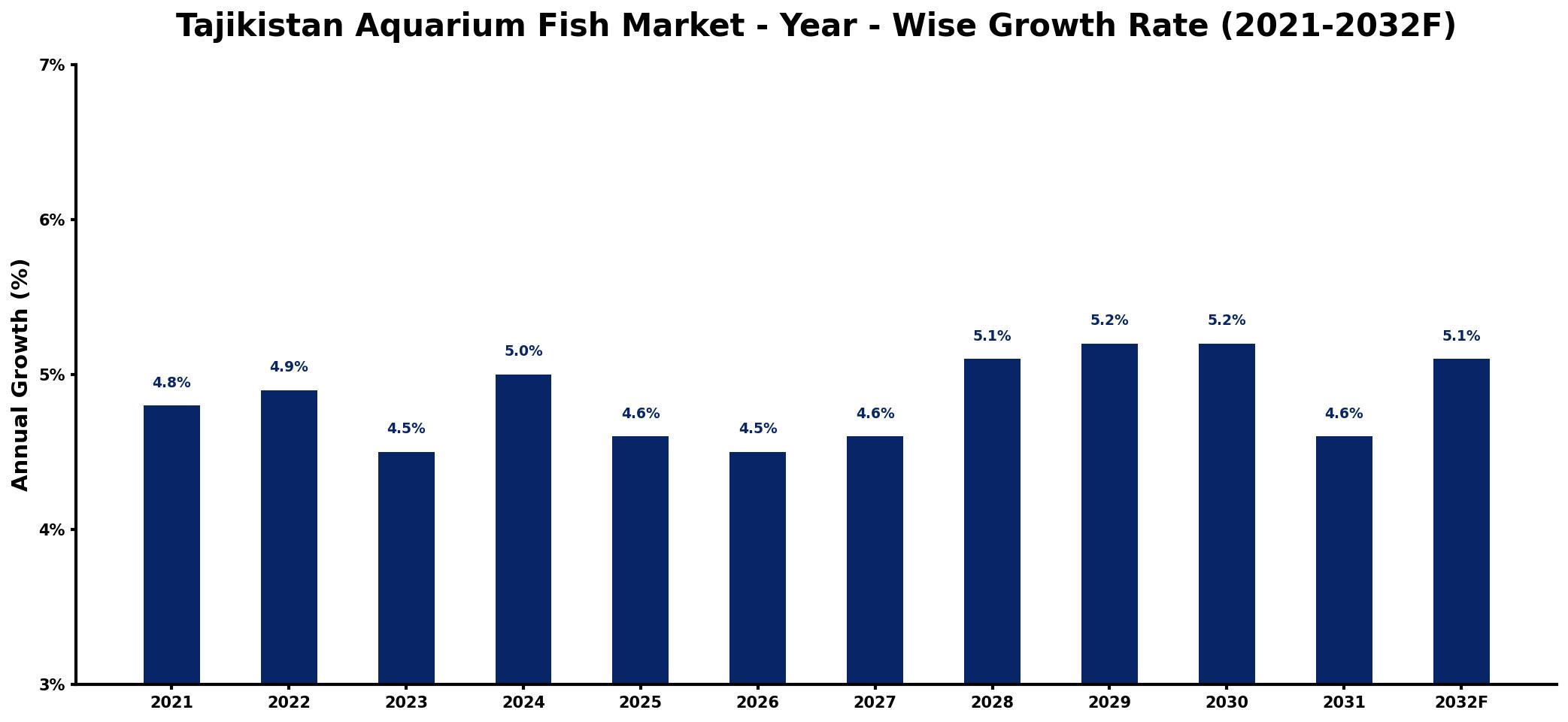
The table below presents the year‑wise growth rates along with the key drivers influencing the market
| Year | Growth Rate | Major Drivers |
| 2021 | 4.8% | Increased consumer interest in pets |
| 2022 | 4.9% | Growth in home decoration trends |
| 2023 | 4.5% | Rise in online retail platforms |
| 2024 | 5.0% | Expansion of local breeding facilities |
| 2025 | 4.6% | Surge in hobbyist community engagement |
| 2026 | 4.5% | Investment in sustainable practices |
| 2027 | 4.6% | Enhanced product variety availability |
| 2028 | 5.1% | expanding industrial usage applications |
| 2029 | 5.2% | Boost in recreational activity awareness |
| 2030 | 5.2% | Increase in disposable income levels |
| 2031 | 4.6% | Wider distribution channel reach |
| 2032 | 5.1% | Strengthening of community events |
Note: Market size estimations and growth projections presented in this report are based on 6Wresearch's proprietary forecasting methodology, utilizing the latest available industry data, government publications, and primary research inputs.
Tajikistan Aquarium Fish Market Synopsis
In Tajikistan, local fish breeders play a crucial role in supplying popular species like guppies, tetras, and bettas. The increasing number of hobbyists looking to enhance their living spaces with vibrant aquariums has led to a burgeoning market for both freshwater and marine fish. Furthermore, the blend of physical retail outlets and burgeoning online platforms offers consumers a diverse range of purchasing options, catering to the evolving needs of the market.
The demand for exotic and rare fish has surged, as enthusiasts increasingly prioritize unique species to enhance the visual appeal of their aquariums. Simultaneously, a growing awareness of sustainable practices is leading consumers to favor captive-bred species over wild-caught fish, aligning their purchasing decisions with environmental considerations. This evolving consumer landscape sets the stage for significant growth in the Tajikistan aquarium fish market.
Tajikistan Aquarium Fish Market Key Takeaways
- The market is experiencing rising demand for unique and colorful fish species among aquarists.
- Online sales platforms are gaining traction, providing greater accessibility for hobbyists.
- Sustainable practices are becoming increasingly important, influencing consumer purchasing behavior.
- The blend of local breeding initiatives and imports contributes to market diversity.
- Investment opportunities exist in breeding, retail, and e-commerce sectors.
Evaluation of Restraints in Tajikistan Aquarium Fish Market
The Tajikistan Aquarium Fish Market faces several constraints that may hinder its growth. Key among these is the limited availability of high-quality fish species, largely attributed to geographical challenges and underdeveloped infrastructure for transportation and storage. The markets reliance on imports can lead to price volatility and inconsistency in fish supply, driven by global supply chain disruptions and fluctuating currency exchange rates. Furthermore, insufficient regulatory oversight raises concerns about the illegal trafficking of endangered species, along with the potential for poor conditions in which fish are kept, ultimately impacting the overall market sustainability.
Tajikistan Aquarium Fish Market Trends
A notable trend shaping the Tajikistan Aquarium Fish Market is the rising popularity of aquascaping, driving hobbyists to seek out rare and visually appealing species. This artistic approach to aquarium design encourages the use of advanced technology, such as superior filtration and lighting systems, to create optimal environments for aquatic life. As more consumers prioritize aesthetics and sustainability, there is a noticeable shift towards responsibly sourced fish, reflecting a broader movement within the global aquarium trade.
Tajikistan Aquarium Fish Market Opportunities
Investment opportunities in the Tajikistan Aquarium Fish Market are promising, particularly for local and international stakeholders interested in establishing aquarium fish farms. By breeding unique and exotic species, businesses can cater to the growing demand from enthusiasts. Retail stores focused on aquarium supplies and accessories also stand to benefit from the expanding customer base. Additionally, developing robust online platforms for fish sales and related products presents a significant growth avenue, tapping into the convenience-driven shopping trend among modern consumers.
Government Initiatives in the Tajikistan Aquarium Fish Market
The government of Tajikistan is actively promoting sustainable practices within the aquarium fish market. This includes implementing regulations governing the import and export of fish species to safeguard against invasive species. Licensing requirements for fish traders are also in place to monitor industry practices. Public awareness campaigns further educate consumers about the importance of sourcing fish from legal and sustainable channels, thereby supporting biodiversity and environmental conservation initiatives.
Future Insights of the Tajikistan Aquarium Fish Market
Looking ahead to 2026-2032, the Tajikistan Aquarium Fish Market is poised for significant growth. Urbanization trends, along with rising disposable incomes, are expected to fuel interest in home aquariums as a form of leisure and personal expression. Technological advancements in fish breeding and distribution are likely to enhance both the availability and variety of species. While environmental regulations and competition from alternative hobbies may pose challenges, strategic responses to these market dynamics will be crucial in leveraging growth potential.
Tajikistan Aquarium Fish Market Latest Developments (2025 - 2026)
Recent developments in the Tajikistan Aquarium Fish Market indicate a shift towards increased emphasis on e-commerce as more retail players enter the online space. Innovations in aquarium technology, including smart monitoring systems for tank conditions, are gaining traction among tech-savvy consumers. Concurrently, partnerships between local breeders and international suppliers are emerging to diversify species availability, aiming to meet the growing demands of hobbyists.
Tajikistan Aquarium Fish Market - Key Attractiveness of the Report
- 10 Years of Market Numbers
- Historical Data Starting from 2022 to 2025
- Base Year: 2025
- Forecast Data until 2032
- Key Performance Indicators Impacting the Market
- Major Upcoming Developments and Projects
Key Highlights of the Report:
- Tajikistan Aquarium Fish Market Outlook
- Market Size of Tajikistan Aquarium Fish Market, 2025
- Forecast of Tajikistan Aquarium Fish Market, 2032
- Historical Data and Forecast of Tajikistan Aquarium Fish Revenues & Volume for the Period 2022-2032F
- Tajikistan Aquarium Fish Market Trend Evolution
- Tajikistan Aquarium Fish Market Drivers and Challenges
- Tajikistan Aquarium Fish Price Trends
- Tajikistan Aquarium Fish Porter's Five Forces
- Tajikistan Aquarium Fish Industry Life Cycle
- Historical Data and Forecast of Tajikistan Aquarium Fish Market Revenues & Volume By Type for the Period 2022-2032F
- Historical Data and Forecast of Tajikistan Aquarium Fish Market Revenues & Volume By Freshwater Fish for the Period 2022-2032F
- Historical Data and Forecast of Tajikistan Aquarium Fish Market Revenues & Volume By Saltwater Fish for the Period 2022-2032F
- Historical Data and Forecast of Tajikistan Aquarium Fish Market Revenues & Volume By Application for the Period 2022-2032F
- Historical Data and Forecast of Tajikistan Aquarium Fish Market Revenues & Volume By Commercial Aquarium for the Period 2022-2032F
- Historical Data and Forecast of Tajikistan Aquarium Fish Market Revenues & Volume By Home Aquarium for the Period 2022-2032F
- Tajikistan Aquarium Fish Import Export Trade Statistics
- Market Opportunity Assessment By Type
- Market Opportunity Assessment By Application
- Tajikistan Aquarium Fish Top Companies Market Share
- Tajikistan Aquarium Fish Competitive Benchmarking By Technical and Operational Parameters
- Tajikistan Aquarium Fish Company Profiles
- Tajikistan Aquarium Fish Key Strategic Recommendations






































