Tajikistan Data Protection Market Size & Growth Rate (2026-2032)
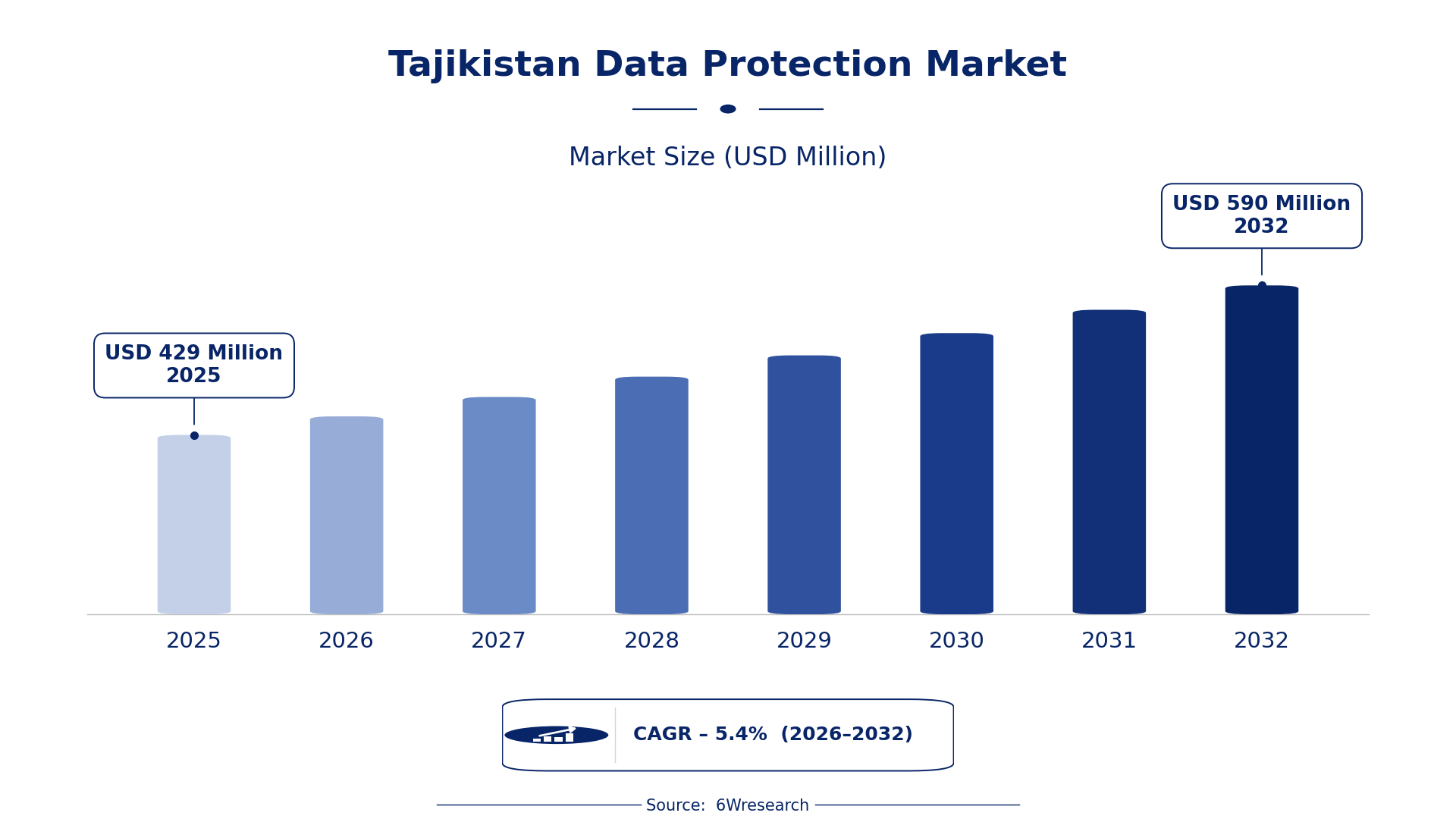
The Tajikistan Data Protection Market was estimated at USD 429 Million in 2025 and is projected to reach USD 590 Million by 2032, growing at a CAGR of 5.4% from 2026 to 2032.
Tajikistan Data Protection Market Synopsis
As Tajikistan advances its digital economy, the demand for data protection solutions is intensifying. Organizations are increasingly prioritizing cybersecurity measures to safeguard their sensitive information against growing threats.
The adoption of the Law on Personal Data Protection in 2021 signifies a shift towards stricter regulatory compliance. This has prompted businesses to invest in technologies that ensure data integrity and protection, fueling the market’s growth.
Tajikistan Data Protection Market Year-wise Growth Rate and Key Drivers
This graph illustrates the annual growth rates of the Tajikistan Data Protection Market from 2021 to 2032, highlighting a steady upward trajectory and projected expansion over the forecast period.
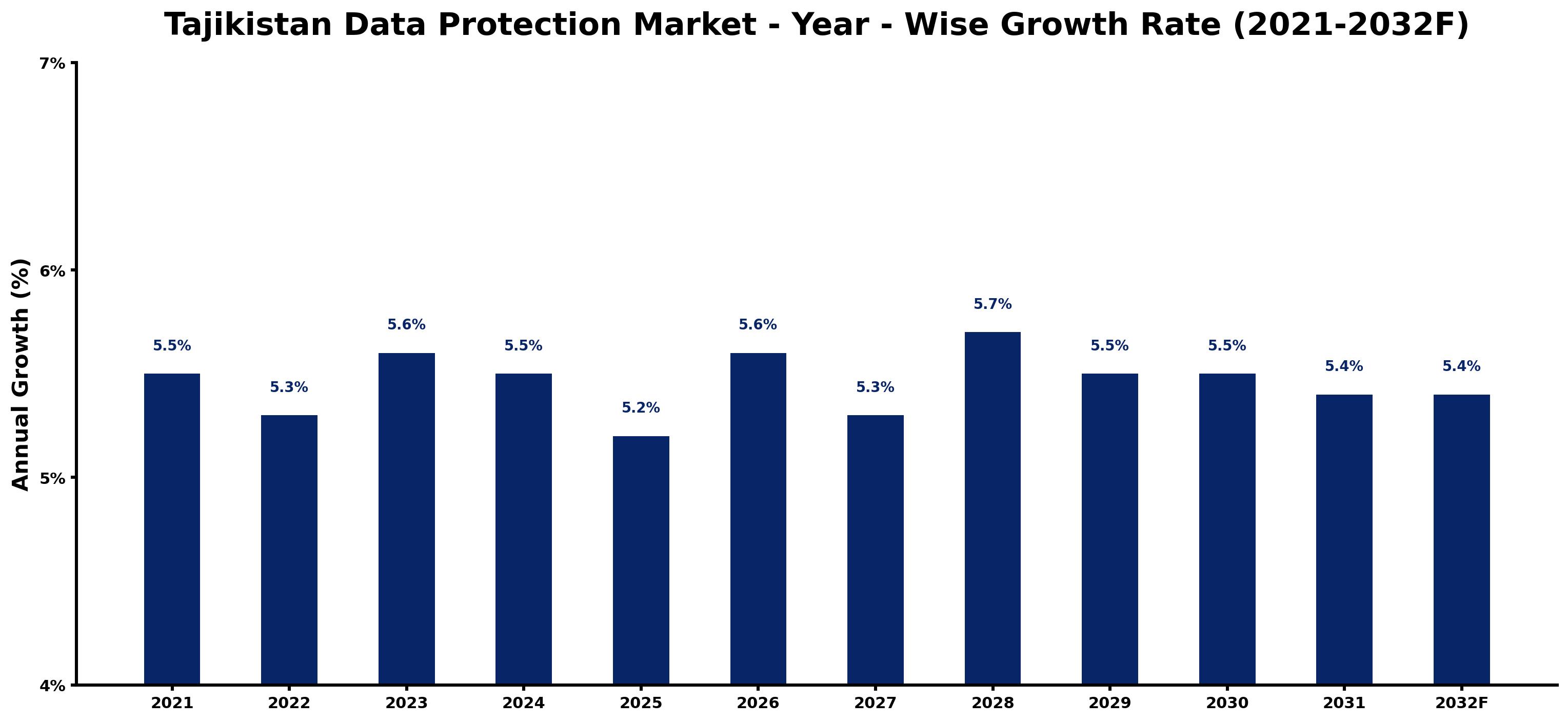
The table below presents the year‑wise growth rates along with the key drivers influencing the market
| Year | Growth Rate | Major Drivers |
| 2021 | 5.5% | Implementation of National Data Protection Strategy by government |
| 2022 | 5.3% | Increased reliance on e-governance requiring data security measures |
| 2023 | 5.6% | Growing digital business models necessitating stronger data protection |
| 2024 | 5.5% | Adoption of GDPR-inspired regulations boosting compliance initiatives |
| 2025 | 5.2% | Rise in local cybersecurity startups enhancing data integrity |
| 2026 | 5.6% | International partnerships improving data protection training resources |
| 2027 | 5.3% | Surge in online banking services requiring robust data safeguards |
| 2028 | 5.7% | Government support for technology hubs focusing on data privacy |
| 2029 | 5.5% | Public awareness campaigns driving demand for data security services |
| 2030 | 5.5% | Emergence of fintech solutions increasing data protection needs |
| 2031 | 5.4% | Legislative updates mandating stricter data handling practices |
| 2032 | 5.4% | Growth in personal data collection among local businesses |
Note: Market size estimations and growth projections presented in this report are based on 6Wresearch's proprietary forecasting methodology, utilizing the latest available industry data, government publications, and primary research inputs.
Tajikistan Data Protection Market Key Takeaways
Below are some of the specific key takeaways from the market, including:
- Increased digitalization is driving demand for comprehensive data protection solutions.
- The introduction of national regulations is leading organizations to reassess their cybersecurity measures.
- Data breaches are escalating, raising the urgency for effective data security protocols.
- Growing awareness of data privacy among individuals and businesses is shaping market dynamics.
- Investment in advanced encryption and incident response technologies is on the rise.
Evaluation of Restraints in Tajikistan Data Protection Market
Several factors are restraining the progress of the Tajikistan Data Protection Market. A lack of comprehensive and clearly defined data protection legislation leads to uncertainty among businesses regarding compliance requirements. This regulatory ambiguity leaves many organizations in a precarious position, unsure of how to effectively protect personal data. Limited public awareness regarding data privacy rights further complicates matters, as both individuals and businesses struggle to implement necessary protective measures. The absence of a centralized authority responsible for enforcing data protection regulations creates gaps in oversight, making it difficult for stakeholders to navigate their obligations.
Tajikistan Data Protection Market Trends
The market is experiencing several notable trends. The growing prevalence of remote work has heightened the need for secure data management solutions, pushing organizations to rethink their cybersecurity strategies. on top of that, increased cloud adoption is creating demand for services that ensure data security across platforms. Training programs focused on data protection and compliance are also on the rise, reflecting a commitment to elevating industry standards. Innovative approaches to data encryption and monitoring are becoming vital in an era where cyber threats evolve rapidly.
Tajikistan Data Protection Market Opportunities
Investment opportunities in this market are promising. Consulting services aimed at helping businesses navigate regulatory challenges are in demand, particularly as the government outlines clearer data protection guidelines. on top of that, sectors such as healthcare and finance, which handle sensitive information, are ripe for targeted data protection solutions. Collaboration between public and private sectors could lead to enhanced infrastructure and technologies that boost data security across the board. As organizations seek to comply with international standards, there is a significant market for compliance technology solutions.
Government Initiatives in the Tajikistan Data Protection Market
Government action is crucial in shaping the future of the Tajikistan Data Protection Market. While there is a lack of specific legislation, the constitution provides a foundation for privacy rights. Recent moves to enhance data protection are indicative of a broader commitment to improving cybersecurity across the nation. This attention to regulation will be vital for building trust among businesses and consumers alike.
- A national initiative launched in late 2021 aimed at establishing basic data privacy regulations to protect personal data.
- Current efforts are underway to improve the technological infrastructure, providing a more secure environment for digital transactions.
- A proposed regulatory framework, expected to be introduced by 2026, aims to provide clearer guidelines for data protection compliance.
- Ongoing training programs for public sector employees focus on data handling and privacy rights, enhancing the overall awareness.
- Plans for a centralized data protection authority are in discussion, targeting the establishment by 2028 to enforce compliance and oversight.
Future Insights of the Tajikistan Data Protection Market
Looking ahead to 2026-2032, the Tajikistan Data Protection Market is set to expand significantly. As digital transactions and online services continue to proliferate, the demand for secure data management will increase proportionately. Organizations will likely prioritize compliance with both local and international standards, creating an environment ripe for innovation in data protection solutions. Enhanced public awareness of data security and privacy will further drive investments in the sector, positioning it for sustained growth.
Tajikistan Data Protection Market Latest Developments
Recent months have seen heightened activity in the Tajikistan Data Protection Market, driven by both regulatory changes and evolving market needs. Businesses are increasingly focused on strengthening their cybersecurity measures in response to escalating cyber threats. The market's maturation is evident as companies adapt to the regulatory environment and invest in data protection technologies.
- A major technology vendor launched a new encryption solution in early 2025, targeting businesses looking to enhance data security.
- In mid-2025, a public-private partnership was formed to provide training sessions aimed at improving data privacy awareness among small and medium-sized enterprises.
- An initiative to modernize data management practices began in late 2024 and is currently underway, aimed at optimizing data handling processes in local firms.
- A cybersecurity awareness campaign was completed in Q1 2025, successfully educating over 500 businesses on best practices for data protection.
- Upcoming legislation is anticipated in late 2026, which will establish clearer data protection requirements for organizations operating in Tajikistan.
Tajikistan Data Protection Market - Key Attractiveness of the Report
- 10 Years of Market Numbers
- Historical Data Starting from 2022 to 2025
- Base Year: 2025
- Forecast Data until 2032
- Key Performance Indicators Impacting the Market
- Major Upcoming Developments and Projects
Key Highlights of the Report:
- Tajikistan Data Protection Market Outlook
- Market Size of Tajikistan Data Protection Market, 2025
- Forecast of Tajikistan Data Protection Market, 2032
- Historical Data and Forecast of Tajikistan Data Protection Revenues & Volume for the Period 2022-2032F
- Tajikistan Data Protection Market Trend Evolution
- Tajikistan Data Protection Market Drivers and Challenges
- Tajikistan Data Protection Price Trends
- Tajikistan Data Protection Porter's Five Forces
- Tajikistan Data Protection Industry Life Cycle
- Historical Data and Forecast of Tajikistan Data Protection Market Revenues & Volume By Component for the Period 2022-2032F
- Historical Data and Forecast of Tajikistan Data Protection Market Revenues & Volume By Solutions for the Period 2022-2032F
- Historical Data and Forecast of Tajikistan Data Protection Market Revenues & Volume By Services (Professional Services and Managed Services) for the Period 2022-2032F
- Historical Data and Forecast of Tajikistan Data Protection Market Revenues & Volume By Deployment Mode for the Period 2022-2032F
- Historical Data and Forecast of Tajikistan Data Protection Market Revenues & Volume By On-premises for the Period 2022-2032F
- Historical Data and Forecast of Tajikistan Data Protection Market Revenues & Volume By Cloud for the Period 2022-2032F
- Historical Data and Forecast of Tajikistan Data Protection Market Revenues & Volume By Industry Vertical for the Period 2022-2032F
- Historical Data and Forecast of Tajikistan Data Protection Market Revenues & Volume By Government and defense for the Period 2022-2032F
- Historical Data and Forecast of Tajikistan Data Protection Market Revenues & Volume By Banking, Financial Services, and Insurance (BFSI) for the Period 2022-2032F
- Historical Data and Forecast of Tajikistan Data Protection Market Revenues & Volume By Healthcare for the Period 2022-2032F
- Historical Data and Forecast of Tajikistan Data Protection Market Revenues & Volume By IT and telecom for the Period 2022-2032F
- Historical Data and Forecast of Tajikistan Data Protection Market Revenues & Volume By Consumer goods and retail for the Period 2022-2032F
- Historical Data and Forecast of Tajikistan Data Protection Market Revenues & Volume By Education for the Period 2022-2032F
- Historical Data and Forecast of Tajikistan Data Protection Market Revenues & Volume By Media and entertainment for the Period 2022-2032F
- Historical Data and Forecast of Tajikistan Data Protection Market Revenues & Volume By Organization Size Large Enterprises for the Period 2022-2032F
- Historical Data and Forecast of Tajikistan Data Protection Market Revenues & Volume By SMEs for the Period 2022-2032F
- Historical Data and Forecast of Tajikistan Data Protection Market Revenues & Volume By Large Enterprises for the Period 2022-2032F
- Tajikistan Data Protection Import Export Trade Statistics
- Market Opportunity Assessment By Component
- Market Opportunity Assessment By Deployment Mode
- Market Opportunity Assessment By Industry Vertical
- Market Opportunity Assessment By Organization Size Large Enterprises
- Tajikistan Data Protection Top Companies Market Share
- Tajikistan Data Protection Competitive Benchmarking By Technical and Operational Parameters
- Tajikistan Data Protection Company Profiles
- Tajikistan Data Protection Key Strategic Recommendations






































