Tajikistan Double Glazing Glass Market Size, Share & Growth Rate
The Tajikistan Double Glazing Glass Market was estimated at USD 194 Million in 2025 and is projected to reach USD 266 Million by 2032, growing at a CAGR of 4.6% from 2026 to 2032. This growth is fueled by increasing urbanization, a significant rise in construction activities, and a shift towards energy-efficient building practices. The harsh climatic conditions prevalent in Tajikistan further drive the demand for products that offer improved insulation and energy savings, making double glazing an attractive choice for both residential and commercial projects.
Tajikistan Double Glazing Glass Market Year-wise Growth Rate and Key Drivers
This graph highlights how the Tajikistan Double Glazing Glass Market has steadily grown over the years, supported by major growth factors.
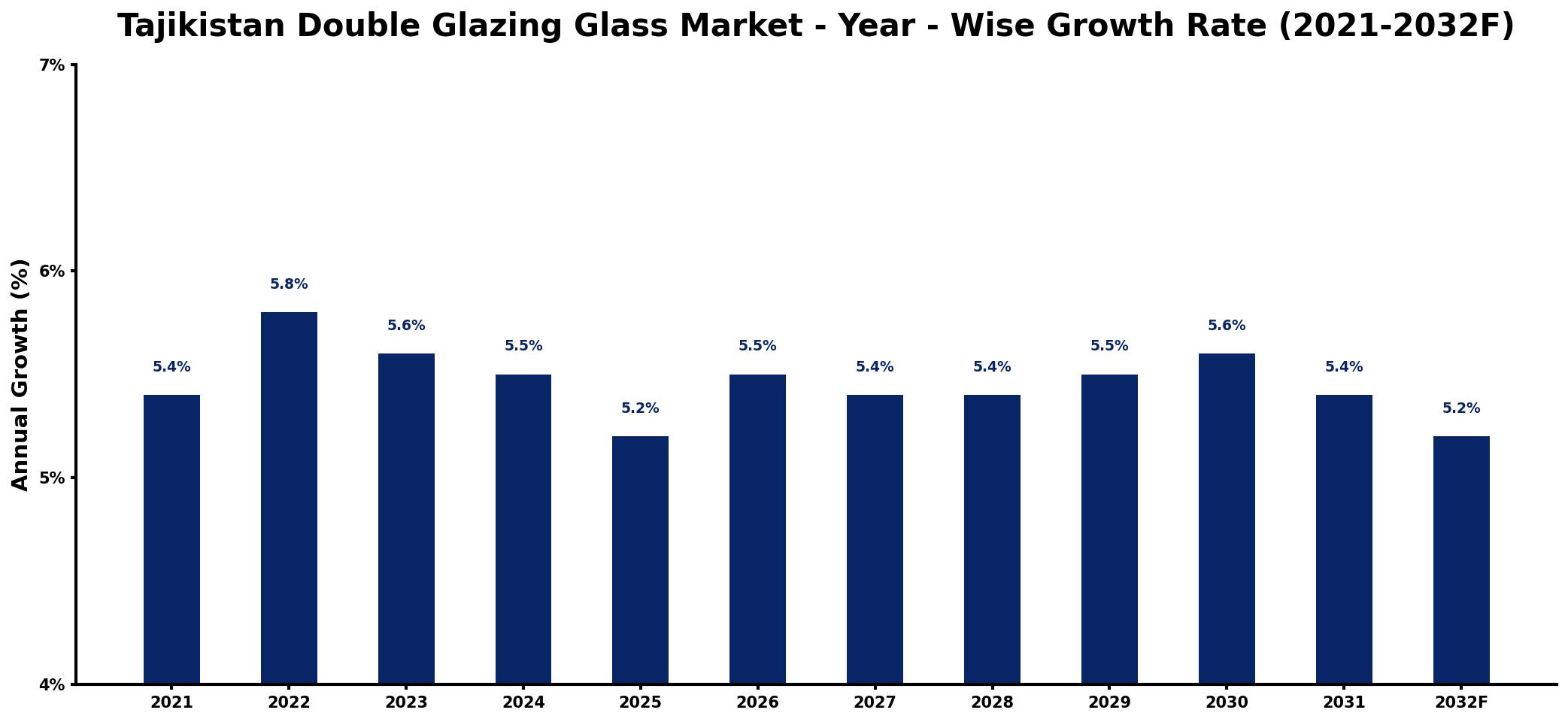
The table below presents the year‑wise growth rates along with the key drivers influencing the market
| Year | Growth Rate | Major Drivers |
| 2021 | 5.4% | Rising construction sector investments |
| 2022 | 5.8% | Increased residential renovation projects |
| 2023 | 5.6% | Growing awareness of energy efficiency |
| 2024 | 5.5% | Expansion of real estate developments |
| 2025 | 5.2% | Higher urban population density |
| 2026 | 5.5% | Emergence of green building regulations |
| 2027 | 5.4% | Technological advancements in manufacturing |
| 2028 | 5.4% | Increased demand for insulation solutions |
| 2029 | 5.5% | Rise in commercial construction activities |
| 2030 | 5.6% | Growing preference for premium materials |
| 2031 | 5.4% | Strengthened infrastructure development initiatives |
| 2032 | 5.2% | Increased focus on sustainable architecture |
Note: Market size estimations and growth projections presented in this report are based on 6Wresearch's proprietary forecasting methodology, utilizing the latest available industry data, government publications, and primary research inputs.
Tajikistan Double Glazing Glass Market Synopsis
A notable trend in the Tajikistan Double Glazing Glass Market is the increasing focus on sustainable construction materials, which aligns with global best practices. Local manufacturers are leveraging this demand while international companies are also entering the market, providing a diverse range of products that cater to various consumer needs.
Moreover, there is a growing awareness among consumers regarding the benefits of double glazing, including enhanced thermal performance and noise reduction. This educational shift is essential for driving market penetration, especially as disposable incomes rise, allowing more consumers to invest in energy-efficient home improvements.
Tajikistan Double Glazing Glass Market Key Takeaways
- The market is characterized by steady growth driven by urbanization and energy efficiency demands.
- Government initiatives are actively promoting the adoption of double glazing glass for new construction projects.
- Increased consumer disposable income is enabling investments in modern building materials.
- The presence of both local and international manufacturers creates a competitive landscape.
- Awareness campaigns about energy efficiency benefits are crucial for market growth.
Evaluation of Restraints in Tajikistan Double Glazing Glass Market
While the Tajikistan Double Glazing Glass Market shows promise, it is not without its challenges. A significant hurdle is the limited understanding among consumers regarding the long-term benefits of double glazing, which can deter adoption. Additionally, the high initial costs associated with double glazing installations may pose a barrier for price-sensitive customers. The scarcity of skilled labor for installation and maintenance further complicates market expansion, hindering rapid growth in certain areas. Addressing these challenges through strategic marketing and educational initiatives will be vital for market players.
Tajikistan Double Glazing Glass Market Trends
The trend towards urbanization in Tajikistan is leading to a surge in infrastructure development, which significantly enhances the demand for double glazing glass. Moreover, rising consumer awareness about energy efficiency is prompting more homeowners and builders to opt for this innovative solution. The introduction of energy efficiency standards by the government is accelerating this shift, pushing both residential and commercial sectors to adopt double glazing as a staple in modern construction.
Tajikistan Double Glazing Glass Market Opportunities
The Tajikistan Double Glazing Glass Market is ripe for investment, particularly as the construction and real estate sectors continue to expand. Companies that can provide high-quality double glazing products and solutions are well-positioned to capture market share. Furthermore, forming strategic partnerships with local construction firms can facilitate access to projects and streamline the supply chain, thereby enhancing competitive advantage. Innovating in technology and product durability will also offer additional growth pathways for market participants.
Government Initiatives in the Tajikistan Double Glazing Glass Market
The Tajikistan government has made significant strides in promoting energy efficiency through various policy measures. This includes offering incentives such as tax breaks and subsidies for investments in energy-efficient double glazing products. Regulations mandating the use of double glazing in new constructions aim to reduce overall energy consumption and environmental impact. Additionally, public awareness campaigns are being implemented to educate consumers about the advantages of using double glazing, thereby supporting market growth.
Future Insights of the Tajikistan Double Glazing Glass Market
Looking ahead to 2026-2032, the Tajikistan Double Glazing Glass Market is set to continue its upward trajectory. With urbanization driving demand for modern construction techniques, double glazing is likely to become a standard feature in new buildings. Increased government support for sustainable building practices will further bolster this trend. As consumers become more cognizant of the benefits—ranging from energy savings to enhanced comfort—the market will likely witness robust growth, offering numerous opportunities for both local and international businesses.
Tajikistan Double Glazing Glass Market Latest Developments (2025 - 2026)
Recent developments in the Tajikistan Double Glazing Glass Market indicate a shift towards higher-quality manufacturing standards and innovative product offerings. Companies are increasingly focusing on technology advancements to enhance the thermal and acoustic performance of their products. Furthermore, collaborations between local manufacturers and international firms are emerging, allowing for knowledge exchange and better product accessibility within the market. Additionally, government initiatives continue to play a crucial role in promoting energy-efficient building practices, further catalyzing market growth.
Tajikistan Double Glazing Glass Market - Key Attractiveness of the Report
- 10 Years of Market Numbers
- Historical Data Starting from 2022 to 2025
- Base Year: 2025
- Forecast Data until 2032
- Key Performance Indicators Impacting the Market
- Major Upcoming Developments and Projects
Key Highlights of the Report:
- Tajikistan Double Glazing Glass Market Outlook
- Market Size of Tajikistan Double Glazing Glass Market, 2025
- Forecast of Tajikistan Double Glazing Glass Market, 2032
- Historical Data and Forecast of Tajikistan Double Glazing Glass Revenues & Volume for the Period 2022-2032F
- Tajikistan Double Glazing Glass Market Trend Evolution
- Tajikistan Double Glazing Glass Market Drivers and Challenges
- Tajikistan Double Glazing Glass Price Trends
- Tajikistan Double Glazing Glass Porter's Five Forces
- Tajikistan Double Glazing Glass Industry Life Cycle
- Historical Data and Forecast of Tajikistan Double Glazing Glass Market Revenues & Volume By Material for the Period 2022-2032F
- Historical Data and Forecast of Tajikistan Double Glazing Glass Market Revenues & Volume By Glass for the Period 2022-2032F
- Historical Data and Forecast of Tajikistan Double Glazing Glass Market Revenues & Volume By Frame and Spacer for the Period 2022-2032F
- Historical Data and Forecast of Tajikistan Double Glazing Glass Market Revenues & Volume By Sealant for the Period 2022-2032F
- Historical Data and Forecast of Tajikistan Double Glazing Glass Market Revenues & Volume By Others for the Period 2022-2032F
- Historical Data and Forecast of Tajikistan Double Glazing Glass Market Revenues & Volume By Thickness for the Period 2022-2032F
- Historical Data and Forecast of Tajikistan Double Glazing Glass Market Revenues & Volume By Less than 10mm for the Period 2022-2032F
- Historical Data and Forecast of Tajikistan Double Glazing Glass Market Revenues & Volume By 10mm to 12mm for the Period 2022-2032F
- Historical Data and Forecast of Tajikistan Double Glazing Glass Market Revenues & Volume By More than 12mm for the Period 2022-2032F
- Historical Data and Forecast of Tajikistan Double Glazing Glass Market Revenues & Volume By Application for the Period 2022-2032F
- Historical Data and Forecast of Tajikistan Double Glazing Glass Market Revenues & Volume By Window and Door for the Period 2022-2032F
- Historical Data and Forecast of Tajikistan Double Glazing Glass Market Revenues & Volume By Faade for the Period 2022-2032F
- Historical Data and Forecast of Tajikistan Double Glazing Glass Market Revenues & Volume By Applications for the Period 2022-2032F
- Tajikistan Double Glazing Glass Import Export Trade Statistics
- Market Opportunity Assessment By Material
- Market Opportunity Assessment By Thickness
- Market Opportunity Assessment By Application
- Tajikistan Double Glazing Glass Top Companies Market Share
- Tajikistan Double Glazing Glass Competitive Benchmarking By Technical and Operational Parameters
- Tajikistan Double Glazing Glass Company Profiles
- Tajikistan Double Glazing Glass Key Strategic Recommendations






































