Tajikistan Dried Mushroom Market Size, Share & Growth Rate
The Tajikistan Dried Mushroom Market was estimated at USD 175 Million in 2025 and is projected to reach USD 190 Million by 2032, growing at a CAGR of 1.2% from 2026 to 2032. This growth trajectory is primarily fueled by an increasing appreciation for the health benefits associated with mushrooms, coupled with a growing trend towards plant-based diets and organic products. Additionally, the convenient nature and extended shelf life of dried mushrooms make them an appealing choice for busy consumers.
Tajikistan Dried Mushroom Market Year-wise Growth Rate and Key Drivers
This graph highlights how the Tajikistan Dried Mushroom Market has steadily grown over the years, supported by major growth factors.
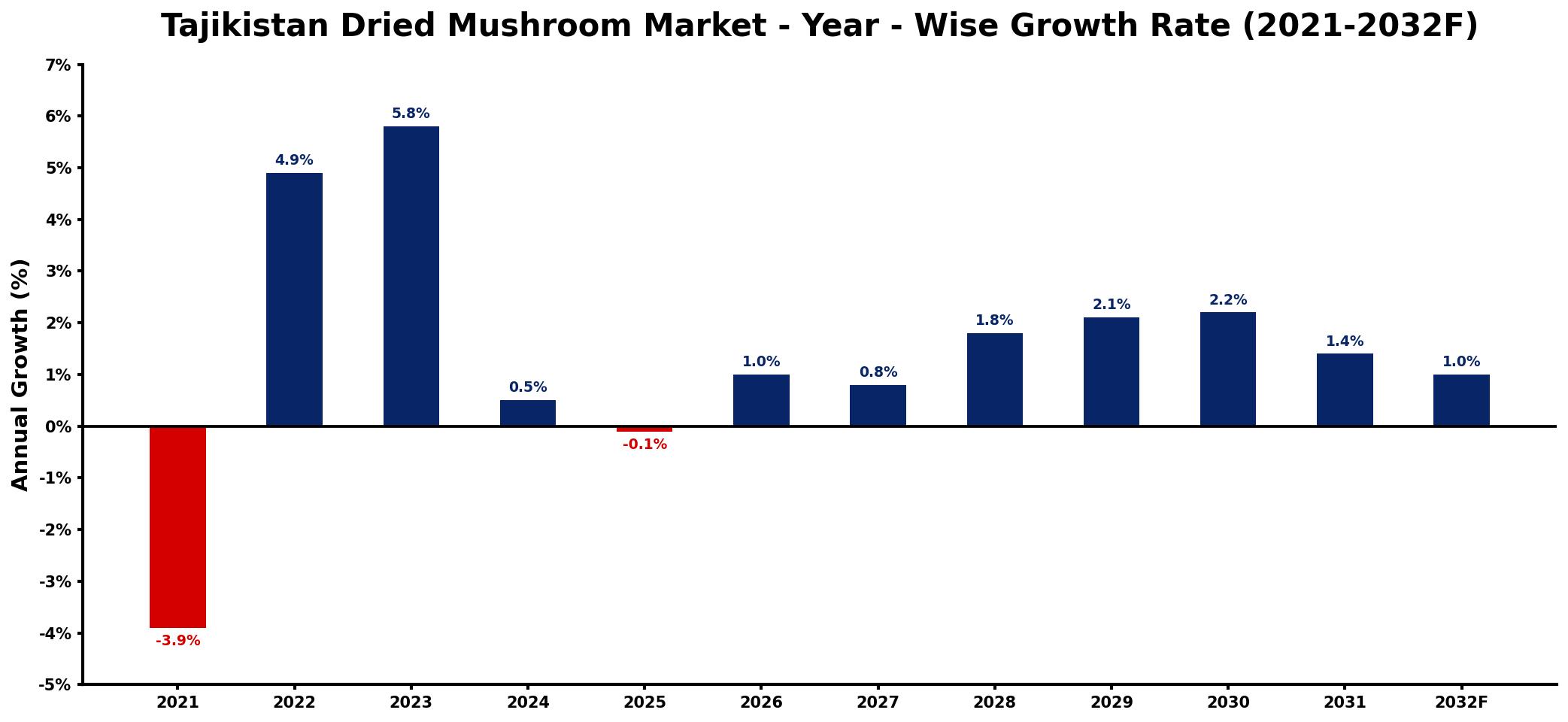
The table below presents the year‑wise growth rates along with the key drivers influencing the market
| Year | Growth Rate | Major Drivers |
| 2021 | -3.9% | Decreased consumer spending patterns |
| 2022 | 4.9% | Rise in health food trends |
| 2023 | 5.8% | Expansion of export markets |
| 2024 | 0.5% | Increased local production capacity |
| 2025 | -0.1% | Reduced investment in agriculture |
| 2026 | 1.0% | Growth in organic food sector |
| 2027 | 0.8% | Higher demand from restaurants |
| 2028 | 1.8% | Emergence of new suppliers |
| 2029 | 2.1% | Strengthening online retail channels |
| 2030 | 2.2% | Increased awareness of nutrition |
| 2031 | 1.4% | Growing popularity of vegetarian diets |
| 2032 | 1.0% | growing regional consumption patterns |
Note: Market size estimations and growth projections presented in this report are based on 6Wresearch's proprietary forecasting methodology, utilizing the latest available industry data, government publications, and primary research inputs.
Tajikistan Dried Mushroom Market Synopsis
In recent years, the Tajikistan dried mushroom market has gained momentum, driven by consumer interest in natural and nutritious foods. This trend is supported by local producers who emphasize quality and sustainability in their offerings. However, as the market continues to expand, there are opportunities and challenges that need to be navigated.
Looking ahead, the market is well-positioned for growth, particularly as urbanization increases and consumers become more health-conscious. The potential for exports to regional and international markets also enhances the future outlook, although infrastructure and quality control improvements are needed to fully capitalize on these opportunities.
Tajikistan Dried Mushroom Market Key Takeaways
- The market is primarily driven by increasing consumer awareness of the nutritional and health benefits of dried mushrooms.
- Small-scale producers dominate the market, focusing on local wild mushroom varieties with unique flavors.
- There is a strong trend towards organic and sustainably sourced food products.
- Investment in infrastructure and processing capabilities is essential for future market expansion.
- Export potential is significant, especially given Tajikistans strategic location along the Silk Road.
Evaluation of Restraints in Tajikistan Dried Mushroom Market
Despite its promising growth, the Tajikistan dried mushroom market faces several real limitations. Key among these is the lack of adequate processing and storage infrastructure, which often leads to inconsistent product quality. Furthermore, many consumers remain unaware of the extensive nutritional benefits that dried mushrooms can offer, limiting demand. The market also grapples with stringent regulations for international exports, making it harder for local producers to tap into lucrative markets. Weather fluctuations can further complicate the supply chain, adding to price volatility and supply challenges.
Tajikistan Dried Mushroom Market Trends
Current trends indicate a significant shift towards organic and natural food products among consumers, positioning dried mushrooms as a sought-after ingredient in health-conscious diets. Additionally, the incorporation of dried mushrooms into gourmet cuisine and health supplements is becoming increasingly popular. As urban lifestyles evolve, the convenience and versatility of dried mushrooms are driving their consumption in various culinary applications.
Tajikistan Dried Mushroom Market Opportunities
There are considerable investment opportunities in the Tajikistan dried mushroom market, particularly for those interested in establishing cultivation and processing facilities. As global demand for organic products surges, Tajikistan's rich biodiversity and favorable climate provide a strong foundation for sustainable mushroom cultivation. Moreover, improving distribution networks and enhancing export capabilities can help local producers reach broader markets, thereby maximizing their growth potential.
Government Initiatives in the Tajikistan Dried Mushroom Market
The Tajik government is actively supporting the dried mushroom sector through various initiatives aimed at bolstering local production. These initiatives include financial assistance to farmers, efforts to promote sustainable harvesting practices, and investments in research and development to enhance product quality. Additionally, the government is facilitating market access through trade agreements and participation in international exhibitions, positioning Tajikistan as a competitive player in the global dried mushroom market.
Future Insights of the Tajikistan Dried Mushroom Market
Looking forward to 2026-2032, the Tajikistan dried mushroom market is set for steady growth, fueled by heightened consumer interest in health and nutrition. The proliferation of plant-based diets and gourmet culinary practices will likely further amplify demand. However, potential challenges, such as seasonal dependence and environmental factors, must be addressed to ensure sustained market momentum. With strategic investments and improvements in infrastructure, the market could significantly enhance its competitiveness both locally and internationally.
Tajikistan Dried Mushroom Market Latest Developments (2025 - 2026)
In the past year, the Tajikistan dried mushroom market has seen increased activity as producers invest in modernizing their processing facilities. This modernization has been accompanied by efforts to educate consumers about the nutritional benefits of dried mushrooms, fostering greater awareness and demand. Moreover, local producers have begun exploring partnerships with regional distributors to enhance their market reach and boost export capabilities.
Tajikistan Dried Mushroom Market - Key Attractiveness of the Report
- 10 Years of Market Numbers
- Historical Data Starting from 2022 to 2025
- Base Year: 2025
- Forecast Data until 2032
- Key Performance Indicators Impacting the Market
- Major Upcoming Developments and Projects
Key Highlights of the Report:
- Tajikistan Dried Mushroom Market Outlook
- Market Size of Tajikistan Dried Mushroom Market, 2025
- Forecast of Tajikistan Dried Mushroom Market, 2032
- Historical Data and Forecast of Tajikistan Dried Mushroom Revenues & Volume for the Period 2022-2032F
- Tajikistan Dried Mushroom Market Trend Evolution
- Tajikistan Dried Mushroom Market Drivers and Challenges
- Tajikistan Dried Mushroom Price Trends
- Tajikistan Dried Mushroom Porter's Five Forces
- Tajikistan Dried Mushroom Industry Life Cycle
- Historical Data and Forecast of Tajikistan Dried Mushroom Market Revenues & Volume By Product Type for the Period 2022-2032F
- Historical Data and Forecast of Tajikistan Dried Mushroom Market Revenues & Volume By Oyster Mushrooms for the Period 2022-2032F
- Historical Data and Forecast of Tajikistan Dried Mushroom Market Revenues & Volume By Shiitake Mushrooms for the Period 2022-2032F
- Historical Data and Forecast of Tajikistan Dried Mushroom Market Revenues & Volume By Button Mushrooms for the Period 2022-2032F
- Historical Data and Forecast of Tajikistan Dried Mushroom Market Revenues & Volume By Other Mushrooms for the Period 2022-2032F
- Historical Data and Forecast of Tajikistan Dried Mushroom Market Revenues & Volume By Packaging Type for the Period 2022-2032F
- Historical Data and Forecast of Tajikistan Dried Mushroom Market Revenues & Volume By Cartons for the Period 2022-2032F
- Historical Data and Forecast of Tajikistan Dried Mushroom Market Revenues & Volume By Polyethylene Bags for the Period 2022-2032F
- Historical Data and Forecast of Tajikistan Dried Mushroom Market Revenues & Volume By Boxes for the Period 2022-2032F
- Historical Data and Forecast of Tajikistan Dried Mushroom Market Revenues & Volume By End User for the Period 2022-2032F
- Historical Data and Forecast of Tajikistan Dried Mushroom Market Revenues & Volume By Consumers for the Period 2022-2032F
- Historical Data and Forecast of Tajikistan Dried Mushroom Market Revenues & Volume By Food Services for the Period 2022-2032F
- Historical Data and Forecast of Tajikistan Dried Mushroom Market Revenues & Volume By Food Manufacturers for the Period 2022-2032F
- Historical Data and Forecast of Tajikistan Dried Mushroom Market Revenues & Volume By Nutraceutical Manufacturers for the Period 2022-2032F
- Historical Data and Forecast of Tajikistan Dried Mushroom Market Revenues & Volume By Cosmetics Manufacturers for the Period 2022-2032F
- Historical Data and Forecast of Tajikistan Dried Mushroom Market Revenues & Volume By Distribution Channel for the Period 2022-2032F
- Historical Data and Forecast of Tajikistan Dried Mushroom Market Revenues & Volume By Convenient Stores for the Period 2022-2032F
- Historical Data and Forecast of Tajikistan Dried Mushroom Market Revenues & Volume By Hypermarkets/supermarket for the Period 2022-2032F
- Historical Data and Forecast of Tajikistan Dried Mushroom Market Revenues & Volume By Individual Stores for the Period 2022-2032F
- Historical Data and Forecast of Tajikistan Dried Mushroom Market Revenues & Volume By E-Commerce for the Period 2022-2032F
- Tajikistan Dried Mushroom Import Export Trade Statistics
- Market Opportunity Assessment By Product Type
- Market Opportunity Assessment By Packaging Type
- Market Opportunity Assessment By End User
- Market Opportunity Assessment By Distribution Channel
- Tajikistan Dried Mushroom Top Companies Market Share
- Tajikistan Dried Mushroom Competitive Benchmarking By Technical and Operational Parameters
- Tajikistan Dried Mushroom Company Profiles
- Tajikistan Dried Mushroom Key Strategic Recommendations






































