Tajikistan Ethyl Alcohol Market Size Growth Rate
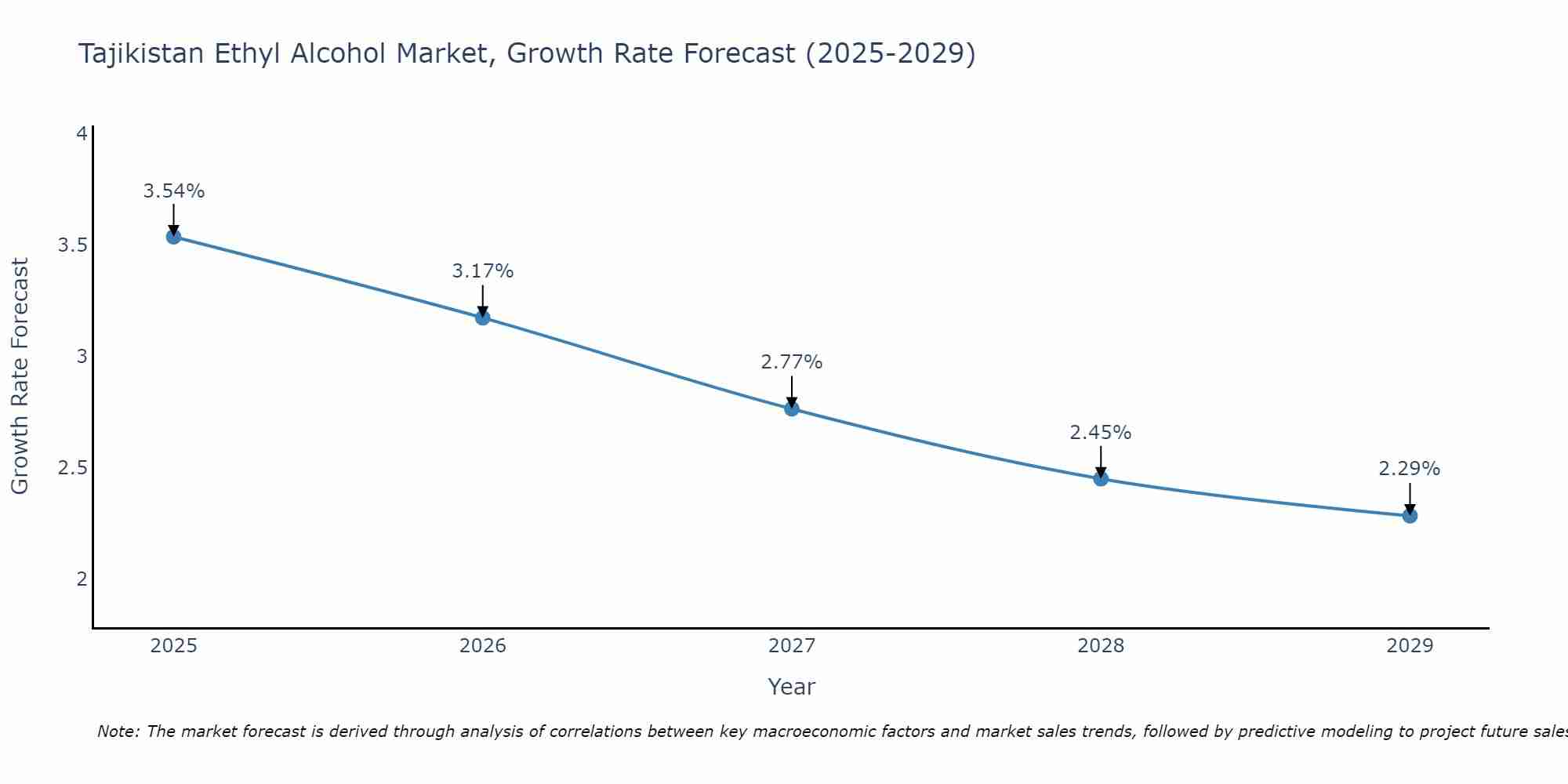
The Tajikistan Ethyl Alcohol Market may undergo a gradual slowdown in growth rates between 2025 and 2029. Although the growth rate starts strong at 3.54% in 2025, it steadily loses momentum, ending at 2.29% by 2029.
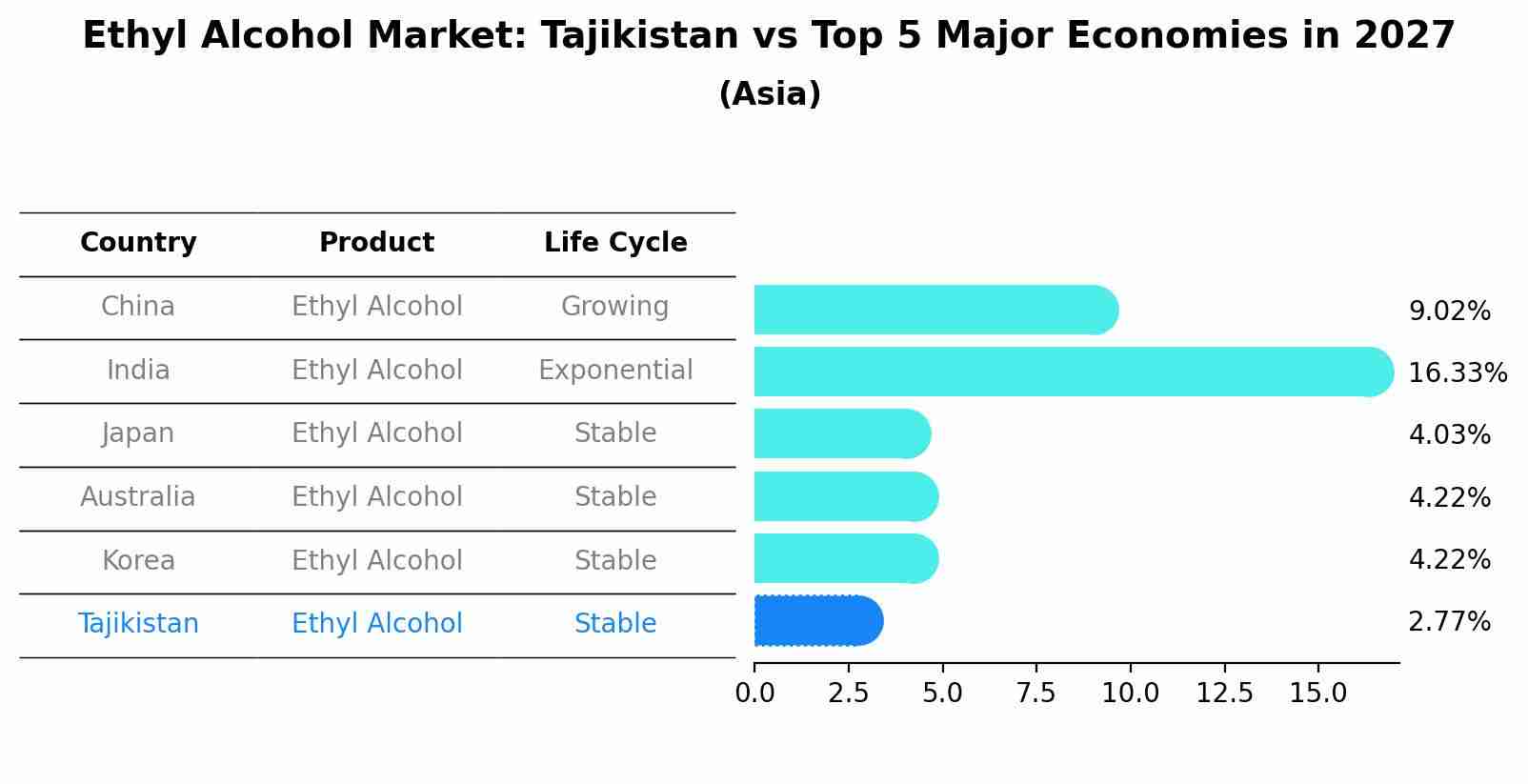
Ethyl Alcohol Market: Tajikistan vs Top 5 Major Economies in 2027 (Asia)
Tajikistan's Ethyl Alcohol market is anticipated to experience a stable growth rate of 2.77% by 2027, reflecting trends observed in the largest economy China, followed by India, Japan, Australia and South Korea.
Tajikistan Ethyl Alcohol Market Overview
The Ethyl Alcohol market in Tajikistan is primarily driven by the country`s growing beverage industry, increasing demand for industrial alcohol for various applications, and a rising trend of using alcohol for medicinal purposes. The market is witnessing steady growth due to the expansion of local distilleries and the import of alcohol products. The government`s regulations and taxation policies play a crucial role in shaping the market dynamics. Key players in the Tajikistan Ethyl Alcohol market include local distilleries, international alcohol producers, and distributors. The market is expected to continue growing in the coming years, driven by evolving consumer preferences and the increasing popularity of alcoholic beverages in the region.
Tajikistan Ethyl Alcohol Market Trends
Currently, the Tajikistan Ethyl Alcohol Market is experiencing growth due to increasing demand for alcoholic beverages in the country. The market is also benefitting from the rising popularity of craft and premium spirits among consumers. Additionally, the government`s efforts to promote local production and reduce imports are driving the growth of the market. There is a noticeable shift towards healthier and more sustainable alcoholic products, leading to a growing demand for organic and natural ethyl alcohol options. The market is also witnessing a trend towards innovative packaging and branding strategies to attract consumers. Overall, the Tajikistan Ethyl Alcohol Market is expected to continue its growth trajectory with a focus on quality, sustainability, and innovation.
Tajikistan Ethyl Alcohol Market Challenges
In the Tajikistan Ethyl Alcohol Market, challenges include strict government regulations on alcohol production and distribution, high taxes on alcohol products, competition from illicit alcohol trade, limited access to modern production techniques and technologies, and fluctuations in raw material prices. Additionally, the market faces issues related to limited consumer awareness about the quality and safety standards of ethyl alcohol products, as well as the impact of cultural and religious beliefs on alcohol consumption patterns. These challenges create barriers to the growth and development of the ethyl alcohol market in Tajikistan, requiring industry players to navigate a complex regulatory environment while also striving to meet consumer demands for high-quality and affordable products.
Tajikistan Ethyl Alcohol Market Investment Opportunities
Investment opportunities in the Tajikistan Ethyl Alcohol Market include the growing demand for alcoholic beverages, particularly vodka and other spirits, driven by a young and increasingly affluent population. The country`s strategic location along the Silk Road provides access to key markets in Central Asia, offering opportunities for export growth. Additionally, government initiatives to attract foreign investment and streamline business regulations create a favorable environment for investors. With the potential for increased production capacity and modernization of facilities, there is room for expansion and innovation in the ethyl alcohol market in Tajikistan. Investors can also explore opportunities in sustainable production practices and value-added products to stay competitive in the market.
Tajikistan Ethyl Alcohol Market Government Policy
Tajikistan`s government has implemented various policies related to the ethyl alcohol market to regulate production, distribution, and consumption. The country has imposed restrictions on the sale and advertising of alcohol, with a minimum legal drinking age of 18 years old. Additionally, the government has introduced measures to combat illicit alcohol production and smuggling to ensure the safety and quality of alcohol products in the market. Furthermore, there are regulations in place regarding licensing requirements for alcohol producers and distributors to monitor and control the industry. Overall, Tajikistan`s government policies aim to promote responsible alcohol consumption, protect public health, and prevent illegal activities within the ethyl alcohol market.
Tajikistan Ethyl Alcohol Market Future Outlook
The future outlook for the Tajikistan Ethyl Alcohol Market appears promising as the demand for ethyl alcohol is expected to grow steadily. Factors such as the increasing use of alcohol in various industries including pharmaceuticals, cosmetics, and food & beverage, coupled with the rising disposable income of the population, are driving this growth. Additionally, the government`s initiatives to promote the production and export of ethyl alcohol are creating opportunities for market expansion. However, challenges such as regulatory restrictions and competition from imported products may pose some hurdles. Overall, with the right strategies in place to address these challenges and capitalize on the growing demand, the Tajikistan Ethyl Alcohol Market is poised for a positive outlook in the foreseeable future.
Key Highlights of the Report:
- Tajikistan Ethyl Alcohol Market Outlook
- Market Size of Tajikistan Ethyl Alcohol Market, 2024
- Forecast of Tajikistan Ethyl Alcohol Market, 2031
- Historical Data and Forecast of Tajikistan Ethyl Alcohol Revenues & Volume for the Period 2021 - 2031
- Tajikistan Ethyl Alcohol Market Trend Evolution
- Tajikistan Ethyl Alcohol Market Drivers and Challenges
- Tajikistan Ethyl Alcohol Price Trends
- Tajikistan Ethyl Alcohol Porter's Five Forces
- Tajikistan Ethyl Alcohol Industry Life Cycle
- Historical Data and Forecast of Tajikistan Ethyl Alcohol Market Revenues & Volume By Grade for the Period 2021 - 2031
- Historical Data and Forecast of Tajikistan Ethyl Alcohol Market Revenues & Volume By Food Grade for the Period 2021 - 2031
- Historical Data and Forecast of Tajikistan Ethyl Alcohol Market Revenues & Volume By Industrial Grade for the Period 2021 - 2031
- Historical Data and Forecast of Tajikistan Ethyl Alcohol Market Revenues & Volume By Pharmaceutical Grade for the Period 2021 - 2031
- Historical Data and Forecast of Tajikistan Ethyl Alcohol Market Revenues & Volume By Lab Grade for the Period 2021 - 2031
- Historical Data and Forecast of Tajikistan Ethyl Alcohol Market Revenues & Volume By End-user Industry for the Period 2021 - 2031
- Historical Data and Forecast of Tajikistan Ethyl Alcohol Market Revenues & Volume By Automotive and Transportation for the Period 2021 - 2031
- Historical Data and Forecast of Tajikistan Ethyl Alcohol Market Revenues & Volume By Food and Beverage for the Period 2021 - 2031
- Historical Data and Forecast of Tajikistan Ethyl Alcohol Market Revenues & Volume By Pharmaceutical for the Period 2021 - 2031
- Historical Data and Forecast of Tajikistan Ethyl Alcohol Market Revenues & Volume By Cosmetics and Personal Care (Includes hand-Sanitizer) for the Period 2021 - 2031
- Historical Data and Forecast of Tajikistan Ethyl Alcohol Market Revenues & Volume By Other End-user Industries for the Period 2021 - 2031
- Tajikistan Ethyl Alcohol Import Export Trade Statistics
- Market Opportunity Assessment By Grade
- Market Opportunity Assessment By End-user Industry
- Tajikistan Ethyl Alcohol Top Companies Market Share
- Tajikistan Ethyl Alcohol Competitive Benchmarking By Technical and Operational Parameters
- Tajikistan Ethyl Alcohol Company Profiles
- Tajikistan Ethyl Alcohol Key Strategic Recommendations






































